TitleForge
TitleForge is an AI-powered tool designed to help YouTube creators optimize their video titles for increased views and …
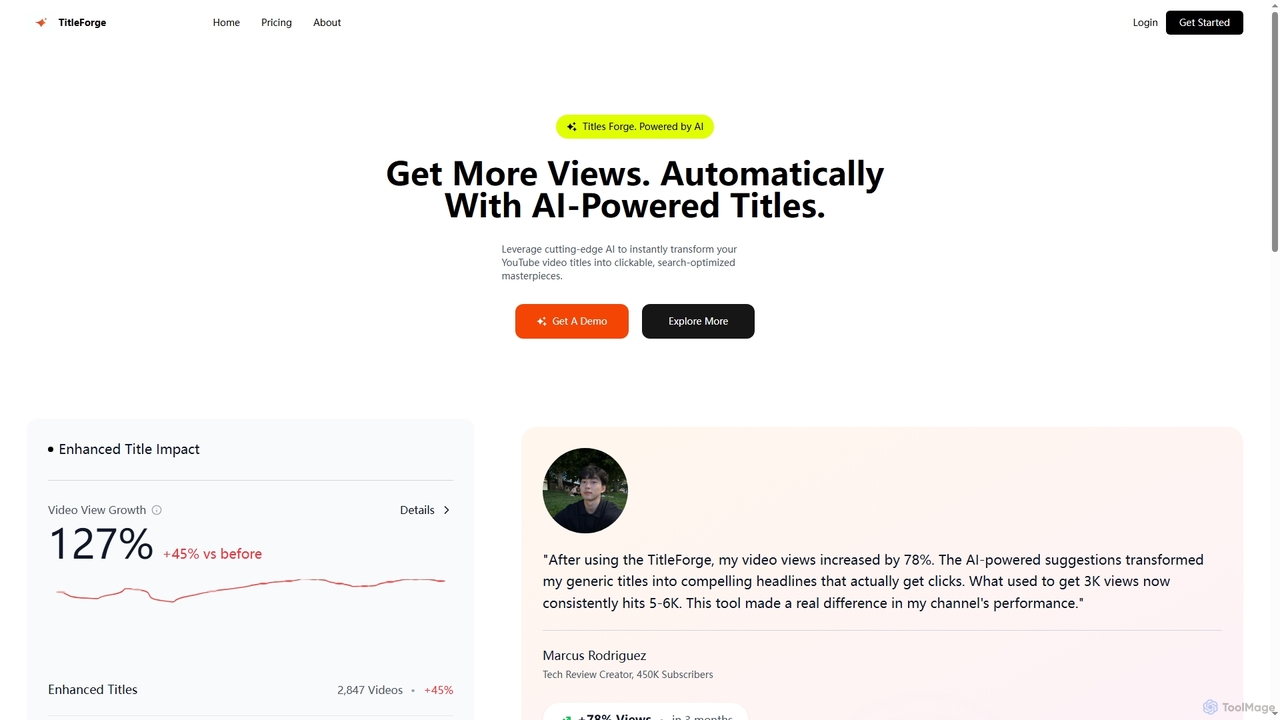
TitleForge is an AI-powered tool designed to help YouTube creators optimize their video titles for increased views and engagement. It leverages advanced machine learning to transform generic titles into clickable, search-optimized headlines, backed by data-driven insights. Creators can instantly generate compelling titles to boost their channel's performance and grow their audience faster.
About Youtube Optimization
YouTube Optimization tools are AI-powered platforms designed to maximize a video's visibility, engagement, and audience growth on YouTube. These tools analyze vast amounts of data from the platform to provide actionable insights on video SEO, audience behavior, and content strategy. By leveraging machine learning, they help creators identify high-potential keywords, craft compelling titles and descriptions, and suggest relevant tags to improve search rankings and recommendations. This data-driven approach transforms content creation from guesswork into a strategic process, enabling creators to reach a wider, more relevant audience.
Core Features
- Keyword Research & Topic Discovery: Identifies high-demand, low-competition keywords and trending topics relevant to your channel's niche.
- Title & Description Generation: Creates SEO-friendly and click-worthy titles and descriptions based on best practices and keyword analysis.
- Tag Recommendation: Suggests a mix of broad and specific tags to enhance video discoverability in YouTube search and related videos.
- Thumbnail Analysis: Provides feedback on thumbnail designs or facilitates A/B testing to improve click-through rates (CTR).
- Performance Analytics & Auditing: Offers in-depth channel analysis, tracks video performance, and provides recommendations for optimizing existing content.
Use Cases
These tools are essential for individual content creators, digital marketing agencies, and brands managing corporate YouTube channels. For instance, a creator can use them to plan a content calendar based on trending topics, while an agency can audit a client's channel to identify quick optimization wins. Businesses use them to ensure their promotional videos align with what their target audience is searching for.
How to Choose
When selecting a YouTube Optimization tool, consider the depth of its keyword database and analytics features. Evaluate its integration with YouTube Studio and other marketing tools. Assess the user interface for ease of use and clarity of recommendations. Finally, compare pricing models based on your channel's size and the number of features you require, such as competitive analysis or A/B testing capabilities.

Youtube OptimizationUse Cases
Planning Video Content with Keyword Research
A content creator specializing in home cooking wants to plan their next video series. Instead of guessing topics, they use a YouTube Optimization tool to research keywords like 'easy 30-minute meals' and 'healthy breakfast ideas'. The tool provides data on search volume, competition level, and related trending queries. Based on these insights, the creator identifies a high-demand, low-competition niche: '15-minute vegan lunch recipes'. They then structure their video scripts around the most relevant keywords, significantly increasing the chances of their new series ranking high in search results and being recommended to the right audience from the start.
Optimizing Titles and Descriptions for SEO
A marketing agency manages a YouTube channel for a tech company. After uploading a new product tutorial, they use an AI optimization tool to generate five different title variations and an SEO-optimized description. The tool analyzes top-ranking videos for similar topics and suggests titles that balance clarity with click-worthiness. It also drafts a description that includes primary and secondary keywords, timestamps for key sections, and relevant links. The agency selects the best title and uses the generated description, saving hours of manual writing and ensuring the video is immediately indexed correctly by YouTube's algorithm.
A/B Testing Thumbnails for Higher Click-Through Rate
A professional YouTuber wants to maximize the initial impact of their latest video. They create two distinct thumbnail designs: one with bold text and another focusing on a dramatic image from the video. Using an optimization tool's A/B testing feature, they set both thumbnails to run for the first six hours after publishing. The tool automatically tracks the click-through rate (CTR) for each version. After the test period, it identifies that the image-focused thumbnail has a 25% higher CTR. The tool then automatically sets the winning thumbnail as the permanent one, ensuring the video attracts the maximum possible audience from YouTube's recommendation engine.
Analyzing Competitor Channel Strategies
A brand entering the competitive fitness space on YouTube uses an optimization tool to analyze the top five channels in their niche. The tool's competitive analysis feature provides a detailed report on their competitors' most successful videos, common tags, title structures, and video release schedules. It reveals that videos under 10 minutes focusing on 'at-home workouts' with 'no equipment' in the title perform best. Armed with this data, the brand adjusts its content strategy to create shorter, more targeted videos, helping them gain traction more quickly by emulating proven success formulas rather than starting from scratch.
Auditing and Reviving an Old Video Library
A channel with hundreds of videos published over several years notices that many older uploads get very few views. The channel manager uses an optimization tool's audit feature to scan the entire library. The tool identifies 50 videos with low CTRs and outdated SEO. For each video, it suggests new, more relevant keywords, provides optimized title and description templates, and recommends better tags. The manager spends a weekend updating these videos. Within a month, many of the revived videos start appearing in search results and recommendations, collectively increasing the channel's monthly views by 15% without creating any new content.
Developing a Multi-Language Content Strategy
A global e-commerce brand wants to expand its YouTube presence in Spain and Germany. Their marketing team uses an optimization tool with multi-language support. They input their core English keywords, and the tool provides localized, high-volume keyword equivalents in Spanish and German. It also helps generate culturally relevant title and description templates for these regions. This allows the team to efficiently create and optimize content for new markets, ensuring their videos are discoverable by local audiences and use language that resonates with them, accelerating international channel growth.