AgentShield
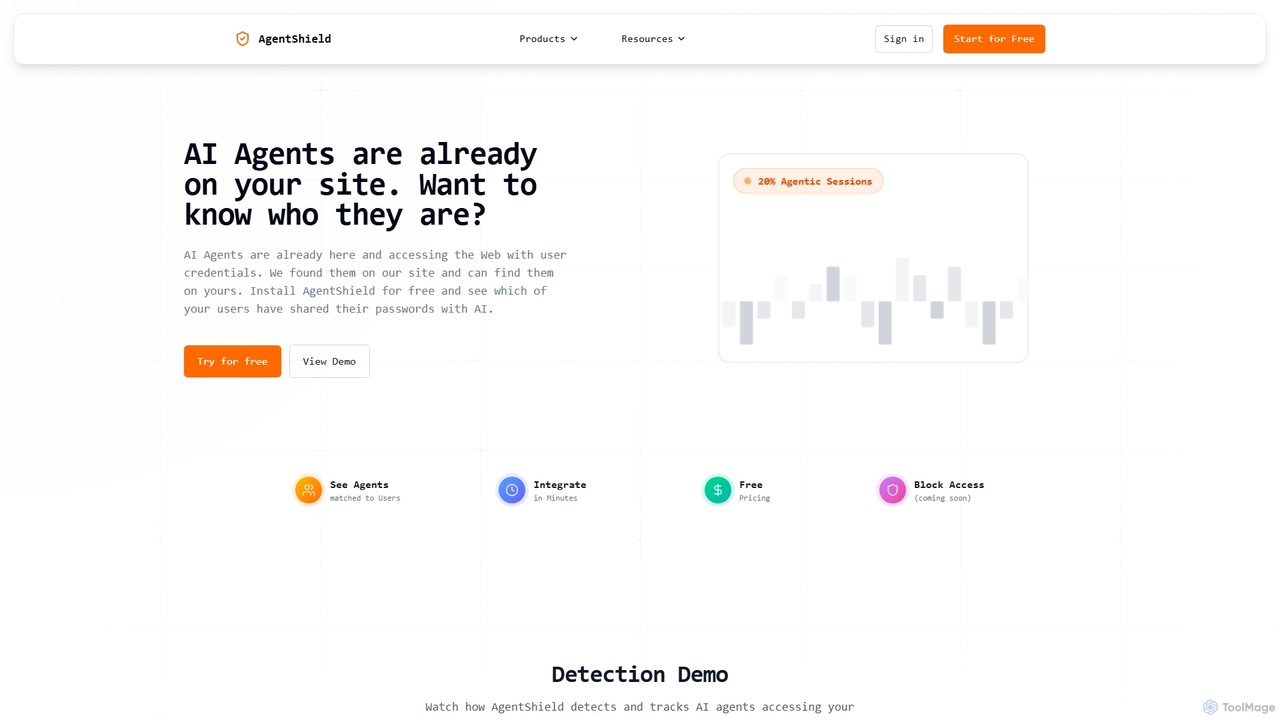
AgentShield is an advanced AI agent detection and protection solution designed to identify and track AI agents accessing …
AgentShield is an advanced AI agent detection and protection solution designed to identify and track AI agents accessing your website using user credentials. It offers free, easy installation and real-time, cryptographically verified detection, helping businesses understand who is sharing their site access with AI.
About Api Management
API Management refers to a suite of tools and processes designed to oversee the entire lifecycle of Application Programming Interfaces (APIs), from creation and publication to security, monitoring, and versioning. These platforms provide a centralized system for organizations to manage their APIs, ensuring they are discoverable, secure, and performant for both internal and external developers. By streamlining API consumption and governance, API Management solutions enable businesses to accelerate digital transformation, foster innovation, and build interconnected digital ecosystems efficiently.
Core Features
- API Gateway: Acts as a single entry point for all API calls, handling routing, authentication, authorization, and rate limiting.
- Developer Portal: Provides a self-service platform for developers to discover, subscribe to, and test APIs with comprehensive documentation.
- Security & Access Control: Implements robust authentication (e.g., OAuth, API keys) and authorization policies to protect APIs from unauthorized access and threats.
- Analytics & Monitoring: Offers real-time insights into API usage, performance, and error rates, enabling proactive issue resolution and optimization.
- Lifecycle Management: Supports the entire API journey, including design, testing, deployment, versioning, and deprecation.
Use Cases
API Management is crucial for organizations exposing or consuming a large number of APIs, facilitating seamless integration between disparate systems and services. It supports microservices architectures, enabling efficient communication and governance across numerous independent services. Businesses leverage these tools to create new revenue streams through API monetization and to enhance partner ecosystems by providing controlled access to data and functionalities.
How to Choose
When selecting an API Management solution, consider its scalability to handle varying traffic loads, the breadth of its security features, and its integration capabilities with existing infrastructure (e.g., identity providers, monitoring tools). Evaluate the ease of use of the developer portal, the granularity of analytics offered, and the flexibility of its deployment options (cloud, on-premise, hybrid). Cost-effectiveness and vendor support are also critical factors for long-term success.

Api ManagementUse Cases
Securely Exposing Internal Services to Partners
A large enterprise needs to share specific data and functionalities from its internal systems (e.g., inventory, customer data) with external business partners. An API Management platform allows the enterprise to create a secure API gateway, apply fine-grained access controls, and publish these APIs through a developer portal. Partners can then easily discover, subscribe to, and integrate with these services, while the enterprise maintains full control over data access, usage policies, and security, ensuring compliance and reducing integration overhead.
Building a Public API Program for Monetization
A SaaS company wants to open up its core functionalities to third-party developers, potentially creating new revenue streams or expanding its ecosystem. With API Management, the company can package its APIs, define usage tiers, implement billing mechanisms, and provide a comprehensive developer portal with SDKs and documentation. This enables developers to easily integrate and build applications on top of the company's platform, while the company can track usage, enforce quotas, and monetize its digital assets effectively.
Managing Microservices Communication in a Distributed Architecture
A development team is building a complex application using a microservices architecture, where numerous small, independent services communicate with each other. An API Management solution provides a central API Gateway to route requests between these services, handle authentication, apply policies, and monitor inter-service communication. This simplifies service discovery, enhances security, and provides visibility into the performance and health of the entire microservices ecosystem, preventing bottlenecks and ensuring system stability.
Accelerating Digital Transformation and Legacy System Integration
An established organization needs to modernize its IT infrastructure and integrate legacy systems with new cloud-native applications or mobile frontends. API Management acts as an abstraction layer, exposing functionalities from older systems as modern APIs without requiring extensive re-engineering. This allows developers to quickly build new digital experiences by consuming these standardized APIs, significantly accelerating digital transformation efforts and extending the lifespan of valuable legacy assets.
Ensuring API Security and Compliance
Organizations handling sensitive data (e.g., financial, healthcare) must adhere to strict regulatory compliance standards (e.g., GDPR, HIPAA) when exposing APIs. An API Management platform provides advanced security features like OAuth 2.0, JWT validation, threat protection, and audit logging. It enables the enforcement of security policies, monitors for suspicious activities, and generates detailed reports, helping businesses meet compliance requirements and protect against data breaches and cyber threats.
Optimizing API Performance and User Experience
A company relies heavily on APIs for its mobile applications and web services, and slow API responses directly impact user experience. API Management tools offer caching mechanisms, load balancing, and detailed performance analytics. By identifying bottlenecks, optimizing API calls, and ensuring high availability through robust gateway management, the company can significantly improve API response times, enhance application performance, and deliver a smoother, more reliable user experience for its customers.