BlogMaker
BlogMaker is an all-in-one, no-code blogging platform designed for simplicity, speed, and powerful SEO. It allows you to …
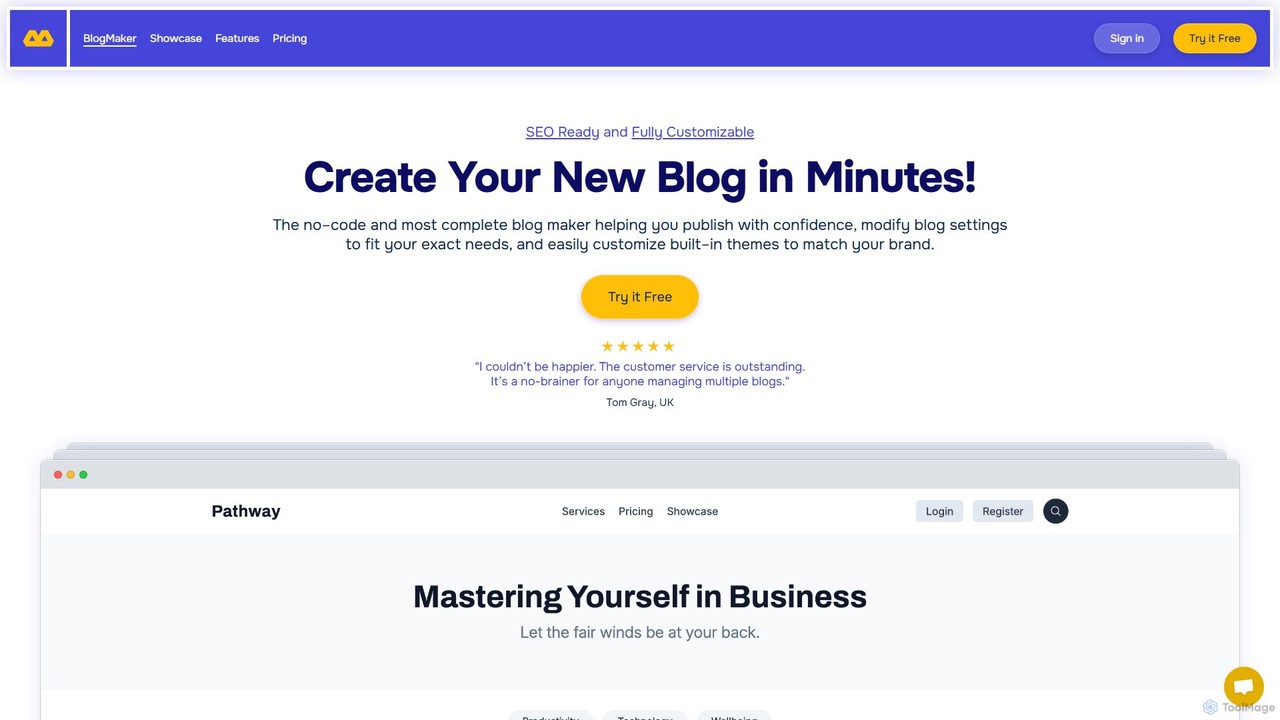
BlogMaker is an all-in-one, no-code blogging platform designed for simplicity, speed, and powerful SEO. It allows you to create and manage a professional blog, complete with hosting, analytics, and newsletter features, without any technical maintenance. A key feature is its ability to host your blog in a subdirectory of your existing domain, significantly boosting your main site's SEO authority.
About Blogging Platform
Blogging platforms are specialized content management systems (CMS) designed for creating, publishing, and managing blog posts and articles. These tools provide an intuitive interface for writing, formatting text, embedding media, and organizing content with categories and tags. They empower individuals, businesses, and organizations to share ideas, news, and expertise, fostering online communities and enhancing digital presence. As a focused type of website tool, blogging platforms streamline content creation and distribution, often including built-in SEO features and community engagement capabilities.
Core Features
- Intuitive Content Editor: Provides a user-friendly interface for writing, editing, and formatting blog posts with rich text options.
- Media Management: Allows easy upload, embedding, and organization of images, videos, and other multimedia files within posts.
- Comment System: Facilitates reader interaction and community building through integrated comment sections and moderation tools.
- SEO Optimization Tools: Offers built-in features like meta descriptions, custom URLs, and sitemap generation to improve search engine visibility.
- Theme & Customization: Provides a variety of templates and design options to personalize the blog's appearance and branding.
Applicable Scenarios
Blogging platforms are essential for various content-driven initiatives. Individuals use them for personal branding and sharing expertise, while businesses leverage them for content marketing to attract and engage customers. Non-profit organizations utilize these platforms to disseminate educational content and news, reaching a wider audience and informing the public about their mission.
How to Choose
When selecting a blogging platform, consider its ease of use, especially for non-technical users, and the extent of customization options available for design and functionality. Evaluate its built-in SEO capabilities to ensure your content is discoverable, and assess its scalability to handle future growth in content and traffic. Finally, check for robust community features like comment systems to foster reader engagement.

Blogging PlatformUse Cases
Build Personal Brand and Authority
An individual expert, such as a digital marketer or a freelance writer, utilizes a blogging platform to regularly publish insightful articles, tutorials, and case studies. By consistently sharing valuable content, they establish themselves as a thought leader in their niche, attract a loyal audience, and ultimately generate leads or client inquiries for their services. This strategy helps in building a strong online professional presence.
Drive Content Marketing for Small Businesses
A small e-commerce store or local service provider leverages a blogging platform to publish regular articles about product benefits, industry trends, and customer success stories. This content strategy aims to improve organic search rankings, attract potential customers through valuable information, and build brand loyalty. By providing solutions and insights, the business can convert readers into paying customers.
Create an Educational Resource Hub
A non-profit organization, educational institution, or research group establishes a blog to disseminate educational content, research findings, and advocacy messages. This allows them to reach a wider audience, inform the public about important topics, and provide valuable resources. The platform facilitates easy sharing of complex information in an accessible format, enhancing public engagement and knowledge dissemination.
Publish Developer Documentation and Updates
Software development teams or tech companies use blogging platforms to publish release notes, technical guides, API updates, and engineering insights. This keeps their user base and developer community informed about new features, bug fixes, and best practices. A well-maintained blog serves as a crucial communication channel, providing transparency and support while fostering a knowledgeable user ecosystem.
Journal Travel and Lifestyle Experiences
A travel or lifestyle blogger uses a blogging platform to document their journeys, share personal experiences, offer tips, and publish photo essays. This allows them to connect with a global audience, inspire others, and potentially monetize their content through affiliate links, sponsorships, or selling digital products. The platform provides the necessary tools for rich storytelling and visual presentation.
Facilitate Internal Company Communications
Large enterprises or distributed teams can utilize a private blogging platform for internal communications. This allows them to share company news, project updates, employee spotlights, and best practices across departments. A dedicated internal blog fosters transparency, enhances employee engagement, and ensures that all team members are informed and aligned with organizational goals, improving overall internal knowledge sharing.