Website Best in category 5 results Accessibility AI Tool

Popular AI tools in the Accessibility field of Website include UserWay、accessiBe、Qualibooth、alttextgeneratorai、ImageComply, etc., helping you quickly improve efficiency.

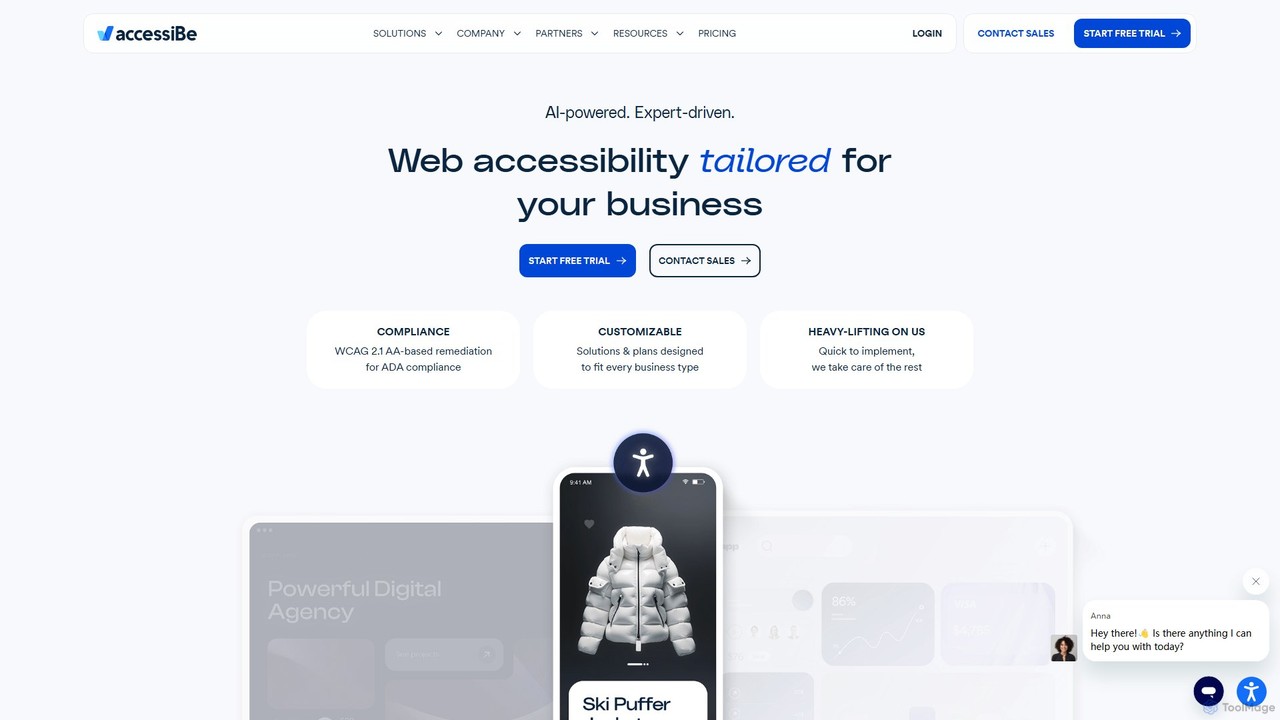
accessiBe

accessiBe

accessiBe is an AI-powered web accessibility solution that helps websites become compliant with WCAG 2.1, ADA, and other …

143.1K
alttextgeneratorai

alttextgeneratorai

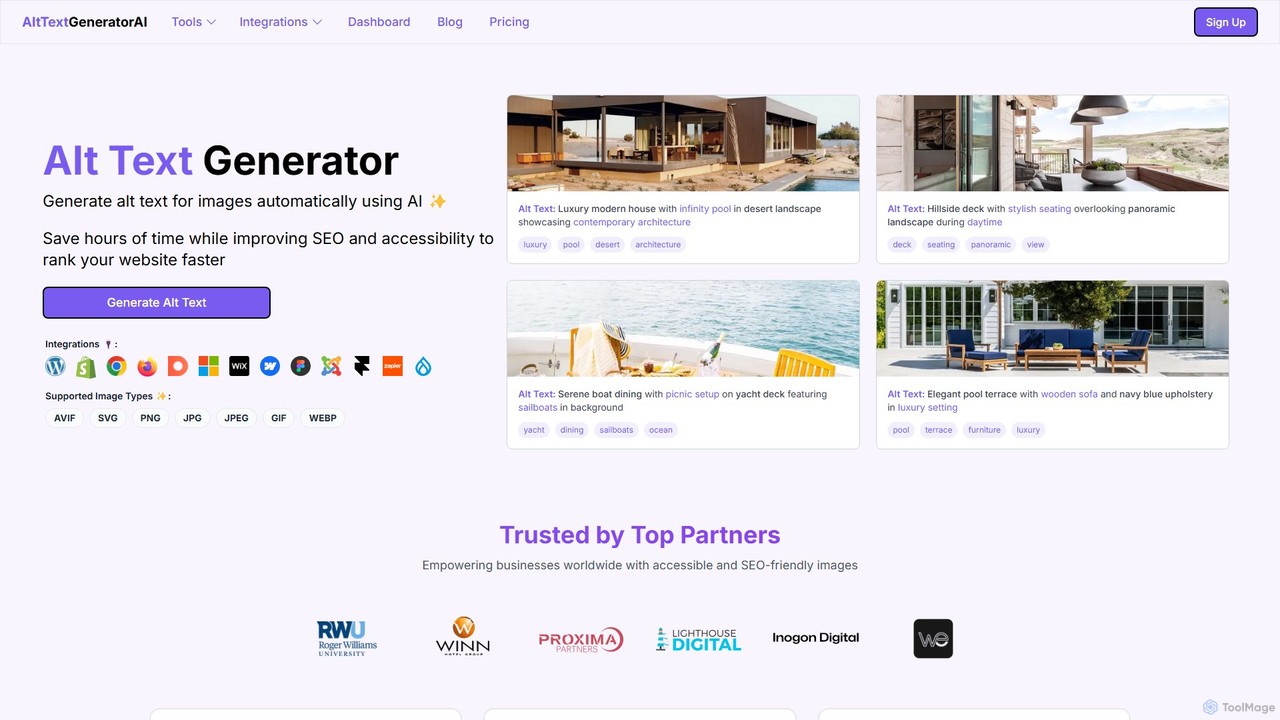
An AI-powered tool that automatically generates accurate and descriptive alt text for images. It helps improve website SEO, …

3.9K
UserWay

UserWay

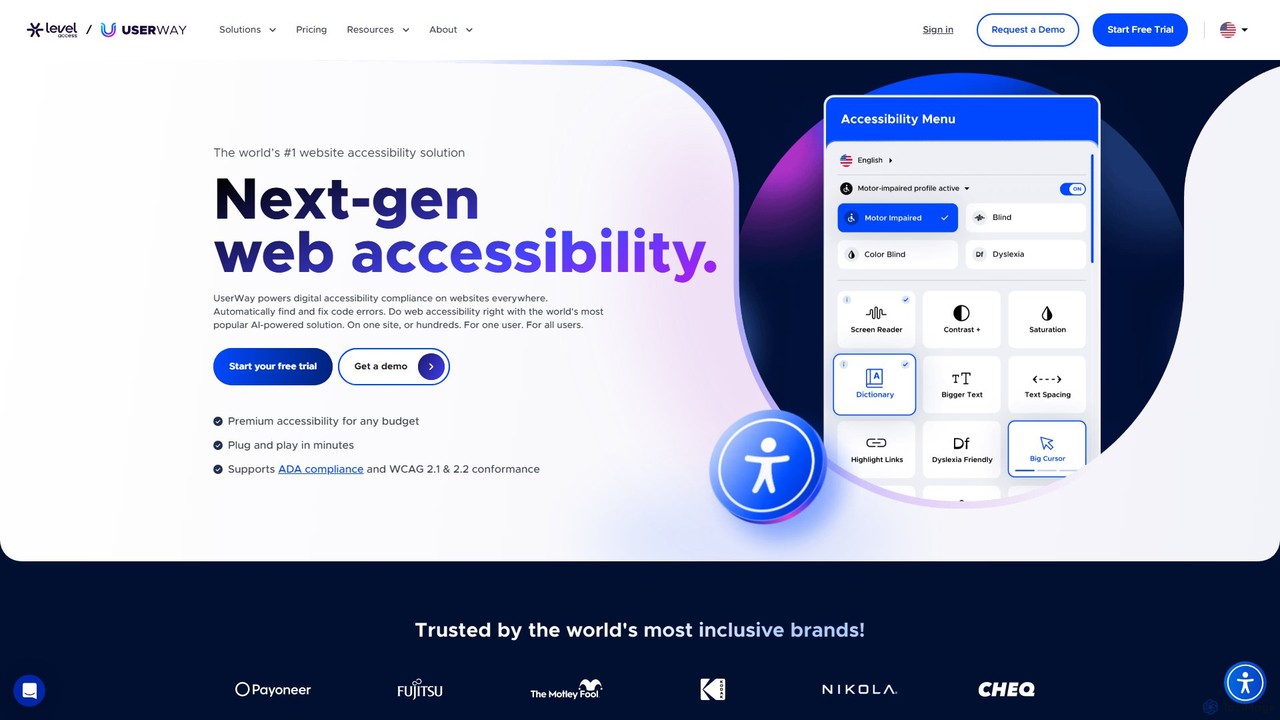
UserWay is an AI-powered web accessibility solution that helps websites achieve and maintain compliance with standards like WCAG …

604.9K
ImageComply

ImageComply

ImageComply is an AI-powered WordPress plugin that automatically generates descriptive alt text for your website's images. It helps …

2.4K
Qualibooth

Qualibooth

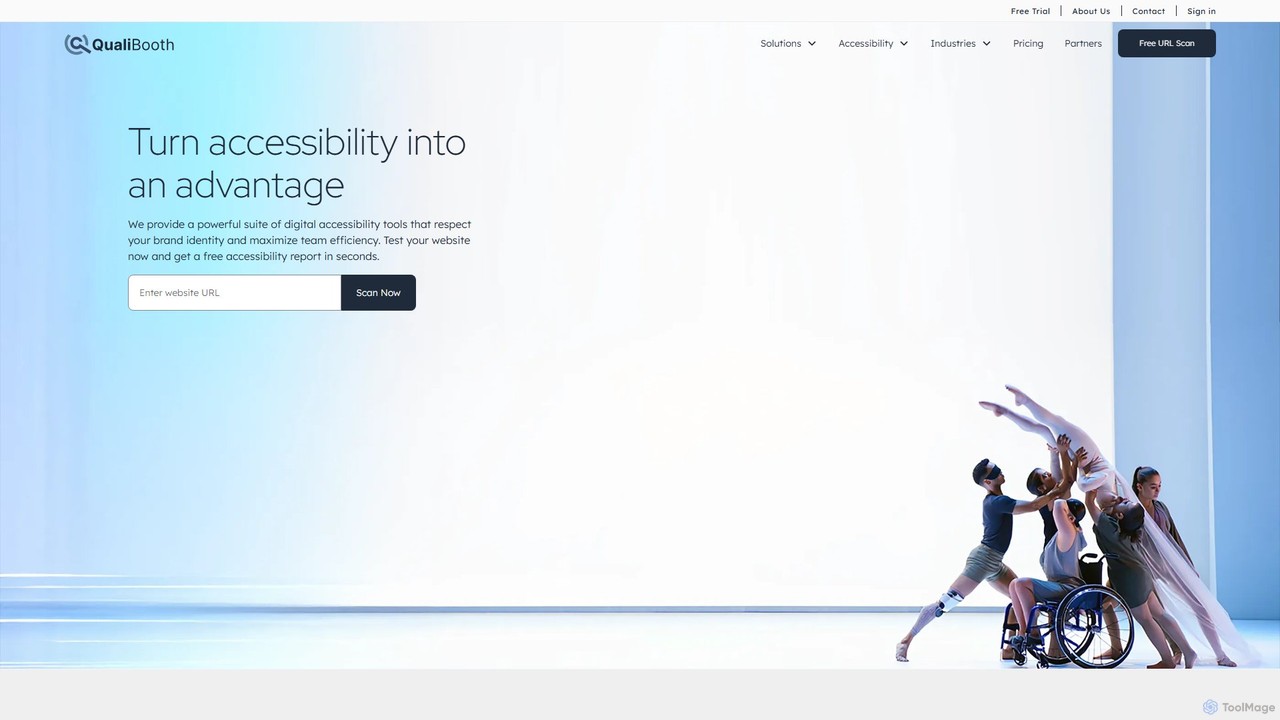
Qualibooth is an enterprise-grade web accessibility software suite. It uses AI-powered tools like the Agora workbench to help …

4.3K

About Accessibility

Accessibility AI tools are specialized solutions designed to enhance the inclusivity and usability of digital content, particularly websites, for individuals with disabilities. These tools leverage artificial intelligence, including computer vision and natural language processing, to automate the identification and remediation of common accessibility barriers. They significantly streamline the process of making websites compliant with global accessibility standards like WCAG, ensuring a broader audience can access and interact with online information effectively.

Core Features

  • Automated Alt-Text Generation: AI analyzes images to generate descriptive alternative text, crucial for screen readers.
  • Contrast and Readability Analysis: Automatically checks text and background color contrast ratios and identifies readability issues.
  • Dynamic Content Captioning: Provides real-time or automated captions and transcripts for audio and video content.
  • Keyboard Navigation Testing: Simulates keyboard-only navigation to detect focus order and interactive element issues.
  • Form Field Labeling: Identifies and suggests appropriate labels for form fields, improving usability for assistive technologies.

Use Cases

Web developers and content managers utilize these tools to proactively integrate accessibility features during development and content creation. E-commerce platforms employ them to ensure product pages are navigable and understandable for all users, expanding their customer base. Educational institutions leverage AI accessibility tools to make online learning materials and platforms inclusive for students with diverse needs, fostering equitable access to education.

How to Choose

When selecting an AI accessibility tool, prioritize solutions that align with relevant compliance standards (e.g., WCAG 2.1 AA, ADA). Evaluate the accuracy and scope of its automated detection and remediation capabilities, considering the types of content and platforms it supports. Look for ease of integration with existing development workflows and content management systems, as well as customizable features that allow for specific brand guidelines or user preferences. Finally, assess the level of human oversight required and the quality of reporting provided.

AccessibilityUse Cases

1

Automating Alt-Text for E-commerce Product Images

An e-commerce manager uses an AI accessibility tool to automatically generate descriptive alt-text for thousands of product images. Instead of manually writing descriptions, the AI analyzes image content, identifies key product features, and creates accurate, concise alt-text, ensuring visually impaired customers can understand product details via screen readers, significantly speeding up product catalog updates and improving SEO.

2

Real-time Captioning for Live Webinars and Online Events

A marketing team hosting a live webinar integrates an AI accessibility tool to provide real-time captions. The AI processes the spoken audio, transcribes it into text, and displays it on screen, making the event accessible to attendees who are deaf or hard of hearing, or those in noisy environments. This expands audience reach and ensures compliance with accessibility guidelines for live digital content.

3

Proactive Accessibility Audits for Website Redesigns

A web development agency uses AI accessibility tools during a website redesign project to conduct continuous, automated audits. The AI scans new page layouts, color schemes, and interactive elements for WCAG compliance issues like insufficient contrast, missing labels, or improper heading structures. This allows developers to identify and fix issues early in the development cycle, preventing costly retrofits and ensuring a fully accessible launch.

4

Enhancing Form Usability for Assistive Technologies

A government agency implements an AI accessibility solution to review and enhance the usability of its online application forms. The AI identifies form fields lacking proper labels, ARIA attributes, or logical tab order. It then suggests or automatically applies corrections, ensuring users relying on screen readers or keyboard navigation can easily understand, navigate, and complete critical government services without barriers.

5

Personalized User Experience with Accessibility Overlays

A content publisher deploys an AI-powered accessibility overlay that allows individual users to customize their browsing experience. The AI detects user preferences (e.g., larger text, high contrast, dyslexia-friendly fonts) and dynamically adjusts the website's appearance and functionality in real-time. This provides a personalized accessible experience without requiring site-wide code changes, catering to a diverse range of user needs.

6

Ensuring Video Content Compliance with Automated Transcripts

A media company uses an AI tool to automatically generate accurate transcripts and synchronized captions for its extensive video library. The AI processes audio tracks, identifies speakers, and timestamps the text, producing high-quality accessibility assets. This ensures all video content is accessible to deaf and hard-of-hearing audiences, improves content discoverability through searchable transcripts, and meets regulatory requirements for media accessibility.

AccessibilityFrequently Asked Questions