Undetectable Humanizer
Undetectable Humanizer is an advanced AI tool designed to transform AI-generated text into natural, human-like content. It leverages …
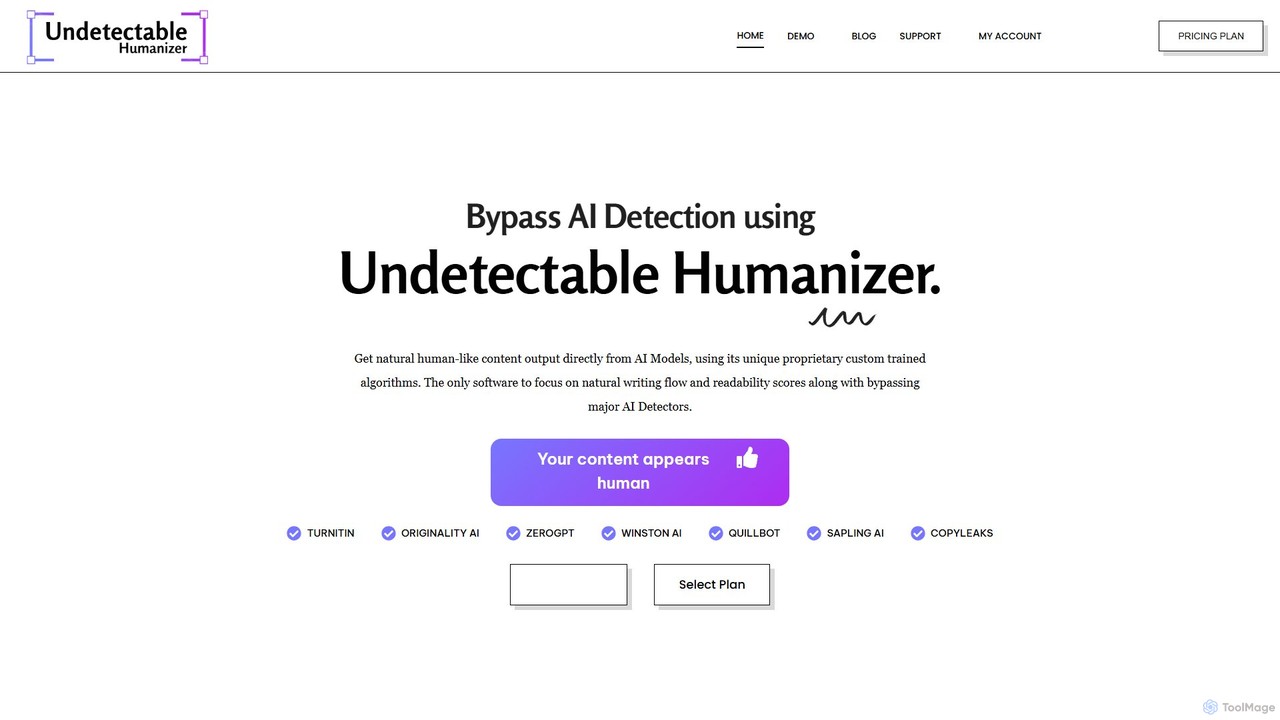
Undetectable Humanizer is an advanced AI tool designed to transform AI-generated text into natural, human-like content. It leverages custom-trained algorithms and multiple leading AI models (GPT-4o, Claude 3, Gemini) to bypass major AI detectors like Turnitin and Originality.ai. The tool focuses on improving readability, boosting SEO rankings, and ensuring your content is engaging and authentic, making it ideal for students, marketers, and content creators.
About Ai Content Humanizer
AI Content Humanizer tools are specialized utilities designed to refine AI-generated text, making it sound more natural, engaging, and authentic. They analyze content for robotic patterns, predictable phrasing, and uniform sentence structures, then rewrite it to mimic the nuances of human writing. This process not only improves readability and connection with the audience but also helps the content bypass AI detection systems. These tools are a crucial final step in the AI-assisted writing workflow, ensuring the output is polished and indistinguishable from human-authored work.
Core Features
- Tone and Style Adjustment: Modifies the text's voice to be more casual, professional, witty, or empathetic, aligning with specific brand or audience needs.
- Sentence Structure Variation: Alters sentence length and complexity, breaking up monotonous patterns to create a more dynamic and natural reading rhythm.
- Vocabulary Enhancement: Replaces common AI word choices with more sophisticated, idiomatic, or contextually appropriate language.
- Readability Improvement: Simplifies complex phrasing and improves the logical flow of ideas to make the content easier for humans to understand and digest.
- AI Detection Evasion: Intelligently rephrases text to reduce the statistical markers that AI detection algorithms look for, increasing the 'human score'.
Use Cases
These tools are widely used by SEO specialists, content marketers, bloggers, and academic writers. For instance, an SEO expert might use a humanizer to refine dozens of AI-generated articles to ensure they rank well without being flagged by search engines. Similarly, a marketing team can humanize ad copy and social media posts to create a more genuine connection with customers.
How to Choose
When selecting an AI Content Humanizer, consider the effectiveness of its humanization algorithm by testing it against popular AI detectors. Evaluate the level of control it offers over tone and style. Also, check for supported languages, processing speed for bulk content, and whether it integrates with your existing writing platforms like Google Docs or WordPress. Finally, compare pricing models based on your expected usage volume.

Ai Content HumanizerUse Cases
Optimizing SEO Blog Posts for Readability
An SEO specialist uses an AI writer to generate a dozen articles on a specific topic to build topical authority. However, the initial drafts sound repetitive and lack a distinct voice. They use an AI Content Humanizer to process these articles. The tool varies sentence structures, injects more engaging vocabulary, and adjusts the tone to be more authoritative yet approachable. The result is a set of unique, high-quality blog posts that are more likely to engage readers, reduce bounce rates, and perform better in search rankings without being flagged as low-effort AI content.
Refining Marketing and Ad Copy
A marketing team generates multiple versions of ad copy for a new campaign using an AI tool. The AI provides factually correct but emotionally flat options. The team runs this copy through an AI Content Humanizer, instructing it to adopt a 'persuasive and urgent' tone. The humanizer rewrites the copy with more powerful verbs, rhetorical questions, and a rhythm that builds excitement. This transformed copy connects better with the target audience on an emotional level, leading to higher click-through rates and conversions for the campaign.
Ensuring Originality in Academic Writing
A student uses an AI writing assistant to brainstorm and structure a research paper. To avoid any issues with plagiarism or AI detection software used by their university, they use an AI Content Humanizer as a final step. The tool rephrases complex sentences, substitutes generic academic phrases with more nuanced alternatives, and improves the overall flow of the arguments. This not only helps the paper pass originality checks but also elevates the quality of the writing, making it clearer, more sophisticated, and more compelling for the professor to read.
Personalizing Bulk Email Outreach
A sales team needs to send outreach emails to hundreds of potential leads. Using a standard AI-generated template often results in low open rates as the emails feel impersonal and robotic. By processing the template through an AI Content Humanizer, they can create multiple variations that sound more conversational and personal. The tool adjusts greetings, rephrases the value proposition in a more natural way, and adds subtle variations to avoid spam filters. This humanized approach leads to a significant increase in both email open rates and positive replies.
Adapting Technical Content for a General Audience
A tech company creates a detailed, jargon-heavy whitepaper using AI to summarize engineering documents. To make this content accessible for a marketing blog post, they use an AI Content Humanizer. They set the tool's objective to 'simplify and engage'. The humanizer translates complex technical terms into easy-to-understand analogies, breaks down long sentences, and adds a narrative flow. The output is a clear, engaging article that effectively communicates the value of their technology to non-expert customers, expanding their content's reach.
Creating Authentic Social Media Updates
A social media manager is responsible for posting daily updates across multiple platforms for a client. To save time, they use AI to generate draft posts based on a content calendar. The raw AI output is often too formal and lacks personality. They use an AI Content Humanizer to inject brand-specific slang, add emojis where appropriate, and rephrase statements to sound like a real person sharing an update. This ensures the brand's social media presence feels authentic and relatable, fostering better community engagement and follower growth.