ToolMage
Sign in

Best 3 Essay Writing AI tools for Education

Popular Essay Writing AI tools in Education include boo.ai, Undetectable Humanizer, and Bulletpen, helping you work more efficiently.

Bulletpen
Freemium

Bulletpen

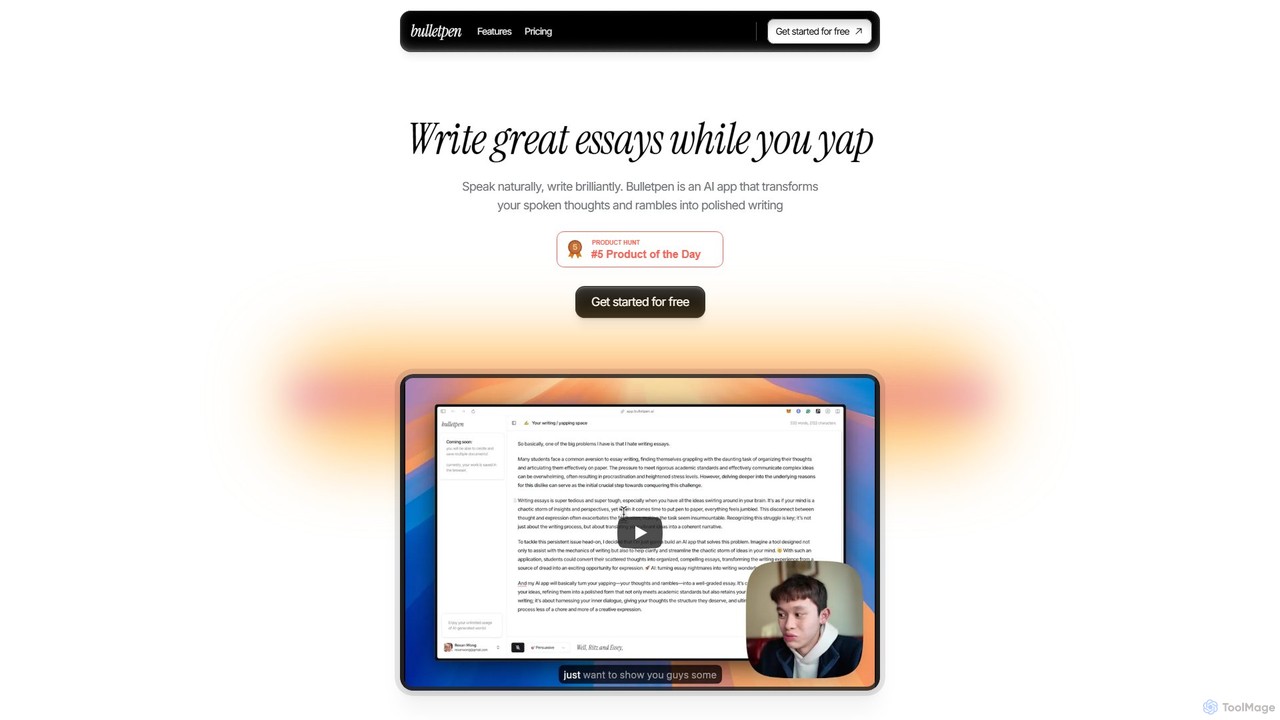
Bulletpen is an AI-powered application that transforms your spoken thoughts and unstructured rambles into polished, well-structured writing. Simply speak your mind, and the AI will capture, refine, and format your ideas into essays, articles, or any text you need. It offers various tones, style mirroring, and AI editing commands to perfect your content, making it ideal for students, writers, and professionals looking to overcome writer's block and boost productivity.

Speech To Text
Visits 6.1KFavorites 138Likes 151
boo.ai
Freemium

boo.ai

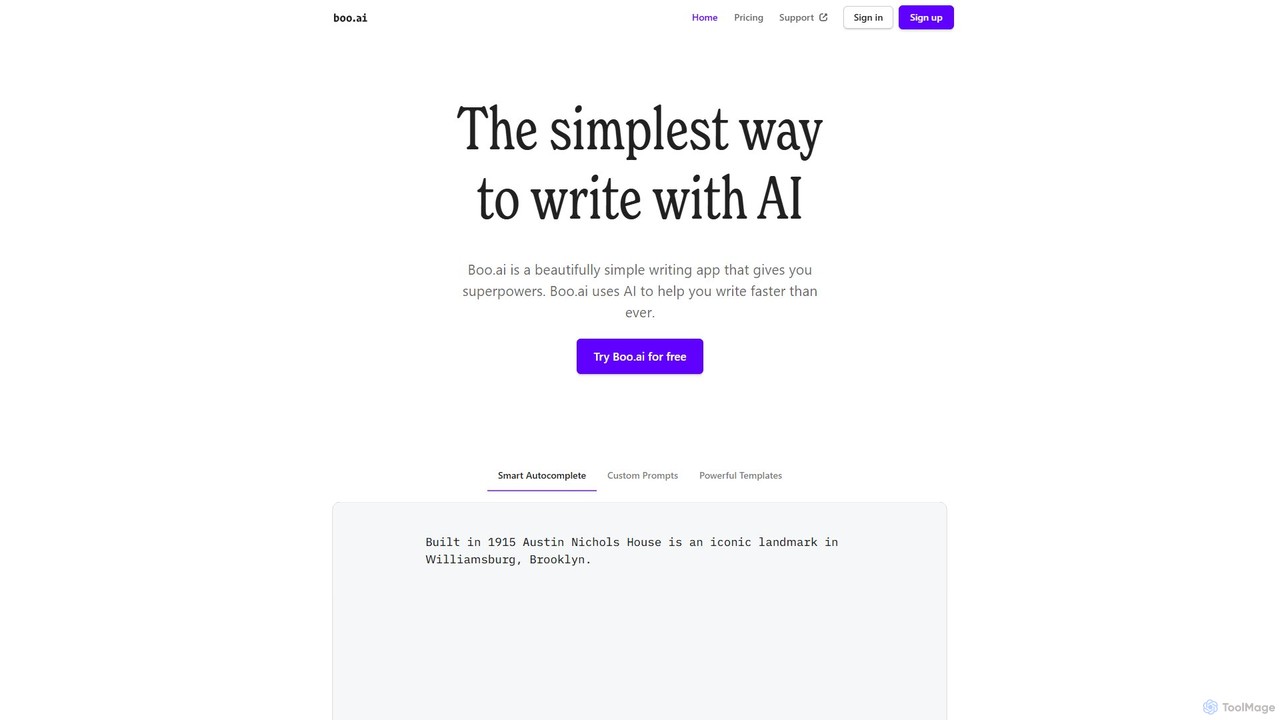
boo.ai is a minimalist AI-powered writing assistant designed for speed and simplicity. It leverages AI to offer smart autocomplete, custom prompts, and powerful templates. The tool learns your writing style over time, provides advanced editing suggestions for tone and structure, and helps with everything from emails and essays to business plans.

Essay Writing
Visits 8.7KFavorites 162Likes 157
Undetectable Humanizer
Paid

Undetectable Humanizer

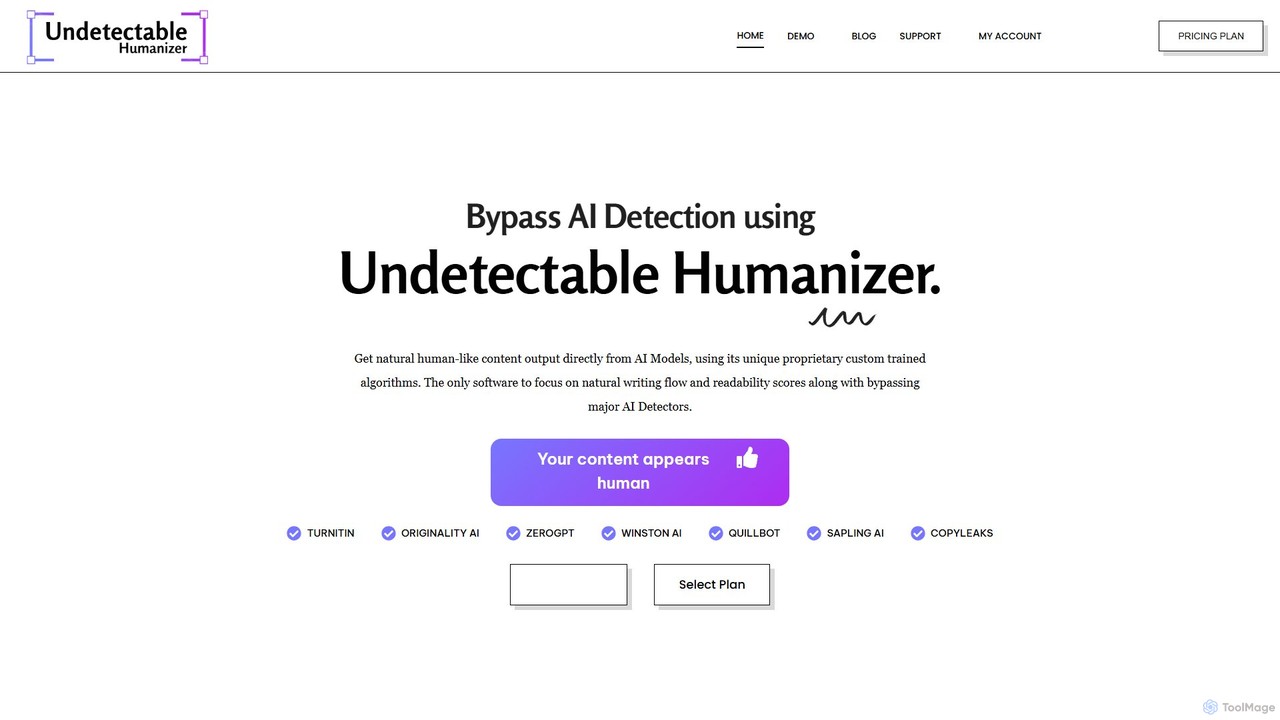
Undetectable Humanizer is an advanced AI tool designed to transform AI-generated text into natural, human-like content. It leverages custom-trained algorithms and multiple leading AI models (GPT-4o, Claude 3, Gemini) to bypass major AI detectors like Turnitin and Originality.ai. The tool focuses on improving readability, boosting SEO rankings, and ensuring your content is engaging and authentic, making it ideal for students, marketers, and content creators.

Essay Writing
Visits 7.4KFavorites 124Likes 119

About Essay Writing

AI Essay Writing tools are specialized AI-powered applications designed to assist students, researchers, and professionals in generating, structuring, and refining academic or formal essays. Leveraging advanced natural language processing (NLP) and machine learning, these tools can understand complex prompts, synthesize information, and produce coherent, well-structured text. They significantly streamline the entire writing process, from initial brainstorming and outlining to drafting and final proofreading, enhancing both efficiency and the overall quality of written assignments.

Core Features

  • Content Generation: Automatically drafts paragraphs, sections, or full essays based on user prompts, keywords, or detailed outlines.
  • Outline Creation: Helps users structure their essays by suggesting logical headings, subheadings, and a coherent flow of arguments.
  • Research Assistance: Integrates with academic databases to find relevant sources, summarize articles, and suggest appropriate citations.
  • Grammar & Style Correction: Identifies and corrects grammatical errors, stylistic inconsistencies, and improves overall readability and academic tone.
  • Plagiarism Detection: Scans generated or user-inputted text against vast databases to ensure originality and help prevent unintentional plagiarism.

Use Cases

These tools are invaluable for students preparing for exams or submitting complex assignments, researchers drafting literature reviews or grant proposals, and professionals creating detailed reports or articles. They help overcome writer's block, ensure structural integrity, and refine linguistic quality across various academic and professional writing tasks.

How to Choose

When selecting an AI essay writing tool, consider its content generation quality and flexibility, the accuracy and breadth of its citation capabilities, the reliability of its plagiarism detection, its integration with academic resources, and its overall ease of use for your specific academic level or professional needs. Evaluate its ability to adapt to different writing styles and academic standards.

Essay Writing use cases

1

Drafting Academic Papers

A university student needs to write a 2000-word essay on a complex historical event. The AI essay writing tool assists by generating an initial outline, suggesting key arguments, and drafting introductory and concluding paragraphs. This significantly reduces the time spent on structural planning and helps overcome writer's block, allowing the student to focus more on critical analysis and research depth.

2

Generating Research Summaries

A researcher needs to quickly review dozens of academic papers for a comprehensive literature review. The AI essay writing tool can process multiple articles, extract key findings, and synthesize them into concise summaries. This allows the researcher to grasp core concepts faster, identify relevant sources efficiently, and build a strong foundation for their own research without manual, time-consuming reading of every single paper.

3

Improving Essay Structure

A high school student struggles with organizing their thoughts into a coherent and logical essay. The AI tool analyzes their initial draft, identifies logical gaps, and suggests improvements to paragraph flow, topic sentences, and overall argument progression. This not only refines the current essay but also teaches the student better structural habits for future writing assignments, fostering critical thinking skills.

4

Enhancing Language and Style

A non-native English speaker needs to submit a formal academic essay but is concerned about grammatical errors and awkward phrasing. The AI tool provides advanced grammar checks, suggests more academic vocabulary, and refines sentence structures to ensure the essay meets high linguistic standards. This helps the student present their ideas clearly and professionally, improving their overall grade and confidence.

5

Brainstorming and Idea Generation

A content creator is tasked with writing an opinion piece on a trending topic but is unsure how to approach it or what angles to explore. The AI essay writer can generate various perspectives, arguments, and supporting points based on a simple prompt. This sparks creativity, provides a solid foundation for the article, and helps the creator quickly develop a unique and engaging narrative.

6

Checking for Originality

Before final submission, a student wants to ensure their essay is free from unintentional plagiarism and meets academic integrity standards. The AI tool's built-in plagiarism checker scans the entire document against a vast database of academic papers, articles, and web content. It highlights any potentially unoriginal content and suggests rephrasing options, providing peace of mind and ensuring compliance with university policies.

Essay Writing FAQ

What are AI Essay Writing tools?

AI Essay Writing tools are software applications that use artificial intelligence, primarily natural language processing (NLP) and machine learning, to assist users in creating, structuring, and refining written essays and academic papers. They can generate text, suggest outlines, provide research assistance, and improve grammar and style, acting as a comprehensive writing assistant for various academic and professional needs.

How do AI Essay Writing tools work?

These tools typically work by taking a user's prompt, keywords, or outline as input. They then leverage large language models (LLMs) trained on vast amounts of text data to generate relevant content, structure arguments logically, and refine language. Some advanced tools also integrate with research databases for source suggestions and built-in plagiarism checkers to ensure originality, providing a comprehensive writing support system.

Can AI Essay Writing tools detect plagiarism?

Many advanced AI Essay Writing tools include integrated plagiarism detection features. They scan the generated or user-inputted text against extensive databases of academic papers, articles, and web content to identify similarities and ensure the originality of the work. While these tools are powerful, users should always perform their own checks and understand their institution's policies on AI usage and academic integrity.

Are AI-generated essays considered ethical for academic submission?

The ethical use of AI essay writing tools in academia is a complex and evolving topic. While they can be valuable for brainstorming, outlining, and refining drafts, submitting entirely AI-generated content as one's own work is generally considered academic dishonesty. It's crucial to use them as assistants to enhance your own writing and critical thinking, not as replacements for original thought and effort. Always adhere to your institution's specific guidelines.

What are the key features to look for when choosing an AI Essay Writing tool?

When selecting an AI essay writing tool, consider its content generation quality and flexibility, ensuring it can adapt to various topics and styles. Look for robust grammar and style correction, reliable plagiarism detection, and strong research assistance capabilities including citation generation. User-friendliness, integration with other writing platforms, and the ability to customize output are also crucial factors for an effective and efficient writing experience.

How do AI Essay Writing tools differ from general AI writing assistants?

While general AI writing assistants offer broad content creation and editing, AI Essay Writing tools are specifically tailored for academic and formal writing. They feature specialized functionalities like academic citation generation, advanced plagiarism detection against scholarly databases, and tools for structuring complex arguments or literature reviews. Their focus is on meeting the rigorous standards and specific needs of educational and research contexts, unlike more versatile but less specialized general writing aids.