ToolMage
Sign in

Best 1 Career AI tools for Writing

Popular Career AI tools in Writing include Career HQ, helping you work more efficiently.

Career HQ
Paid

Career HQ

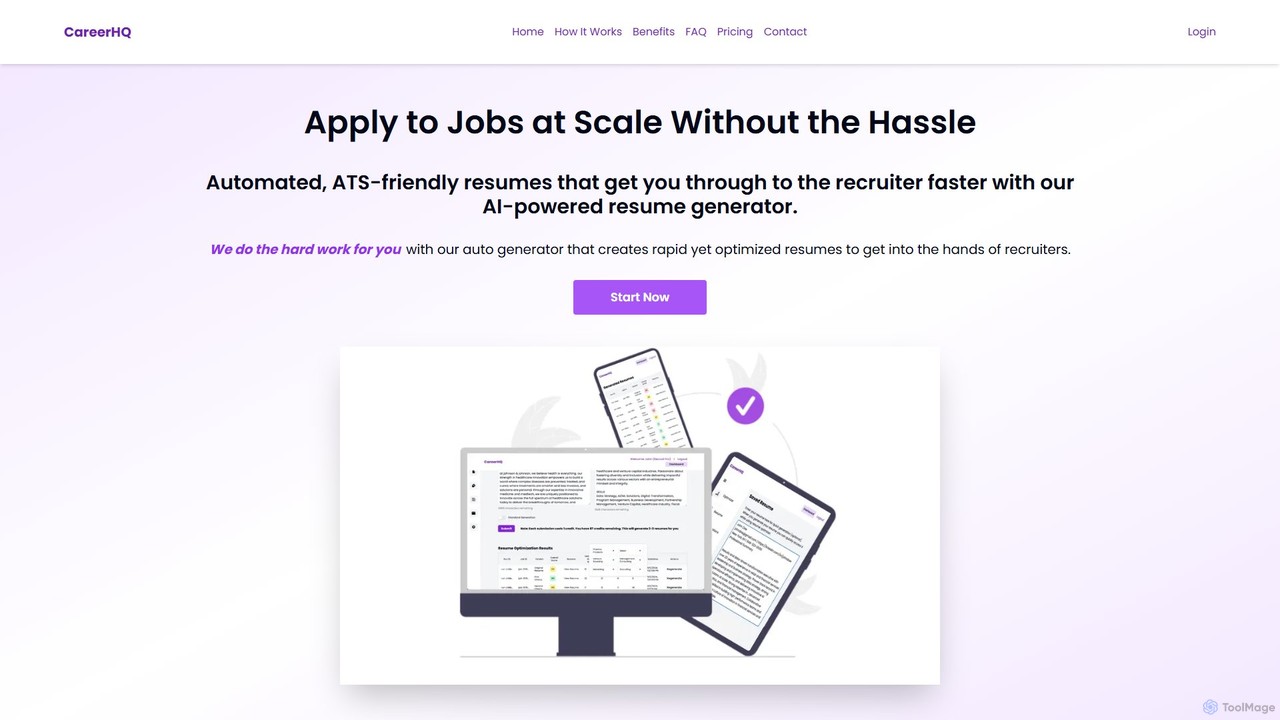
Career HQ is an AI-powered resume generator that automates the creation of ATS-friendly resumes. By analyzing your base resume and a specific job description, it optimizes your CV with relevant keywords and proper formatting, helping you bypass applicant tracking systems and reach recruiters faster. Apply to more jobs in less time with tailored, professional resumes.

Job Application
Visits 5.2KFavorites 177Likes 163

About Career

Career AI tools are specialized writing assistants that leverage artificial intelligence to optimize and personalize documents crucial for professional advancement. These sophisticated tools utilize natural language processing (NLP) and advanced generative AI models to craft compelling resumes, persuasive cover letters, and impactful professional profiles. Their primary value lies in streamlining the often-tedious job application process, significantly enhancing personal branding, and improving the overall effectiveness of professional communication for career-focused individuals. By automating content generation and offering strategic insights, these tools empower users to present their best professional self.

Core Features

  • Resume Optimization: Analyzes job descriptions and user input to generate highly tailored resume bullet points, skill sections, and summaries, significantly enhancing keyword matching for applicant tracking systems (ATS).
  • Cover Letter Generation: Creates personalized and persuasive cover letters that dynamically align with specific job requirements, highlighting relevant skills, experiences, and career aspirations.
  • LinkedIn Profile Enhancement: Provides intelligent suggestions for optimizing LinkedIn summaries, headlines, experience descriptions, and skill endorsements to boost professional visibility and network engagement.
  • Interview Scripting & Practice: Generates potential interview questions based on target roles and user's background, offering AI-driven answers or talking points to help users prepare confidently.
  • Professional Email Drafting: Assists in composing clear, concise, and impactful professional communications for networking, follow-ups, inquiry letters, and other career-related correspondence.

Applicable Scenarios

These tools are invaluable for active job seekers aiming to stand out in a competitive market, professionals looking to strategically advance their careers, and individuals seeking to refine their personal brand across various platforms. They are particularly useful for recent graduates crafting their first professional documents, experienced professionals transitioning careers, and anyone needing to quickly generate high-quality, tailored application materials or prepare for critical career milestones.

How to Choose

When selecting a Career AI tool, consider its core specialization (e.g., resume-focused vs. broader career support), the quality and level of personalization in its output, and its integration capabilities with popular job platforms or professional networks. Evaluate the tool's data privacy policies, ease of use, and its ability to adapt to various industries, job levels, and cultural nuances in professional communication, ensuring it meets your specific career development needs and ethical standards.

Career use cases

1

Optimizing a Resume for a Specific Job Posting

A job seeker uploads their existing resume and a target job description. The AI tool analyzes both, identifies key skills and keywords from the job posting, and suggests specific edits, rephrasing, and additions to the resume to maximize its relevance and ATS compatibility, increasing the chances of an interview.

2

Generating a Personalized Cover Letter

An applicant provides their resume and the details of a company and role they're applying for. The AI crafts a unique cover letter that highlights relevant experiences and skills from the resume, directly addresses the company's values and job requirements, and maintains a professional, engaging tone, saving hours of manual writing.

3

Enhancing a LinkedIn Profile for Industry Visibility

A professional aiming for career growth inputs their current LinkedIn profile and desired industry. The AI suggests improvements for the headline, summary, and experience sections, incorporating industry-specific keywords and action verbs to attract recruiters and expand their professional network.

4

Practicing for a Job Interview

An individual preparing for an interview inputs the job title and company. The AI generates common and role-specific interview questions, then allows the user to practice answering. It provides real-time feedback on clarity, conciseness, and keyword usage, helping to refine responses and build confidence.

5

Drafting a Professional Networking Email

A user wants to connect with a potential mentor or industry contact. They provide basic information about the recipient and their purpose. The AI drafts a polite, concise, and impactful networking email, including a clear call to action, ensuring professional etiquette and increasing response rates.

6

Creating a Personal Branding Statement

A freelancer or entrepreneur needs a concise statement to articulate their unique value proposition. They input their skills, experience, and target audience. The AI generates several compelling personal branding statements suitable for websites, social media bios, or elevator pitches, helping to clearly communicate their professional identity.

Career FAQ

What are Career AI tools?

Career AI tools are artificial intelligence-powered applications designed to assist individuals with various aspects of their professional development and job search. They leverage natural language processing and generative AI to create, optimize, and personalize career-related documents like resumes, cover letters, and LinkedIn profiles. These tools aim to streamline the application process, enhance personal branding, and improve communication effectiveness, ultimately helping users achieve their career goals more efficiently.

How do Career AI tools differ from general writing AI tools?

While general writing AI tools assist with a broad range of content creation, Career AI tools are specifically trained on professional development data, job market trends, and HR best practices. They focus on optimizing content for applicant tracking systems (ATS), crafting industry-specific language, and tailoring narratives to career objectives. This specialization allows them to provide more targeted, effective, and compliant advice for job applications and professional branding, unlike generic tools that lack this domain-specific expertise.

What are the main benefits of using AI for career development?

Using AI for career development offers several key benefits. Firstly, it significantly saves time by automating the drafting and optimization of resumes, cover letters, and professional profiles. Secondly, it enhances the quality and relevance of application materials by ensuring keyword optimization and alignment with job descriptions, increasing visibility to recruiters. Thirdly, it provides personalized feedback and suggestions, helping users refine their professional narrative and prepare more effectively for interviews and networking opportunities.

Are Career AI tools suitable for all industries and job levels?

Most Career AI tools are designed to be versatile and can be adapted for various industries and job levels, from entry-level positions to executive roles. However, their effectiveness can vary. Tools with advanced customization options and a broad training dataset tend to perform better across diverse sectors. Users in highly specialized or niche fields might need to provide more specific input and review AI-generated content carefully to ensure accuracy and industry-specific nuances are captured correctly.

How can I ensure the privacy and security of my data when using Career AI tools?

To ensure data privacy and security, always choose reputable Career AI tools that clearly outline their data handling policies. Look for tools that offer end-to-end encryption, comply with data protection regulations like GDPR, and have transparent terms of service regarding how your personal information is stored, processed, and used. Avoid sharing sensitive personal details beyond what's necessary, and regularly review the privacy settings of the platforms you use.