
ToolMage
Sign in

Best 1 Character Naming AI tools for Writing

Popular Character Naming AI tools in Writing include Named by AI, helping you work more efficiently.

Named by AI
Free

Named by AI

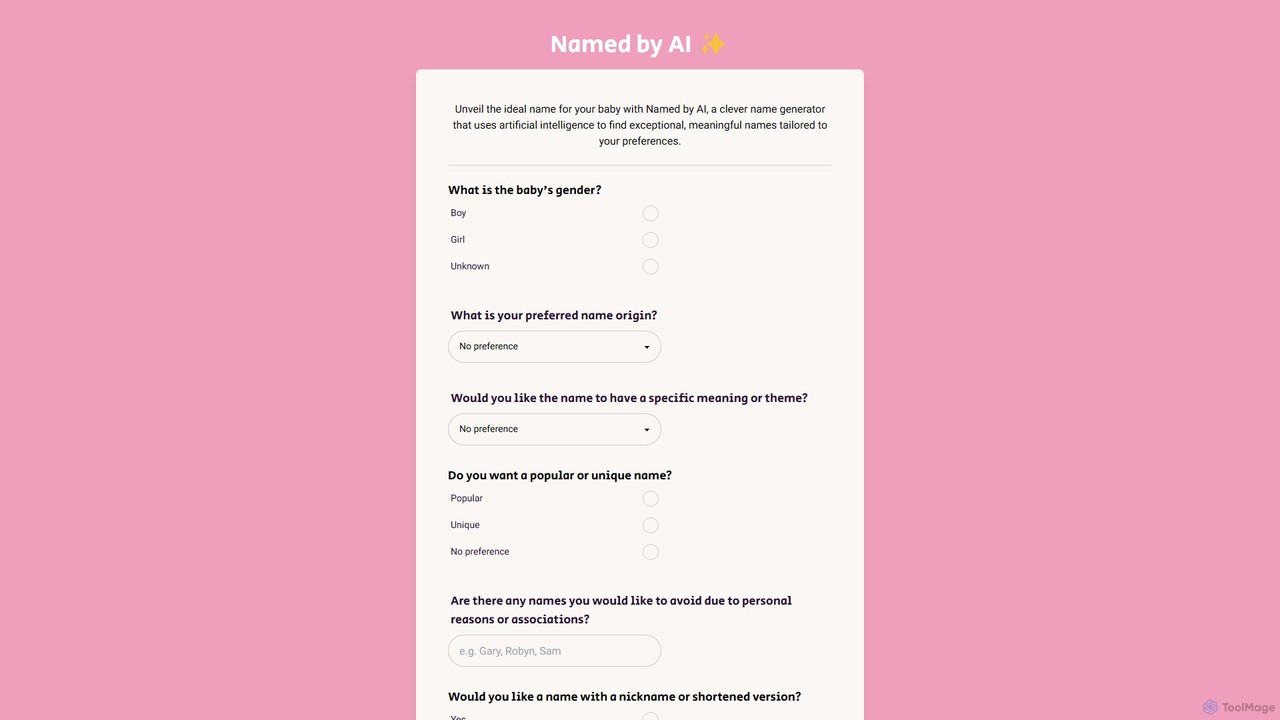
Named by AI is an intelligent name generator that uses AI to create unique and meaningful names for babies, pets, or characters. It offers personalized suggestions based on gender, origin, meaning, and popularity preferences.

Creative
Visits 10.2KFavorites 135Likes 125

About Character Naming

AI Character Naming tools are specialized applications that generate unique and fitting names for fictional characters. These tools leverage large language models and extensive databases of cultural, linguistic, and genre-specific names to produce relevant suggestions. They help writers, game developers, and creators overcome creative blocks by providing names that align with a character's background, personality, and the story's setting. This specificity saves significant research time and enhances the depth and authenticity of creative projects.

Core Features

  • Genre & Theme Filtering: Generates names suitable for specific genres like fantasy, sci-fi, historical, or modern settings.
  • Cultural & Linguistic Origin: Allows users to specify ethnic or linguistic roots (e.g., Japanese, Norse, Elvish) for authentic naming.
  • Trait-Based Suggestions: Provides names associated with particular character traits, such as 'brave', 'wise', or 'mysterious'.
  • Bulk Generation: Creates extensive lists of names, including first names, last names, and variations, for populating entire worlds.

Use Cases

These tools are primarily used by novelists crafting casts of characters, game developers designing non-player characters (NPCs), and screenwriters seeking memorable names for their scripts. They are also valuable for tabletop RPG players who need to create characters on the fly and for marketers developing brand personas.

How to Choose

When selecting a Character Naming tool, consider the depth of its name database and the variety of available filters (genre, culture, meaning). Evaluate its customization options, such as the ability to specify name length or phonetic structure. Also, assess the user interface for ease of use and features like saving or exporting generated name lists for future reference.

Character Naming use cases

1

Crafting Names for a Fantasy Novel

A fantasy author is building a world with distinct races like elves, dwarves, and orcs. Instead of spending hours researching linguistic patterns, they use an AI character naming tool. They select the 'fantasy' genre, then filter by 'elvish' origin to generate a list of ethereal first names. For dwarves, they choose a 'Norse' origin filter to get strong, guttural-sounding names. This process allows the author to quickly generate hundreds of culturally consistent names for their main cast and background characters, ensuring the world feels cohesive and authentic.

2

Populating a Sci-Fi Game with NPCs

A game development studio needs to name thousands of non-player characters (NPCs) for their upcoming open-world sci-fi RPG. Manually creating these names would be a monumental task. Using a character naming tool, the lead writer sets parameters for different alien species and human factions. For a warrior alien race, they generate names with harsh consonants. For a diplomatic human faction, they generate names from a mix of futuristic-sounding Earth cultures. The tool's bulk generation feature outputs CSV files of names, which are then directly imported into the game engine, saving hundreds of development hours.

3

Finding a Memorable Protagonist Name

A screenwriter is working on a modern thriller and needs a name for the protagonist that is both unique and evocative. They use a naming tool and input keywords related to the character's personality, such as 'resilient,' 'cunning,' and 'isolated.' The AI suggests names that have historical or etymological links to these concepts. The writer can then review a curated list of names with their meanings, helping them choose a name like 'Kaelan' (meaning 'slender' or 'mighty warrior') that subtly reinforces the character's traits to the audience without being overly obvious.

4

On-the-Fly Naming for Tabletop RPGs

A Game Master (GM) running a Dungeons & Dragons session has their players unexpectedly enter a tavern they hadn't planned for. The players start interacting with the bartender, a guard, and a mysterious stranger. To make the world feel alive, the GM needs names instantly. They quickly open a character naming app on their phone, select 'Medieval Fantasy' and 'Common Human,' and generate a few names. This allows them to seamlessly name the NPCs 'Boric,' 'Elara,' and 'Finn,' avoiding awkward pauses and maintaining immersion for the players.

5

Developing a Relatable Brand Persona

A marketing team is creating a new brand persona to represent their company in social media and customer communications. They need a name that sounds friendly, trustworthy, and modern. Using a character naming tool, they input these traits as keywords. They also set the origin to 'Modern American' to ensure cultural relevance. The tool generates a list of names like 'Alex Chen' or 'Maya Singh,' providing both first and last name combinations that feel authentic and approachable. This data-driven approach helps the team choose a name that resonates with their target audience, moving beyond simple brainstorming.

6

Ensuring Historical Accuracy in Fiction

An author writing a historical novel set in Victorian England needs names that are period-appropriate. Choosing a modern name would break the reader's immersion. They use a character naming tool and select the 'Historical' genre and '19th Century English' as filters. The AI accesses databases of historical records and literature to suggest authentic names like 'Arthur Covington' or 'Eleanor Ainsworth.' This saves the author from tedious manual research in census records or historical archives, while ensuring the names used in their story are accurate and believable for the time period.

Character Naming FAQ

What are AI Character Naming tools?

AI Character Naming tools are specialized software applications designed to generate names for fictional characters. Unlike simple random lists, they use AI, including natural language processing and large databases, to create names based on user-defined criteria such as genre (fantasy, sci-fi), cultural origin, time period, and even desired personality traits. Their primary purpose is to help writers, game developers, and other creators find meaningful and appropriate names quickly, saving research time and overcoming creative blocks.

How do I choose the right character naming tool?

To choose the right tool, consider these factors:

  • Database Depth: Does the tool offer a wide variety of cultures, languages, and genres? A tool with a larger, more diverse database will provide more authentic and unique options.
  • Customization & Filtering: Check for advanced filters like meaning, personality traits, name length, or phonetic style. The more control you have, the better you can tailor the results.
  • Ease of Use: The interface should be intuitive, allowing you to generate and manage lists of names efficiently.
  • Output Options: Look for features like the ability to save favorite names, create lists, and export them (e.g., as a CSV file) for use in other applications.
What's the difference between an AI name generator and a simple random name list?

The key difference is intelligence and context. A simple random name list pulls from a fixed, static database and combines elements randomly, often producing nonsensical or generic results. An AI Character Naming tool, on the other hand, uses algorithms to understand context. It can generate names that fit specific linguistic rules, cultural norms, and genre conventions. It can also associate names with meanings or traits, providing a much more sophisticated and useful result for creative projects that require depth and authenticity.

Who can benefit from using AI Character Naming tools?

A wide range of creators can benefit from these tools. This includes:

  • Authors and Novelists: For creating believable characters in any genre, from fantasy to historical fiction.
  • Game Developers: For populating their games with hundreds or thousands of unique NPCs.
  • Screenwriters: For finding catchy and meaningful names for film and television characters.
  • Tabletop RPG Players and Game Masters: For quickly generating names for player characters and NPCs during a game.
  • Marketers: For developing relatable brand personas and mascots.
Can these tools generate names with specific meanings?

Yes, many advanced AI Character Naming tools have this capability. They allow users to input keywords related to a desired meaning or character trait, such as 'brave,' 'light,' or 'sea.' The AI then searches its database for names that have etymological roots or historical associations with that concept. This feature is particularly useful for writers who want to use naming as a subtle form of characterization, embedding a character's core attributes directly into their name to add a layer of depth to their storytelling.