ToolMage
Sign in

Best 1 Citation Management AI tools for Writing

Popular Citation Management AI tools in Writing include CitationGenerator.ai, helping you work more efficiently.

CitationGenerator.ai
Freemium

CitationGenerator.ai

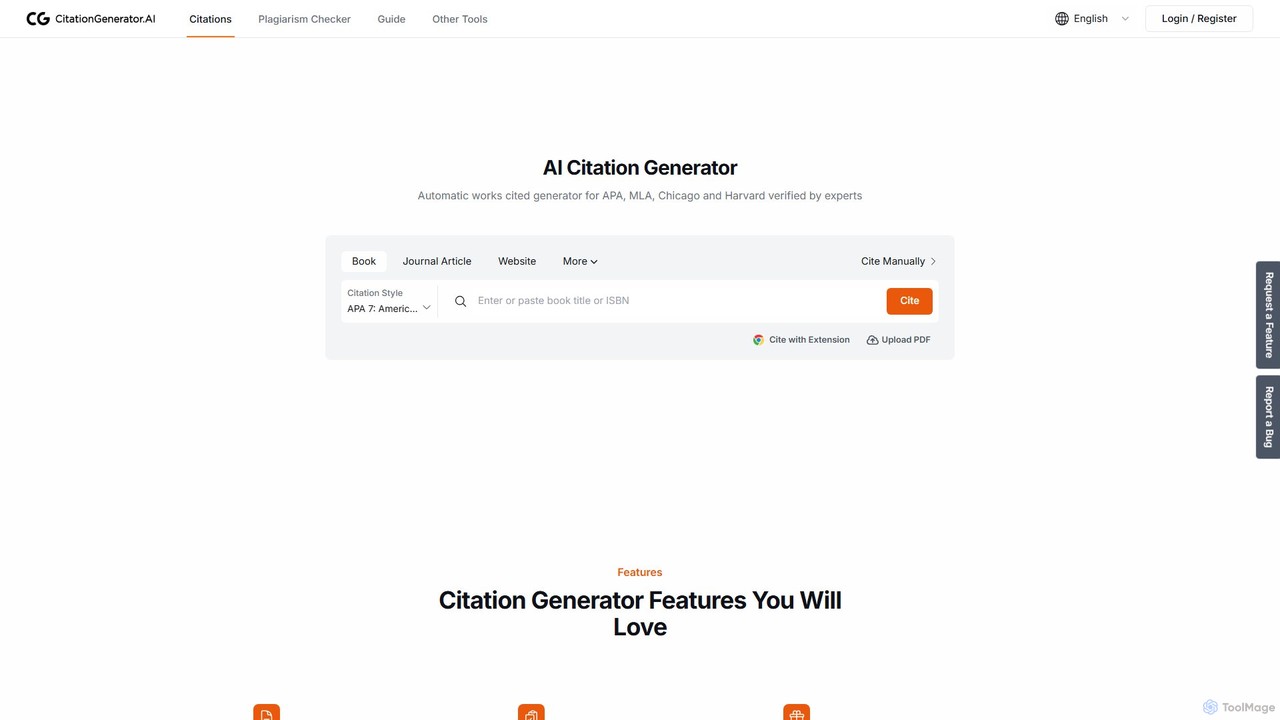
A powerful, free AI tool for students and researchers. Instantly generate accurate citations in APA, MLA, Chicago, and thousands of other styles. Features include an ad-free interface, a free plagiarism checker, multi-level folders for organization, and seamless import/export options. It's a comprehensive, user-friendly solution designed to enhance academic integrity and streamline the writing process without any hidden costs.

Academic Assistance
Visits 12.8KFavorites 143Likes 154

About Citation Management

Citation Management tools are AI-powered solutions designed to automate the process of creating, organizing, and formatting academic citations and bibliographies. These tools leverage artificial intelligence to identify citation elements from various sources, suggest appropriate formats, and ensure compliance with a wide array of academic style guides. They streamline research workflows, significantly reducing the manual effort and potential for errors in scholarly writing, making the entire writing process more efficient and accurate.

Core Features

  • Automatic Citation Generation: Instantly generate citations for books, articles, websites, and other sources in various styles (e.g., APA, MLA, Chicago).
  • Bibliography & Reference List Creation: Compile comprehensive and correctly formatted bibliographies or reference lists with ease.
  • Style Guide Compliance Checking: Automatically verify that citations and bibliographies adhere to specific academic style guidelines.
  • Reference Organization & Storage: Centralize and manage research sources, notes, and PDFs in an organized digital library.
  • Integration with Writing Tools: Seamlessly insert citations and bibliographies directly into word processors and other writing platforms.

Applicable Scenarios

These tools are indispensable for academic researchers, university students, and professional authors who regularly engage in scholarly writing. They are particularly useful when preparing theses, dissertations, journal articles, and research papers where precise and consistent citation is critical. By automating the tedious aspects of referencing, users can focus more on content creation and analysis.

How to Choose

When selecting an AI Citation Management tool, consider its support for required citation styles (e.g., APA, MLA, Chicago), integration capabilities with your preferred writing software (e.g., Word, Google Docs), and the accuracy of its AI-driven generation. Evaluate its reference organization features, ease of use, and whether it offers collaborative functionalities for team projects. Finally, assess its pricing model and customer support.

Citation Management use cases

1

Streamlining Citation for Academic Papers

University students and researchers can use AI citation management tools to automatically generate accurate in-text citations and reference lists for their research papers. By simply inputting source details or importing PDFs, the tool formats citations according to the required style (e.g., APA, MLA), saving hours of manual formatting and ensuring consistency across the entire document.

2

Ensuring Journal-Specific Citation Compliance

Authors submitting articles to academic journals often face strict and unique citation style requirements. AI citation management tools allow authors to quickly switch between different journal-specific styles, ensuring that every reference and bibliography entry precisely matches the target journal's guidelines, significantly increasing the chances of successful submission without formatting errors.

3

Managing Extensive References for Theses

Graduate students working on theses or dissertations typically manage hundreds of sources. These tools provide a centralized database to store, organize, and annotate all references. When writing, students can effortlessly insert citations and generate a comprehensive bibliography, maintaining accuracy and consistency throughout their lengthy academic work.

4

Facilitating Shared Reference Libraries in Teams

Research teams can leverage AI citation management platforms to create and share a common reference library. This ensures all team members have access to the same sources and can contribute to a unified bibliography. The tools help maintain consistency in citation styles across contributions, simplifying the final compilation and editing process for collaborative publications.

5

Organizing and Citing Sources for Literature Reviews

Researchers conducting extensive literature reviews need to efficiently organize and cite numerous articles, books, and reports. AI tools help categorize sources, add notes, and generate citations on the fly. This systematic approach ensures no critical source is missed and that the review is accurately referenced, forming a solid foundation for further research.

6

Verifying Proper Attribution and Avoiding Plagiarism

Beyond just formatting, AI citation management tools assist in proper attribution, which is crucial for avoiding unintentional plagiarism. By correctly tracking and citing all sources, writers can demonstrate academic integrity. Some tools even integrate with plagiarism checkers, providing an additional layer of verification to ensure all borrowed ideas are properly referenced.

Citation Management FAQ

What are AI Citation Management tools?

AI Citation Management tools are software applications that use artificial intelligence to automate the process of creating, organizing, and formatting academic citations and bibliographies. They are designed to help researchers, students, and authors manage their sources efficiently, ensuring accuracy and adherence to various academic style guides like APA, MLA, and Chicago. These tools significantly reduce the manual effort involved in referencing.

How do AI Citation Management tools work?

AI Citation Management tools typically work by allowing users to input source information (e.g., book ISBN, journal DOI, website URL) or upload source files (e.g., PDFs). The AI then identifies key bibliographic data (author, title, publication date, etc.) and, based on the selected citation style, automatically generates the correct in-text citation and bibliography entry. Many tools also offer features for organizing references, annotating sources, and integrating with word processors.

What are the key benefits of using AI Citation Management tools?

The primary benefits include significant time savings by automating tedious formatting tasks, enhanced accuracy by minimizing human error in citations, and ensuring consistency across all references in a document. They also help in adhering to specific academic style guidelines, facilitate better organization of research materials, and can aid in avoiding unintentional plagiarism by ensuring proper attribution of sources.

What is the difference between manual citation and AI citation management?

Manual citation involves individually typing out each citation and bibliography entry according to a specific style guide, which is time-consuming and prone to errors. AI citation management, on the other hand, automates this process. Users input source data once, and the AI tool generates and formats citations instantly, allowing for quick style changes and ensuring consistency. This automation drastically improves efficiency and accuracy compared to manual methods.

Who benefits most from using AI Citation Management tools?

Academic professionals, university students (especially those writing theses or dissertations), researchers, and authors who frequently engage in scholarly writing benefit most. Anyone who needs to manage a large volume of research sources, adhere to strict citation guidelines, or collaborate on academic projects will find these tools invaluable for maintaining accuracy, saving time, and streamlining their writing workflow.