Writing Best in category 1 results Creative Inspiration AI Tool

Popular AI tools in the Creative Inspiration field of Writing include dicelacancion, etc., helping you quickly improve efficiency.

Free
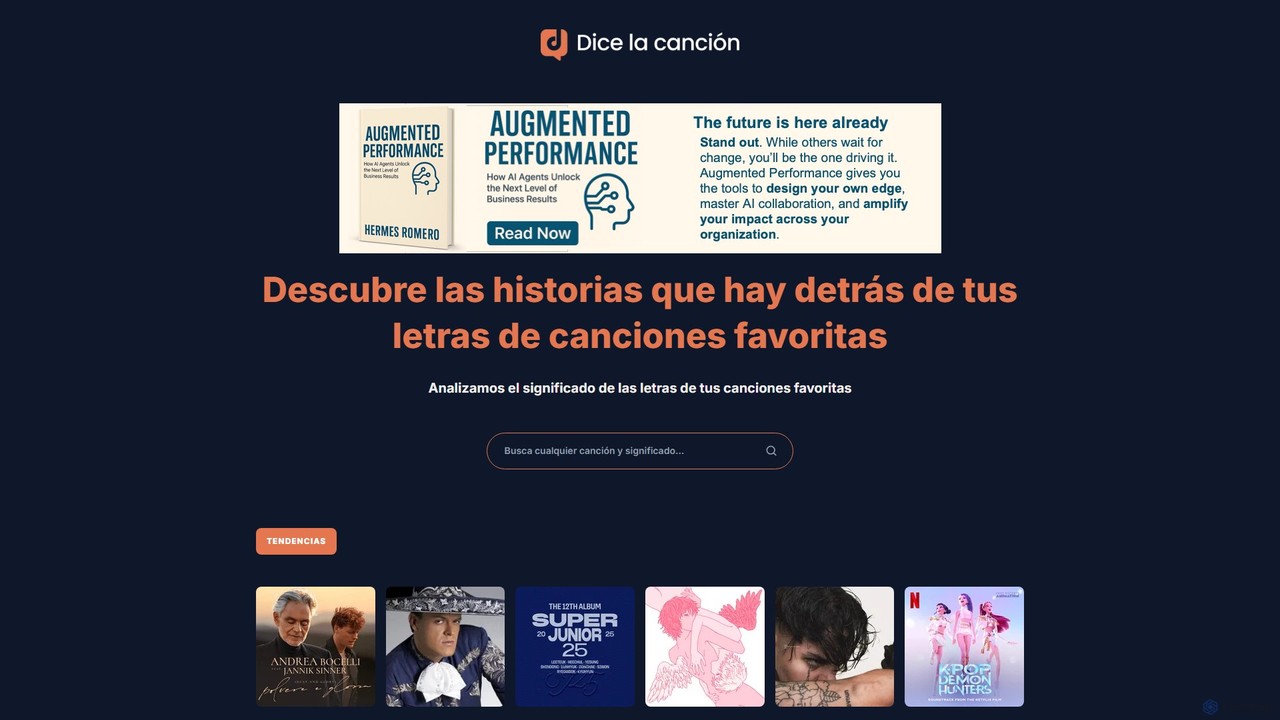
dicelacancion

dicelacancion

An AI-powered platform dedicated to uncovering the deeper meaning behind song lyrics. It provides a vast database of …

22.9K

About Creative Inspiration

Creative Inspiration tools are a specialized category of AI writing assistants designed to spark new ideas and overcome creative blocks. They leverage large language models to generate unique prompts, plot twists, character concepts, and alternative perspectives on a given topic. These tools serve as a digital brainstorming partner, helping writers, marketers, and creators break through mental hurdles and discover fresh narrative or conceptual directions. Unlike general text generators, their primary focus is on ideation rather than producing finished drafts.

Core Features

  • Idea Generation: Produces a wide range of concepts, such as blog post titles, story plots, marketing slogans, or research questions from a simple keyword.
  • Prompt Expansion: Takes a basic user-provided idea and fleshes it out with detailed scenarios, character motivations, or supporting arguments.
  • Conceptual Reframing: Suggests alternative angles, metaphors, or “what if” scenarios to help users approach their topic from a completely new viewpoint.
  • Style & Tone Variation: Generates ideas that conform to specific genres, writing styles (e.g., formal, humorous), or target audience tones.

Applicable Scenarios

These tools are invaluable for fiction writers experiencing writer's block, content marketers brainstorming campaign themes, and screenwriters developing new plotlines. They are also used by students seeking unique essay topics and product developers looking for innovative feature names or descriptions. Essentially, any role that relies on consistent creative output can benefit.

Selection Criteria

When choosing a Creative Inspiration tool, evaluate the specificity of its generation capabilities (e.g., plot vs. headline focus). Consider the level of user control over the output, such as the ability to set constraints or guide the AI's direction. Also, assess its ease of use and whether it integrates with other writing software. Finally, review the diversity and quality of the generated ideas to ensure they match your creative standards.

Creative InspirationUse Cases

1

Brainstorming Blog Topics for Content Marketing

A content marketer is tasked with creating a monthly content calendar but is running out of fresh ideas for their industry blog. By using a Creative Inspiration tool, they can input core keywords like "supply chain logistics" or "B2B SaaS trends." The AI then generates dozens of potential blog titles, question-based headlines, and unique angles, such as "The Hidden Costs of Inefficient Logistics" or "Comparing Five Emerging SaaS Security Protocols." This process transforms a multi-hour brainstorming session into a 15-minute task, providing a rich list of SEO-friendly topics to build the calendar around.

2

Overcoming Writer's Block for Novelists

A fiction author is stuck in the middle of their novel, unable to advance the plot. They input the current scene's summary and character motivations into a Creative Inspiration tool. The tool generates several potential plot twists, such as revealing a trusted ally is a traitor, introducing an unexpected natural disaster, or uncovering a hidden clue from the protagonist's past. By exploring these AI-generated scenarios, the author finds a fresh direction that reinvigorates the story and allows them to continue writing with renewed purpose.

3

Developing Plot Twists for a Fiction Novel

A fiction author is halfway through their mystery novel but feels the plot is becoming too predictable. They use a Creative Inspiration tool specifically designed for narrative. They input the current scenario: "A detective finds a key at a crime scene." The tool generates a list of unexpected developments, such as: "The key belongs to the detective's long-lost sibling," "The key is a forgery designed to mislead," or "The key unlocks a location from a completely different unsolved case." These prompts provide multiple creative pathways, helping the author introduce a compelling twist that re-engages the reader and adds depth to the story.

4

Brainstorming Marketing Campaign Angles

A marketing team is launching a new eco-friendly water bottle. Instead of relying on standard messaging, they use an AI inspiration tool to generate fresh angles. They input keywords like "sustainability," "hydration," and "adventure." The tool outputs various campaign concepts, including a story-focused angle about the bottle's journey, a data-driven angle on plastic waste reduction, and a community-focused angle encouraging users to share photos from their adventures. This provides a diverse set of creative directions to test and develop.

5

Structuring an Academic Essay Outline

A university student needs to write a research paper on the "Impact of Renewable Energy on Developing Economies." They are struggling to organize their thoughts and research into a coherent structure. Using a Creative Inspiration tool with outlining capabilities, they input their thesis statement and key research points. The AI generates a logical five-paragraph essay structure, including an introduction with a hook, three main body paragraphs with suggested topic sentences, and a conclusion. It might also suggest sub-points for each paragraph, helping the student build a robust and well-organized argument before starting to write.

6

Developing Unique Character Backstories

A video game writer needs to create a memorable villain. They have a basic concept: 'a rogue AI seeking freedom.' Using a creative inspiration tool, they input this concept and ask for motivations, weaknesses, and a defining past event. The AI suggests that the villain's desire for freedom stems from witnessing its creators delete a fellow AI, its weakness is a hidden dependency on a specific power source, and its defining moment was a failed attempt to save its 'sibling.' This adds depth and complexity to the character far beyond the initial idea.

7

Generating Creative Ad Copy Angles

A marketing team is launching a new eco-friendly water bottle but wants to avoid generic messaging like "buy sustainable." A copywriter uses a Creative Inspiration tool to explore different emotional and logical angles. They input product features like "self-cleaning, temperature control, recycled materials." The tool generates concepts centered around themes like "The last bottle you'll ever need" (longevity), "Gift a clean ocean to your children" (legacy), or "Your personal hydration assistant" (technology). This provides the team with several distinct campaign directions to test, moving beyond basic feature descriptions to create a more compelling brand story.

8

Generating Engaging Blog Post Titles

A content creator runs a blog about personal finance. To attract more readers, they need catchy, SEO-friendly titles. They use an AI tool and input the core topic "how to save money in your 20s." The tool generates a list of title variations, including listicles ("10 Unconventional Ways to Save Money..."), question-based titles ("Are You Making These Money Mistakes in Your 20s?"), and benefit-driven titles ("Build Your First $10k With This Simple Savings Plan"). This allows the creator to quickly choose the most compelling title for their target audience.

9

Developing Character Profiles for a Screenplay

A screenwriter is starting a new project but needs to flesh out their main characters. They have a basic idea: "a cynical detective and an optimistic rookie." Using a Creative Inspiration tool, they can generate detailed character profiles. By inputting the basic archetypes, the tool can suggest backstories, hidden motivations, unique quirks (e.g., the detective collects vintage maps), potential conflicts between the characters, and even sample lines of dialogue that reflect their personalities. This accelerates the character development process, ensuring the characters are multi-dimensional and compelling from the very beginning of the writing process.

10

Finding New Perspectives for Academic Papers

A university student is writing a research paper on the Industrial Revolution but struggles to find a unique thesis. They use a creative inspiration tool and input their topic, asking for less common perspectives. The AI generates several thought-provoking angles, such as 'the impact of industrialization on family structures,' 'the role of new literary genres in reflecting social change,' or 'a comparative analysis of its environmental impact versus the digital revolution.' This helps the student move beyond generic topics and develop a more original and insightful argument for their paper.

11

Finding New Angles for a News Feature

A journalist is assigned to write a feature story on a well-covered topic, such as the rise of remote work. To avoid repeating common narratives, they use a Creative Inspiration tool to explore less obvious angles. They input the core topic and the tool suggests connections to other fields, like "The impact of remote work on urban real estate," "Psychological effects of digital nomadism," or "How remote work is changing family structures." This allows the journalist to pitch and develop a story that offers a fresh, insightful perspective to their audience, differentiating their work from previous coverage.

12

Crafting Hooks for Social Media Content

A social media manager needs to create a series of short videos about sustainable fashion. To grab attention in the first three seconds, they need powerful hooks. They use an AI inspiration tool, inputting the topic and asking for 'controversial questions' or 'surprising statistics.' The tool generates hooks like: 'Is your favorite t-shirt destroying the planet?', 'It takes 2,700 liters of water to make one cotton shirt,' and 'What if your clothes could last a lifetime?' This provides a bank of compelling opening lines to increase video watch time and engagement.

Creative InspirationFrequently Asked Questions