PlayPhrase.me
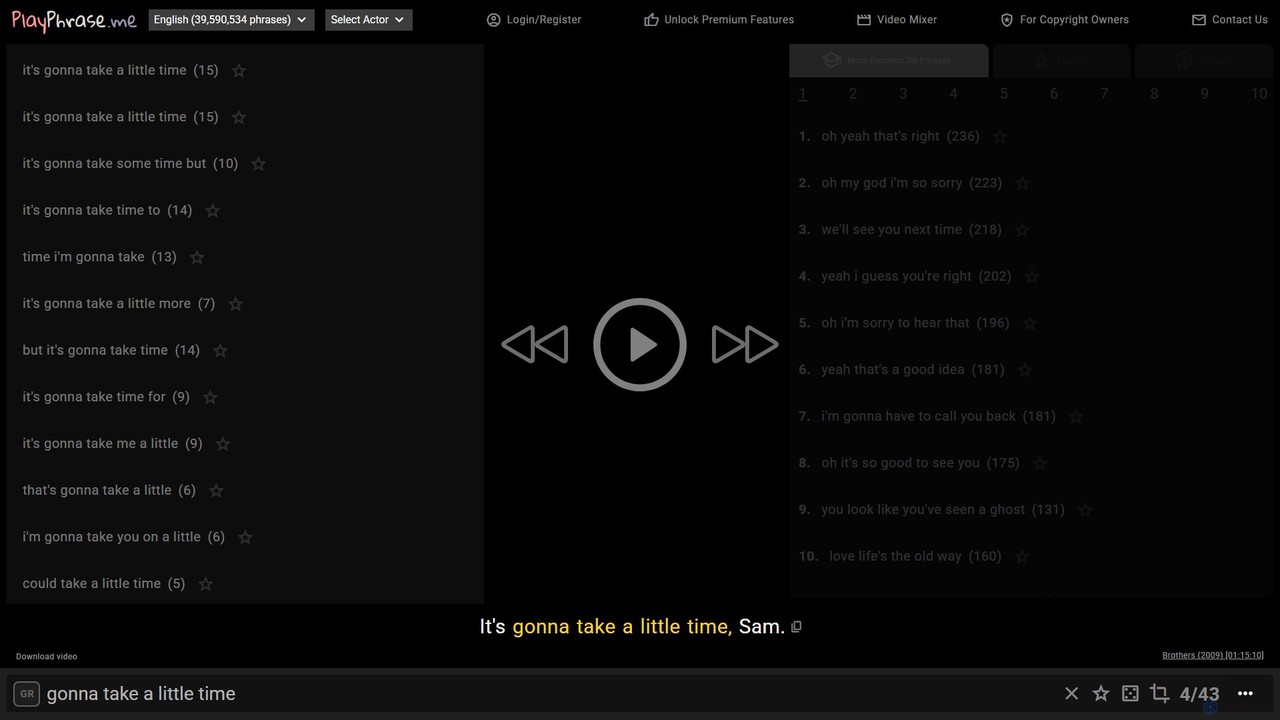
A powerful video search engine for finding specific phrases and dialogue in movies and TV shows. Ideal for …
A powerful video search engine for finding specific phrases and dialogue in movies and TV shows. Ideal for language learners, writers, and content creators to see words used in real-world context.
About Dialogue
AI Dialogue tools are a specialized category of writing assistants designed to generate, refine, and analyze conversations for creative works. These tools utilize language models trained on vast libraries of scripts, novels, and plays to produce character-consistent and contextually relevant dialogue. They help writers enhance narrative flow, develop distinct character voices, and overcome creative blocks in crafting believable interactions. This focus on narrative function distinguishes them from general-purpose chatbots.
Core Features
- Character Voice Consistency: Maintains a unique speaking style, vocabulary, and tone for each character throughout a script or story.
- Context-Aware Suggestions: Generates dialogue options that align with the plot, scene setting, and emotional state of the characters.
- Subtext and Pacing Analysis: Provides insights into the underlying meaning and rhythm of a conversation to improve its dramatic impact.
- Formatting Automation: Automatically formats dialogue according to industry standards for screenplays, stage plays, or other specific layouts.
- Interactive Brainstorming: Acts as a creative partner, allowing writers to explore different conversational paths and scenarios.
Use Cases
These tools are primarily used by screenwriters, novelists, playwrights, and video game narrative designers. For instance, a screenwriter can use them to quickly draft alternative lines for a difficult scene, while a novelist can ensure a new character's speech pattern remains consistent. Game developers also leverage them to create extensive and varied dialogue trees for non-player characters (NPCs).
How to Choose
When selecting an AI Dialogue tool, consider its ability to manage and recall character profiles. Evaluate the quality and creativity of its suggestions for your specific genre (e.g., comedy, drama, sci-fi). Check for integrations with popular writing software like Final Draft or Scrivener, and assess the user interface for ease of use in managing complex conversations and character interactions.

DialogueUse Cases
Drafting Screenplay Scenes
A screenwriter working on a thriller film is struggling with a tense interrogation scene. Using an AI Dialogue tool, they input the scene's context, the detective's cynical personality, and the suspect's nervous demeanor. The tool generates several versions of the back-and-forth, exploring different questioning tactics and evasive answers. This process not only provides strong dialogue options but also helps the writer refine the scene's pacing and escalate the tension, saving hours of brainstorming.
Developing Unique Character Voices in a Novel
A fantasy novelist is introducing a new character from a remote mountain clan. To ensure this character's dialogue feels authentic and distinct, the author inputs key traits into an AI tool: 'proud,' 'speaks in short, direct sentences,' 'uses nature-based metaphors.' The AI generates sample lines of dialogue that reflect these traits. The author can then refine these suggestions to build a consistent and memorable voice, ensuring the new character stands out from the existing cast.
Generating Branching Dialogue for Video Games
A narrative designer for an RPG needs to create a complex dialogue tree for a key non-player character (NPC). The player's choices should lead to different outcomes. The designer outlines the main branches ('friendly,' 'hostile,' 'inquisitive') in an AI Dialogue tool. The tool then populates each path with appropriate lines, questions, and responses, maintaining the NPC's established personality. This automates the creation of hundreds of potential dialogue lines, allowing the designer to focus on the core narrative structure and choice impact.
Polishing Dialogue for a Stage Play
A playwright has a completed draft but feels the dialogue in a key scene lacks rhythm and subtext. They use an AI tool to analyze the conversation's flow. The tool highlights repetitive phrasing and suggests alternative wording that implies hidden emotions or motives. It might propose shortening lines to increase pace or adding a strategic pause. This analytical feedback helps the playwright refine the dialogue to be more impactful when spoken aloud by actors on stage.
Creating Realistic Training Scenarios
An instructional designer is creating an e-learning module for customer service training. They need to build a simulation where trainees interact with an angry customer. Using an AI Dialogue tool, the designer sets the customer's personality to 'irate but reasonable' and defines the support agent's goal. The tool generates a realistic conversation flow, including common complaints, escalations, and potential de-escalation phrases. This allows for the creation of an interactive and effective role-playing exercise without having to manually script every possible interaction.
Overcoming Writer's Block for Dialogue
A fiction writer is stuck on a scene where two old friends reunite after many years. The conversation feels stiff and unnatural. The writer uses an AI Dialogue tool as a brainstorming partner, inputting the characters' shared history and current emotional states (e.g., one is successful, the other is struggling). The tool provides several opening lines and conversational topics, from awkward small talk to direct emotional questions. This spark of inspiration helps the writer break through the block and find a natural, emotionally resonant direction for the scene.