ToolMage
Sign in

Best 2 Literature Review AI tools for Writing

Popular Literature Review AI tools in Writing include Undermind and Base, helping you work more efficiently.

Base
Freemium

Base

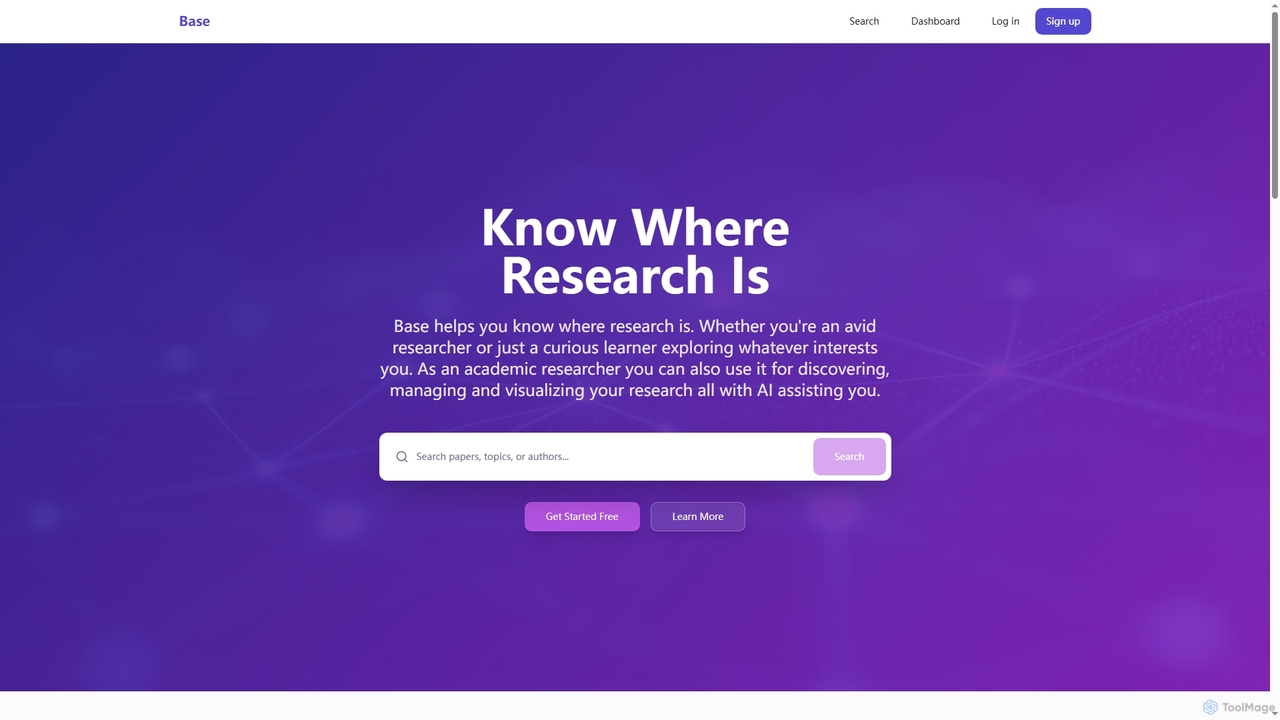
Base is an AI-powered research platform for academics and learners. It enables searching over 240 million papers, visualizing research landscapes with interactive graphs, organizing findings, and using an AI chat to uncover deeper insights from credible sources.

Academic
Visits 12.2KFavorites 121Likes 126
Undermind
Freemium

Undermind

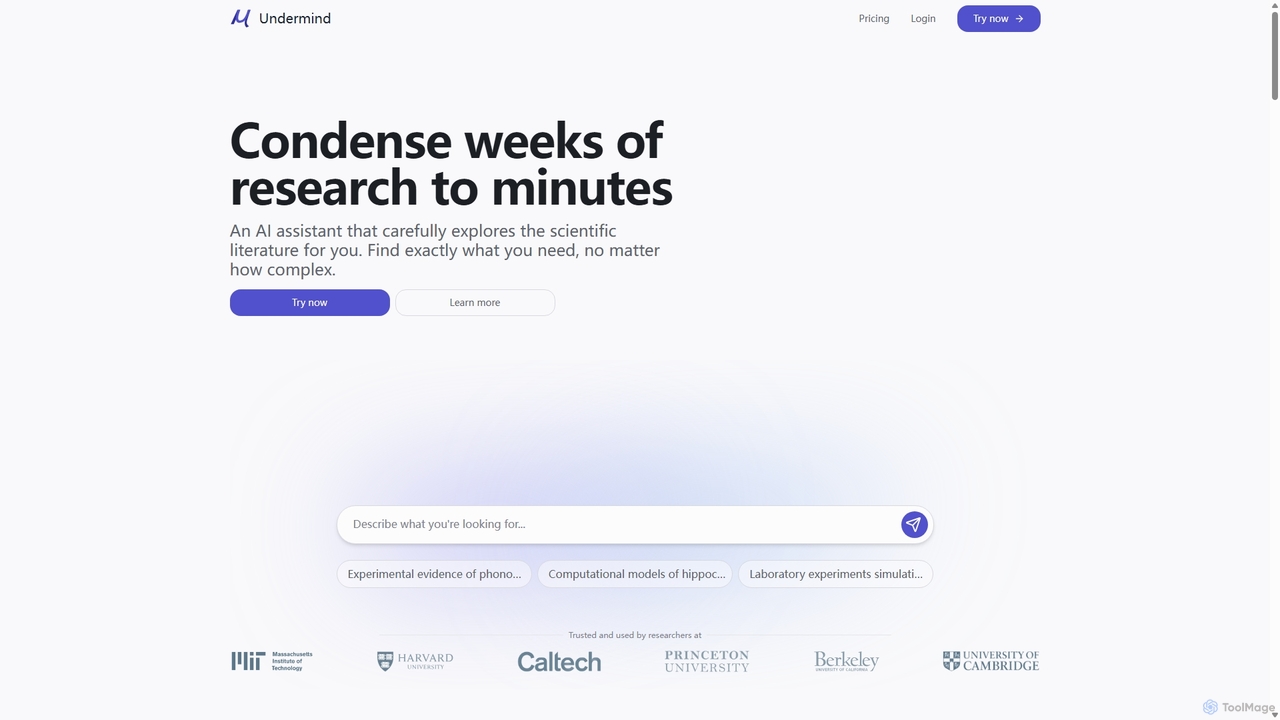
An AI-powered research assistant designed for scientists and academics. It automates literature reviews by exploring thousands of scientific papers, traversing citation graphs, and synthesizing information. Undermind condenses weeks of research into minutes, helping users assess novelty, identify gaps, and uncover cross-disciplinary insights with verifiable, citation-backed responses.

Academic
Visits 331.2KFavorites 107Likes 109

About Literature Review

AI Literature Review tools are specialized applications designed to automate and streamline the process of surveying, synthesizing, and writing academic literature reviews. They leverage natural language processing (NLP) to analyze vast collections of research papers, identifying key themes, findings, and connections. These tools significantly accelerate the research process, helping academics and students quickly grasp the state-of-the-art in their field. They move beyond simple search, offering deep analytical capabilities to structure complex information.

Core Features

  • Automated Paper Discovery: Connects to academic databases to find and filter relevant research papers based on keywords and concepts.
  • Thematic Analysis & Synthesis: Automatically groups papers by common themes, extracts key arguments, and helps generate synthesized summaries.
  • Citation Network Visualization: Maps the citation relationships between papers to identify influential works and research trends.
  • Draft Generation Assistance: Helps create structured outlines and initial draft paragraphs based on the analyzed literature.
  • Reference Management Integration: Works with citation managers and automatically formats bibliographies in various academic styles.

Use Cases

These tools are primarily used by PhD students, academic researchers, and R&D professionals. They are essential for tasks such as writing thesis chapters, preparing review articles for journals, conducting systematic reviews in medicine, and performing technology landscape analysis before initiating new projects.

How to Choose

When selecting a tool, consider its integration with academic databases relevant to your field (e.g., PubMed, Scopus). Evaluate the depth of its analytical features—does it offer thematic synthesis or just summarization? Also, check for compatibility with your writing software (Word, LaTeX) and reference managers, and assess the user interface's capacity to handle large volumes of papers.

Literature Review use cases

1

Accelerate PhD Thesis Literature Review

A doctoral candidate needs to write the literature review chapter for their dissertation, involving over 300 papers. Using an AI Literature Review tool, they upload all papers, and the system automatically categorizes them by sub-topic, extracts methodologies, and identifies research gaps. The tool generates an interactive mind map of themes, allowing the candidate to visually explore connections. This reduces manual reading and note-taking time by an estimated 70%, enabling them to focus on critical analysis and synthesizing a compelling narrative for their research.

2

Conduct a Systematic Review for Medical Research

A team of clinical researchers is conducting a systematic review on the efficacy of a new treatment. An AI Literature Review tool helps automate the screening process by applying inclusion/exclusion criteria to thousands of abstracts. It then extracts key data points like patient demographics, intervention details, and outcomes into a structured table. This ensures a transparent and reproducible methodology, significantly reducing the risk of human error and speeding up the process of evidence synthesis for publication.

3

Prepare a State-of-the-Art Review Article

An established professor is invited to write a review article for a leading academic journal. To cover the last decade of research comprehensively, they use an AI tool to analyze thousands of publications. The tool's citation network analysis feature identifies the most influential papers and emerging research fronts. It also generates summaries for different thematic clusters, which serve as the foundational blocks for the article's sections. This allows the professor to draft a high-quality, comprehensive review in weeks instead of months.

4

Perform Competitive Technology Intelligence

An R&D manager at a tech company needs to assess the latest advancements in a specific field before allocating budget. They use an AI Literature Review tool to scan academic papers and patent databases. The tool identifies key research groups, emerging material compositions, and performance benchmarks reported in the literature. It generates a summary report highlighting trends and white spaces, providing the manager with the critical intelligence needed to make an informed, strategic investment decision.

5

Streamline Grant Proposal Writing

A research scientist is writing a grant proposal for a funding agency. A crucial part is demonstrating the novelty of the proposed work by situating it within the current body of knowledge. The scientist uses an AI tool to quickly map out the existing literature, identify unresolved questions, and find supporting evidence for their hypothesis. The tool helps generate concise summaries and a formatted bibliography, strengthening the proposal's background section and increasing its chances of being funded.

6

Create Annotated Bibliographies for Coursework

A graduate student is assigned to create an annotated bibliography for a seminar, requiring them to summarize and critically evaluate 50 key texts. The student uses an AI Literature Review tool to get initial summaries for each source, highlighting the main arguments and methodologies. This provides a solid first draft for each annotation, which the student then refines with their own critical analysis. The tool's ability to manage sources and export in APA style saves significant time on formatting and organization.

Literature Review FAQ

What are AI Literature Review tools?

AI Literature Review tools are software applications that use artificial intelligence to help researchers find, analyze, and synthesize academic literature. Unlike simple search engines, they can understand the content of papers, identify themes, summarize findings, and map connections between studies. Their primary goal is to accelerate the traditionally time-consuming process of conducting a comprehensive literature review for academic papers or theses.

How do I choose the right AI Literature Review tool?

Choosing the right tool depends on your specific needs. Consider these factors:

  • Database Access: Ensure it connects to the primary academic databases in your field (e.g., PubMed, Scopus).
  • Analytical Depth: Determine if you need simple summarization or more advanced features like thematic analysis and research gap identification.
  • Workflow Integration: Check for compatibility with your reference managers (Zotero, Mendeley) and writing software (Word, LaTeX).
  • Collaboration: If you work in a team, look for features that support collaborative annotation and review.
What's the difference between an AI Literature Review tool and a reference manager?

A reference manager (like Zotero) is primarily for organizing sources, storing PDFs, and formatting citations. An AI Literature Review tool does much more. It actively analyzes the content of your sources to help you understand the research landscape. While a reference manager stores your library, an AI Literature Review tool reads it, synthesizes it, and helps you write about it by identifying themes and summarizing articles.

What are the key features of AI Literature Review tools?

Most AI Literature Review tools offer a combination of powerful features. Key functions include: automated search and screening of papers from multiple databases, AI-powered summarization of articles, thematic analysis to group similar papers, visualization of citation networks to find seminal works, and assistance in drafting the review with structured outlines and synthesized text. Many also integrate directly with reference managers.

Who can benefit from using AI Literature Review tools?

These tools are valuable for anyone engaged in research-intensive writing. The primary users are graduate students (Masters and PhD) working on theses, academic researchers writing papers, and scientists in corporate R&D departments. Additionally, medical professionals performing systematic reviews, policy analysts, and grant writers can use these tools to efficiently process large volumes of information and build a strong evidence-based foundation for their work.