ToolMage
Sign in

Best 1 Paraphrasing Tool for Writing

Popular Paraphrasing Tool in Writing include fastessay, helping you work more efficiently.

fastessay
Freemium

fastessay

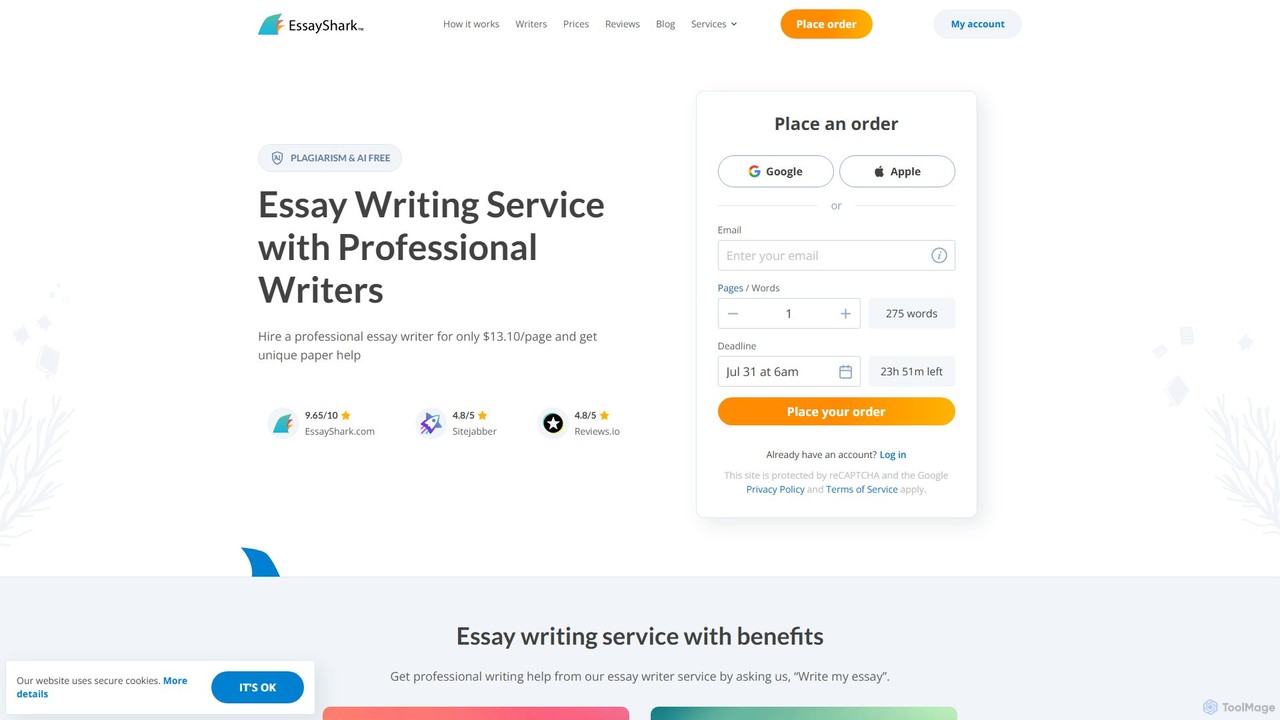
fastessay is a comprehensive academic writing platform that combines free AI-powered tools with a marketplace of expert human writers. It offers solutions for every stage of the writing process, from generating ideas and thesis statements with AI to receiving custom-written, edited, and proofread essays from subject-matter specialists. The platform is designed to help students save time, improve their grades, and ensure the originality and quality of their academic work.

Academic Assistance
Visits 68.3KFavorites 139Likes 114

About Paraphrasing Tool

Paraphrasing tools are AI-powered applications designed to rephrase existing text while preserving its original meaning. Leveraging advanced natural language processing (NLP) algorithms, these tools analyze input text and generate alternative versions with different vocabulary, sentence structures, and stylistic nuances. They are invaluable for enhancing clarity, avoiding plagiarism, and adapting content for various audiences within the broader field of writing.

Core Features

  • Text Rewriting: Generates multiple alternative versions of sentences, paragraphs, or entire articles.
  • Plagiarism Checking: Often integrated with plagiarism detection to ensure originality of rewritten content.
  • Style and Tone Adjustment: Allows users to modify the output's tone (e.g., formal, casual, academic) and writing style.
  • Vocabulary Enhancement: Suggests synonyms and alternative phrasing to enrich language and improve readability.
  • Grammar and Spelling Correction: Automatically identifies and corrects grammatical errors and typos during the rewriting process.

Use Cases

Paraphrasing tools are widely used across various sectors. Students utilize them to rephrase research material for assignments, ensuring originality and understanding. Content creators employ them to quickly generate variations of articles or social media posts, maintaining message consistency while avoiding repetitive phrasing. Business professionals use them to refine reports, emails, or presentations, making complex information more accessible and engaging for diverse audiences.

How to Choose

When selecting a paraphrasing tool, consider its accuracy in preserving original meaning, the variety and quality of rewriting options it offers, and its integration capabilities with other writing platforms. Evaluate its plagiarism detection features, the flexibility of style and tone adjustments, and the supported languages. User interface, pricing model, and customer support are also crucial factors for a seamless and productive experience.

Paraphrasing Tool use cases

1

Enhancing Academic Papers for Originality

Students and researchers often need to cite sources while presenting information in their own words to avoid plagiarism. A paraphrasing tool allows them to input excerpts from academic articles or books and generate unique rephrased versions. This helps in integrating research effectively into essays, theses, and dissertations, ensuring the content is original, well-understood, and adheres to academic integrity standards, saving significant time compared to manual rewriting.

2

Generating Diverse Marketing Copy Variations

Marketing professionals frequently require multiple versions of ad copy, social media posts, or product descriptions for A/B testing or targeting different demographics. Instead of manually crafting each variant, a paraphrasing tool can take an initial piece of copy and quickly produce several distinct yet semantically equivalent options. This accelerates content production, allows for broader campaign testing, and helps maintain a fresh voice across various marketing channels.

3

Improving Readability of Technical Documentation

Technical writers and engineers often produce complex documentation that needs to be accessible to a wider audience, including non-technical users. By using a paraphrasing tool, dense technical jargon and convoluted sentences can be transformed into clearer, simpler language without losing accuracy. This ensures that user manuals, guides, and internal reports are easily understood, reducing support queries and improving user satisfaction.

4

Overcoming Writer's Block in Content Creation

Content creators, bloggers, and journalists sometimes face writer's block or struggle to find new ways to express familiar ideas. A paraphrasing tool can act as a creative assistant, taking an existing draft or even a few bullet points and offering fresh perspectives and alternative phrasings. This helps to jumpstart the writing process, generate new ideas, and overcome creative hurdles, leading to more diverse and engaging content.

5

Localizing Content for International Audiences

Businesses expanding globally need to adapt their content to resonate with different cultural and linguistic nuances. While translation tools convert language, paraphrasing tools can refine translated text to sound more natural and culturally appropriate for specific regions. This ensures that marketing materials, website content, and communications are not just accurately translated but also effectively localized, enhancing engagement with international customers.

6

Summarizing and Condensing Long Documents

Professionals in various fields, such as legal, finance, or journalism, often deal with lengthy reports, contracts, or news articles. While dedicated summarization tools exist, paraphrasing tools can also be used to condense key information into shorter, more digestible paragraphs while maintaining coherence. This helps in quickly grasping the essence of long documents, preparing executive summaries, or extracting critical points for presentations, saving valuable reading time.

Paraphrasing Tool FAQ

What are Paraphrasing Tools?

Paraphrasing tools are AI-powered software designed to rewrite text, changing its wording and sentence structure while preserving the original meaning. They utilize natural language processing (NLP) to analyze input and generate unique alternative versions. These tools are commonly used to enhance clarity, avoid accidental plagiarism, and adapt content for different audiences, making them valuable assets in the writing process.

How do Paraphrasing Tools work?

Paraphrasing tools typically work by employing advanced AI algorithms, including natural language processing (NLP) and machine learning. When you input text, the tool first analyzes its semantic meaning and grammatical structure. It then identifies synonyms, reorders phrases, and reconstructs sentences to create new variations. Some tools also offer options to adjust the tone, style, or complexity of the output, providing diverse rewriting possibilities.

What are the benefits of using a Paraphrasing Tool?

Using a paraphrasing tool offers several key benefits. It helps users avoid plagiarism by generating original versions of existing text, crucial for academic and professional writing. These tools can also improve content clarity and readability by simplifying complex sentences or enriching vocabulary. Additionally, they save significant time in content creation, help overcome writer's block, and allow for quick generation of multiple content variations for marketing or different audiences.

How to choose the best Paraphrasing Tool for my needs?

To choose the best paraphrasing tool, consider several factors. Evaluate its accuracy in maintaining the original meaning and the quality of its output, looking for natural-sounding rephrased text. Check for features like style/tone adjustment, plagiarism detection integration, and supported languages. User interface, ease of use, pricing, and customer support are also important. Free versions or trials can help you assess if a tool meets your specific writing requirements.

Can Paraphrasing Tools help avoid plagiarism?

Yes, paraphrasing tools can be a valuable aid in avoiding plagiarism, but they should be used responsibly. Their primary function is to rephrase text, which helps in presenting information from sources in your own words. However, it's crucial to always review the output to ensure it accurately reflects the original meaning and to properly cite your sources. Relying solely on a tool without critical review can still lead to unintentional plagiarism if the meaning is distorted or sources are not credited.