Tadween
Tadween is an AI-powered platform that transforms your career data, such as resumes and work diaries, into tailored, …
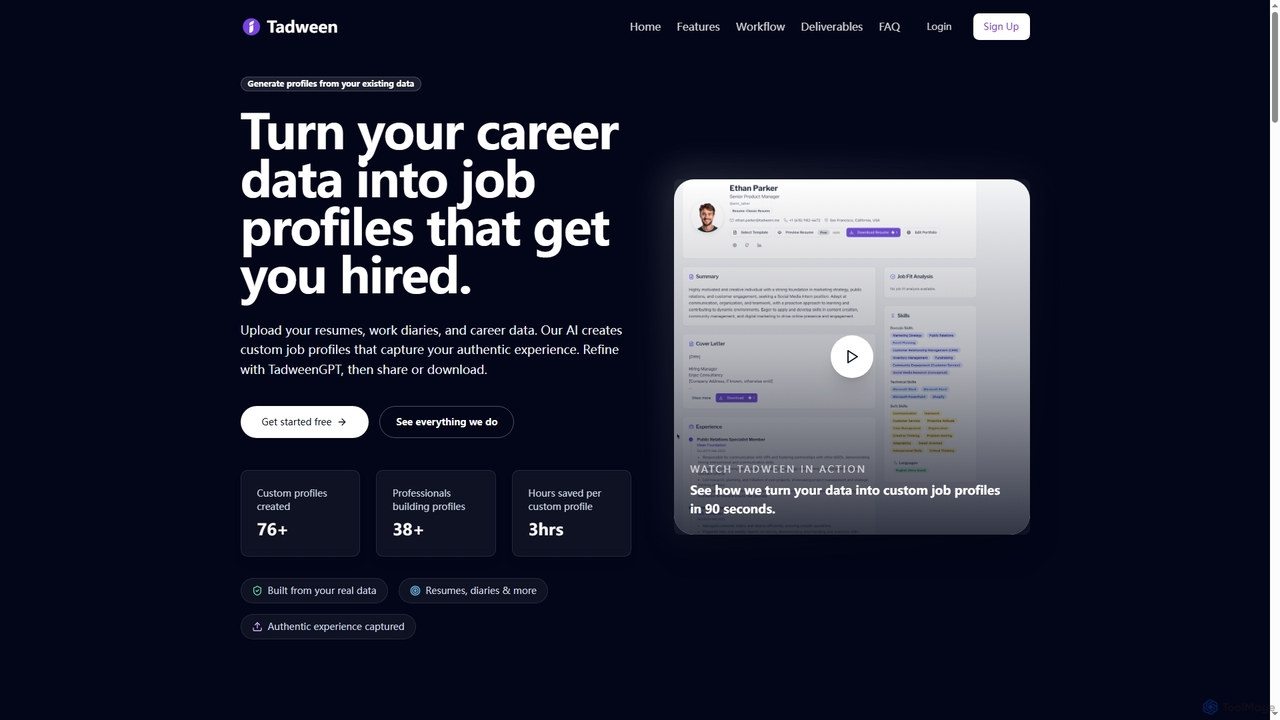
Tadween is an AI-powered platform that transforms your career data, such as resumes and work diaries, into tailored, professional job profiles. It features an AI assistant, TadweenGPT, to help you refine content, and allows you to download ATS-optimized resumes or share public profiles with custom URLs.
About Personalized Content
Personalized Content tools are a specialized category of AI writing assistants that generate or adapt text based on specific user data and behavior. These tools analyze inputs such as demographics, purchase history, and browsing activity to create highly relevant and individualized messages. The primary value lies in transforming generic communication into a one-to-one conversation, significantly boosting engagement, conversion rates, and customer loyalty. They are essential for creating dynamic experiences across various digital channels.
Core Features
- Data Integration: Connects with CRMs, analytics platforms, and user databases to access audience data.
- Dynamic Variable Insertion: Automatically populates text with user-specific details like names, locations, or recently viewed items.
- Audience Segmentation Logic: Creates distinct content variations tailored to different predefined user groups.
- Behavioral Triggering: Generates content in real-time based on user actions, such as cart abandonment or repeat visits.
- Content Performance Analytics: Provides insights into how different personalized versions perform, enabling continuous optimization.
Applicable Scenarios
These tools are widely used in e-commerce, digital marketing, and customer relationship management. For instance, an online retailer can use them to generate personalized product recommendations in emails. A SaaS company can tailor landing page content based on the visitor's industry. Customer support teams can draft more empathetic and context-aware responses by leveraging a customer's interaction history.
Selection Criteria
When choosing a Personalized Content tool, evaluate its integration capabilities with your existing tech stack (e.g., CRM, email platform). Assess the depth of personalization it offers—from simple name insertion to complex behavioral logic. Consider the supported channels (web, email, mobile), scalability for your audience size, and adherence to data privacy regulations like GDPR and CCPA.

Personalized ContentUse Cases
Dynamic Email Marketing Campaigns
An email marketer for an e-commerce brand needs to increase click-through rates for their weekly promotional campaigns. Instead of sending a generic newsletter, they use a personalized content tool integrated with their CRM. The tool analyzes each recipient's past purchase history and browsing behavior to dynamically insert recommended products, use their first name in the greeting, and even tailor the subject line. This results in emails that feel like a one-to-one recommendation, leading to higher engagement and a measurable lift in conversions.
Tailoring Website Landing Pages
A SaaS company runs targeted ad campaigns on different platforms (e.g., LinkedIn for enterprise clients, Facebook for small businesses). A digital marketer uses a personalized content tool to create dynamic landing pages. The tool detects the referral source of a visitor and automatically adjusts the headline, customer testimonials, and call-to-action (CTA) to match the ad they clicked. A visitor from LinkedIn sees enterprise-focused language and case studies, while a visitor from Facebook sees content tailored to small business needs. This alignment between ad and landing page significantly improves conversion rates.
Personalized In-App User Onboarding
A product manager for a mobile application wants to improve user retention during the critical first-week onboarding phase. They implement a personalized content tool that customizes the in-app messages and tutorials based on the user's role (e.g., 'Admin' vs. 'Standard User') selected during sign-up. The tool guides each user type through the most relevant features for their needs. For example, an 'Admin' user is shown how to invite team members, while a 'Standard User' is shown how to complete their first task. This tailored guidance helps users find value faster, reducing churn.
Automated Personalized Customer Support Replies
A customer support manager aims to reduce response times while maintaining a high quality of service. They integrate a personalized content tool with their help desk software. When a support ticket is created, the tool analyzes the customer's history (e.g., previous tickets, subscription plan) and the content of their query. It then generates a draft reply that is context-aware and personalized. For example, it can reference a previous issue or acknowledge their loyalty as a long-term customer. This allows support agents to quickly edit and send highly relevant responses, improving both efficiency and customer satisfaction.
Generating Personalized Social Media Ad Copy
A social media manager is tasked with creating ad variations for a campaign targeting multiple audience segments. Manually writing unique copy for each segment is time-consuming. By using a personalized content tool, they can define audience profiles based on demographics, interests, and location. The AI then generates dozens of ad copy variations, each tailored with language and offers that resonate with a specific segment. For example, a younger audience might see a more casual tone and a student discount, while an older audience sees copy focused on quality and durability. This automates the creation of hyper-targeted ads, improving ad relevance and return on ad spend (ROAS).
Crafting Personalized Sales Outreach Sequences
A sales development representative (SDR) needs to engage with hundreds of prospects weekly. Generic outreach emails have low response rates. The SDR uses a personalized content tool that integrates with LinkedIn and their CRM. The tool scans a prospect's profile for details like their role, recent posts, or company news. It then generates a multi-step email sequence where each message is personalized with these specific data points, creating a relevant and non-generic opening. This approach significantly increases the likelihood of getting a reply and booking a meeting, making the SDR's outreach efforts more effective.