Writing Best in category 6 results Prompting AI Tool

Popular AI tools in the Prompting field of Writing include PulsarChat、foku、Learn Prompting Pro、PromptVisor、Promptsion、geminivsgpt, etc., helping you quickly improve efficiency.

Learn Prompting Pro

Learn Prompting Pro

Learn Prompting Pro is a comprehensive online course designed to master AI prompting with GPT-4. It equips users …

2.5K
PulsarChat

PulsarChat

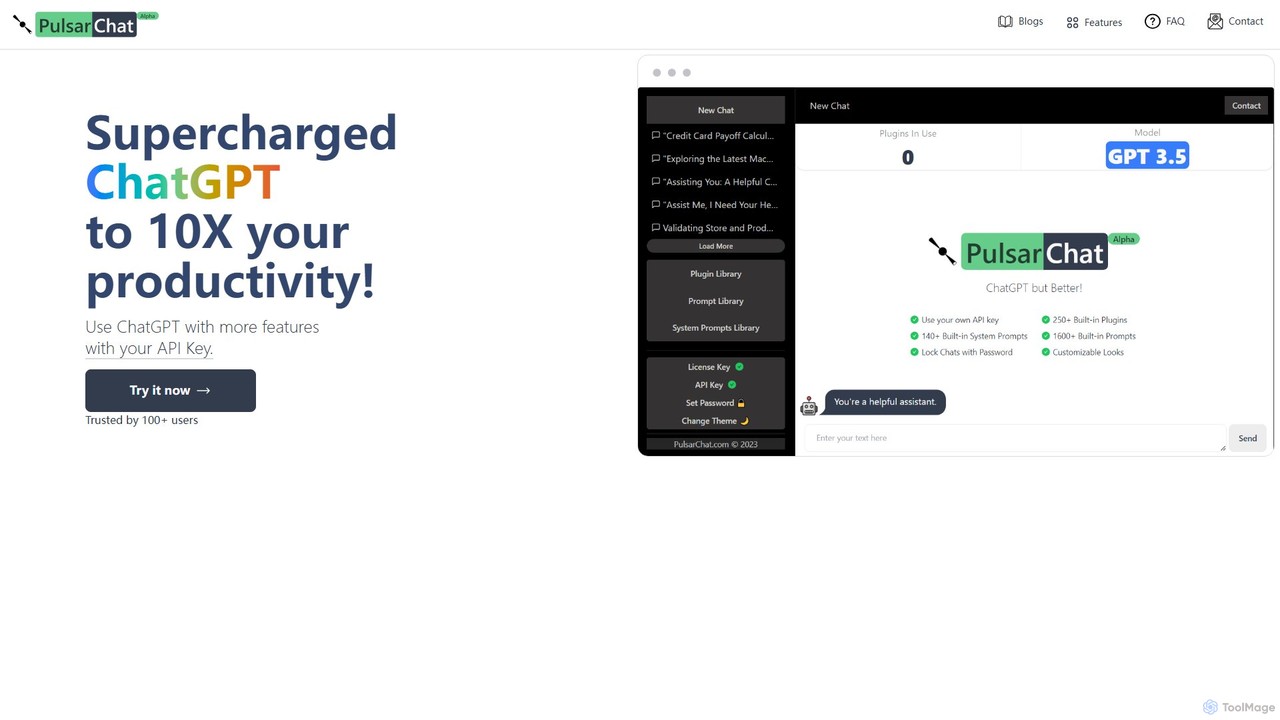
PulsarChat is a powerful web-based client that supercharges your ChatGPT experience. By using your own OpenAI API key, …

2.5K
foku

foku

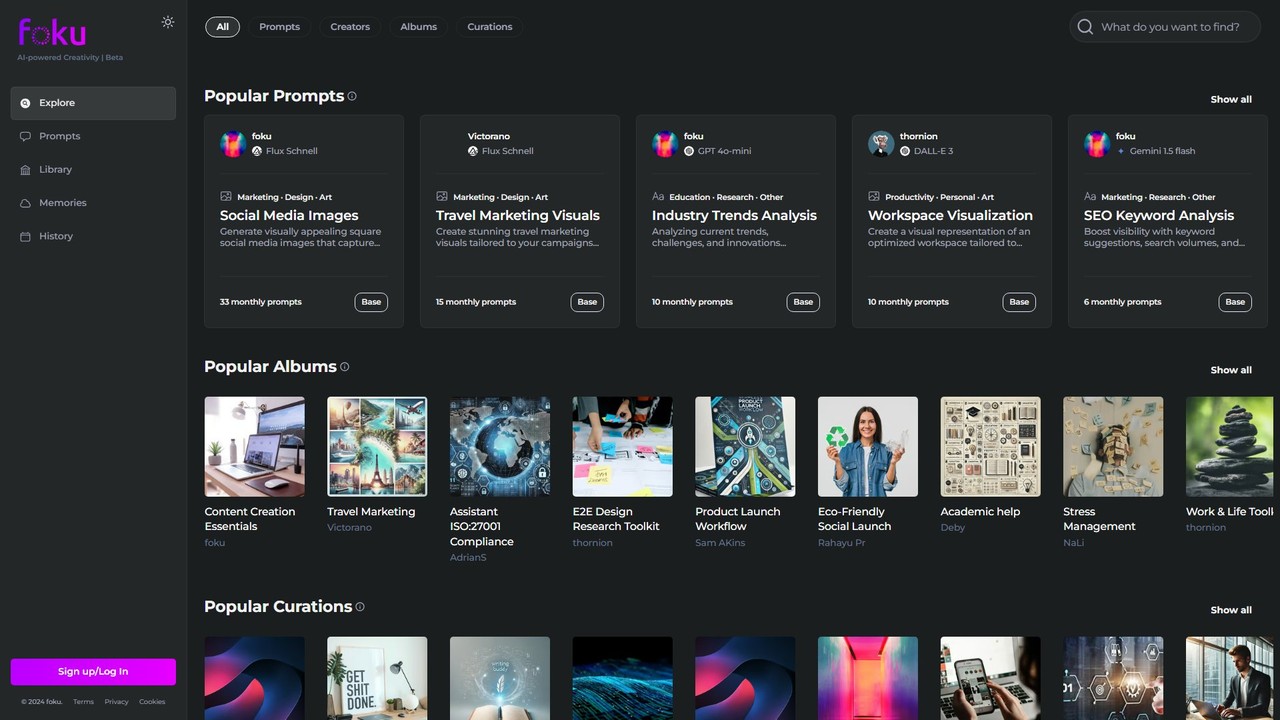
foku is a collaborative AI prompt marketplace and community hub. It allows users to discover, share, and utilize …

2.5K
Promptsion

Promptsion

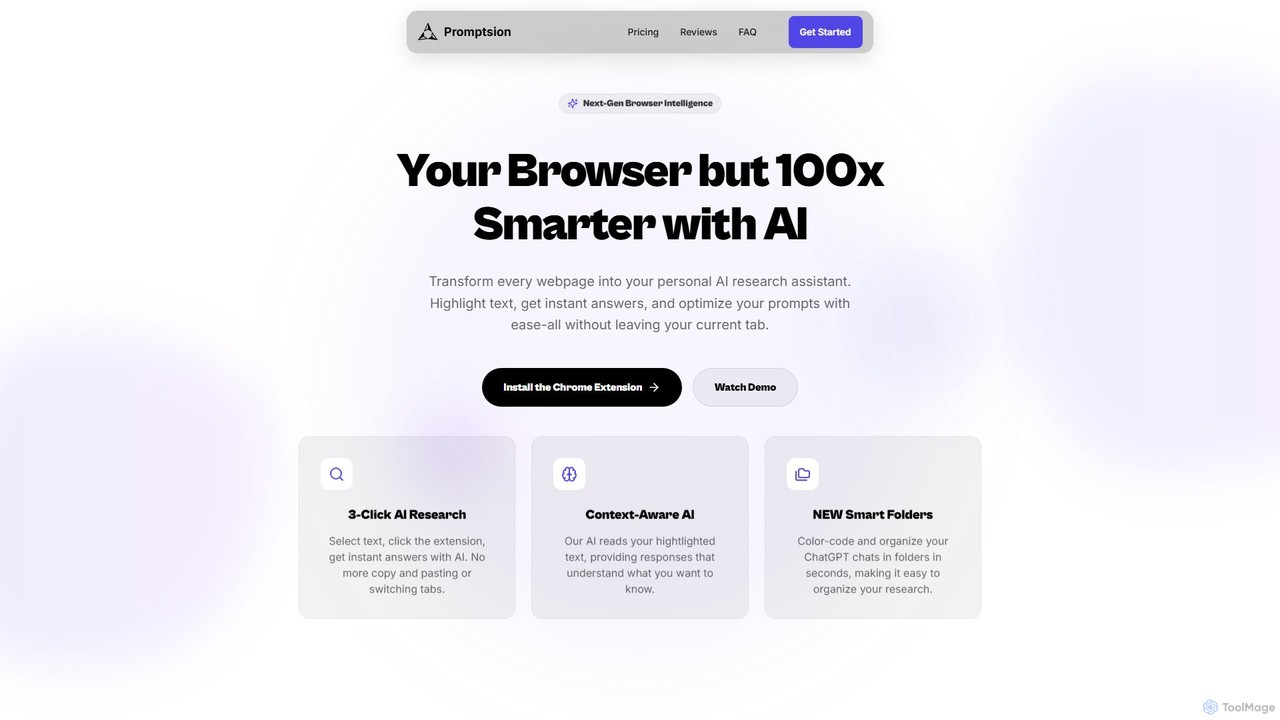
Promptsion is an AI-powered Chrome extension that transforms your browser into a smart research assistant. Highlight text on …

2.4K
Free
geminivsgpt

geminivsgpt

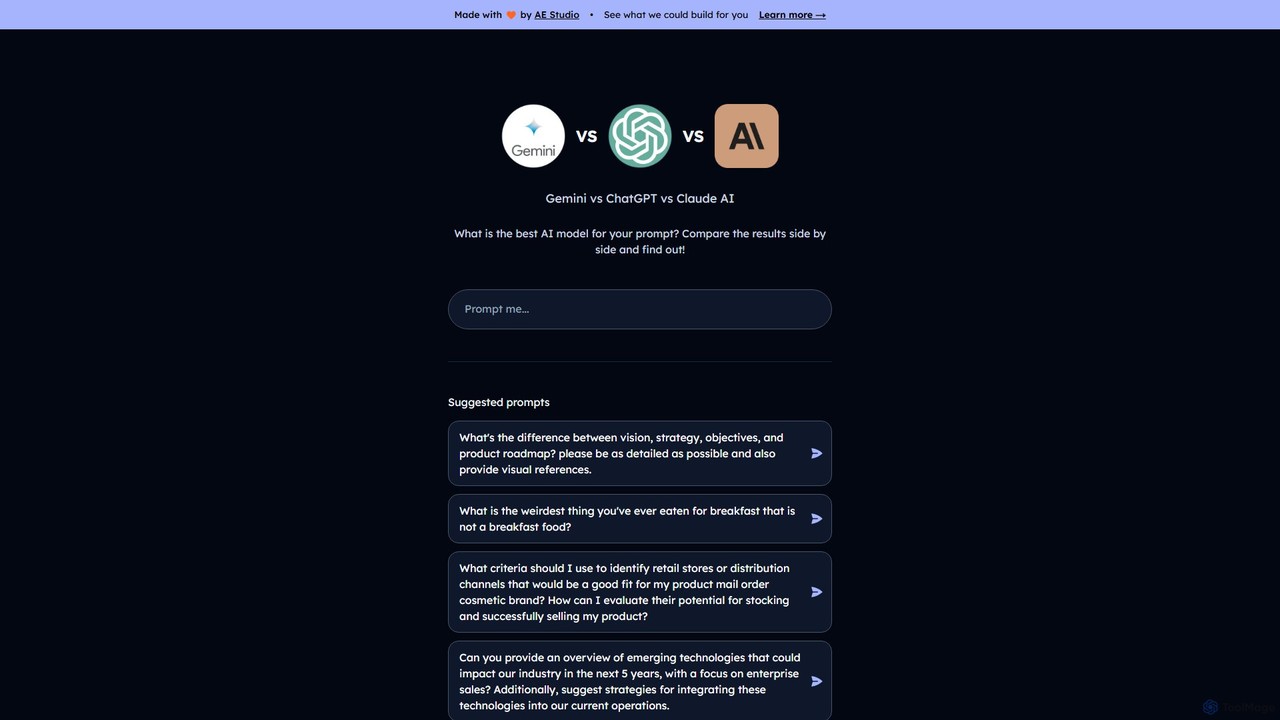
A powerful, free online tool for instantly comparing responses from leading AI models like Google's Gemini, OpenAI's ChatGPT, …

2.4K
PromptVisor

PromptVisor

PromptVisor is an all-in-one AI platform that provides access to leading language models like ChatGPT, Gemini, Claude, and …

2.4K

About Prompting

Prompting tools are a specialized class of software designed to help users craft, manage, and optimize instructions, known as prompts, for large language models (LLMs). These tools provide a structured environment for prompt engineering, moving beyond simple text editors to offer advanced features for creating scalable and repeatable AI interactions. They are essential for anyone looking to achieve consistent, high-quality, and predictable outputs from generative AI systems. By focusing on the input to the AI, these tools enable the creation of robust and reusable prompt assets.

Core Features

  • Prompt Templating: Create reusable prompt structures with dynamic placeholders or variables for easy customization.
  • Version Control: Track changes to prompts, compare different versions, and revert to previous iterations, similar to code management.
  • Performance Analytics: Test prompts against various models and analyze outputs based on quality, cost, latency, and other metrics.
  • Collaboration Hub: Provides a shared workspace for teams to create, review, and manage a central library of prompts.
  • Workflow & Chain Building: Connect multiple prompts in sequence to automate complex, multi-step tasks.

Use Cases

Prompting tools are widely used by AI developers building applications, marketing teams standardizing content generation, and customer support teams creating reliable chatbot responses. They are also valuable for researchers conducting systematic experiments with LLMs and for enterprises aiming to govern the use of generative AI across their organization.

How to Choose

When selecting a prompting tool, consider its integration capabilities with different LLM APIs (like OpenAI, Anthropic, Google). Evaluate the sophistication of its templating and version control systems. For team use, assess its collaboration features and access controls. Finally, consider the depth of its analytics for prompt optimization and cost management.

PromptingUse Cases

1

Standardizing Marketing Campaign Copy

A marketing team lead uses a prompting tool to create a set of master templates for generating ad copy, social media posts, and email newsletters. Team members, regardless of their prompt engineering skill level, can select a template and fill in variables like 'product_name', 'target_audience', and 'key_benefit'. This ensures all generated content is consistently on-brand and high-quality, reducing manual review time and accelerating campaign launches.

2

Developing Reliable AI Application Logic

An AI developer is building a feature that summarizes legal documents. They use a prompting tool to design, test, and version control the core summarization prompt. The tool's A/B testing feature allows them to compare multiple prompt variations for accuracy, conciseness, and handling of edge cases. Once the optimal prompt is identified, it's deployed to production via an API, ensuring the application's logic is robust and easily updatable.

3

Building Complex Content Creation Workflows

A content strategist designs a multi-step workflow within a prompting tool to automate article creation. The first prompt generates a detailed outline from a topic. The second prompt takes each outline point and expands it into a full paragraph. A final prompt reviews the entire article for tone, style, and grammar. This chaining of prompts transforms a manual, multi-hour process into a streamlined, semi-automated workflow.

4

Managing a Centralized Prompt Library for Enterprise

An enterprise IT administrator implements a prompting tool to serve as a central, governed repository for all approved prompts used across the company. Different departments can access pre-vetted prompts for tasks like HR policy summarization or sales email drafting. This approach ensures security, prevents inconsistent AI usage, and allows the company to track API costs and performance from a single dashboard.

5

Optimizing Chatbot Conversation Flows

A customer support manager uses a prompting tool to refine the conversational prompts for their support chatbot. They analyze failed conversations and use the tool to create better prompts that handle user ambiguity. The version control system allows them to safely roll out new conversation logic, test its effectiveness with a subset of users, and quickly revert if performance degrades, leading to higher customer satisfaction.

6

Conducting Systematic AI Model Research

A university researcher uses a prompting tool to conduct a study on LLM bias. They create a base prompt template and systematically inject thousands of variables representing different demographic groups. The tool automates the process of running these prompts and logging the AI's responses. This structured approach ensures the experiment is repeatable, and the data is organized for analysis, which would be unmanageable with a simple script.

PromptingFrequently Asked Questions