ToolMage
Sign in

Best 1 Rewriting Tool for Writing

Popular Rewriting Tool in Writing include wintermuteai, helping you work more efficiently.

wintermuteai
Freemium

wintermuteai

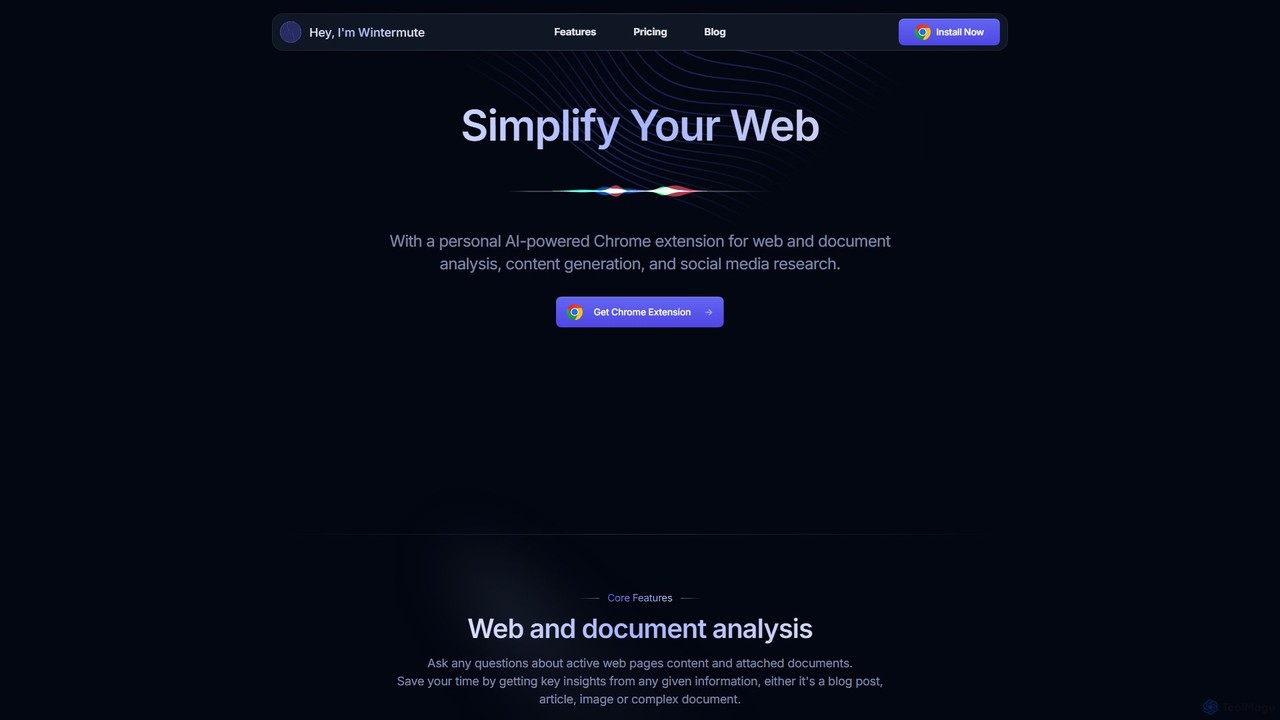
WintermuteAI is a personal AI-powered Chrome extension that simplifies your web experience. It excels at web and document analysis, content generation, and social media research, allowing you to summarize articles, analyze PDFs and images, and generate text directly in your browser's side panel.

Browser Extension
Visits 5.4KFavorites 104Likes 141

About Rewriting Tool

Rewriting tools are AI-powered applications designed to rephrase, restructure, and enhance existing text while preserving its original meaning. These tools leverage advanced natural language processing (NLP) to analyze content and generate alternative versions, offering a fresh perspective or improved clarity. They are invaluable for content creators, students, and professionals seeking to refine their writing, avoid plagiarism, or adapt text for different audiences within the broader field of writing. By transforming sentences and paragraphs, rewriting tools help users achieve better readability, unique expression, and a more appropriate tone for their specific communication goals.

Core Features

  • Paraphrasing & Rephrasing: Automatically generates alternative wordings and sentence structures for given text.
  • Tone Adjustment: Modifies the emotional or stylistic tone of content, such as formal, informal, persuasive, or academic.
  • Plagiarism Detection Support: Helps create original content by suggesting rephrased versions, reducing similarity to source material.
  • Readability Enhancement: Simplifies complex sentences or elaborates on concise ones to improve text flow and comprehension.
  • Grammar & Style Correction: Integrates with or offers basic grammar and stylistic improvements during the rewriting process.

Use Cases

Rewriting tools are widely adopted across various sectors. Content marketers use them to repurpose blog posts into social media updates or email snippets, ensuring consistent messaging with varied expression. Students leverage these tools to rephrase research material for essays, aiding in academic integrity and clarity. Business professionals utilize them to refine reports, presentations, and emails, ensuring professional tone and conciseness. These applications streamline the writing process, making content more adaptable and impactful for diverse communication needs.

How to Choose

When selecting an AI rewriting tool, consider its accuracy in preserving original meaning and its flexibility in generating diverse rephrased options. Evaluate the range of tone and style adjustments offered, as well as support for multiple languages. Look for tools with integrated plagiarism checks or seamless integration with other writing aids. Finally, assess the user interface for ease of use and the pricing model to ensure it aligns with your budget and usage frequency, prioritizing tools that offer clear, natural-sounding output.

Rewriting Tool use cases

1

Content Repurposing for Marketing

Content marketers and bloggers use rewriting tools to transform long-form articles into concise social media posts, email newsletters, or ad copy. By inputting an existing blog post, the tool generates multiple short, engaging variations tailored for different platforms, saving hours of manual adaptation and ensuring consistent brand messaging across channels.

2

Academic Plagiarism Avoidance

Students and researchers utilize these tools to rephrase source material and integrate it into their academic papers while maintaining originality. Instead of direct quotes, the tool helps generate unique sentence structures and vocabulary, significantly reducing the risk of unintentional plagiarism and improving the overall flow and clarity of their essays and reports.

3

Optimizing Marketing & Sales Copy

Sales and marketing teams employ rewriting tools to A/B test different versions of headlines, product descriptions, or call-to-action buttons. The tool quickly produces various compelling alternatives, allowing teams to identify which phrasing resonates best with their target audience, leading to higher conversion rates and improved campaign performance.

4

Enhancing Professional Communication

Business professionals, including managers and HR personnel, use rewriting tools to refine emails, internal memos, and official documents. They can adjust the tone to be more formal, empathetic, or direct, ensuring messages are clear, professional, and effectively convey the intended sentiment, thereby improving workplace communication efficiency.

5

Generating SEO-Friendly Content Variations

SEO specialists and webmasters leverage rewriting tools to create multiple unique versions of content for similar topics or keywords, avoiding duplicate content penalties. This helps in expanding content reach, targeting a broader range of long-tail keywords, and improving search engine rankings without extensive manual content creation efforts.

6

Simplifying Complex Technical Documentation

Technical writers and educators use rewriting tools to simplify complex jargon or elaborate on concise instructions in manuals, guides, or educational materials. By adjusting the readability level, they can make intricate information accessible to a wider audience, from beginners to experts, enhancing comprehension and user experience.

Rewriting Tool FAQ

What are AI rewriting tools?

AI rewriting tools are software applications that use artificial intelligence, specifically natural language processing (NLP), to rephrase or restructure existing text. Their primary function is to generate alternative versions of sentences, paragraphs, or entire articles while preserving the original meaning. They are commonly used to improve clarity, adjust tone, enhance originality, and make content more engaging for specific audiences.

How do AI rewriting tools help avoid plagiarism?

AI rewriting tools can help reduce the risk of unintentional plagiarism by generating unique phrasings and sentence structures for source material. Instead of directly copying text, users can input content and receive rephrased versions. However, it's crucial to always review the rewritten output for accuracy and originality, and to properly cite all sources, as the tool is an aid, not a substitute for academic integrity.

What's the difference between a rewriting tool and a grammar checker?

A rewriting tool focuses on transforming the structure and wording of text to create new versions, often with different tones or styles, while maintaining the core meaning. A grammar checker, on the other hand, primarily identifies and corrects grammatical errors, spelling mistakes, punctuation issues, and stylistic inconsistencies within the existing text. Rewriting tools aim to change *how* something is said, while grammar checkers aim to fix *what* is said incorrectly.

Who can benefit most from using AI rewriting tools?

A wide range of users can benefit from AI rewriting tools. This includes content creators (bloggers, marketers, journalists) for repurposing and optimizing content, students for academic writing and plagiarism avoidance, business professionals for refining communications, and anyone looking to improve the clarity, conciseness, or tone of their written work. They are particularly useful for those who need to produce varied content quickly or overcome writer's block.

What are the limitations of AI rewriting tools?

While powerful, AI rewriting tools have limitations. They may sometimes produce text that sounds unnatural, lacks human nuance, or misinterprets complex contexts, requiring human review and editing. They might struggle with highly specialized jargon or creative writing where subtle emotional depth is crucial. Over-reliance can also hinder a user's own writing skill development. Therefore, they are best used as an assistive technology rather than a complete replacement for human writing.