ToolMage
Sign in

Best 4 Text Generation AI tools for Writing

Popular Text Generation AI tools in Writing include Goblin Tools, Claptools, Write Me A Prayer, and Roast My Tree, helping you work more efficiently.

Roast My Tree
Free

Roast My Tree

An AI-powered entertainment tool that humorously roasts your Christmas tree. Upload a photo of your tree, and the AI will generate a witty, sarcastic, and funny critique, perfect for sharing holiday cheer and a few laughs with friends and family.

Entertainment
Visits 4.2KFavorites 107Likes 112
Write Me A Prayer
Free

Write Me A Prayer

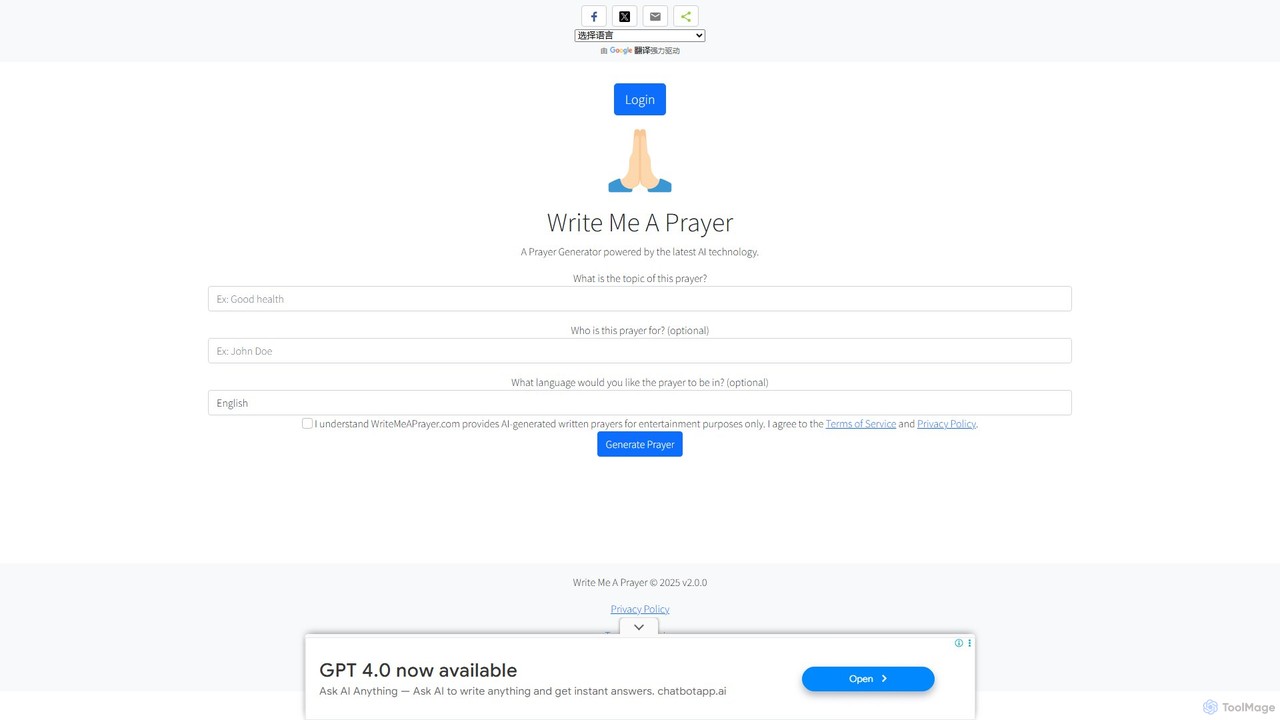
Write Me A Prayer is an AI-powered tool designed to help users craft personal and meaningful prayers. By simply describing a situation, feeling, or request, the AI generates a unique prayer tailored to your needs. It supports an extensive range of over 100 languages, making it a globally accessible resource for personal devotion, spiritual support, and moments of reflection. It's a simple, free, and immediate way to find the words you're looking for.

Spirituality
Visits 4.9KFavorites 141Likes 147
Goblin Tools
Freemium

Goblin Tools

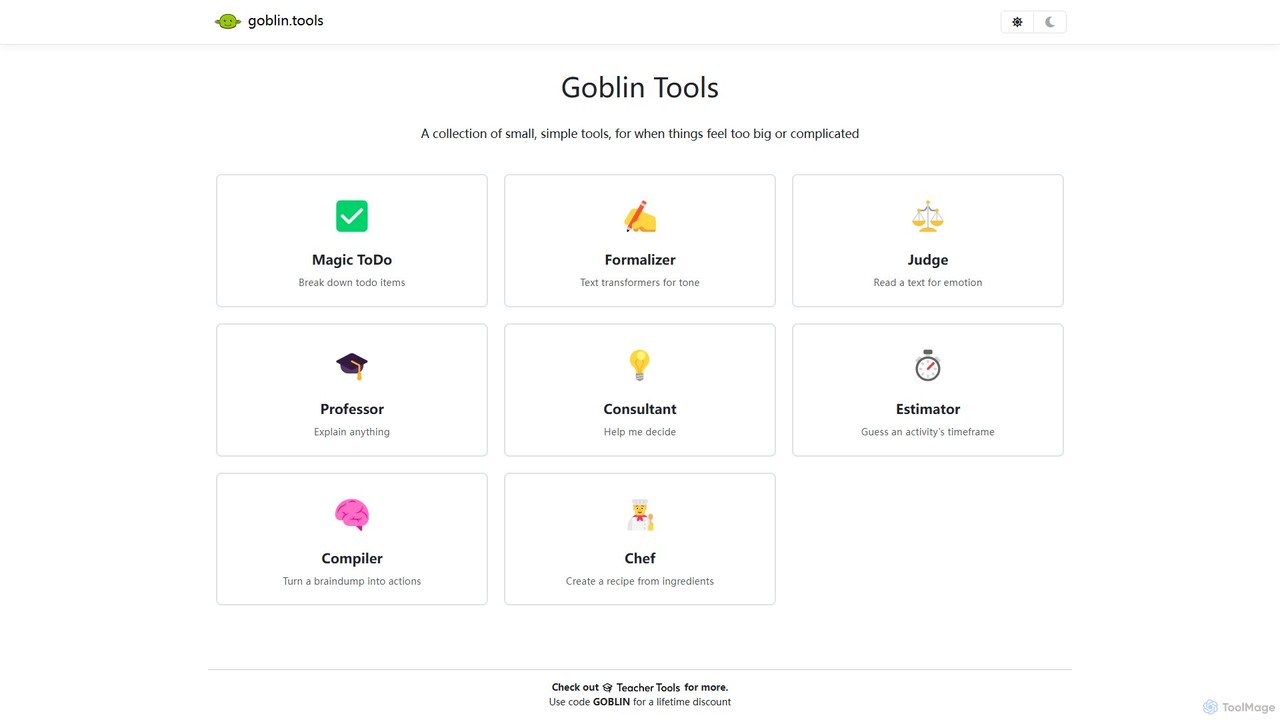
A collection of simple, single-task AI tools designed to help neurodivergent individuals and anyone feeling overwhelmed. Goblin Tools simplifies complex tasks, analyzes text tone, breaks down projects into manageable steps, and offers practical assistance for everyday challenges.

Learning
Visits 905.5KFavorites 129Likes 108
Claptools
Free

Claptools

Claptools is a free online platform offering a collection of AI-powered tools designed to simplify daily tasks. It focuses on providing easy-to-use solutions for social media management, content creation, and general productivity, helping users enhance their efficiency at work, school, or for personal projects without any cost.

Tool Suite
Visits 135.7KFavorites 132Likes 108

About Text Generation

Text Generation tools are AI-powered applications that automatically produce human-like written content. Leveraging advanced natural language processing (NLP) and machine learning models, they transform prompts or data into coherent and contextually relevant text. These tools significantly enhance productivity for content creators, marketers, and developers by automating various writing tasks, from drafting articles to generating code snippets.

Core Features

  • Content Creation: Automatically generate articles, blog posts, marketing copy, and social media updates.
  • Text Summarization: Condense long documents or web pages into concise summaries.
  • Language Translation: Translate text between multiple languages while preserving context and nuance.
  • Style Adaptation: Adjust the tone, style, and format of text to suit different audiences or platforms.
  • Code Generation: Assist developers by generating code snippets, functions, or scripts based on natural language descriptions.

Applicable Scenarios

Text Generation tools are invaluable for marketing teams needing to produce high volumes of ad copy, content creators drafting blog posts or scripts, and customer service departments automating responses. Developers also utilize them for generating documentation or boilerplate code, streamlining their workflow.

How to Choose

When selecting a Text Generation tool, consider the quality and coherence of its output, the level of customization it offers for tone and style, and its integration capabilities with existing platforms. Evaluate the range of supported languages, the pricing model, and the ethical guidelines for AI-generated content to ensure it meets your specific needs and standards.

Featured tool rankings

Text Generation use cases

1

Generate Diverse Marketing Copy

Marketing specialists can leverage text generation tools to quickly produce a wide array of ad headlines, social media captions, and product descriptions. By inputting key product features and target audience demographics, the AI can generate multiple creative variations, saving hours of manual brainstorming and copywriting, and enabling rapid A/B testing for optimal campaign performance.

2

Draft Blog Posts and Articles

Content creators and bloggers can use text generation tools to overcome writer's block and accelerate the drafting process for articles and blog posts. By providing a topic, keywords, and desired tone, the AI can generate outlines, introductory paragraphs, or even full drafts, which can then be refined and personalized, significantly reducing the time spent on initial content creation.

3

Automate Customer Service Responses

Customer service teams can deploy text generation tools to automate responses to frequently asked questions, common inquiries, and support tickets. By integrating with CRM systems, these tools can generate personalized and contextually relevant replies, ensuring consistent communication, reducing response times, and freeing up human agents to handle more complex issues, thereby improving overall customer satisfaction.

4

Generate Business Emails and Reports

Professionals across various industries can utilize text generation tools to draft routine business communications, such as emails, meeting summaries, and internal reports. By providing key bullet points or a brief outline, the AI can structure the information into a professional and coherent document, saving time on repetitive writing tasks and ensuring clarity and consistency in corporate communications.

5

Assist in Software Code Generation

Software developers can leverage text generation tools to accelerate coding by generating boilerplate code, function definitions, or even entire scripts based on natural language descriptions. This capability helps in quickly prototyping ideas, reducing repetitive coding, and ensuring adherence to coding standards, allowing developers to focus on more complex logical challenges rather than syntax and structure.

6

Summarize Academic and Research Content

Researchers and students can employ text generation tools to quickly summarize lengthy academic papers, research articles, and literature reviews. By feeding in complex texts, the AI can extract key findings, methodologies, and conclusions, providing concise summaries that aid in understanding vast amounts of information, accelerating literature reviews, and drafting research proposals more efficiently.

Text Generation FAQ

What are Text Generation tools?

Text Generation tools are AI-powered software that automatically produce written content. They leverage advanced natural language processing (NLP) and machine learning models, particularly large language models (LLMs), to understand prompts and generate coherent, contextually relevant text. Their core functions include drafting articles, creating marketing copy, summarizing documents, and even generating code snippets.

How do Text Generation tools work?

Text Generation tools primarily work by employing large language models (LLMs) trained on vast datasets of text and code. When a user provides a prompt or input, the LLM analyzes it to understand the context, intent, and desired output. It then predicts the most probable sequence of words to generate a response that is coherent, grammatically correct, and relevant to the input, often mimicking human writing styles.

What are the benefits of using Text Generation tools?

The primary benefits of Text Generation tools include significant time savings and increased efficiency in content creation, allowing users to produce high volumes of text quickly. They help overcome writer's block, ensure content consistency in tone and style, and can generate diverse variations for A/B testing. These tools also enable scalability in content production and reduce the manual effort required for repetitive writing tasks, freeing up human creativity for more strategic work.

How to choose the right Text Generation tool?

Choosing the right Text Generation tool involves several key considerations. First, evaluate the quality and coherence of the output for your specific use case. Second, assess the customization options for tone, style, and length. Third, check for integration capabilities with your existing workflows and platforms. Fourth, consider the range of supported languages and the tool's ability to handle specific dialects or nuances. Finally, compare pricing models and review the provider's ethical guidelines for AI-generated content to ensure alignment with your values and budget.

What is the difference between Text Generation and traditional content writing?

The main difference lies in the creator and process. Text Generation uses AI algorithms to automate content creation, offering speed, scalability, and consistency based on predefined prompts and data. It excels at generating large volumes of text for repetitive tasks. Traditional content writing relies on human creativity, critical thinking, and nuanced understanding, allowing for deeper emotional connection, unique perspectives, and complex storytelling. While AI assists in efficiency, human writers bring irreplaceable originality and strategic insight.

What are the ethical considerations for AI Text Generation?

Ethical considerations for AI Text Generation include the potential for generating misinformation or biased content, as AI models learn from existing data which may contain biases. There are also concerns about plagiarism and intellectual property, as AI-generated text can sometimes closely resemble human-written content. Transparency about AI authorship, responsible deployment, and robust content moderation are crucial to mitigate these risks and ensure ethical use of these powerful tools.