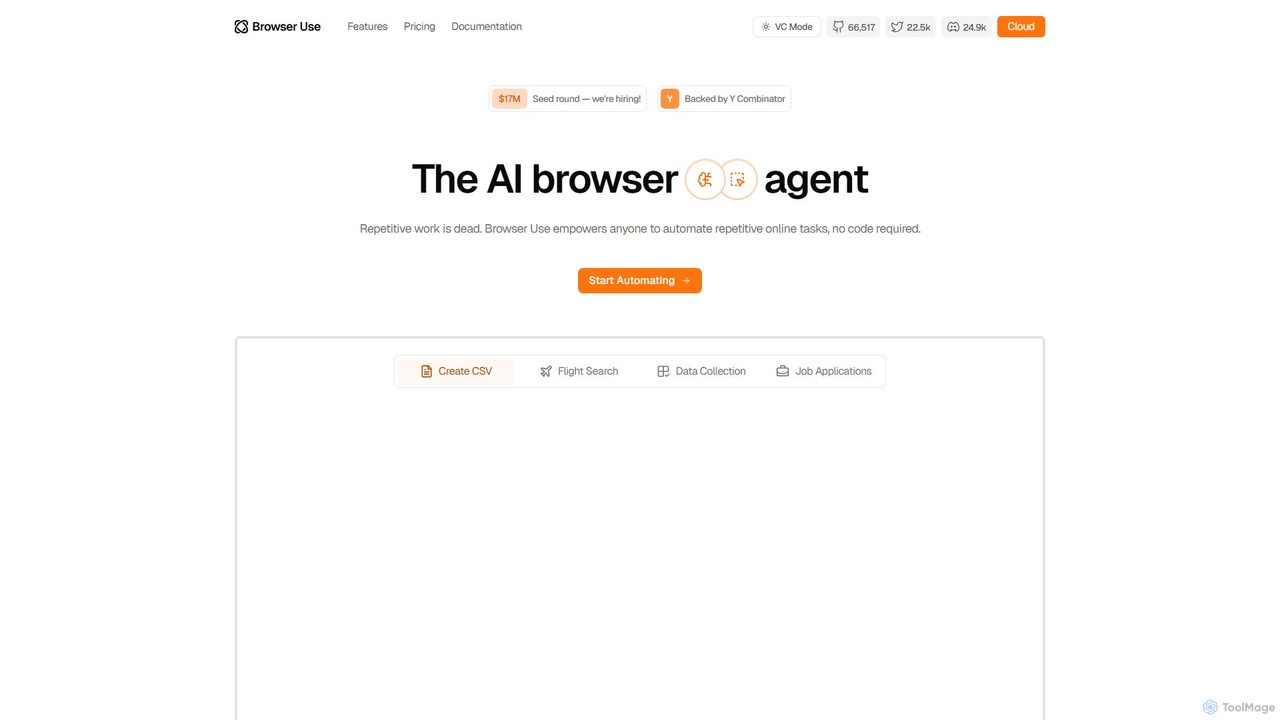
Browser Use is an AI-powered browser agent that automates repetitive online tasks without requiring any code. It can handle complex data scraping, form filling, and other web-based workflows. Backed by Y Combinator, it offers a simple chat interface for users and a powerful API for developers to streamline their online activities.

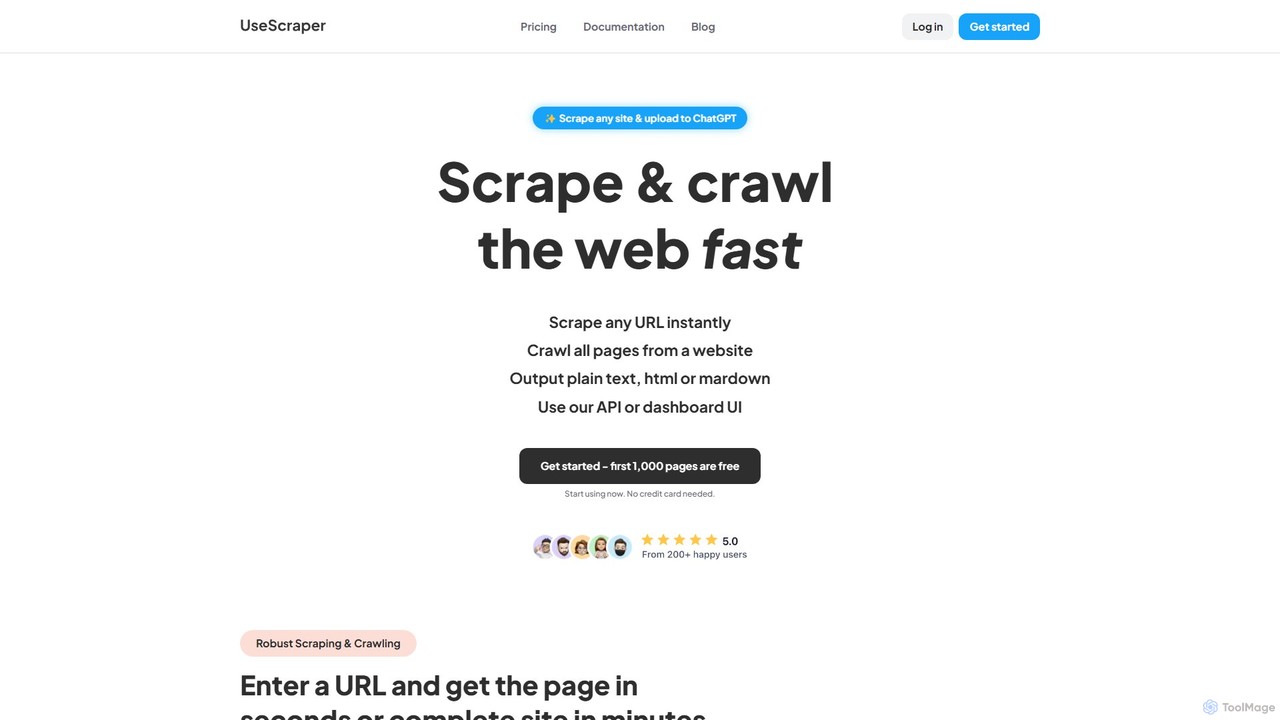
UseScraper is a powerful web crawler and scraper API designed for developers and AI applications. It efficiently extracts data from any website, featuring full JavaScript rendering, auto-scaling infrastructure, and clean output formats like Markdown, ideal for feeding data into LLMs like ChatGPT.
Product overview
Browser Use Product overview
Browser Use is an AI-powered browser agent that automates repetitive online tasks without requiring any code. It can handle complex data scraping, form filling, and other web-based workflows. Backed by Y Combinator, it offers a simple chat interface for users and a powerful API for developers to streamline their online activities.
UseScraper Product overview
UseScraper is a powerful web crawler and scraper API designed for developers and AI applications. It efficiently extracts data from any website, featuring full JavaScript rendering, auto-scaling infrastructure, and clean output formats like Markdown, ideal for feeding data into LLMs like ChatGPT.
Detailed feature comparison
| Feature | Browser Use | UseScraper |
|---|---|---|
| Primary category | Data Extraction | Data Extraction |
| Added | 2025-08-04 | 2025-08-05 |
| Pricing | Freemium | Freemium |
| Official website | browser-use.com | usescraper.com |
| Product type | Website | Website |
| Performance data | ||
| User rating | Not verified | Not verified |
| Comments | 0 | 0 |
| Monthly visits | 540K | 4K |
| Monthly growth | -1.5% | Not verified |
| Favorites | 116 | 115 |
| Details | View details | View details |
Browser Use vs UseScraper monthly traffic
Compare Browser Use and UseScraper by monthly reach, traffic trend, visit depth, top regions, and acquisition sources.
How to interpret the traffic data
In the Browser Use vs UseScraper monthly traffic comparison, Browser Use currently shows 540K visits and UseScraper shows 4K; Browser Use has about 133.4 times the visible traffic of UseScraper, an absolute difference of about 535.9K visits. This reflects visible reach, not feature quality or paid users.
Only Browser Use has complete third-party traffic details; UseScraper uses visits recorded inside ToolMage. These scopes cannot estimate market share directly, and on-site views should not be treated as the product’s total website traffic.
Browser Use monthly traffic:
Latest traffic
Monthly traffic trend
- 2025/9: 331.2K Monthly visits
- 2026/1: 271.2K Monthly visits
- 2026/2: 288.9K Monthly visits
- 2026/3: 459.4K Monthly visits
- 2026/4: 548K Monthly visits
- 2026/5: 540K Monthly visits
Top regions
Top 5 countries/regions
| Country/region | Percentage | Traffic |
|---|---|---|
| 🇺🇸United States | 43.09% | 232.7K |
| 🇨🇳China | 25.26% | 136.4K |
| 🇮🇳India | 17.4% | 94K |
| 🇹🇼Taiwan | 8.1% | 43.7K |
| 🇩🇪Germany | 6.15% | 33.2K |
Traffic sources
| Source type | Percentage | Traffic |
|---|---|---|
| Direct | 81.44% | 439.8K |
| Referral | 17.44% | 94.2K |
| 1.12% | 6K |
Search keywords
UseScraper monthly traffic:
Latest traffic
Usage comparison
Compare the core capabilities of Browser Use and UseScraper
Browser Use Core features
UseScraper Core features
Use cases
Browser Use Use cases
UseScraper Use cases
Browser Use vs UseScraper:In-depth comparison and selection guidance
First decide whether the products solve the same kind of need
This in-depth Browser Use vs UseScraper comparison uses only the product records, taxonomy, audience, traffic, and community signals available on this page. Browser Use is primarily listed under “Data Extraction”, while UseScraper is primarily listed under “Data Extraction”, so the first decision is whether your actual task matches their recorded scope.
The structured fields currently show these decision-relevant differences: Monthly visits (Browser Use: 540K; UseScraper: 4K); Favorites (Browser Use: 116; UseScraper: 115); Website (Browser Use: browser-use.com; UseScraper: usescraper.com); Added (Browser Use: 2025-08-04; UseScraper: 2025-08-05). These facts are more useful for selection than brand visibility alone.
What market visibility and monthly traffic mean
In the Browser Use vs UseScraper monthly traffic comparison, Browser Use currently shows 540K visits and UseScraper shows 4K; Browser Use has about 133.4 times the visible traffic of UseScraper, an absolute difference of about 535.9K visits. This reflects visible reach, not feature quality or paid users.
Only Browser Use has complete third-party traffic details; UseScraper uses visits recorded inside ToolMage. These scopes cannot estimate market share directly, and on-site views should not be treated as the product’s total website traffic.
The current traffic scope is not sufficient for a reliable product ranking. Treat monthly visits as a market-interest signal, then decide using taxonomy, use cases, pricing, and a like-for-like trial rather than reading exposure as product capability.
Product positioning, use cases, and roles
Browser Use and UseScraper currently overlap in shared categories: Data Extraction, Api, and Automation; shared tags: API, data extraction, and web scraping. This can place both on the same shortlist, but it does not prove equal implementation, depth, or cost.
Browser Use's unique categories/tags are Workflow Automation, browser automation, form filling, no-code, open source, RPA, workflow automation, and Y Combinator; UseScraper's are AI data, automation, chatgpt, data collection, developer tools, JavaScript rendering, markdown, and RAG. These unique fields are the strongest differentiators: validate the product whose recorded scope matches the task instead of following traffic alone.
What ratings, comments, and favorites can tell you
Browser Use has no verified rating, 0 comments, 116 favorites, and 109 likes;UseScraper has no verified rating, 0 comments, 115 favorites, and 112 likes。
Neither product has enough rating or comment samples for a credible reputation ranking.
Selection guidance by actual need
When to evaluate Browser Use first
Put Browser Use on the priority trial list when the task aligns with “Data Extraction” and especially Workflow Automation, browser automation, form filling, no-code, open source, and RPA. This follows recorded positioning and does not imply unlisted capabilities are absent.
Browser Use also currently records: pricing is freemium, product type is website, 540K verified monthly visits, no verified user rating. Verify any hard requirement around price, platform, or reach before trial, and do not let sparse review data substitute for testing.
When to evaluate UseScraper first
Put UseScraper on the priority trial list when the task aligns with “Data Extraction” and especially AI data, automation, chatgpt, data collection, developer tools, and JavaScript rendering. This follows recorded positioning and does not imply unlisted capabilities are absent.
UseScraper also currently records: pricing is freemium, product type is website, 4K on-site monthly views, no verified user rating. Verify any hard requirement around price, platform, or reach before trial, and do not let sparse review data substitute for testing.
How to validate the recommendation before deciding
The available data describes positioning, public visibility, and community signals, but it cannot prove output quality, speed, integration effort, privacy, or long-term cost in your workflow. Before deciding, run the same representative tasks in Browser Use and UseScraper, then record completion time, accuracy, manual corrections, and the real paid threshold. A like-for-like trial turns this comparison into a defensible adoption decision.
Comparison FAQ
How should I choose between Browser Use and UseScraper?
Where does this comparison data come from?
What do unknown fields mean?
Related AI tools

Apify
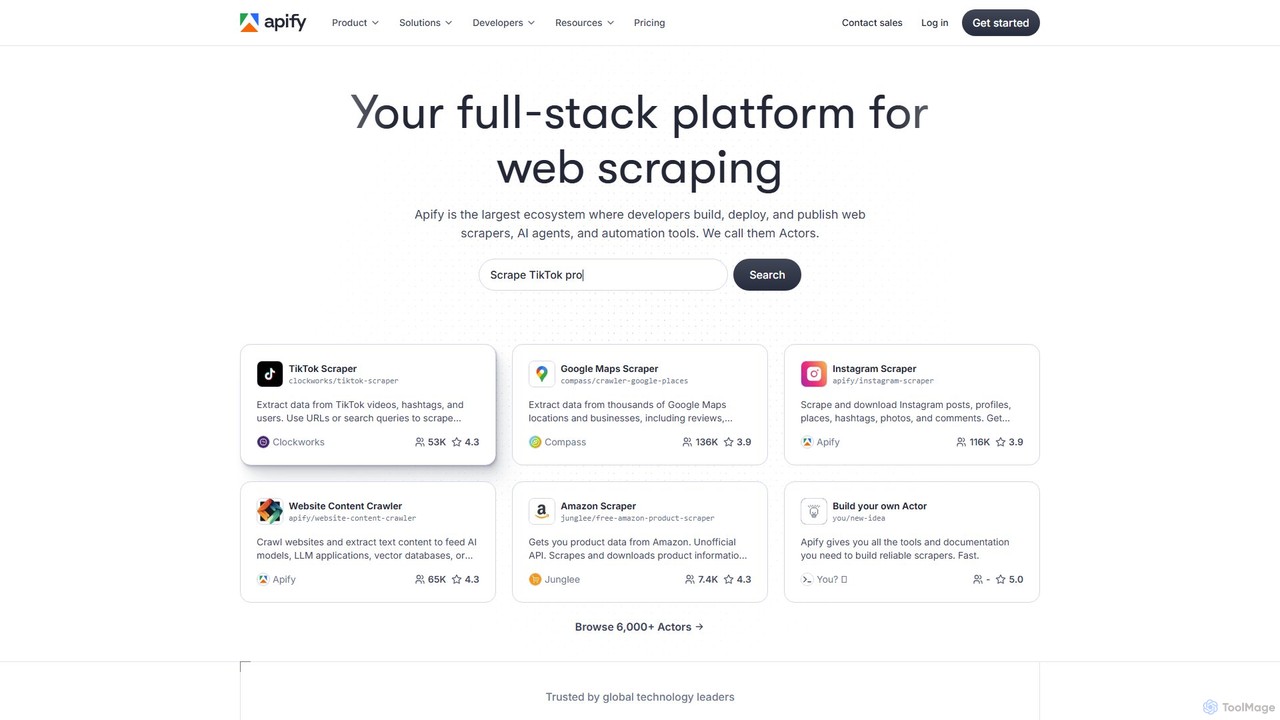
Apify is a full-stack web scraping and automation platform that enables developers to build, deploy, and publish data extraction tools, known as 'Actors'. It offers a vast marketplace of pre-built scrapers for popular websites like Google Maps, Instagram, and TikTok, alongside a robust cloud infrastructure for creating custom solutions. With support for Python and JavaScript, open-source libraries, and seamless integrations, Apify simplifies collecting web data at any scale.
Data Collection
Skyvern
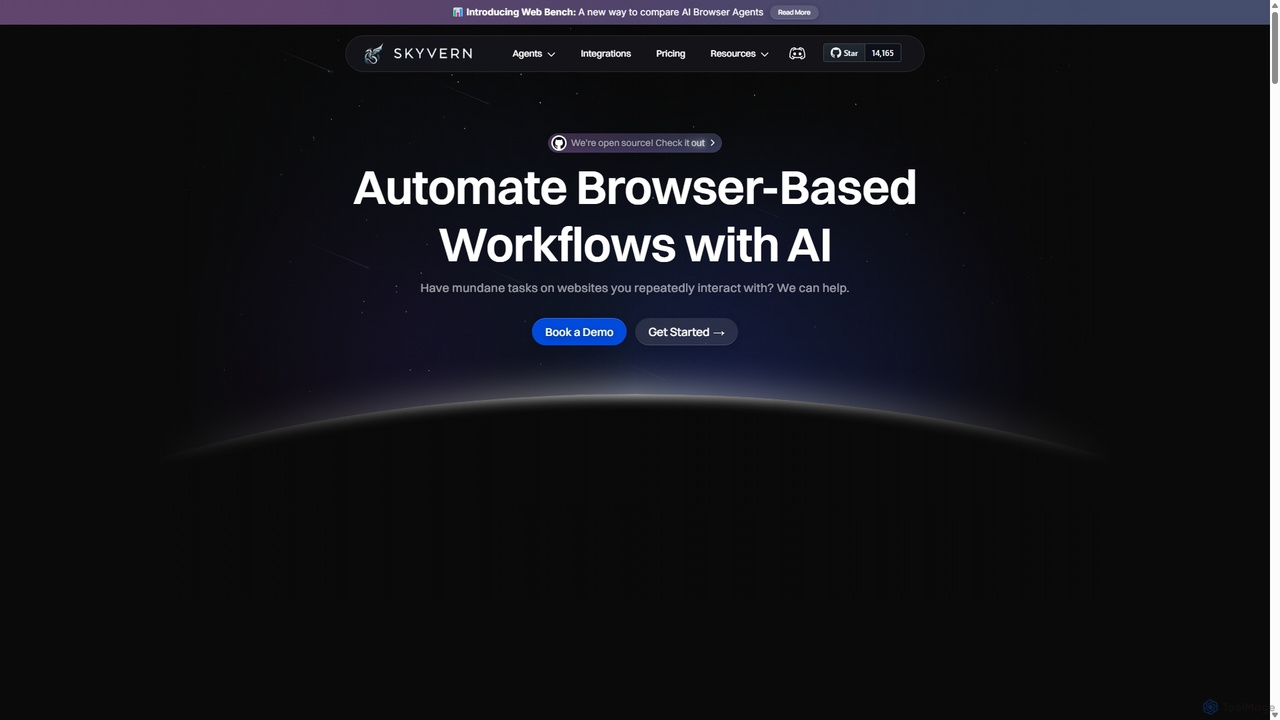
Skyvern is an AI-powered browser automation platform that uses computer vision and natural language to automate complex web workflows. It can handle data extraction, form submissions, invoice retrieval, and more on any website, adapting dynamically to changes without traditional scripting.
Api
Skrape
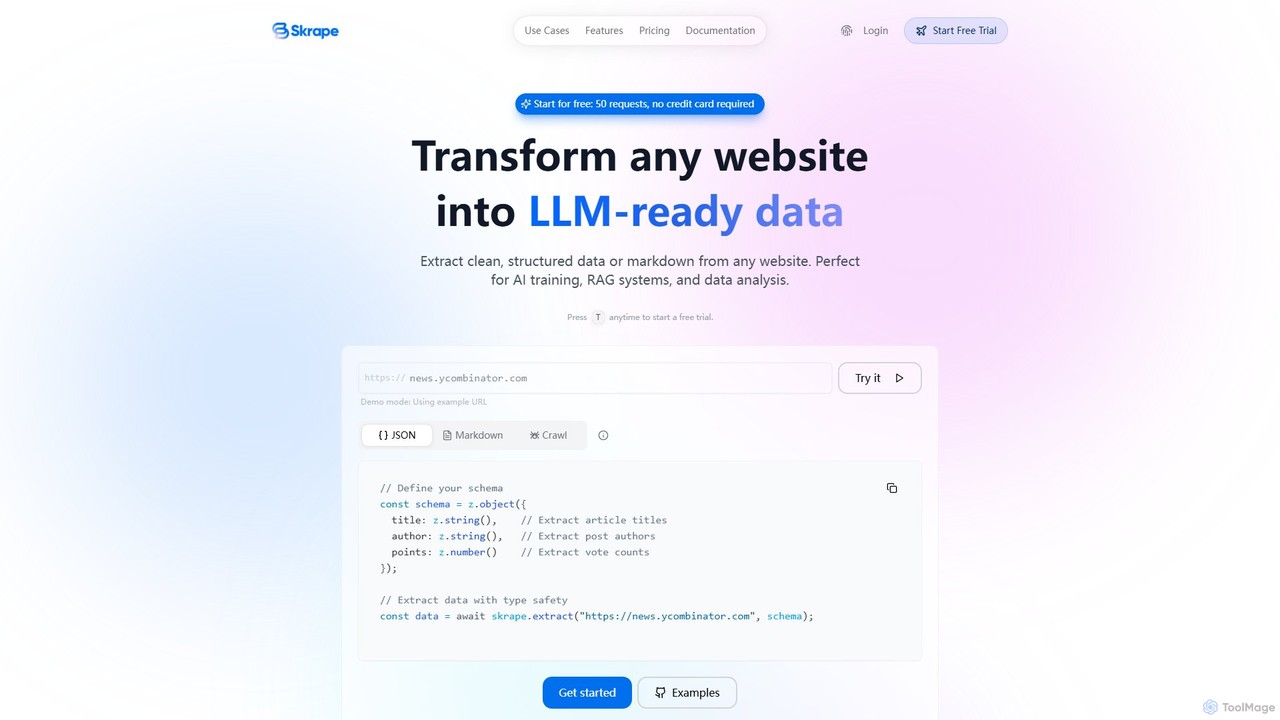
Skrape is an LLM-powered web scraping API designed to transform any website into clean, structured, and LLM-ready data. It simplifies data extraction by converting web pages into structured JSON or clean markdown, making it ideal for AI training, RAG systems, and data analysis. With features like dynamic content handling and smart crawling, Skrape provides a reliable solution for developers and businesses to automate their data collection pipelines.
Scraping
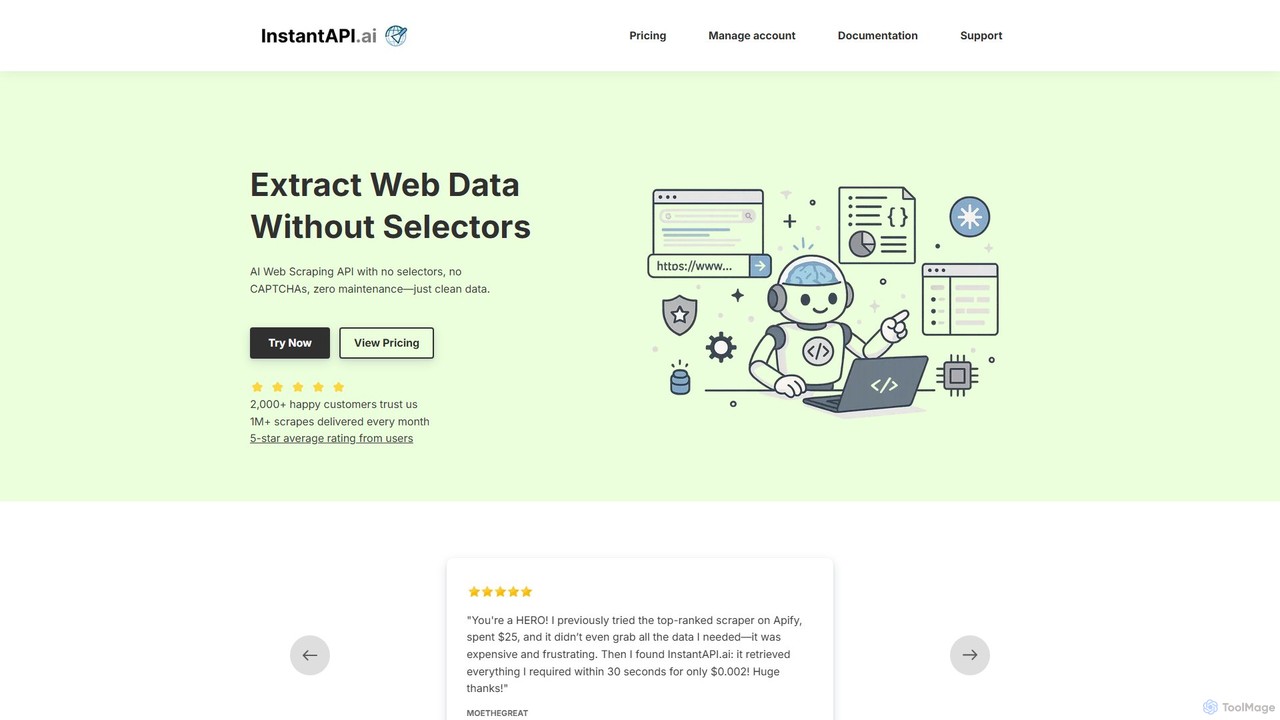
instantapi
instantapi is an AI-powered web scraping API designed for simplicity and speed. It allows users to extract structured data from any website with a single API call, eliminating the need for complex coding or manual setup. Ideal for developers, data analysts, and businesses who need fast, affordable, and reliable data extraction without the hassle of traditional web scrapers.
Data Extraction
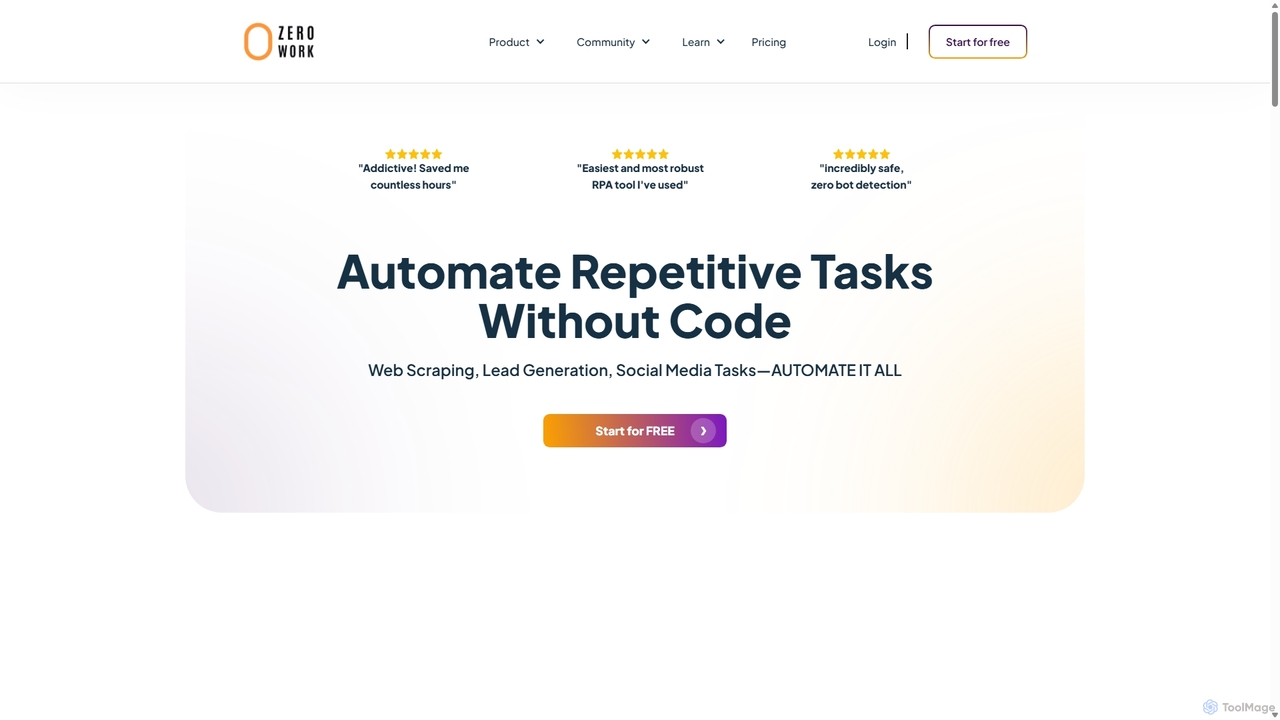
ZeroWork
A no-code Robotic Process Automation (RPA) tool to automate any repetitive web task. Build "TaskBots" with a visual drag-and-drop interface to scrape data, generate leads, manage social media, and more. Integrates AI for content generation and features robust anti-bot detection to ensure account safety.
No Code
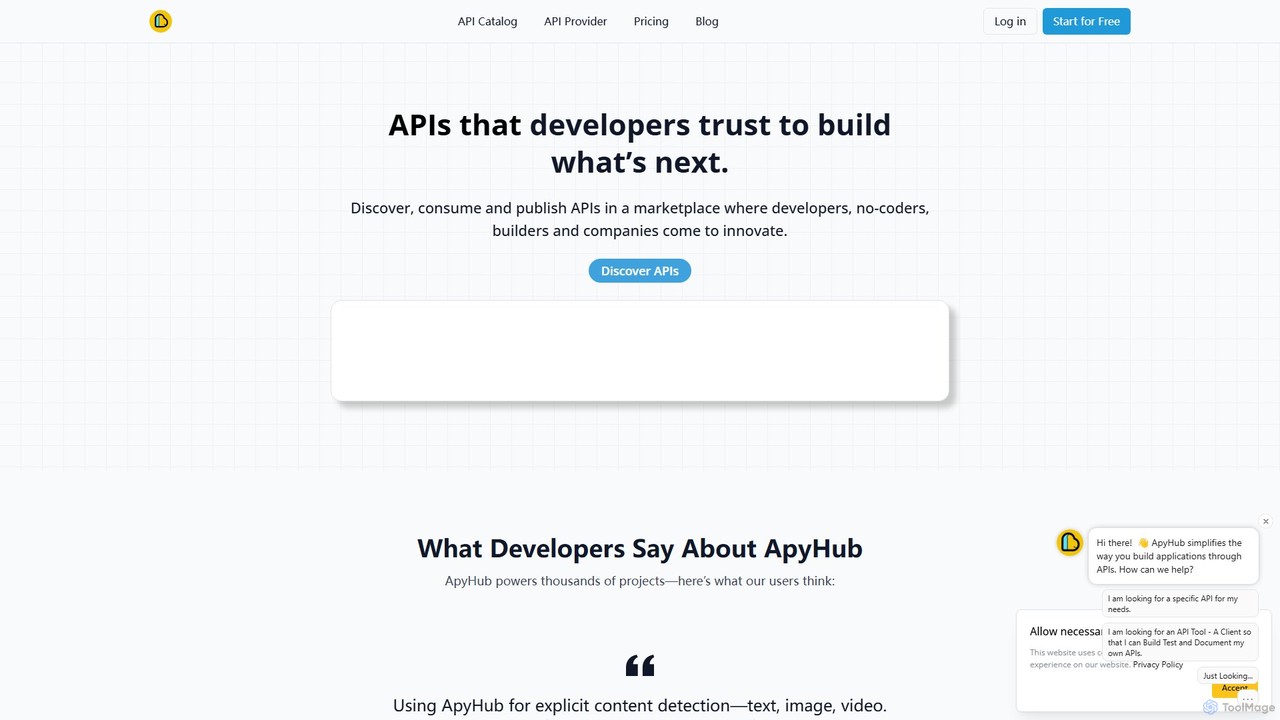
ApyHub
ApyHub is a comprehensive developer platform offering over 150 production-ready APIs. It's designed to accelerate application development by providing a vast catalog of utility and AI-powered APIs for tasks like data extraction, file manipulation, marketing automation, and e-commerce. It enables developers, no-coders, and teams to innovate faster by integrating trusted, pre-built functionalities, reducing boilerplate code and infrastructure management.
Text Generation
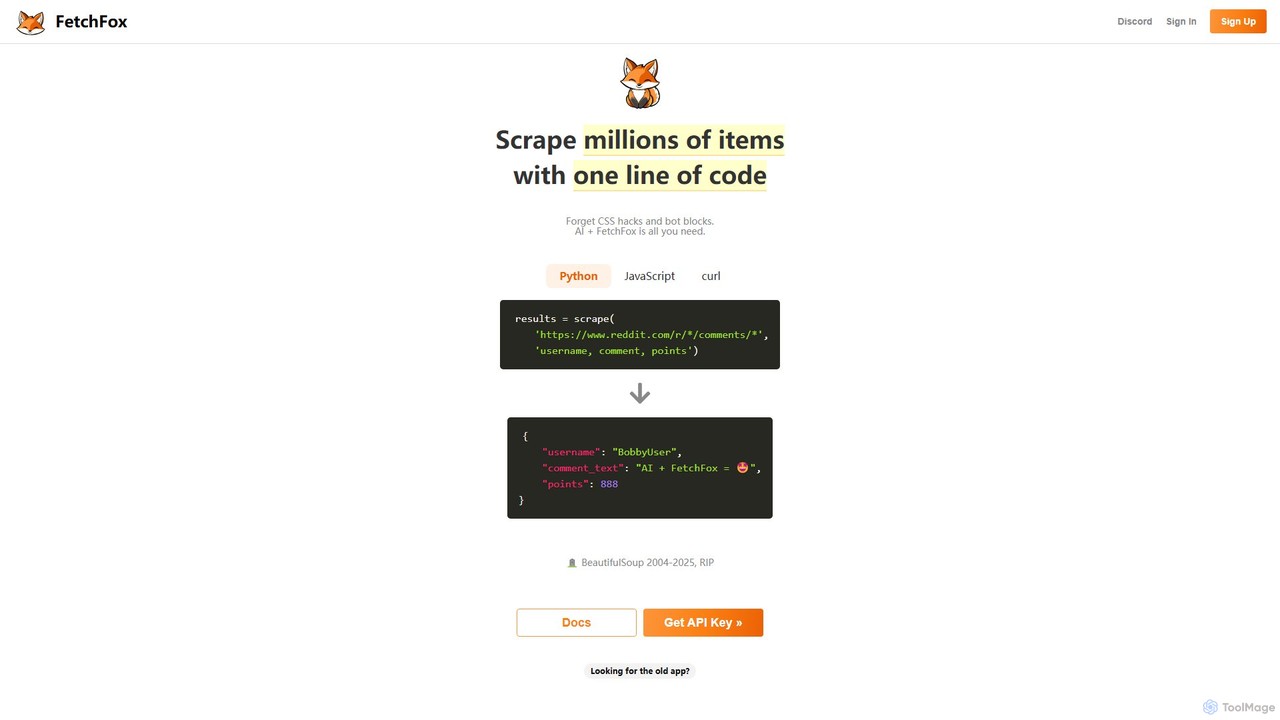
FetchFox
FetchFox is an AI-powered web scraping tool that allows users to extract data from any website using simple text prompts. It eliminates the need for complex coding or CSS selectors, automatically handling anti-bot measures. Available as an API, JavaScript library, and Chrome extension, it's designed for both developers and non-technical users to automate data collection effortlessly.
Data Extraction
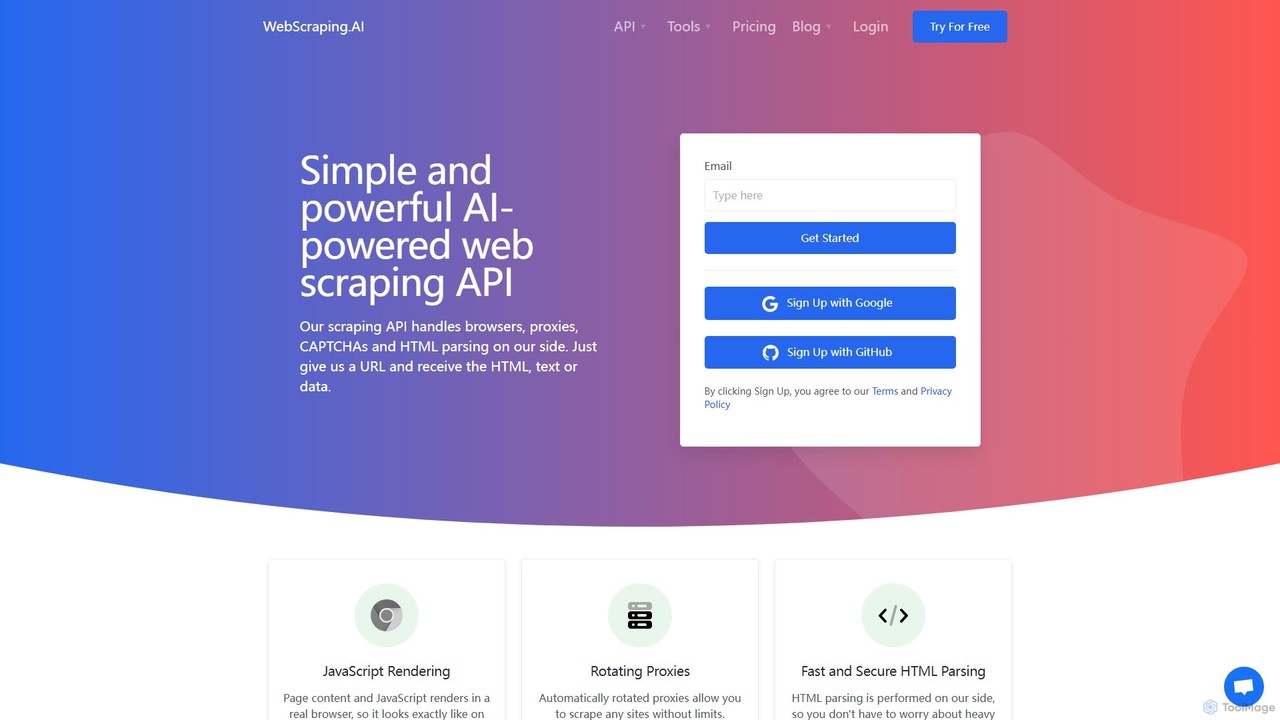
WebScraping.AI
WebScraping.AI is an advanced API for developers that simplifies web scraping using AI. It features rotating proxies, JavaScript rendering, and geotargeting to bypass blocks and access dynamic content. Its core strength lies in its LLM-powered tools, which can extract unstructured data, generate summaries, and answer questions directly from web pages, streamlining data collection for any project.
Data Extraction
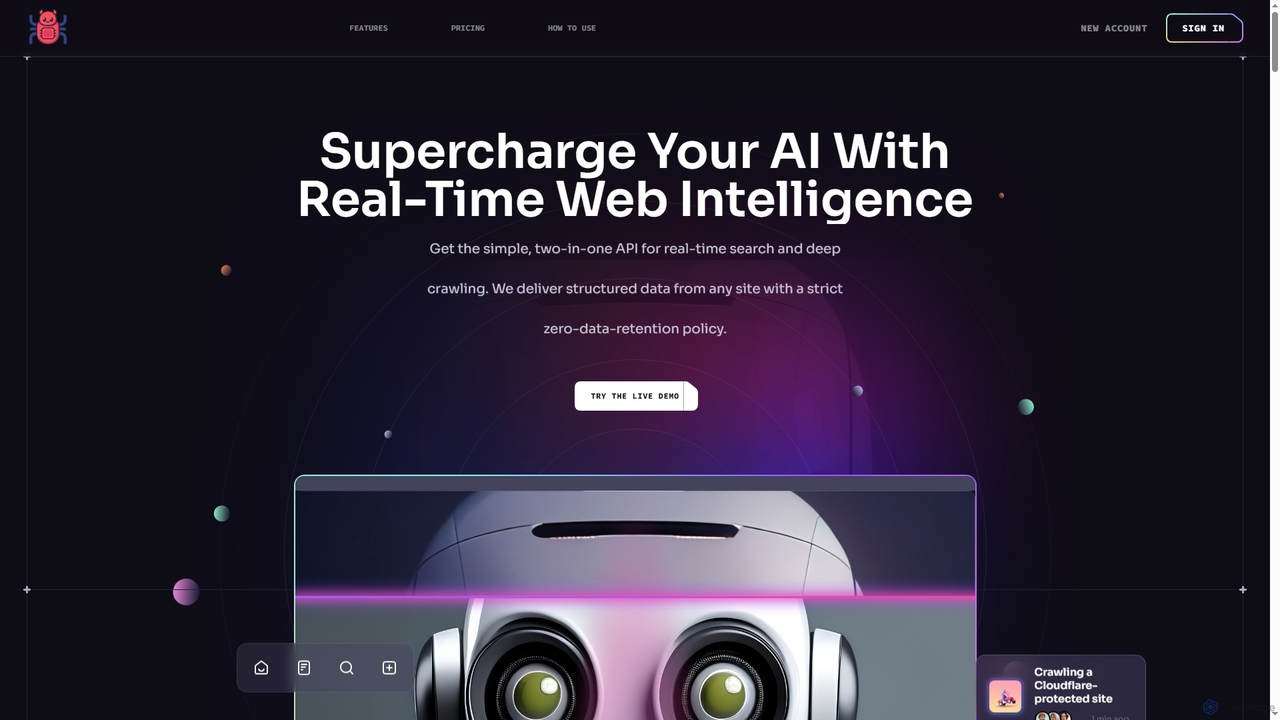
Crawleo
A powerful two-in-one API for AI systems, providing real-time web search and deep crawling. It delivers structured, AI-ready data (JSON, Markdown) from any website, bypassing anti-bot measures while ensuring privacy with a strict zero-data-retention policy. Designed for RAG pipelines, LLMs, and automation workflows.
Data Retrieval
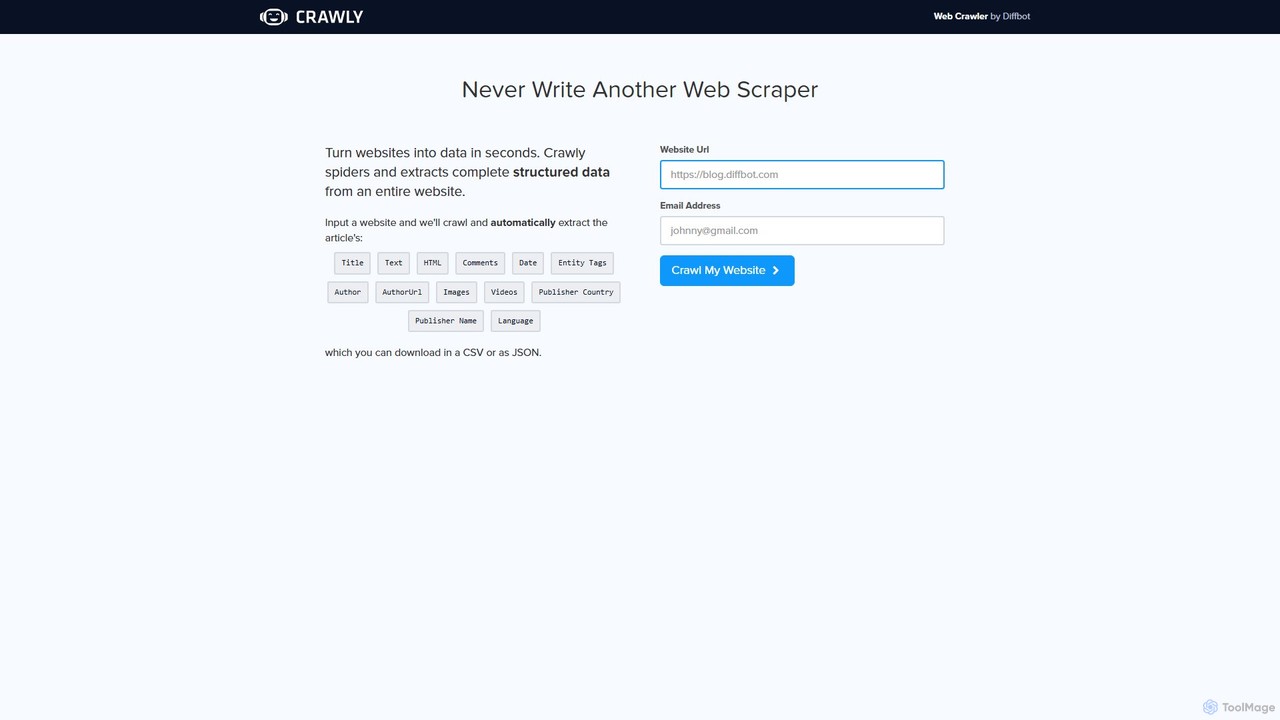
Crawly
Crawly is an AI-powered web crawler by Diffbot that automatically extracts structured data from entire websites. Simply input a URL, and Crawly spiders the site to pull key information like articles, products, and discussions, converting it into clean JSON or CSV data without any coding required.
Web Scraping
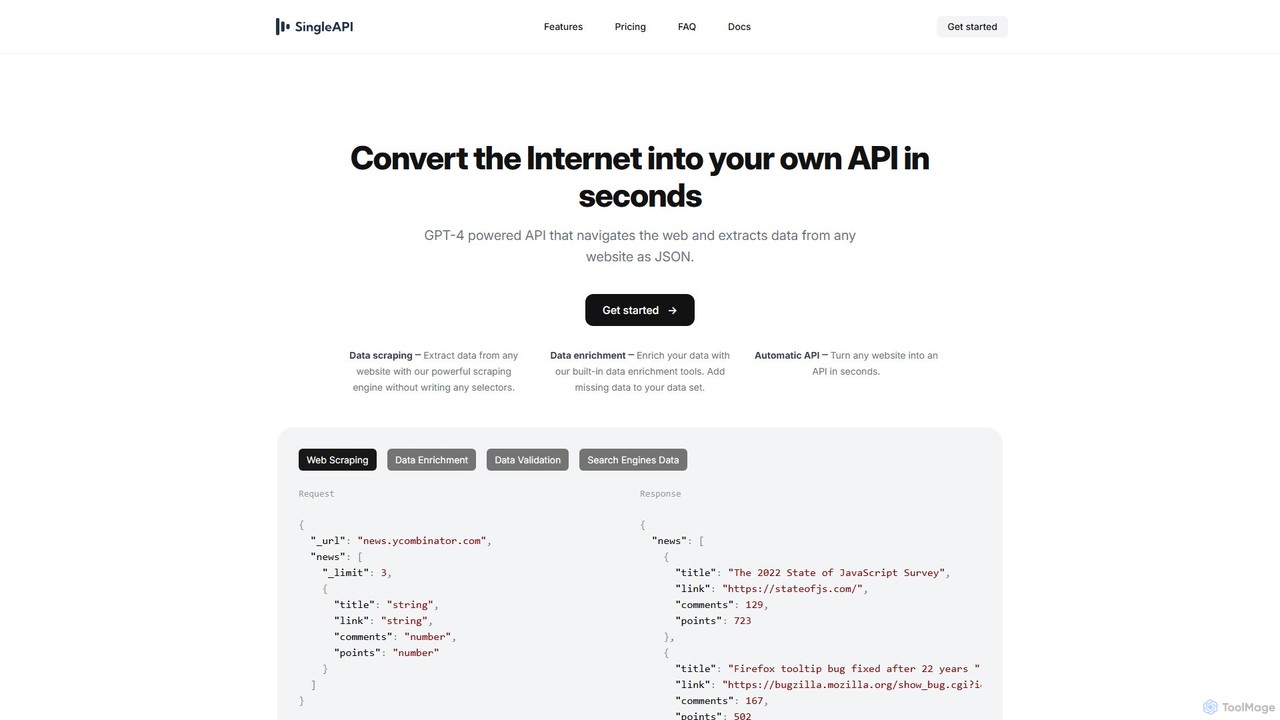
SingleAPI
SingleAPI is a GPT-4 powered tool that instantly converts any website into a structured JSON API. It simplifies web scraping, data extraction, and data enrichment without writing any code or selectors, allowing users to effortlessly access web data for various applications.
Web Scraping
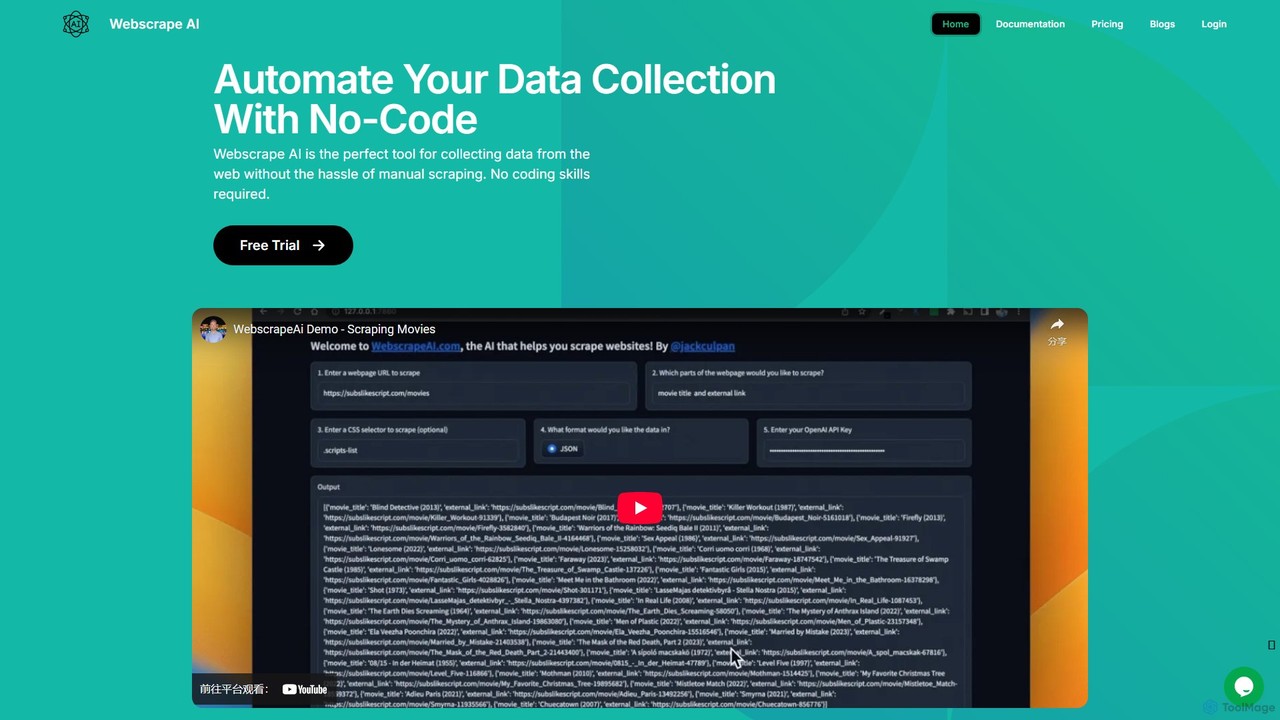
webscrapeai
WebscrapeAI is a no-code, AI-powered platform designed to automate web data collection. Simply provide a URL and specify the data you need, and the AI handles the entire scraping process. It supports dynamic websites, bulk scraping, proxy integration, and offers an API for developers, making data extraction fast, accurate, and accessible to everyone.
Web Scraping
Curlent
Curlent is an AI-powered web scraping and data extraction platform that automates the collection of structured data from any website. It intelligently handles dynamic content, anti-bot measures, and complex layouts, providing clean, ready-to-use data via a powerful API.
Scraping
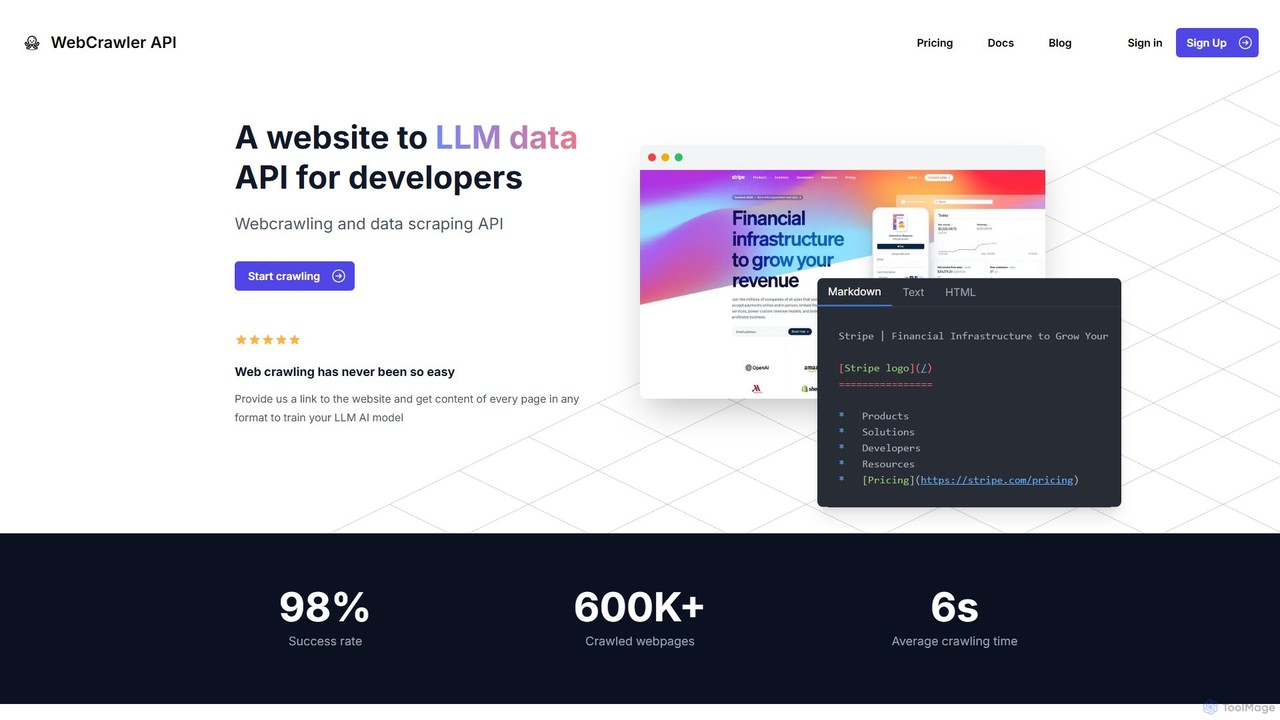
Webcrawlerapi
Webcrawlerapi is a powerful API for developers to effortlessly crawl websites and extract clean data. It simplifies web scraping by handling JavaScript rendering, anti-bot measures, and data parsing. Ideal for gathering structured content like Markdown or text to train LLM AI models or for Retrieval-Augmented Generation (RAG) systems, it offers a high success rate and a simple, pay-as-you-go pricing model.
Data Extraction
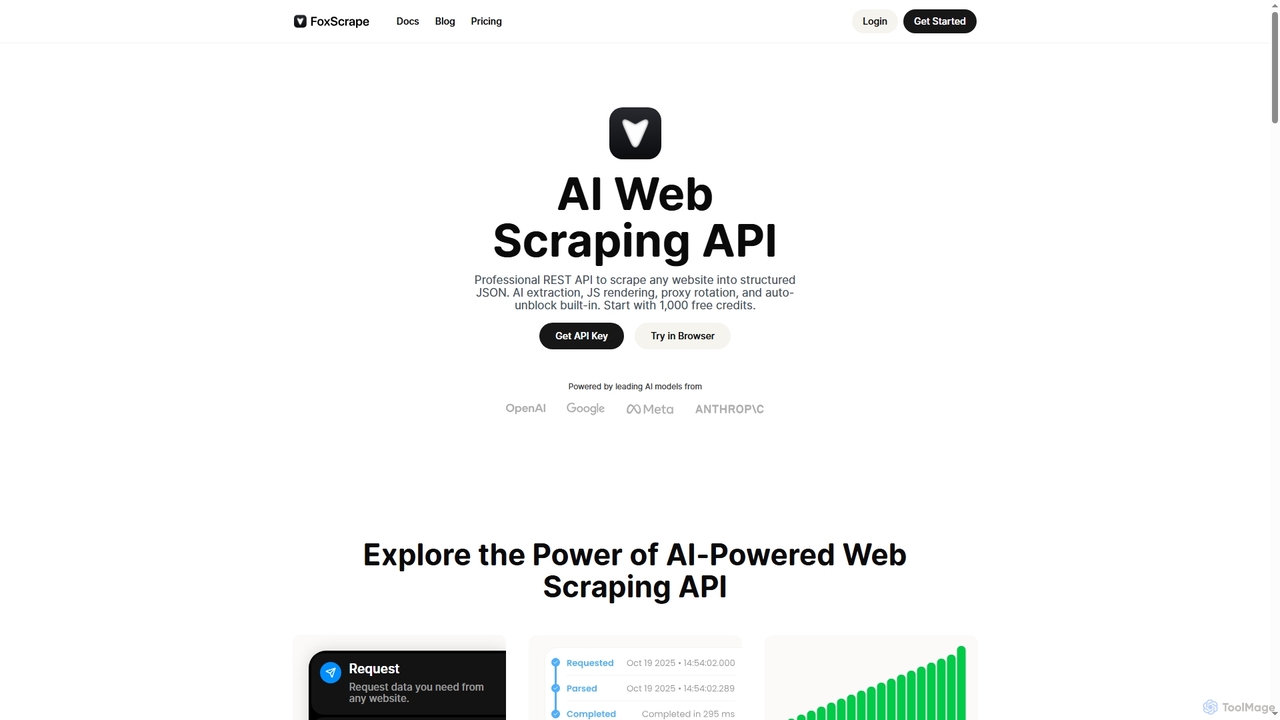
Foxscrape
FoxScrape is an AI-powered web scraping REST API for developers. It simplifies data extraction by converting any website into structured JSON data using features like AI-driven parsing from plain English, JavaScript rendering for dynamic sites, and automatic proxy rotation to prevent blocks.
Data Extraction