
Ai Infrastructure Best in category 1 results Data Retrieval AI Tool

Popular AI tools in the Data Retrieval field of Ai Infrastructure include Crawleo, etc., helping you quickly improve efficiency.

Crawleo

Crawleo

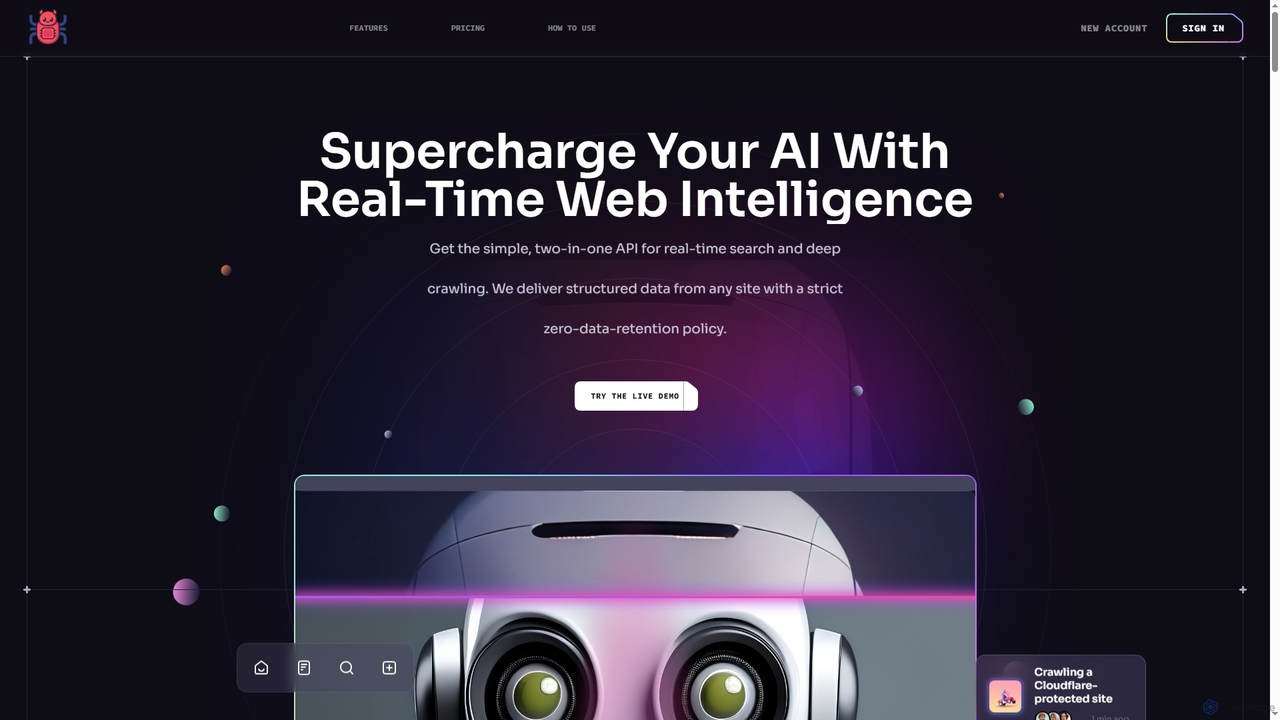
A powerful two-in-one API for AI systems, providing real-time web search and deep crawling. It delivers structured, AI-ready …

4.6K

About Data Retrieval

Data Retrieval tools are specialized systems designed to efficiently locate and extract specific information from large, often unstructured, datasets for AI applications. These tools utilize advanced techniques like semantic search and vector indexing to understand the contextual meaning of a query, rather than just matching keywords. They are fundamental for building applications that require real-time access to relevant knowledge, such as Retrieval-Augmented Generation (RAG) systems. By providing accurate, context-rich data to AI models, these tools significantly enhance the quality and reliability of AI-generated outputs.

Core Features

  • Semantic Search: Enables searching based on conceptual meaning and user intent, not just literal keyword matches.
  • Vector Indexing: Converts data (text, images) into numerical vectors for rapid similarity searches in large-scale databases.
  • Data Connectors: Provides pre-built integrations to ingest and synchronize data from various sources like databases, documents, and APIs.
  • Hybrid Search: Combines keyword-based search with semantic search to improve relevance and accuracy.
  • Advanced Filtering: Allows refining search results using metadata, dates, sources, or other custom attributes.

Use Cases

Data Retrieval tools are crucial for developers and data scientists building AI-powered applications. They are commonly used to create internal knowledge bases for enterprises, power intelligent customer support chatbots that draw from product documentation, and enhance e-commerce search engines to better understand customer queries. These tools form the backbone of any system that needs to ground AI responses in factual, proprietary data.

How to Choose

When selecting a Data Retrieval tool, evaluate its compatibility with your existing data sources and formats. Assess the query performance, including latency and throughput, to ensure it meets your application's needs. Consider its scalability to handle future data growth. Also, examine the availability and quality of its APIs and SDKs for seamless integration into your development workflow.

Data RetrievalUse Cases

1

Powering a RAG-based Customer Support Chatbot

A SaaS company's support team is overwhelmed with repetitive customer queries. A developer uses a Data Retrieval tool to index the entire knowledge base, including help articles, tutorials, and FAQs. They then integrate this indexed data with a large language model to build a RAG-powered chatbot. When a customer asks a question, the tool first retrieves the most relevant document snippets and feeds them to the LLM, which then generates a precise, context-aware answer. This reduces support ticket volume by 40% and provides customers with instant, 24/7 assistance.

2

Creating an Internal Corporate Knowledge Search

A large enterprise struggles with information silos, making it difficult for employees to find internal documents like HR policies, project reports, and technical specifications. An IT manager implements a Data Retrieval solution that connects to various internal repositories (SharePoint, Confluence, Google Drive). The tool indexes all documents, enabling employees to ask natural language questions like 'What is our remote work policy?' via a central search portal. This semantic search capability drastically reduces time spent searching for information and improves cross-departmental collaboration.

3

Enhancing E-commerce Product Discovery

An online fashion retailer notices that their standard keyword-based search engine fails to understand complex or vague user queries like 'summer dress for a wedding'. An e-commerce manager integrates a Data Retrieval tool to power their product search. The tool converts product descriptions and attributes into vectors, enabling a semantic understanding of products. Now, when a user searches, the system retrieves items that contextually match the occasion, style, and season, even if the exact keywords aren't in the product title. This leads to a 15% increase in conversion rates from search and higher customer satisfaction.

4

Automating Legal Document Analysis

A law firm needs to review thousands of documents for a complex litigation case to find relevant precedents and evidence. Paralegals use a Data Retrieval tool to ingest and index all case files, depositions, and legal texts. They can then perform semantic searches for complex legal concepts, such as 'breach of fiduciary duty in tech startups,' instead of manually searching for keywords. The tool ranks documents by relevance, allowing the legal team to quickly identify critical information, saving hundreds of hours of manual review and strengthening their case strategy.

5

Accelerating Academic Research and Literature Review

A PhD student in bioinformatics is conducting a literature review on 'gene editing techniques for rare diseases'. Manually sifting through thousands of research papers is a daunting task. The researcher uses a Data Retrieval tool to index a vast database of academic papers. They can then query the system with complex, natural language questions. The tool retrieves not only papers with exact keyword matches but also semantically related studies on similar mechanisms or diseases. This helps the researcher uncover non-obvious connections and complete their literature review in weeks instead of months.

6

Building a Personalized Content Recommendation Engine

A media streaming service wants to improve user engagement by providing more relevant content recommendations. A data scientist on the team uses a Data Retrieval platform to create vector embeddings for every movie and show based on their synopsis, genre, and user reviews. When a user watches a piece of content, the system performs a similarity search to find other content with close vector representations. This semantic approach provides more nuanced recommendations than simple genre-matching, suggesting content with similar themes or moods. The new engine increases average user session time by 20%.

Data RetrievalFrequently Asked Questions