ToolMage
Sign in

AI TOOL COMPARISON

CopyCoder vs Frontender

What is the difference, and which fits your workflow? Compare features, usage, pricing models and traffic side by side.

Jump to key differences

Product overview

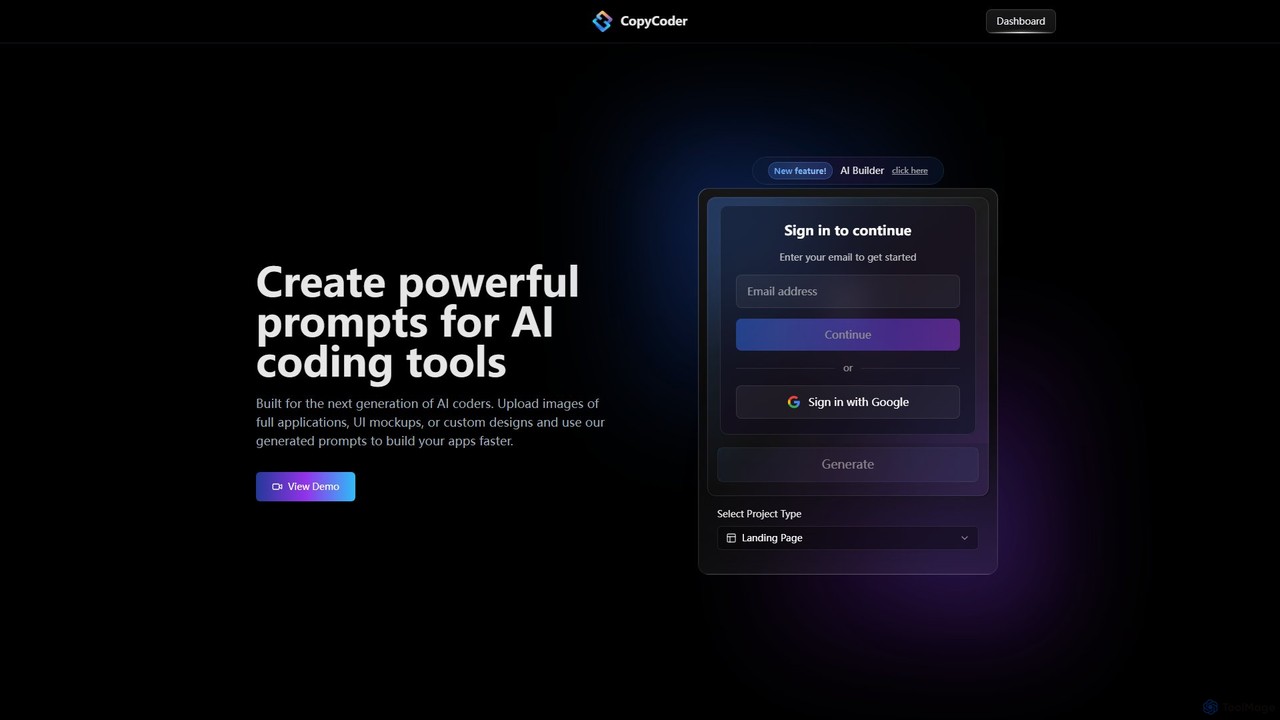
CopyCoder Product overview

CopyCoder is an AI-powered tool designed for developers that converts UI designs, mockups, and images into powerful, structured prompts for AI coding assistants like Cursor. It streamlines the development process by bridging the gap between visual design and code generation, enabling faster app building.

Preview

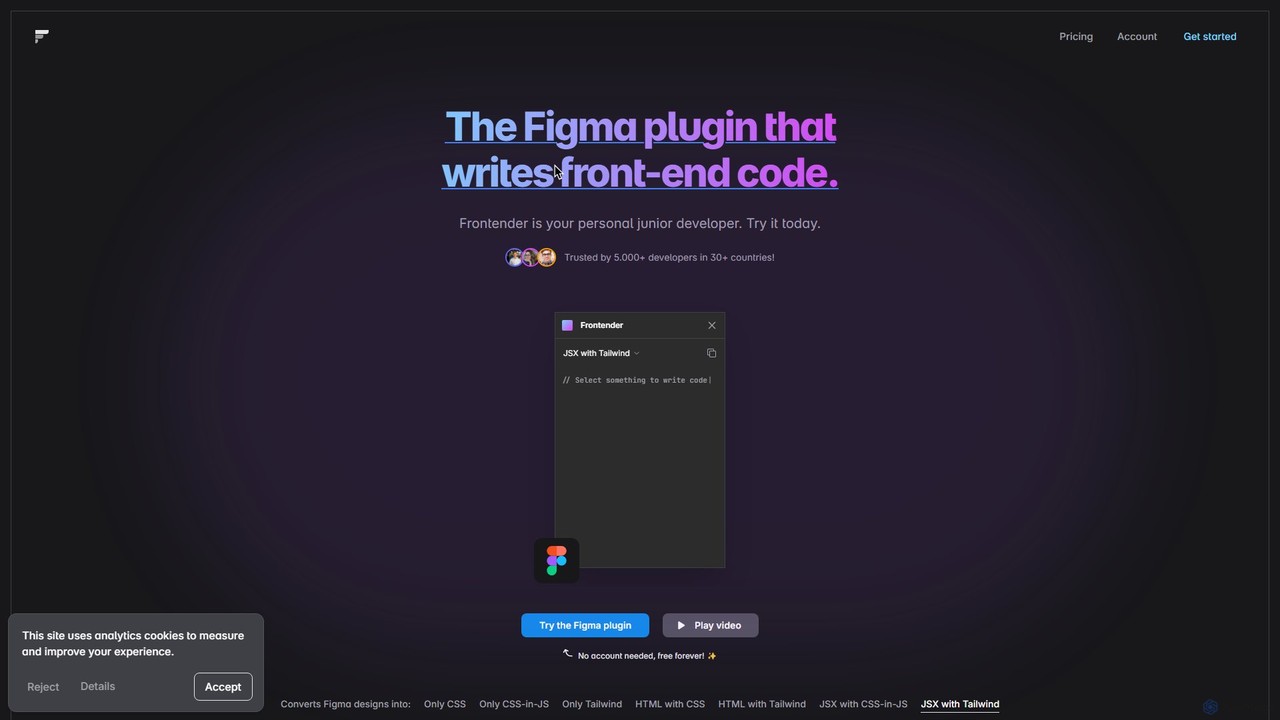
Frontender Product overview

A powerful Figma plugin that acts as your personal junior developer, instantly converting Figma designs into clean, production-ready front-end code. It supports HTML, JSX, CSS, CSS-in-JS, and Tailwind CSS, and works seamlessly with frameworks like React, Vue, and Svelte, even with messy design files.

Preview

Quick facts

Compare product focus, pricing models and audiences. Highlighted rows indicate different listed information; unknown pricing does not mean free.

CopyCoder VS Frontender — Quick facts
Quick factsCopyCoderFrontender
Pricing modelPaidFreemium
Product typeWebExtensions
Primary focusDesign To CodeDesign To Code
Audience and rolesNo data availableNo data available
CategoriesDesign To Code · Code Assistant · Developer ToolsDesign To Code · Code Assistant · Workflow Automation
AddedAug 14, 2025Aug 9, 2025
UpdatedNov 19, 2026Nov 19, 2026

Features, usage and use cases

Explore the listed product descriptions, features and workflows. Taxonomy labels alone are not feature evaluations.

CopyCoder

CopyCoder is a revolutionary AI tool built for the next generation of developers, designed to significantly accelerate the application development workflow. It specializes in translating visual designs into high-quality, structured prompts that can be used with AI coding assistants. By simply uploading an image of a UI mockup, a screenshot of an existing application, or a custom design, developers can generate detailed prompts that guide AI tools like Cursor to write the corresponding code. This process eliminates the tedious and time-consuming task of manually describing UI elements and layouts, allowing developers to focus on logic and functionality.

The platform is praised by the developer community for its impressive ability to convert images to code prompts, creating an incredibly efficient 'getting started' workflow. It's not just about speed; it's about precision. CopyCoder generates prompts that include details about component structure, styling, and layout, leading to more accurate and reliable code generation from the target AI assistant. This makes it an indispensable tool for rapid prototyping, front-end development, and for anyone looking to streamline their design-to-code process.

How to use CopyCoder

Using CopyCoder is a straightforward process designed for maximum efficiency:

  1. Sign Up and Log In: Create an account or sign in using your email or Google account.
  2. Select a Project Type: Start by choosing the type of project you are working on, for example, a 'Landing Page'.
  3. Upload Your Design: Drag and drop an image file of your UI mockup, application screenshot, or design concept into the upload area.
  4. Generate the Prompt: CopyCoder's AI will analyze the image, deconstruct its components, and generate a comprehensive, structured prompt.
  5. Use the Prompt: Copy the generated prompt and paste it into your preferred AI coding tool (e.g., Cursor). The AI assistant will then use this detailed prompt to generate the front-end code for your application.
  6. Build and Iterate: Use the generated code as a foundation for your project, iterating and adding functionality as needed.

Core Features of CopyCoder

  • Image-to-Prompt Generation (Clone UI): The core functionality that analyzes any UI image and converts it into a detailed, actionable prompt for AI coders.
  • AI Builder (Beta): An advanced feature that assists in the building process, likely offering more control over prompt generation and project structure.
  • Complete Template Library: Access a library of pre-designed templates to kickstart projects and provide inspiration.
  • Project Management: Organize your work with dedicated project spaces (1 for the Starter plan, unlimited for the Pro plan).
  • Seamless Integration: Designed to work perfectly with leading AI coding assistants, enhancing their capabilities.

Use Cases for CopyCoder

CopyCoder is versatile and can be used in various development scenarios:

  • Rapid Prototyping: Quickly transform design ideas from tools like Figma or Sketch into interactive web prototypes.
  • Frontend Development: Accelerate the creation of landing pages, dashboards, and complex UI components for web applications.
  • Design Handoff: Streamline the collaboration between designers and developers by providing a clear, machine-readable translation of visual designs.
  • Learning and Training: Helps developers understand how to effectively prompt AI coding tools by showing how visual elements are described textually.
  • Modernizing Legacy UIs: Take screenshots of older applications and use the generated prompts to quickly rebuild them with modern frameworks.

Advantages of CopyCoder

Developers choose CopyCoder for several key benefits:

  • Increased Productivity: Drastically reduces the time spent on writing boilerplate code and translating visual designs into code specifications.
  • Enhanced Accuracy: Generates specific and structured prompts, leading to higher quality and more predictable code output from AI assistants.
  • Simplified Workflow: Offers an intuitive drag-and-drop interface that simplifies the initial stages of development.
  • Empowers AI Assistants: Unlocks the full potential of tools like Cursor by providing them with superior input.
  • Strong Community Trust: Highly regarded and recommended by developers for its effectiveness and innovation.

Pricing and Plans

CopyCoder offers two straightforward subscription plans. There is no free trial available, as the platform incurs costs from AI model providers for every use.

  • Starter Plan: $15/month. Includes 1 project, full access to Clone UI, CopyCoder Builder (Beta), the complete template library, and standard customer support. Ideal for individuals and small projects.
  • Pro Plan: $39/month. Includes unlimited projects, full access to all features including Clone UI and CopyCoder Builder (Beta), the complete template library, and priority customer support. Best for serious developers and professional use.

Users can upgrade, downgrade, or cancel their plan at any time, with changes taking effect in the next billing cycle. Payments are processed securely through Stripe and accept all major credit cards.

Frontender

Frontender is a revolutionary Figma plugin designed to dramatically accelerate the front-end development workflow. It functions as an intelligent assistant, or a 'personal junior developer', that translates your Figma designs directly into high-quality, usable code. Trusted by thousands of developers worldwide, Frontender bridges the gap between design and implementation, allowing for a more streamlined and efficient development process.

The core capability of Frontender is its ability to analyze any selected layer or group of layers within a Figma file and generate corresponding front-end code in various formats. This eliminates the tedious and time-consuming task of manually writing code from a design mockup, freeing up developers to focus on more complex logic and functionality. The tool is engineered to be highly intelligent, capable of understanding design hierarchy, element order, and visual meaning even from disorganized or 'messy' Figma files that don't rely on strict autolayout or perfectly structured layers.

How to use Frontender

Using Frontender is designed to be incredibly straightforward and intuitive, integrating directly into your existing Figma workflow. There's no need for an external application or complex setup. The process is as follows:

  1. Install the Plugin: Find and install the Frontender plugin from the Figma Community.
  2. Select a Layer: Open your Figma design file and select any layer, component, or group of elements you wish to convert.
  3. Generate Code: With the layer selected, run the Frontender plugin. It will instantly analyze the design properties—such as size, position, color, typography, and layout—and present you with the generated code.
  4. Choose Your Format: You can choose from a wide array of output formats, including pure HTML with CSS, JSX with Tailwind CSS, or even just the CSS or CSS-in-JS styles.
  5. Copy and Use: Simply copy the generated code and paste it directly into your project's codebase. For Pro users, the autocopy feature makes this even faster.

Core Features of Frontender

  • Multi-Format Code Generation: Converts designs into a wide range of formats: Only CSS, Only CSS-in-JS, Only Tailwind, HTML with CSS, HTML with Tailwind, JSX with CSS-in-JS, and JSX with Tailwind.
  • Broad Framework Compatibility: The generated code is compatible with major front-end frameworks and libraries like React, Next.js (using JSX), as well as Vue and Svelte (using HTML).
  • Intelligent Design Analysis: Frontender does not depend on perfectly organized Figma files. Its AI can interpret hierarchy and meaning from messy layouts, making it highly versatile.
  • Deep Tailwind CSS Integration: The tool has an exceptional understanding of Tailwind CSS. It can use arbitrary values or intelligently find the closest matching value in your Tailwind configuration file.
  • Custom Tailwind Config Support: Users can paste their custom `tailwind.config.js` file directly into the plugin, and Frontender will generate code using your project's specific custom classes and design tokens.
  • Instant Code & Autocopy (Pro): Professional plan users benefit from instant code generation and an autocopy feature that streamlines the workflow even further.
  • React & Vue Component Generation (Pro): A new feature for Pro users that generates complete, ready-to-use components for React and Vue.

Use Cases for Frontender

Frontender is a versatile tool for various professionals and scenarios:

  • Front-End Developers: To rapidly scaffold UI components from Figma designs, significantly reducing boilerplate coding and accelerating project timelines.
  • UI/UX Designers: To facilitate a smoother handoff to developers by providing them with functional, accurate code snippets, ensuring design fidelity is maintained.
  • Full-Stack Developers: To quickly build out the front-end of an application without needing to spend extensive time on CSS and layout details.
  • Prototyping: To turn static designs into interactive, code-based prototypes in a fraction of the time.
  • Design System Implementation: To ensure consistency by generating code that adheres to a predefined Tailwind config, reinforcing the design system's rules.

Advantages of Frontender

The primary advantage of Frontender is its massive boost to productivity. It automates a significant portion of the front-end coding process, allowing developers to be more efficient. The code it generates is praised for its accuracy, closely matching the Figma design. Its flexibility in handling messy files and supporting custom configurations makes it a practical tool for real-world projects, not just idealized design files. Furthermore, its generous free tier makes it accessible to individual developers, students, and hobbyists, while the professional plan offers unlimited power for serious development work.

Pricing and Plans

Frontender operates on a freemium model, providing options for both casual users and professionals.

  • Free Plan: This plan is free forever and does not require an account. It includes 15 free conversions per month, making it perfect for small projects or for trying out the tool.
  • Professional Plan: This plan unlocks the full potential of Frontender. It offers unlimited conversions, instant code generation, autocopy, support for React & Vue components, and the ability to use a custom Tailwind config. The Professional plan is available as a monthly or annual subscription. The annual subscription offers the best value, effectively providing 3 months for free compared to the monthly rate. (Note: The pricing page often features promotional discounts, such as a summer sale.)

Positioning

Their taxonomy shows where the products overlap and where each one has a more distinct focus. Unknown fields are shown explicitly and are never filled with assumptions.

Categories

Shared
Design To CodeCode Assistant
Only CopyCoder
Developer Tools
Only Frontender
Workflow Automation

Tags

Shared
code generator
Only CopyCoder
ai coding assistantCursordeveloper toolsfrontend developmentimage to codeprompt generatorrapid prototypingUI to codeweb development
Only Frontender
cssdesign to codedeveloper toolfigma pluginfront-end developmenthtmlJSXreactSvelteTailwind CSSvueworkflow automation

Audience and roles

Shared
No listed items
Only CopyCoder
No listed items
Only Frontender
No listed items

Traffic comparison

Traffic is shown on the same scale so differences in market visibility are not visually understated.

How to interpret the traffic data

Both charts share the same months and vertical scale. Each tool identifies its latest reporting month; missing months are left blank, not counted as zero. Regional and source visit counts are estimates calculated from the reported shares.

CopyCoder monthly traffic:

Latest traffic · 2026-05

Monthly visits
693
Avg. visit duration
0:04
Pages per visit
1.09
Bounce rate
82.71%
Data updated 2026-06-15

Monthly traffic trend

  • 2025-07: No data available
  • 2025-08: No data available
  • 2025-09: 18.6K
  • 2026-01: 5.9K
  • 2026-02: 3.4K
  • 2026-03: 1.1K
  • 2026-04: 1.7K
  • 2026-05: 693

Top regions

Top 5 countries/regions
Country/regionPercentageEstimated visits
🇺🇸United States100%693

Search keywords

copycoder.icopy coders

Frontender monthly traffic:

Latest traffic · 2026-05

Monthly visits
939
Avg. visit duration
0:00
Pages per visit
1.01
Bounce rate
40.46%
Data updated 2026-06-11

Monthly traffic trend

  • 2025-07: 20
  • 2025-08: 299
  • 2025-09: 443
  • 2026-01: No data available
  • 2026-02: No data available
  • 2026-03: 0
  • 2026-04: 0
  • 2026-05: 939

Top regions

Top 5 countries/regions
Country/regionPercentageEstimated visits
🇷🇺Russia100%939

Search keywords

frontender

Community signals

Ratings, comments, favorites, and likes are community signals—not a substitute for product fit.

CopyCoder

Rating
No data available
Comments
0
Favorites
191
Likes
168

Frontender

Rating
No data available
Comments
0
Favorites
180
Likes
176

CopyCoder vs Frontender · Comparison FAQ

What do CopyCoder and Frontender have in common?
Both tools are listed under Design To Code、Code Assistant. These categories indicate overlapping use cases; compare their detailed descriptions for workflows, capabilities and limitations.
Are CopyCoder and Frontender free?
Listed pricing models: CopyCoder — Paid; Frontender — Freemium. Missing pricing is not proof of a free plan, and freemium does not mean every feature is free. Check official sites for current plans, limits and trials.
How should I choose between CopyCoder and Frontender?
The primary listed category is Design To Code for CopyCoder, and Design To Code for Frontender. Compare features, steps and use cases, then verify pricing, data permissions and deployment needs. This page does not include hands-on testing and does not declare a winner from traffic or tags.

Sources and comparison methodology

This page is assembled from ToolMage product listings, taxonomy, traffic statistics and on-site user feedback. It is not a hands-on test or an independent review.

  • Feature and plan descriptions reflect information in the listings, not real-time guarantees. Verify pricing, quotas, availability and privacy terms on the official sites.
  • Traffic uses the reporting months shown. Missing statistics do not mean zero visits, and different periods do not establish growth or superiority. Regional and source visit counts are estimates based on shares.
  • Different tags indicate differences in the listings, not proof that the other product lacks a capability. Ratings, favorites and visits are not used to declare a winner.

Related comparisons