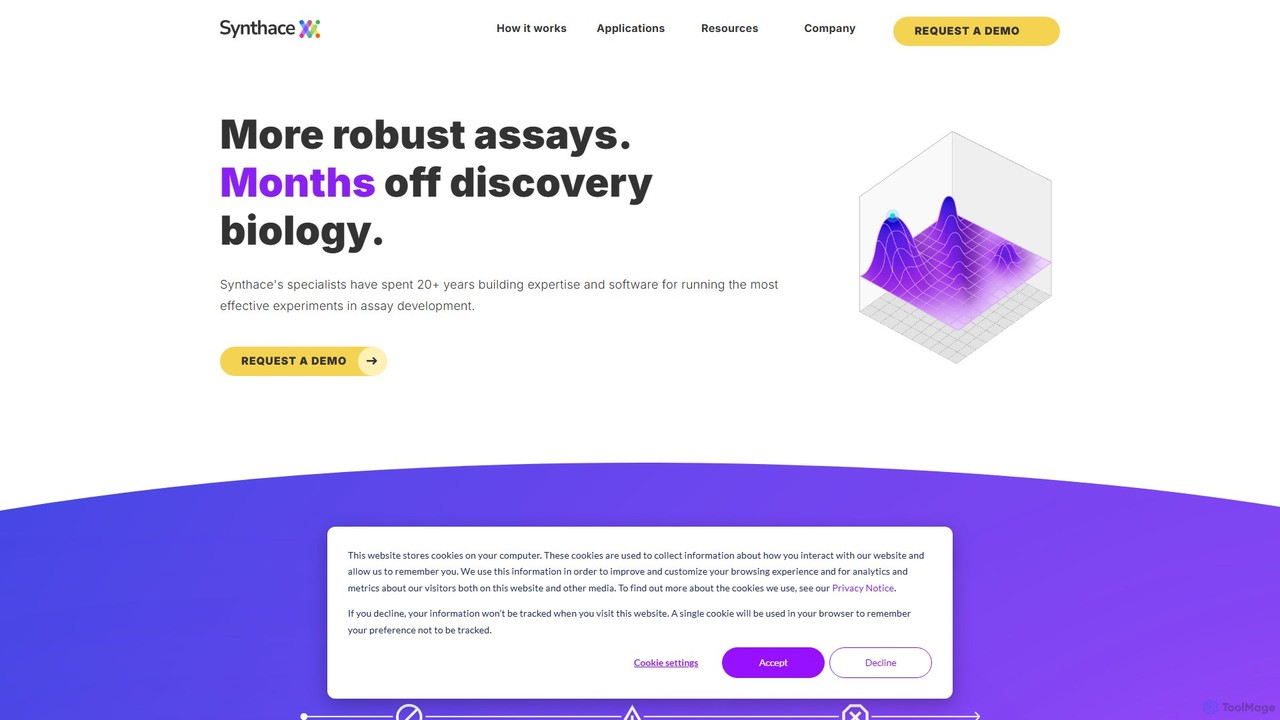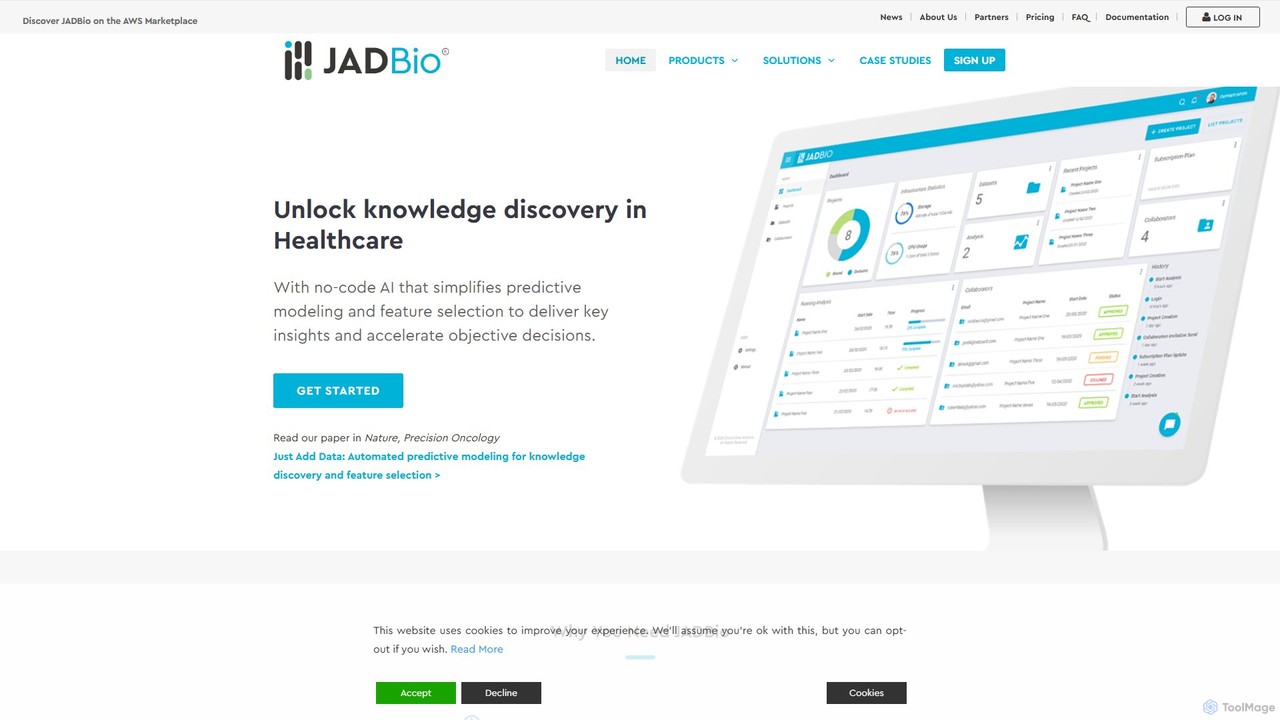
Cradle is an AI-powered platform designed for scientists and biotech companies to engineer better proteins faster. By leveraging generative AI and machine learning, it helps generate novel protein candidates and optimize their properties, such as stability, activity, and binding affinity. The platform learns from your experimental data, enabling more breakthroughs in fewer lab experiments and significantly accelerating development timelines from years to quarters.
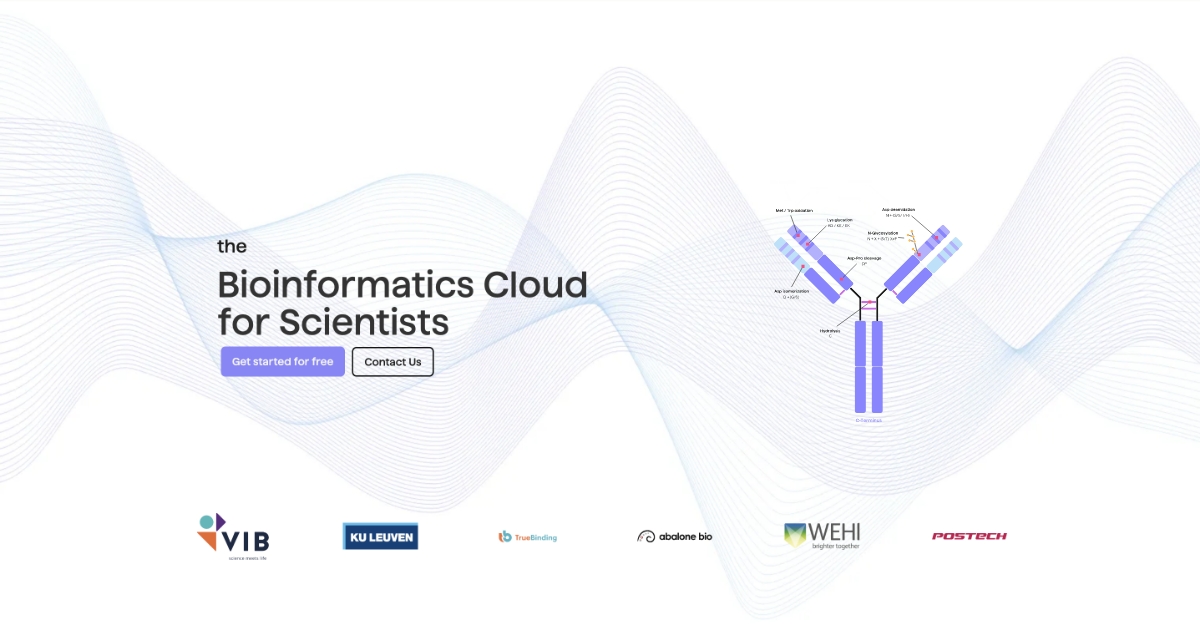
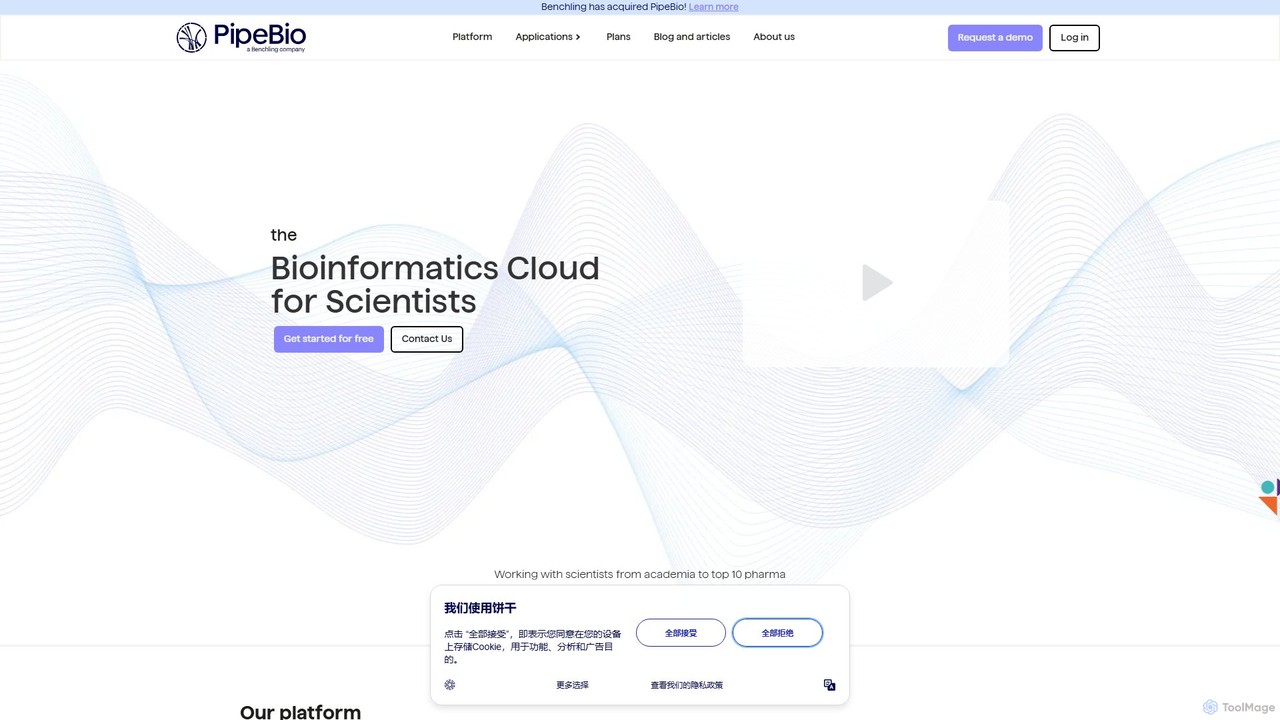
PipeBio is a specialized, cloud-based bioinformatics platform designed for antibody, TCR, and peptide discovery. It enables researchers to analyze, visualize, and manage large-scale sequence data, integrating seamlessly with functional assay results to accelerate biologics development. Acquired by Benchling, it offers an end-to-end solution for modern drug discovery.
Product overview
Cradle Product overview
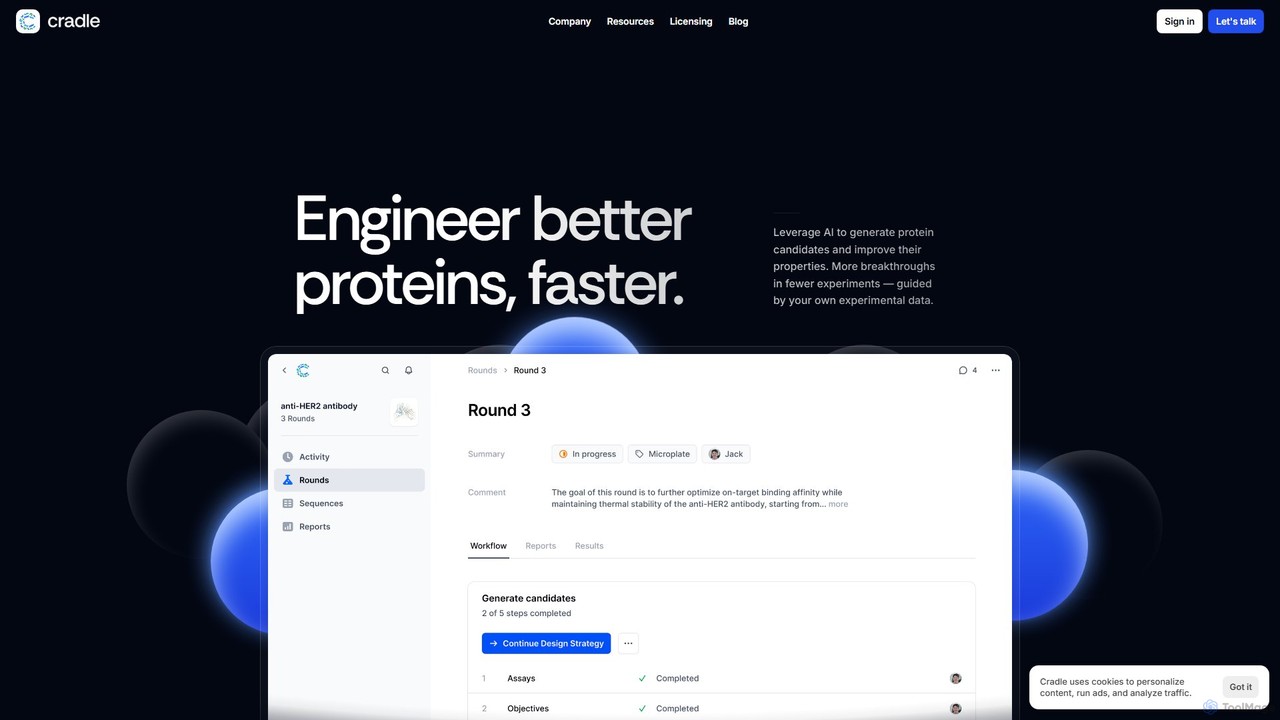
Cradle is an AI-powered platform designed for scientists and biotech companies to engineer better proteins faster. By leveraging generative AI and machine learning, it helps generate novel protein candidates and optimize their properties, such as stability, activity, and binding affinity. The platform learns from your experimental data, enabling more breakthroughs in fewer lab experiments and significantly accelerating development timelines from years to quarters.
PipeBio Product overview
PipeBio is a specialized, cloud-based bioinformatics platform designed for antibody, TCR, and peptide discovery. It enables researchers to analyze, visualize, and manage large-scale sequence data, integrating seamlessly with functional assay results to accelerate biologics development. Acquired by Benchling, it offers an end-to-end solution for modern drug discovery.
Detailed feature comparison
| Feature | Cradle | PipeBio |
|---|---|---|
| Primary category | Drug Discovery | Drug Discovery |
| Added | 2025-08-07 | 2025-08-04 |
| Pricing | Paid | Paid |
| Official website | www.cradle.bio | pipebio.com |
| Product type | Website | Website |
| Performance data | ||
| User rating | Not verified | Not verified |
| Comments | 0 | 0 |
| Monthly visits | 52.1K | 6.9K |
| Monthly growth | 78.8% | 35.5% |
| Favorites | 99 | 126 |
| Details | View details | View details |
Cradle vs PipeBio monthly traffic
Compare Cradle and PipeBio by monthly reach, traffic trend, visit depth, top regions, and acquisition sources.
How to interpret the traffic data
In the Cradle vs PipeBio monthly traffic comparison, Cradle currently shows 52.1K visits and PipeBio shows 6.9K; Cradle has about 7.5 times the visible traffic of PipeBio, an absolute difference of about 45.2K visits. This reflects visible reach, not feature quality or paid users.
Both tools provide verified traffic details, so monthly trends, visit depth, regions, and acquisition sources can be compared on the same basis.
Cradle monthly traffic:
Latest traffic
Monthly traffic trend
- 2025/9: 46.2K Monthly visits
- 2026/1: 40.6K Monthly visits
- 2026/2: 31.6K Monthly visits
- 2026/3: 30.9K Monthly visits
- 2026/4: 29.1K Monthly visits
- 2026/5: 52.1K Monthly visits
Top regions
Top 5 countries/regions
| Country/region | Percentage | Traffic |
|---|---|---|
| 🇺🇸United States | 40.81% | 21.3K |
| 🇳🇱Netherlands | 30.31% | 15.8K |
| 🇻🇳Vietnam | 11.39% | 5.9K |
| 🇨🇦Canada | 9.41% | 4.9K |
| 🇫🇷France | 8.08% | 4.2K |
Traffic sources
| Source type | Percentage | Traffic |
|---|---|---|
| Direct | 55.94% | 29.1K |
| Referral | 27.79% | 14.5K |
| 16.27% | 8.5K |
Search keywords
PipeBio monthly traffic:
Latest traffic
Monthly traffic trend
- 2025/9: 10.7K Monthly visits
- 2026/1: 8.3K Monthly visits
- 2026/2: 9K Monthly visits
- 2026/3: 6.2K Monthly visits
- 2026/4: 5.1K Monthly visits
- 2026/5: 6.9K Monthly visits
Top regions
Top 5 countries/regions
| Country/region | Percentage | Traffic |
|---|---|---|
| 🇺🇸United States | 69.69% | 4.8K |
| 🇮🇳India | 27.75% | 1.9K |
| 🇰🇷Korea, Republic of | 2.56% | 177 |
Search keywords
Usage comparison
Compare the core capabilities of Cradle and PipeBio
Cradle Core features
PipeBio Core features
Use cases
Cradle Use cases
PipeBio Use cases
Cradle vs PipeBio:In-depth comparison and selection guidance
First decide whether the products solve the same kind of need
This in-depth Cradle vs PipeBio comparison uses only the product records, taxonomy, audience, traffic, and community signals available on this page. Cradle is primarily listed under “Drug Discovery”, while PipeBio is primarily listed under “Drug Discovery”, so the first decision is whether your actual task matches their recorded scope.
The structured fields currently show these decision-relevant differences: Monthly visits (Cradle: 52.1K; PipeBio: 6.9K); Monthly growth (Cradle: 78.8%; PipeBio: 35.5%); Favorites (Cradle: 99; PipeBio: 126); Website (Cradle: www.cradle.bio; PipeBio: pipebio.com); Added (Cradle: 2025-08-07; PipeBio: 2025-08-04). These facts are more useful for selection than brand visibility alone.
What market visibility and monthly traffic mean
In the Cradle vs PipeBio monthly traffic comparison, Cradle currently shows 52.1K visits and PipeBio shows 6.9K; Cradle has about 7.5 times the visible traffic of PipeBio, an absolute difference of about 45.2K visits. This reflects visible reach, not feature quality or paid users.
Both tools provide verified traffic details, so monthly trends, visit depth, regions, and acquisition sources can be compared on the same basis.
If public market visibility is an important first-pass criterion, investigate Cradle first. The final choice should still follow taxonomy, use case, and a real trial because higher traffic does not prove broader capabilities or better workflow fit.
Product positioning, use cases, and roles
Cradle and PipeBio currently overlap in shared categories: Drug Discovery; shared tags: drug discovery and protein engineering. This can place both on the same shortlist, but it does not prove equal implementation, depth, or cost.
Cradle's unique categories/tags are Research, Biotechnology, antibody engineering, biotechnology, enzyme design, generative AI, machine learning, and scientific research; PipeBio's are Data Analysis, Bioinformatics, antibody discovery, bioinformatics, biologics, data visualization, genomics, and NGS. These unique fields are the strongest differentiators: validate the product whose recorded scope matches the task instead of following traffic alone.
What ratings, comments, and favorites can tell you
Cradle has no verified rating, 0 comments, 99 favorites, and 94 likes;PipeBio has no verified rating, 0 comments, 126 favorites, and 132 likes。
Neither product has enough rating or comment samples for a credible reputation ranking.
Selection guidance by actual need
When to evaluate Cradle first
Put Cradle on the priority trial list when the task aligns with “Drug Discovery” and especially Research, Biotechnology, antibody engineering, biotechnology, enzyme design, and generative AI. This follows recorded positioning and does not imply unlisted capabilities are absent.
Cradle also currently records: pricing is paid, product type is website, 52.1K verified monthly visits, no verified user rating. Verify any hard requirement around price, platform, or reach before trial, and do not let sparse review data substitute for testing.
When to evaluate PipeBio first
Put PipeBio on the priority trial list when the task aligns with “Drug Discovery” and especially Data Analysis, Bioinformatics, antibody discovery, bioinformatics, biologics, and data visualization. This follows recorded positioning and does not imply unlisted capabilities are absent.
PipeBio also currently records: pricing is paid, product type is website, 6.9K verified monthly visits, no verified user rating. Verify any hard requirement around price, platform, or reach before trial, and do not let sparse review data substitute for testing.
How to validate the recommendation before deciding
The available data describes positioning, public visibility, and community signals, but it cannot prove output quality, speed, integration effort, privacy, or long-term cost in your workflow. Before deciding, run the same representative tasks in Cradle and PipeBio, then record completion time, accuracy, manual corrections, and the real paid threshold. A like-for-like trial turns this comparison into a defensible adoption decision.
Comparison FAQ
How should I choose between Cradle and PipeBio?
Where does this comparison data come from?
What do unknown fields mean?
Related AI tools

Ligo Biosciences
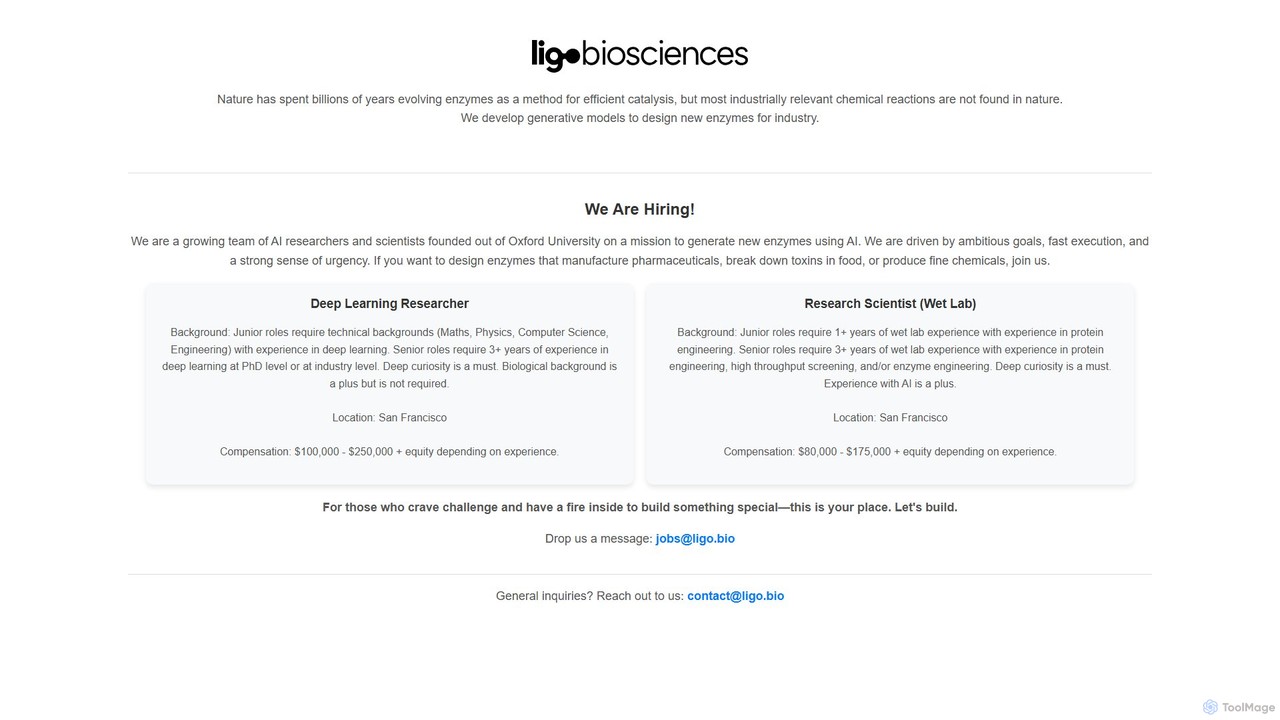
Ligo Biosciences is a research-driven company that leverages generative AI models to design novel enzymes for industrial applications. Originating from Oxford University, they create custom biocatalysts for pharmaceuticals, fine chemical production, and food safety, accelerating innovation beyond the limits of naturally occurring enzymes.
Generative Models
Tamarind Bio
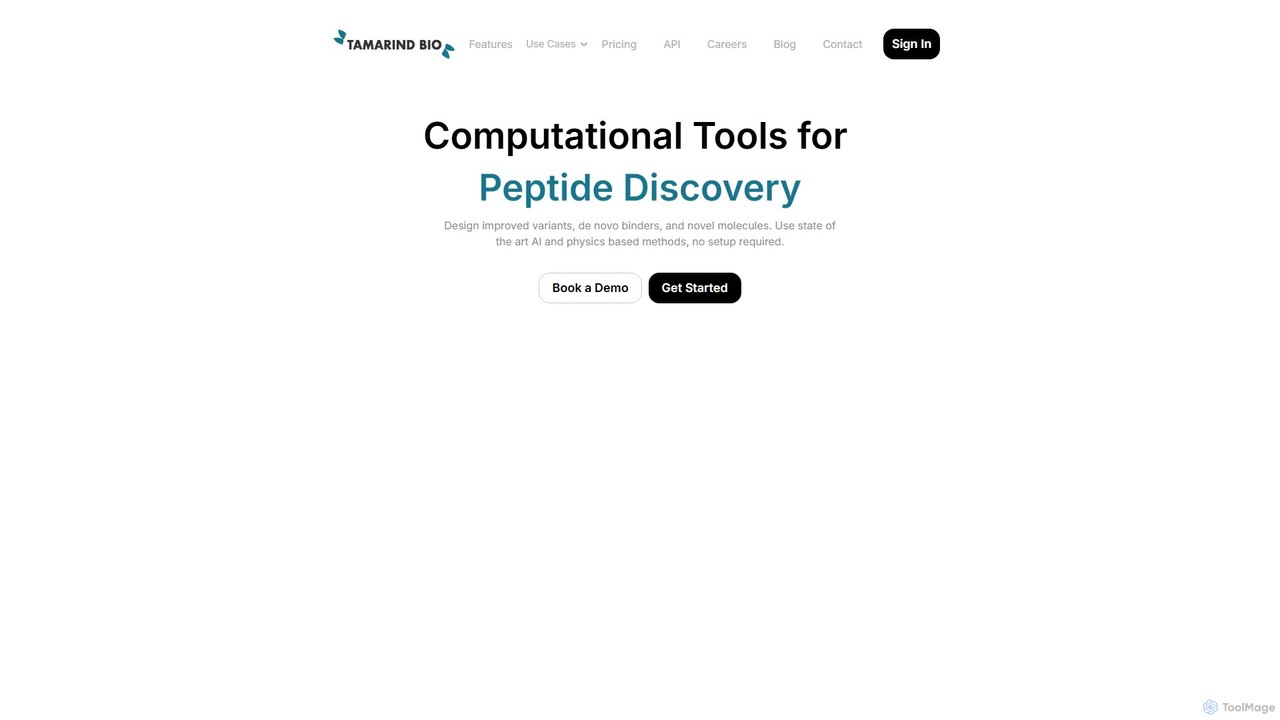
Tamarind Bio is an advanced computational platform that democratizes protein engineering. It provides scientists with a user-friendly interface and a powerful API to access state-of-the-art AI and physics-based tools like AlphaFold and RFdiffusion. The platform streamlines protein design, antibody engineering, and enzyme optimization, handling all high-performance computing and orchestration. This allows researchers to design novel molecules and improve biological variants at a massive scale, accelerating discovery in life sciences without requiring specialized computational expertise.
Api
Ginkgo Bioworks
Ginkgo Bioworks is a leading synthetic biology company that utilizes AI, automation, and a vast biological codebase to program cells. They engineer custom microorganisms for partners in pharmaceuticals, agriculture, and industrial manufacturing, accelerating biological R&D and enabling the sustainable production of novel products.
Sustainable Farming
Verge Genomics
Verge Genomics is a biotechnology company leveraging an all-in-human, AI-powered platform, CONVERGE®, to discover and develop drugs for complex diseases. By analyzing vast human genomic datasets, it aims to accelerate the creation of effective treatments for conditions like ALS, Parkinson's, and Frontotemporal Dementia, moving from discovery to clinic significantly faster than traditional methods.
Machine Learning
Ginkgo Bioworks
Ginkgo Bioworks is a leading biotechnology platform that leverages AI, automation, and data analytics to program cells for a wide range of applications. It provides "biology-as-a-service," enabling partners in pharma, agriculture, and industrial sectors to accelerate their R&D and develop novel bio-based products.
Drug Discovery
Variational AI
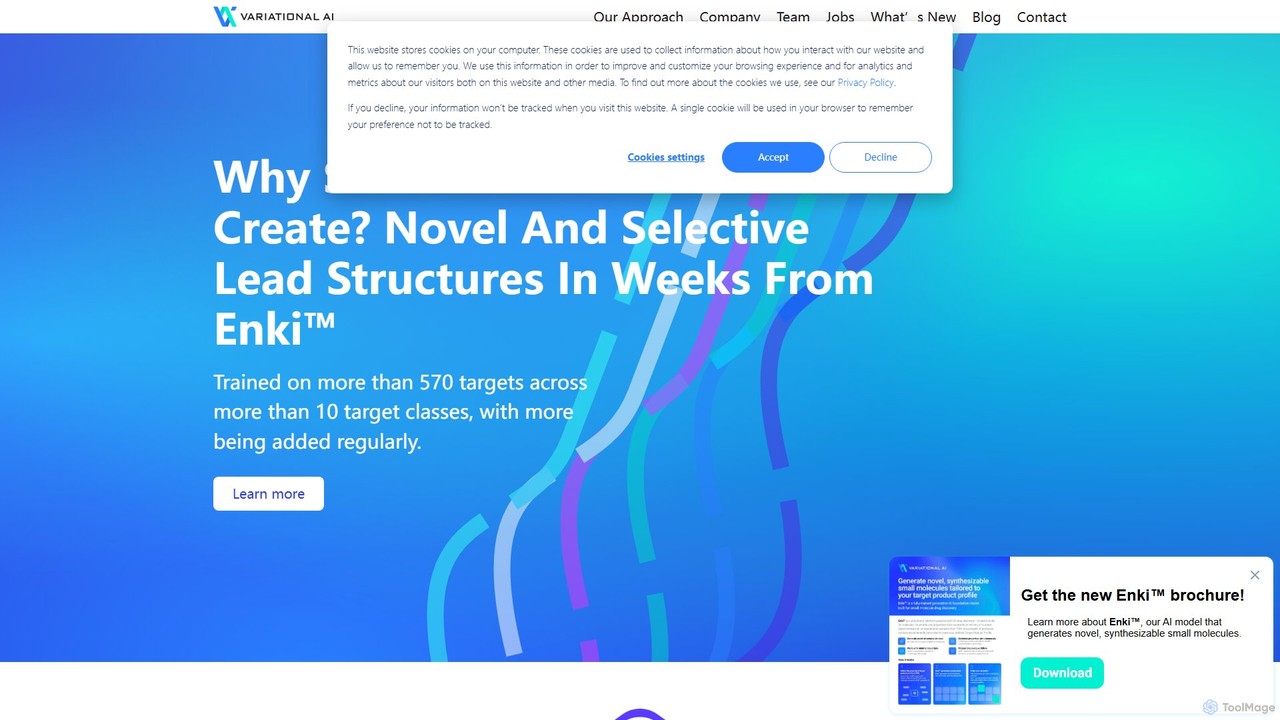
Variational AI leverages a generative AI foundation model, Enki™, to discover novel, drug-like small molecules. It accelerates drug discovery by generating selective lead structures in weeks, enabling biopharmaceutical partners to bypass traditional high-throughput screening and redefine the economics of therapeutic development.
Generative Models
1910genetics
1910genetics is a biotechnology company revolutionizing drug discovery with its multimodal AI platform, ITO™. Powered by lab automation, it accelerates the design of both small and large molecule therapeutics, aiming to make previously undruggable targets treatable for diseases like cancer, and neurological or autoimmune disorders.
Predictive Modeling
floatz
floatz is an AI-powered platform for the biotech and pharmaceutical industries, specializing in target validation and prioritization. It provides a "Foundational Evidence Audit" to de-risk R&D pipelines, using computational due diligence to assess the biological relevance and commercial viability of therapeutic targets, helping companies secure funding and make confident investment decisions.
Biotechnology
Benchling
Benchling is a cloud-based R&D platform for life sciences, using AI to accelerate scientific discovery. It unifies Electronic Lab Notebook (ELN), LIMS, and molecular biology tools to centralize data, streamline workflows, and enable collaboration for biotech and pharmaceutical research.
Analytics
InsightAI
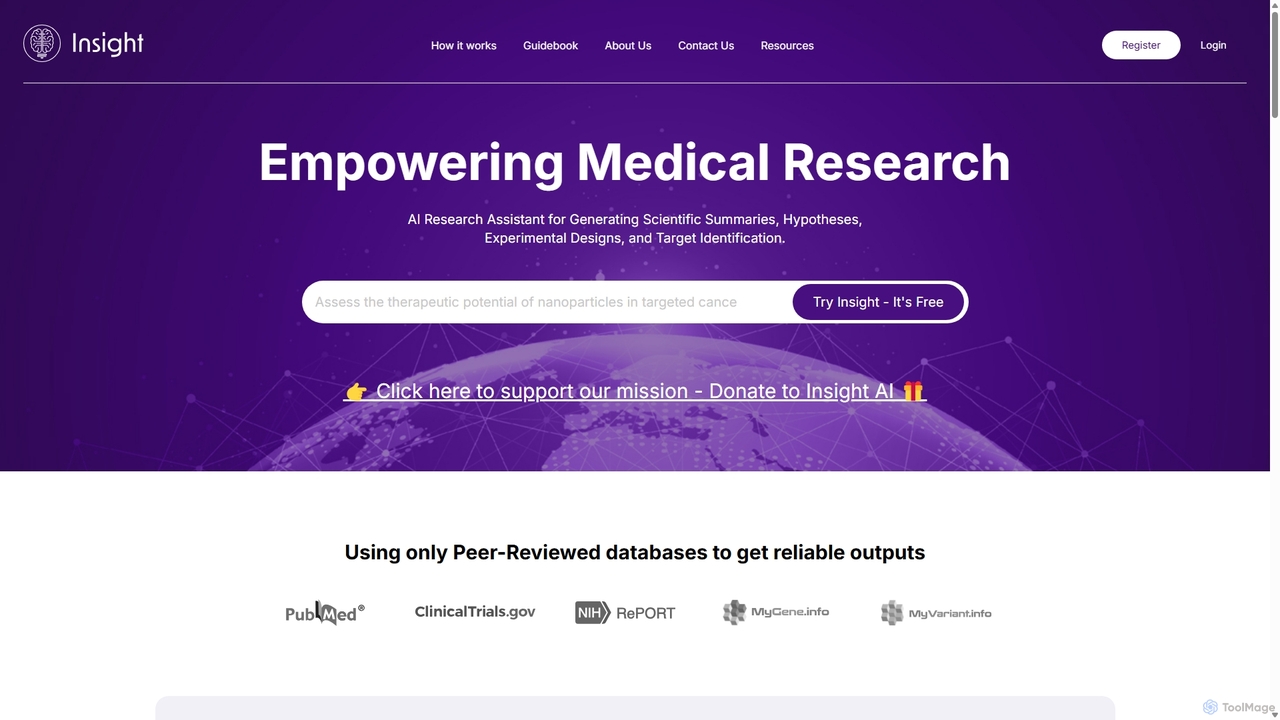
InsightAI is an AI-powered research assistant designed for the medical and life sciences fields. It streamlines the research process by generating scientific summaries, formulating hypotheses, creating experimental designs, and identifying potential drug targets. By integrating with peer-reviewed databases like PubMed, NIH Clinical Trials, and MyGene, InsightAI provides reliable, data-driven insights, saving researchers significant time on literature reviews and data analysis, thereby accelerating scientific discovery.
Academic
Reshape Biotech
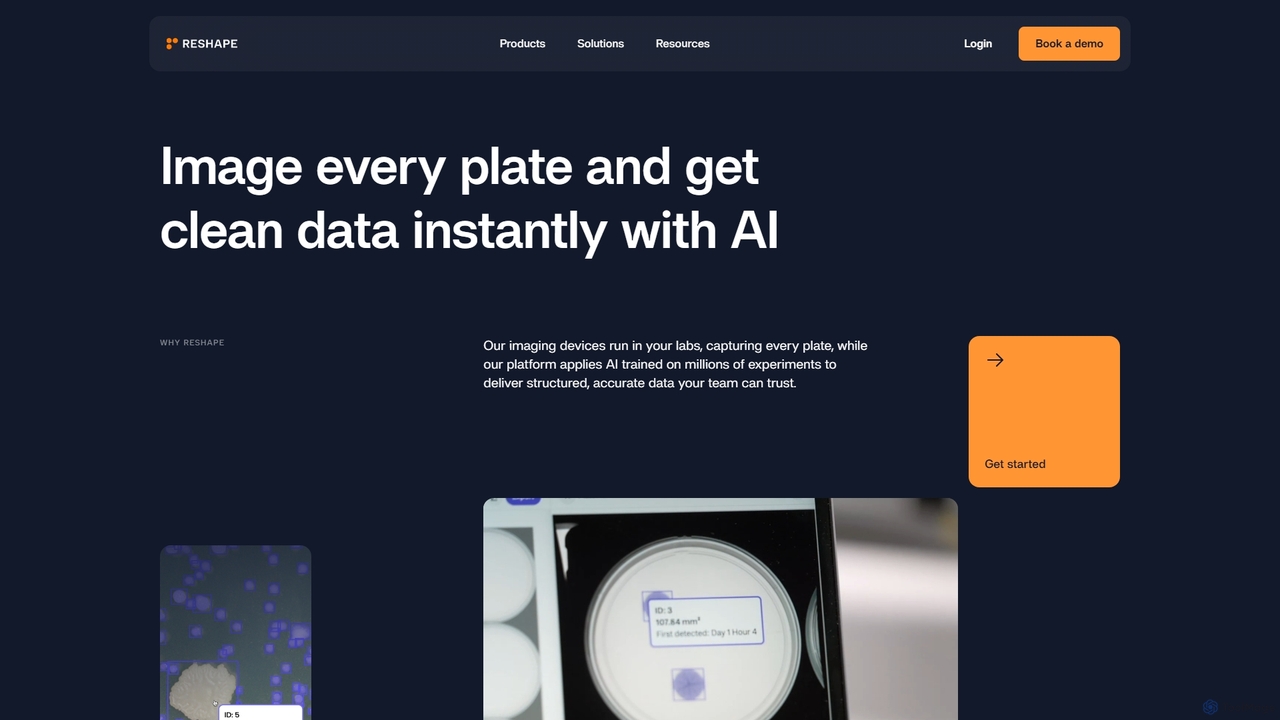
Reshape Biotech provides an AI-powered lab automation platform that combines automated imaging hardware with a cloud-based analysis system. It's designed for R&D and QC labs in biotechnology, agriculture, and food science to automate plate imaging, analyze experiments with AI, and generate structured, reproducible data, significantly accelerating research and development cycles.
Laboratory Automation
Constellab
Constellab is a sovereign AI and data science platform designed for the life sciences and biotechnology sectors. It provides a collaborative, no-code environment for data analysis, visualization, and project management, with flexible deployment options (cloud, on-premise) to ensure data security, traceability, and regulatory compliance.
Low Code No Code
victordibia
A comprehensive resource hub by Victor Dibia, a leading researcher in Applied ML and HCI. It features open-source AI tools like AutoGen Studio and LIDA, in-depth articles, research papers, and talks on generative AI, multi-agent systems, and human-computer interaction. A valuable platform for developers, researchers, and AI enthusiasts.
Data Visualization
Synthace
Synthace is a life sciences R&D cloud platform combining software and expert consultation to accelerate drug discovery. It helps biology teams design, automate, and analyze complex experiments, such as assay development, using multifactorial methods and lab automation. This approach significantly reduces timelines, increases experimental throughput, and delivers more robust, reliable data for critical decision-making in biopharmaceutical research.
Automation
JADBio
JADBio is a no-code Automated Machine Learning (AutoML) platform designed for life sciences and biotechnology. It specializes in analyzing complex, high-dimensional biological data (omics) to accelerate biomarker discovery, identify predictive biosignatures, and build accurate predictive models for precision medicine and translational research.
Machine Learning