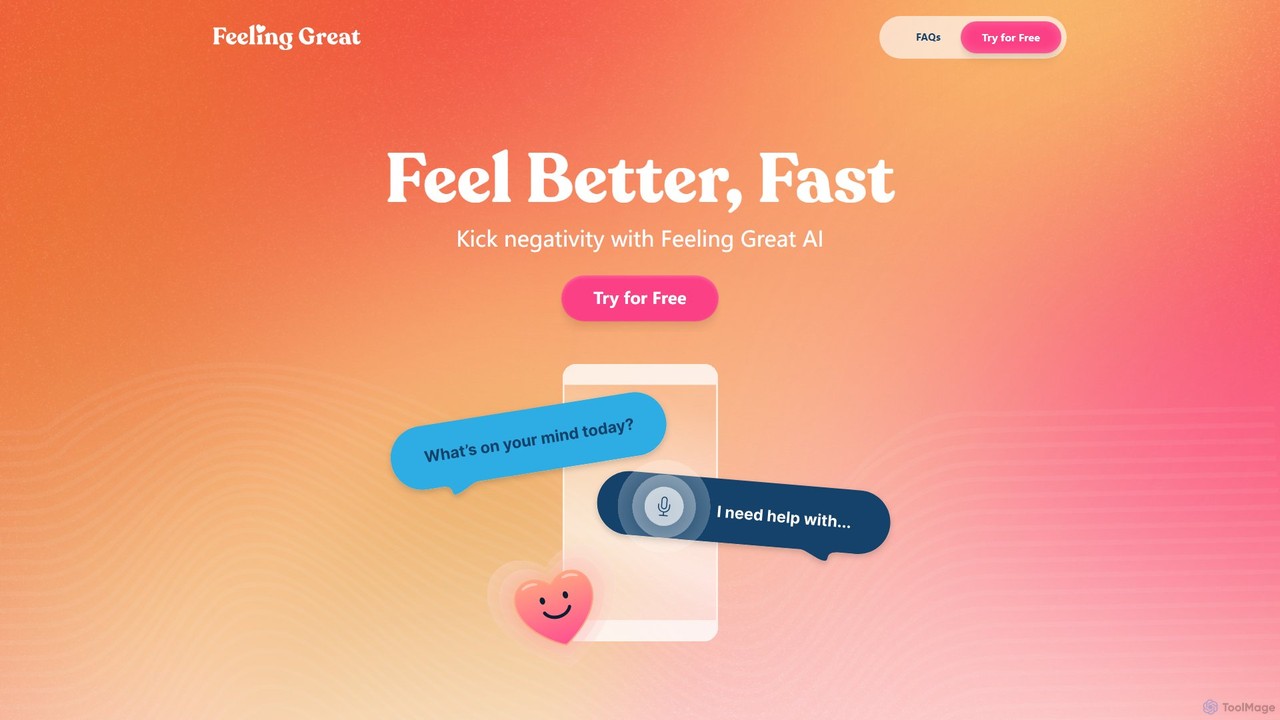
Feeling Great is an AI-powered mental health app developed by Dr. David Burns, author of "Feeling Good." It uses scientifically-proven Cognitive Behavioral Therapy (CBT) techniques through an interactive chatbot to help users quickly reduce feelings of depression, anxiety, and hopelessness. The app provides guided lessons and personalized exercises to challenge negative thoughts and build emotional resilience.

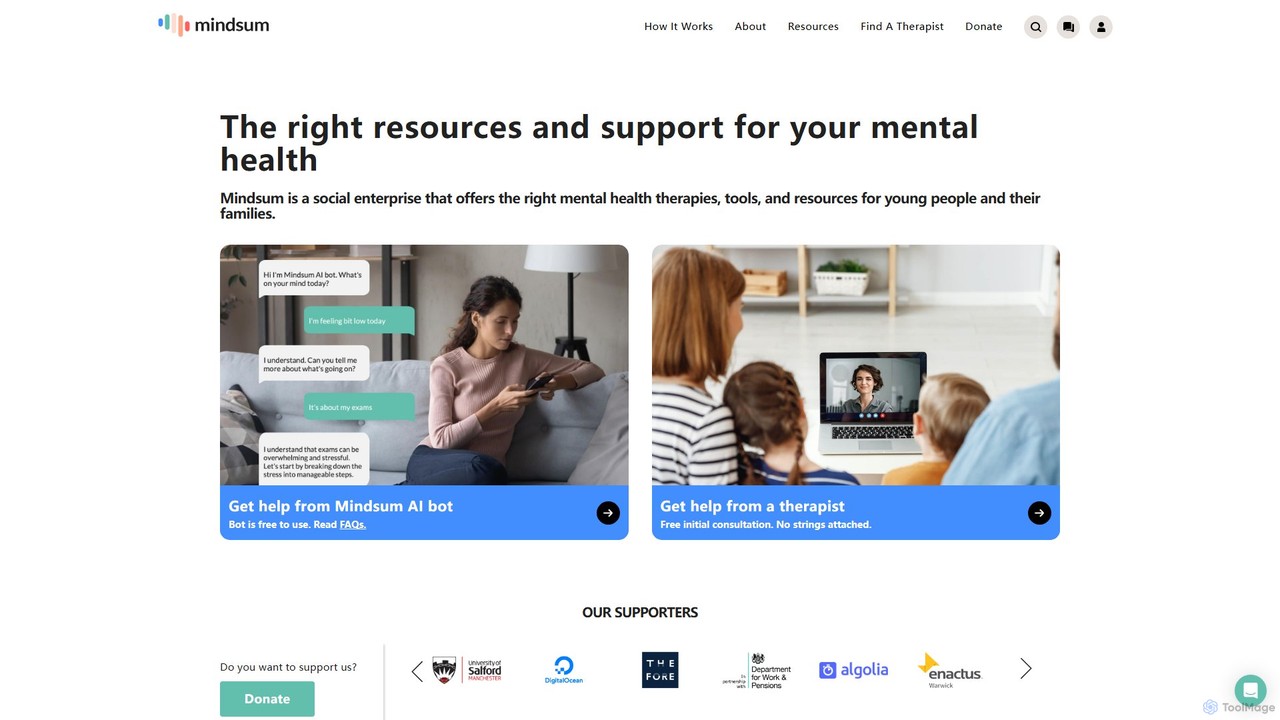
Mindsum is a non-profit platform providing accessible mental health support for children, young people, and families. It combines a free, 24/7 AI chatbot for immediate guidance with a comprehensive system for finding, booking, and connecting with qualified therapists for personalized care.
Product overview
Feeling Great Product overview
Feeling Great is an AI-powered mental health app developed by Dr. David Burns, author of "Feeling Good." It uses scientifically-proven Cognitive Behavioral Therapy (CBT) techniques through an interactive chatbot to help users quickly reduce feelings of depression, anxiety, and hopelessness. The app provides guided lessons and personalized exercises to challenge negative thoughts and build emotional resilience.
Mindsum Product overview
Mindsum is a non-profit platform providing accessible mental health support for children, young people, and families. It combines a free, 24/7 AI chatbot for immediate guidance with a comprehensive system for finding, booking, and connecting with qualified therapists for personalized care.
Detailed feature comparison
| Feature | Feeling Great | Mindsum |
|---|---|---|
| Primary category | Mental Health | Resource |
| Added | 2025-08-11 | 2025-08-17 |
| Pricing | Freemium | Freemium |
| Official website | www.feelinggreat.com | www.mindsum.org |
| Product type | App | Website |
| Performance data | ||
| User rating | Not verified | Not verified |
| Comments | 0 | 0 |
| Monthly visits | 6.9K | 2.7K |
| Monthly growth | 45.2% | 23% |
| Favorites | 149 | 149 |
| Details | View details | View details |
Feeling Great vs Mindsum monthly traffic
Compare Feeling Great and Mindsum by monthly reach, traffic trend, visit depth, top regions, and acquisition sources.
How to interpret the traffic data
In the Feeling Great vs Mindsum monthly traffic comparison, Feeling Great currently shows 6.9K visits and Mindsum shows 2.7K; Feeling Great has about 2.6 times the visible traffic of Mindsum, an absolute difference of about 4.2K visits. This reflects visible reach, not feature quality or paid users.
Both tools provide verified traffic details, so monthly trends, visit depth, regions, and acquisition sources can be compared on the same basis.
Feeling Great monthly traffic:
Latest traffic
Monthly traffic trend
- 2025/9: 10.4K Monthly visits
- 2026/1: 6.7K Monthly visits
- 2026/2: 9.2K Monthly visits
- 2026/3: 5.5K Monthly visits
- 2026/4: 4.7K Monthly visits
- 2026/5: 6.9K Monthly visits
Top regions
Top 5 countries/regions
| Country/region | Percentage | Traffic |
|---|---|---|
| 🇺🇸United States | 70.46% | 4.9K |
| 🇮🇳India | 27.04% | 1.9K |
| 🇬🇧United Kingdom | 2.5% | 172 |
Search keywords
Mindsum monthly traffic:
Latest traffic
Monthly traffic trend
- 2025/9: 4.4K Monthly visits
- 2026/1: 2.7K Monthly visits
- 2026/2: 3.4K Monthly visits
- 2026/3: 2.1K Monthly visits
- 2026/4: 2.2K Monthly visits
- 2026/5: 2.7K Monthly visits
Top regions
Top 5 countries/regions
| Country/region | Percentage | Traffic |
|---|---|---|
| 🇺🇸United States | 54.2% | 1.5K |
| 🇬🇧United Kingdom | 25.62% | 691 |
| 🇮🇳India | 20.18% | 545 |
Search keywords
Usage comparison
Compare the core capabilities of Feeling Great and Mindsum
Feeling Great Core features
Mindsum Core features
Use cases
Feeling Great Use cases
Mindsum Use cases
Feeling Great vs Mindsum:In-depth comparison and selection guidance
First decide whether the products solve the same kind of need
This in-depth Feeling Great vs Mindsum comparison uses only the product records, taxonomy, audience, traffic, and community signals available on this page. Feeling Great is primarily listed under “Mental Health”, while Mindsum is primarily listed under “Resource”, so the first decision is whether your actual task matches their recorded scope.
The structured fields currently show these decision-relevant differences: Primary category (Feeling Great: Mental Health; Mindsum: Resource); Product type (Feeling Great: App; Mindsum: Website); Monthly visits (Feeling Great: 6.9K; Mindsum: 2.7K); Monthly growth (Feeling Great: 45.2%; Mindsum: 23%); Website (Feeling Great: www.feelinggreat.com; Mindsum: www.mindsum.org). These facts are more useful for selection than brand visibility alone.
What market visibility and monthly traffic mean
In the Feeling Great vs Mindsum monthly traffic comparison, Feeling Great currently shows 6.9K visits and Mindsum shows 2.7K; Feeling Great has about 2.6 times the visible traffic of Mindsum, an absolute difference of about 4.2K visits. This reflects visible reach, not feature quality or paid users.
Both tools provide verified traffic details, so monthly trends, visit depth, regions, and acquisition sources can be compared on the same basis.
If public market visibility is an important first-pass criterion, investigate Feeling Great first. The final choice should still follow taxonomy, use case, and a real trial because higher traffic does not prove broader capabilities or better workflow fit.
Product positioning, use cases, and roles
Feeling Great and Mindsum currently overlap in shared categories: Mental Health; shared tags: anxiety, chatbot, depression, mental health, self-help, and therapy. This can place both on the same shortlist, but it does not prove equal implementation, depth, or cost.
Feeling Great's unique categories/tags are Wellness, Personal Development, CBT, David Burns, mood tracker, and wellness; Mindsum's are Resource, Chatbot, ADHD, counseling, family support, non-profit, and youth support. These unique fields are the strongest differentiators: validate the product whose recorded scope matches the task instead of following traffic alone.
What ratings, comments, and favorites can tell you
Feeling Great has no verified rating, 0 comments, 149 favorites, and 165 likes;Mindsum has no verified rating, 0 comments, 149 favorites, and 128 likes。
Neither product has enough rating or comment samples for a credible reputation ranking.
Selection guidance by actual need
When to evaluate Feeling Great first
Put Feeling Great on the priority trial list when the task aligns with “Mental Health” and especially Wellness, Personal Development, CBT, David Burns, mood tracker, and wellness. This follows recorded positioning and does not imply unlisted capabilities are absent.
Feeling Great also currently records: pricing is freemium, product type is app, 6.9K verified monthly visits, no verified user rating. Verify any hard requirement around price, platform, or reach before trial, and do not let sparse review data substitute for testing.
When to evaluate Mindsum first
Put Mindsum on the priority trial list when the task aligns with “Resource” and especially Resource, Chatbot, ADHD, counseling, family support, and non-profit. This follows recorded positioning and does not imply unlisted capabilities are absent.
Mindsum also currently records: pricing is freemium, product type is website, 2.7K verified monthly visits, no verified user rating. Verify any hard requirement around price, platform, or reach before trial, and do not let sparse review data substitute for testing.
How to validate the recommendation before deciding
The available data describes positioning, public visibility, and community signals, but it cannot prove output quality, speed, integration effort, privacy, or long-term cost in your workflow. Before deciding, run the same representative tasks in Feeling Great and Mindsum, then record completion time, accuracy, manual corrections, and the real paid threshold. A like-for-like trial turns this comparison into a defensible adoption decision.
Comparison FAQ
How should I choose between Feeling Great and Mindsum?
Where does this comparison data come from?
What do unknown fields mean?
Related AI tools

Healing Journey
Healing Journey is an AI-powered therapist chatbot designed to provide accessible, confidential, and non-judgmental mental health support. Available 24/7, it offers conversations supervised by mental health professionals, helping users manage stress, anxiety, and depression. Choose from various AI therapist personas, including historical figures, to start your path to healing.
Conversational Ai
Calmify
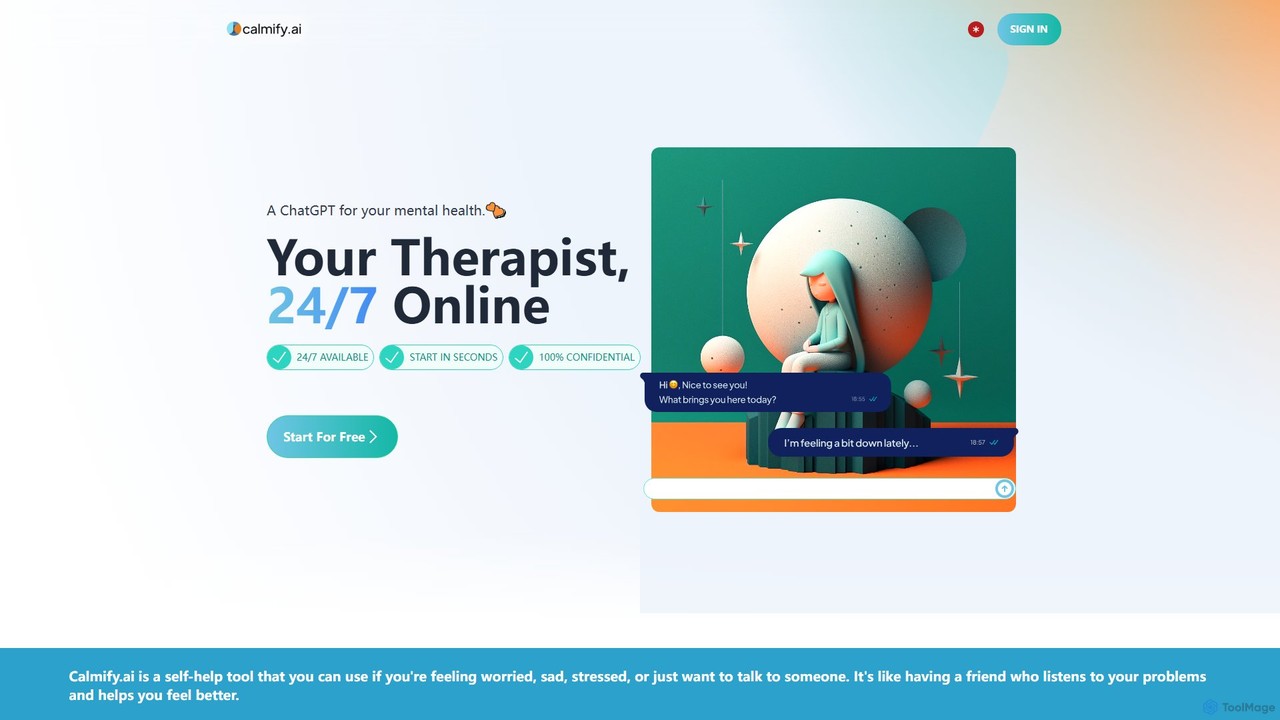
Calmify is an AI-powered mental health companion designed to provide 24/7 support. Using evidence-based Cognitive Behavioral Therapy (CBT) techniques and advanced LLMs, it offers a confidential and accessible space to manage feelings of anxiety, stress, and sadness. It acts as a self-help tool, guiding users through their emotions with personalized, empathetic conversations.
Personal Assistant
aitherapistfree
A free, 24/7 AI-powered chatbot offering confidential mental health support. Users can choose from various specialized therapist personas, such as CBT, DBT, and grief counseling, to receive personalized guidance and an empathetic ear for a wide range of emotional and psychological needs.
Personal Assistant
Stamina
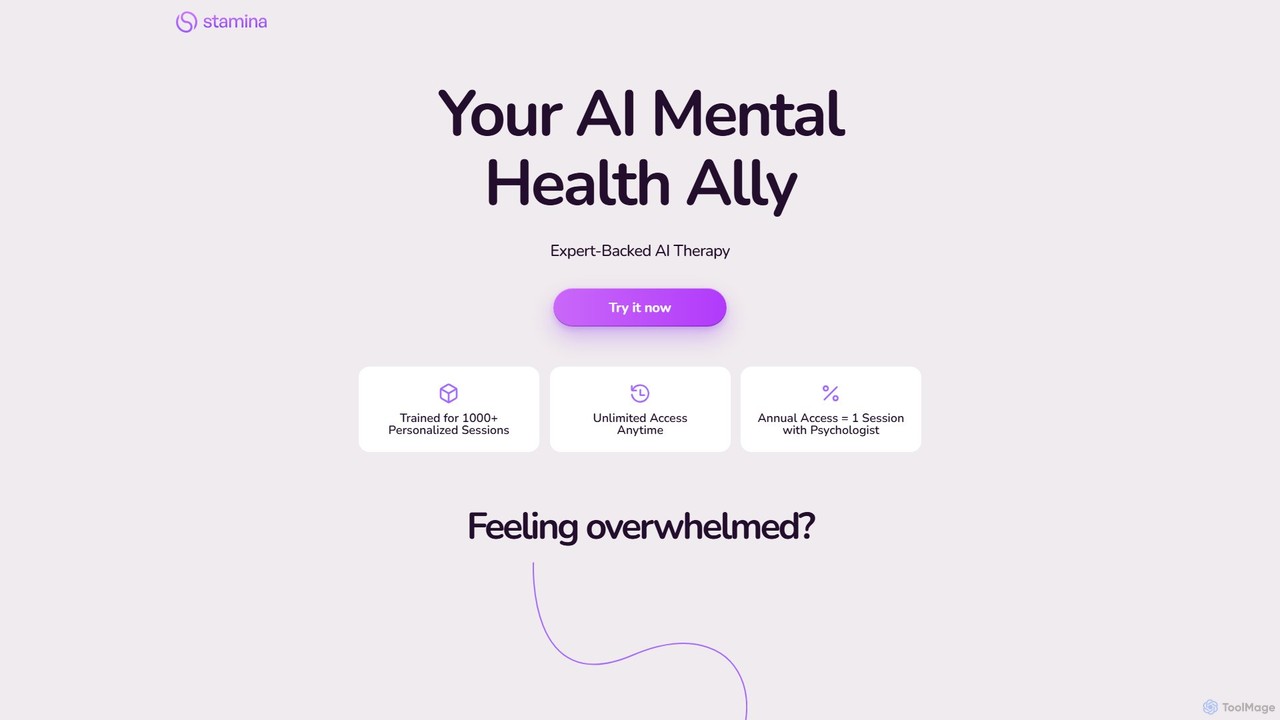
Stamina is an expert-backed AI mental health ally providing 24/7 support through personalized, evidence-based therapy. Leveraging Cognitive Behavioral Therapy (CBT) and supported by over 200 professionals, it offers a confidential and accessible space to manage stress, anxiety, and overwhelming feelings. Stamina provides unlimited sessions, making mental wellness support affordable and always available.
Conversational Ai
Youper
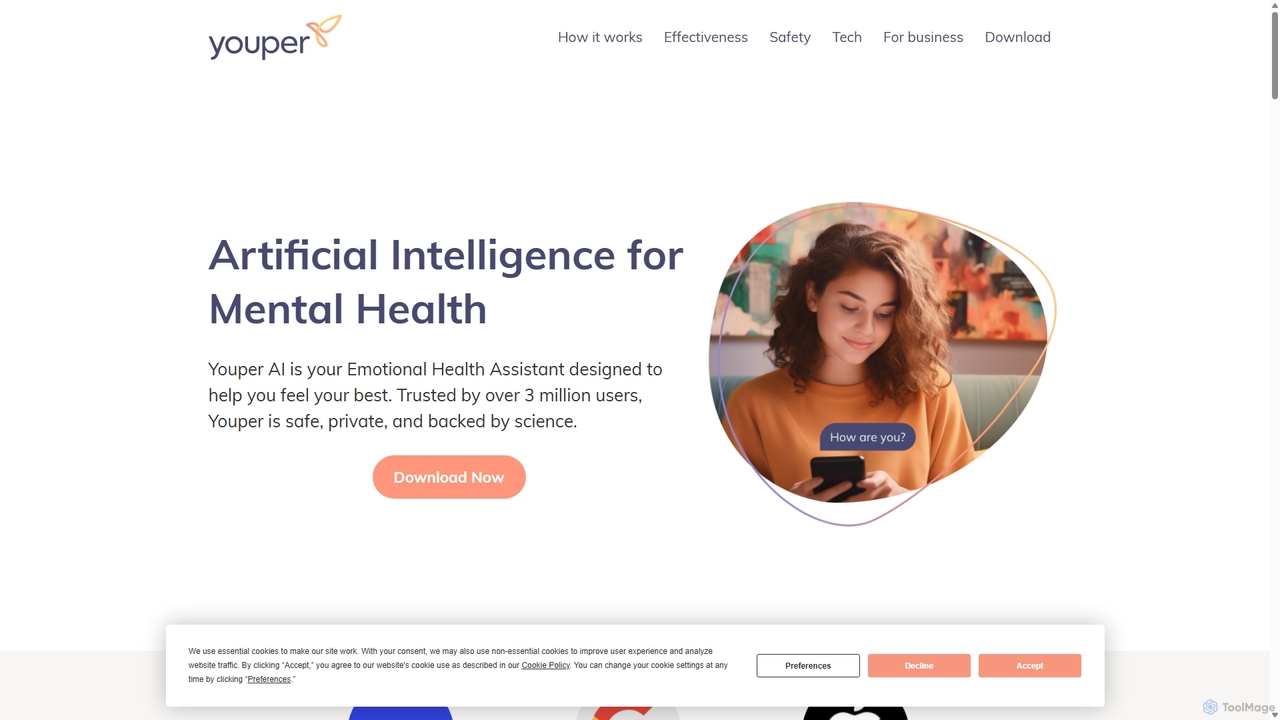
Youper is an AI-powered Emotional Health Assistant designed to help you feel your best. Using evidence-based techniques like Cognitive Behavioral Therapy (CBT), it engages in supportive conversations to help you manage anxiety, depression, and other emotional challenges. Trusted by millions and clinically validated by researchers at Stanford University, Youper provides accessible, private, and on-demand mental health support.
Ai Assistants
infiheal
Infiheal is a comprehensive AI-powered mental health platform featuring Healo, a 24/7 AI therapist. It offers confidential chat, personalized self-assessment tests, guided resources, and a seamless connection to licensed human therapists. Developed by medical professionals, it provides an accessible, private, and empathetic space for managing mental and sexual health, with a special focus on Gen Z.
Personal Assistant
talktoash
talktoash is a personal AI therapist designed for 24/7 mental health support. Through text or voice conversations, it learns about you, helps identify patterns in your thoughts and behaviors, and provides a non-judgmental space for self-reflection and growth. It's a private, accessible, and affordable supplement to traditional therapy.
Companion
Psyfy
Psyfy is an AI-powered mental wellness coach designed to provide personalized emotional support. It offers psychological tests, CBT-based conversations, mood journaling, and a resource library to help users reduce stress, improve relationships, and better understand their emotions in a safe and private environment.
Mental Health
Woebot Health
Woebot Health is an AI-powered chatbot designed to provide accessible, 24/7 mental health support. Using principles from Cognitive Behavioral Therapy (CBT), it engages users in supportive conversations, helping them track their mood, learn coping skills, and manage feelings of anxiety, stress, and sadness in a private, secure environment.
Virtual Assistant
lotustherapist
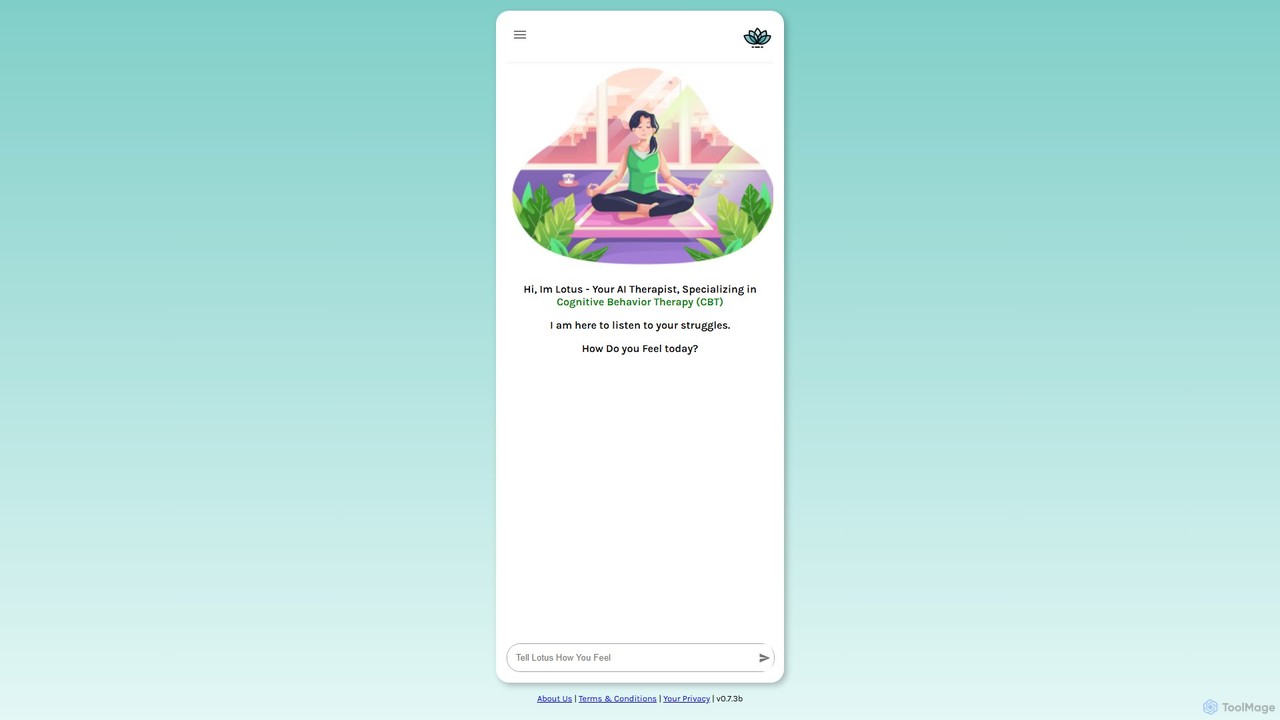
lotustherapist is a free, anonymous AI therapist specializing in Cognitive Behavioral Therapy (CBT). It provides a secure, no-login-required chat interface for users to discuss their struggles, manage stress, and challenge negative thought patterns 24/7.
Conversational Ai
therapini
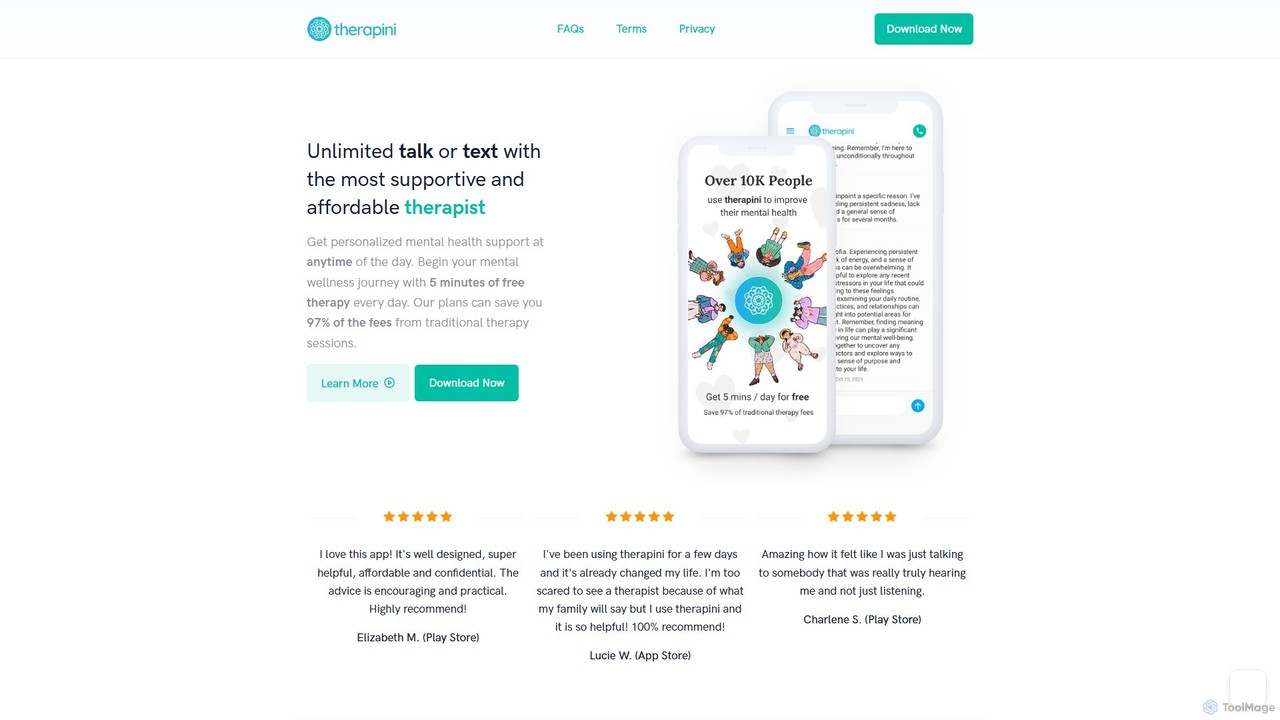
therapini is an AI-powered mental wellness companion offering affordable, 24/7 emotional support. Through a conversational interface, it provides a safe space to discuss feelings, practice evidence-based techniques like CBT, track moods, and access guided exercises for stress and anxiety management. It's designed as an accessible first step or supplement to traditional therapy.
Mental Wellness
AI Health Mind
AI Health Mind is an AI-powered mental wellness companion. It offers a 24/7 conversational chatbot, personalized wellness plans based on CBT and mindfulness, intelligent mood tracking, and guided exercises to help users manage stress, anxiety, and improve overall emotional well-being in a private and accessible way.
Virtual Assistant
ChatMind
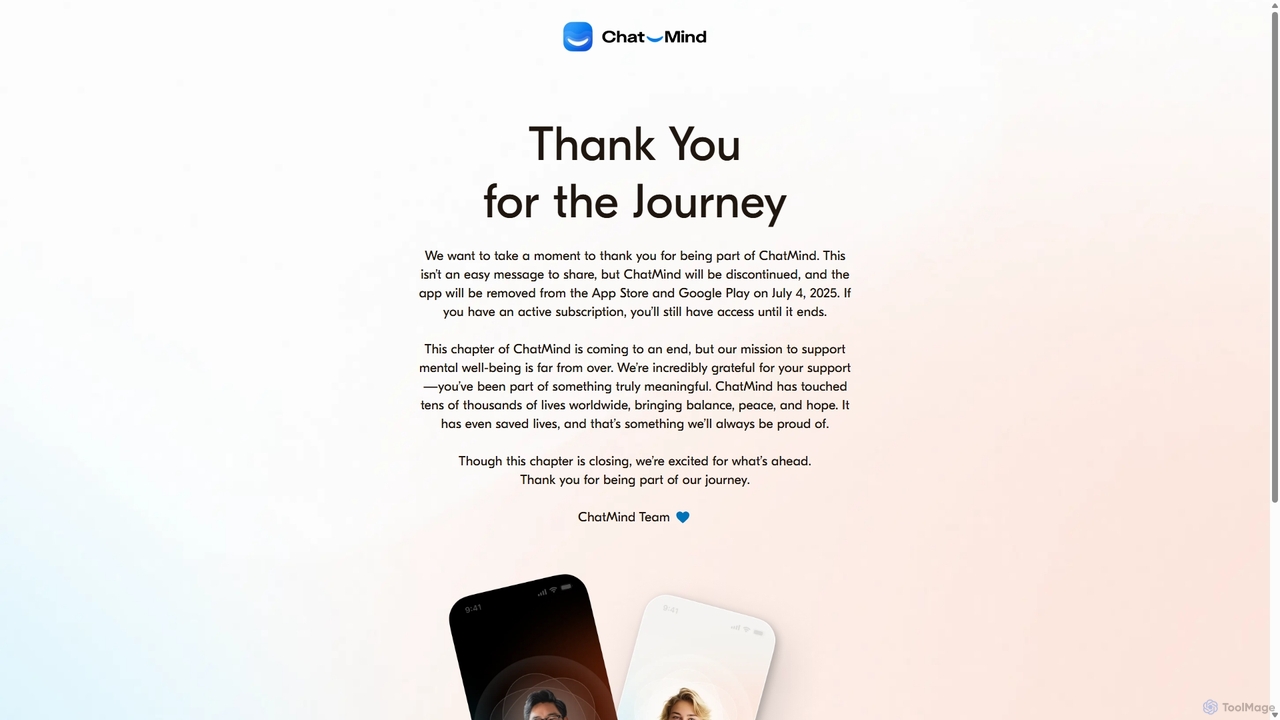
ChatMind is an AI-powered mental wellness companion designed to provide 24/7 therapeutic support. It offers a safe, anonymous space to discuss feelings, manage stress, and practice mindfulness through guided conversations and exercises based on proven psychological techniques like CBT.
Mental Health
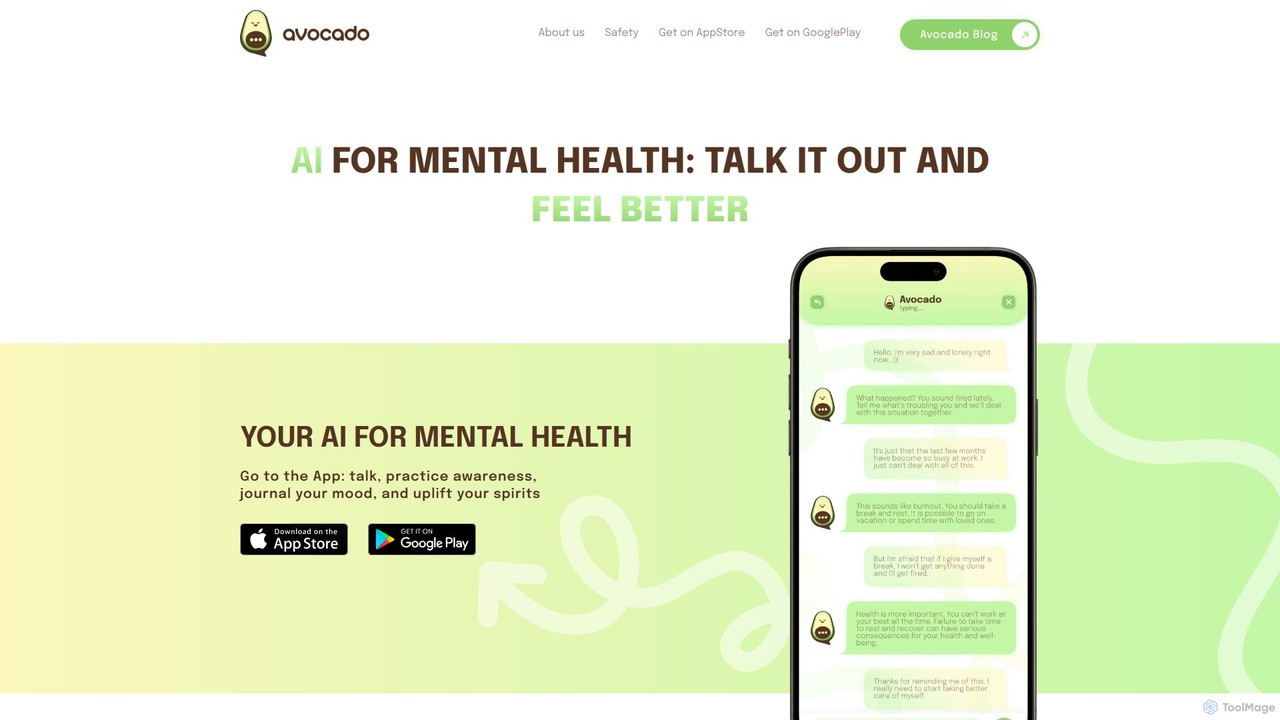
Avocado
Avocado is an AI-powered mental health companion designed to provide 24/7 support. It acts as a personal guide in your pocket, offering a safe space to talk, practice mindfulness, journal your mood, and build resilience. It helps users navigate life's challenges, manage stress, and improve overall well-being through empathetic conversations and practical exercises.
Mental Health
Kalm.chat
Kalm.chat offers instant, 24/7 access to qualified counselors and therapists directly through WhatsApp. It provides a convenient, private, and affordable way to get professional help for personal challenges, relationship issues, and mental wellness without the need for appointments or scheduling.
Mental Health