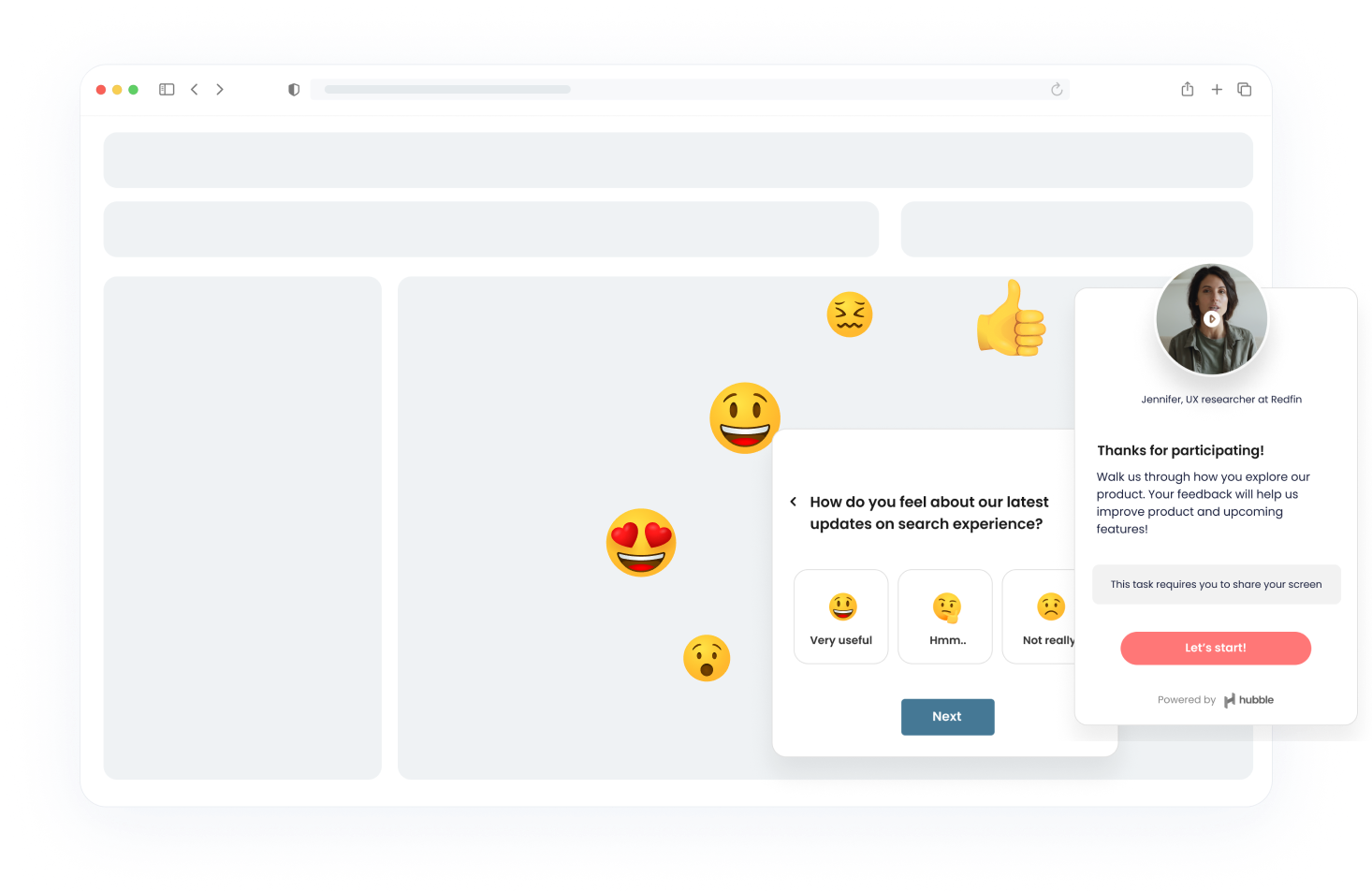
Hubble is an all-in-one, AI-powered user research platform designed for enterprise teams. It enables rapid insights by streamlining the entire research process, from creating studies and recruiting participants to analyzing feedback. The platform supports various methodologies like prototype testing, surveys, and card sorting, using AI to summarize findings and accelerate decision-making.

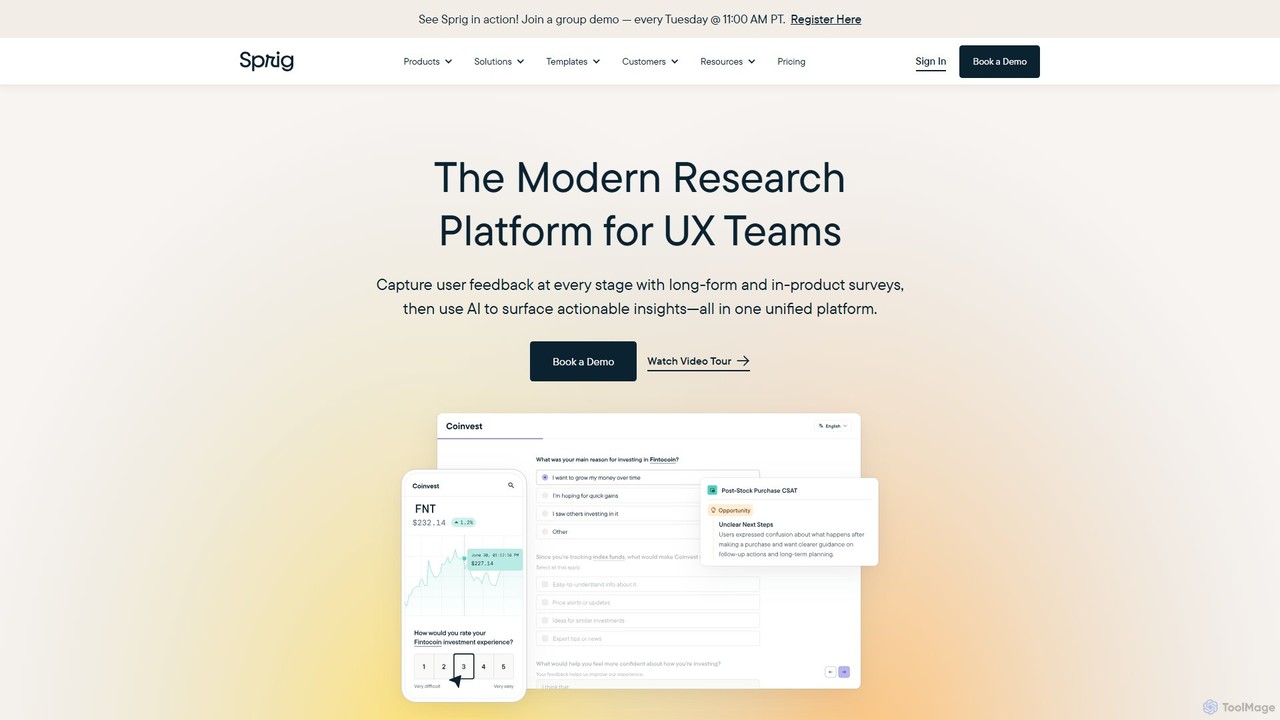
Sprig is a modern research platform for UX teams, using AI to capture user feedback through surveys, session replays, and heatmaps. It helps teams analyze user behavior, identify pain points, and make faster, data-backed product decisions.
Product overview
Hubble Product overview
Hubble is an all-in-one, AI-powered user research platform designed for enterprise teams. It enables rapid insights by streamlining the entire research process, from creating studies and recruiting participants to analyzing feedback. The platform supports various methodologies like prototype testing, surveys, and card sorting, using AI to summarize findings and accelerate decision-making.
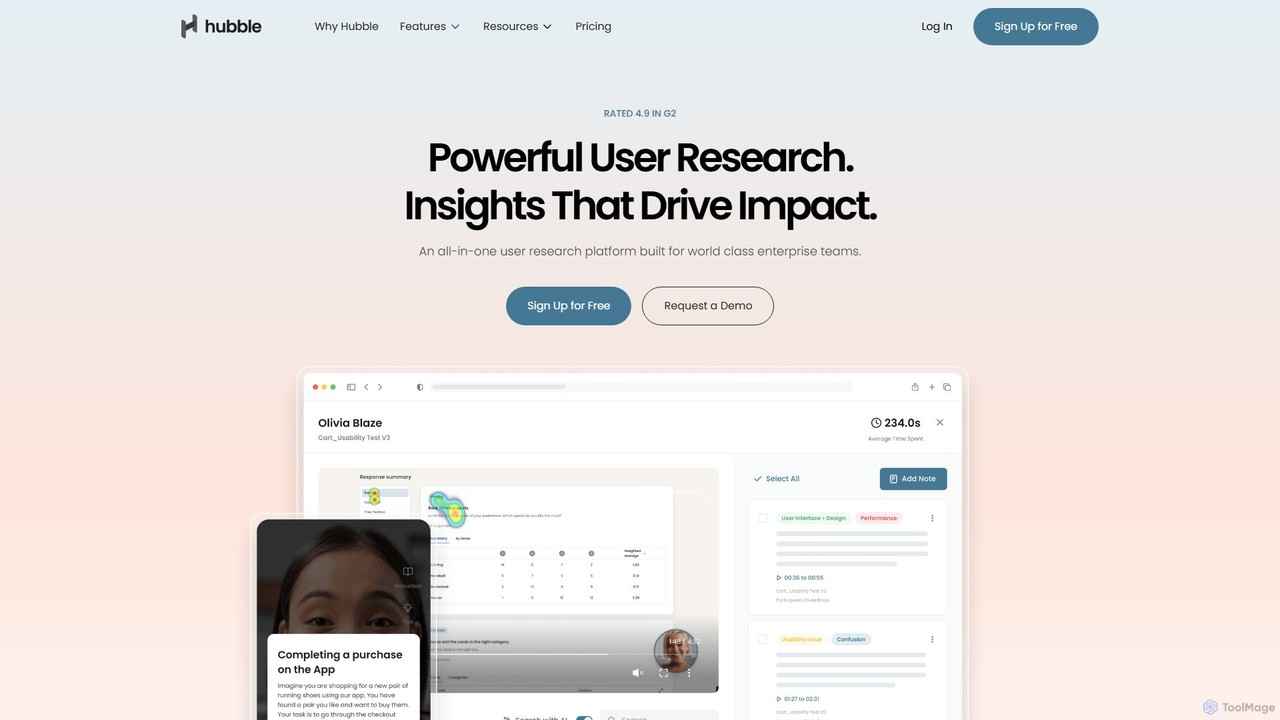
Sprig Product overview
Sprig is a modern research platform for UX teams, using AI to capture user feedback through surveys, session replays, and heatmaps. It helps teams analyze user behavior, identify pain points, and make faster, data-backed product decisions.
Detailed feature comparison
| Feature | Hubble | Sprig |
|---|---|---|
| Primary category | Analytics | Analytics |
| Added | 2025-08-03 | 2025-08-02 |
| Pricing | Freemium | Freemium |
| Official website | www.usehubble.io | sprig.com |
| Product type | Website | Website |
| Performance data | ||
| User rating | Not verified | Not verified |
| Comments | 0 | 0 |
| Monthly visits | 12K | 316K |
| Monthly growth | 49.7% | 13.6% |
| Favorites | 123 | 135 |
| Details | View details | View details |
Hubble vs Sprig monthly traffic
Compare Hubble and Sprig by monthly reach, traffic trend, visit depth, top regions, and acquisition sources.
How to interpret the traffic data
In the Hubble vs Sprig monthly traffic comparison, Hubble currently shows 12K visits and Sprig shows 316K; Sprig has about 26.3 times the visible traffic of Hubble, an absolute difference of about 304K visits. This reflects visible reach, not feature quality or paid users.
Both tools provide verified traffic details, so monthly trends, visit depth, regions, and acquisition sources can be compared on the same basis.
Hubble monthly traffic:
Latest traffic
Monthly traffic trend
- 2025/9: 12.6K Monthly visits
- 2026/1: 9K Monthly visits
- 2026/2: 6.9K Monthly visits
- 2026/3: 8K Monthly visits
- 2026/4: 8K Monthly visits
- 2026/5: 12K Monthly visits
Top regions
Top 5 countries/regions
| Country/region | Percentage | Traffic |
|---|---|---|
| 🇻🇳Vietnam | 29.69% | 3.6K |
| 🇮🇳India | 25.46% | 3.1K |
| 🇺🇸United States | 25.04% | 3K |
| 🇬🇧United Kingdom | 18.39% | 2.2K |
| 🇵🇰Pakistan | 1.42% | 170 |
Traffic sources
| Source type | Percentage | Traffic |
|---|---|---|
| Direct | 100% | 12K |
Search keywords
Sprig monthly traffic:
Latest traffic
Monthly traffic trend
- 2025/9: 323.5K Monthly visits
- 2026/1: 341.2K Monthly visits
- 2026/2: 310.6K Monthly visits
- 2026/3: 265K Monthly visits
- 2026/4: 278.2K Monthly visits
- 2026/5: 316K Monthly visits
Top regions
Top 5 countries/regions
| Country/region | Percentage | Traffic |
|---|---|---|
| 🇺🇸United States | 91.19% | 288.2K |
| 🇨🇦Canada | 3.03% | 9.6K |
| 🇻🇳Vietnam | 3.03% | 9.6K |
| 🇬🇧United Kingdom | 1.44% | 4.6K |
| 🇩🇪Germany | 1.31% | 4.1K |
Traffic sources
| Source type | Percentage | Traffic |
|---|---|---|
| Referral | 58.55% | 185K |
| Direct | 34.19% | 108K |
| 7.26% | 22.9K |
Search keywords
Usage comparison
Compare the core capabilities of Hubble and Sprig
Hubble Core features
Sprig Core features
Use cases
Hubble Use cases
Sprig Use cases
Hubble vs Sprig:In-depth comparison and selection guidance
First decide whether the products solve the same kind of need
This in-depth Hubble vs Sprig comparison uses only the product records, taxonomy, audience, traffic, and community signals available on this page. Hubble is primarily listed under “Analytics”, while Sprig is primarily listed under “Analytics”, so the first decision is whether your actual task matches their recorded scope.
The structured fields currently show these decision-relevant differences: Monthly visits (Hubble: 12K; Sprig: 316K); Monthly growth (Hubble: 49.7%; Sprig: 13.6%); Favorites (Hubble: 123; Sprig: 135); Website (Hubble: www.usehubble.io; Sprig: sprig.com); Added (Hubble: 2025-08-03; Sprig: 2025-08-02). These facts are more useful for selection than brand visibility alone.
What market visibility and monthly traffic mean
In the Hubble vs Sprig monthly traffic comparison, Hubble currently shows 12K visits and Sprig shows 316K; Sprig has about 26.3 times the visible traffic of Hubble, an absolute difference of about 304K visits. This reflects visible reach, not feature quality or paid users.
Both tools provide verified traffic details, so monthly trends, visit depth, regions, and acquisition sources can be compared on the same basis.
If public market visibility is an important first-pass criterion, investigate Sprig first. The final choice should still follow taxonomy, use case, and a real trial because higher traffic does not prove broader capabilities or better workflow fit.
Product positioning, use cases, and roles
Hubble and Sprig currently overlap in shared categories: Analytics, Customer Feedback, and User Research; shared tags: AI analysis, customer feedback, product management, and user research. This can place both on the same shortlist, but it does not prove equal implementation, depth, or cost.
Hubble's unique categories/tags are Testing, card sorting, feedback, figma, prototype testing, surveys, tree testing, and usability testing; Sprig's are data analysis, in-product surveys, session replay, user experience, and UX research. These unique fields are the strongest differentiators: validate the product whose recorded scope matches the task instead of following traffic alone.
What ratings, comments, and favorites can tell you
Hubble has no verified rating, 0 comments, 123 favorites, and 138 likes;Sprig has no verified rating, 0 comments, 135 favorites, and 111 likes。
Neither product has enough rating or comment samples for a credible reputation ranking.
Selection guidance by actual need
When to evaluate Hubble first
Put Hubble on the priority trial list when the task aligns with “Analytics” and especially Testing, card sorting, feedback, figma, prototype testing, and surveys. This follows recorded positioning and does not imply unlisted capabilities are absent.
Hubble also currently records: pricing is freemium, product type is website, 12K verified monthly visits, no verified user rating. Verify any hard requirement around price, platform, or reach before trial, and do not let sparse review data substitute for testing.
When to evaluate Sprig first
Put Sprig on the priority trial list when the task aligns with “Analytics” and especially data analysis, in-product surveys, session replay, user experience, and UX research. This follows recorded positioning and does not imply unlisted capabilities are absent.
Sprig also currently records: pricing is freemium, product type is website, 316K verified monthly visits, no verified user rating. Verify any hard requirement around price, platform, or reach before trial, and do not let sparse review data substitute for testing.
How to validate the recommendation before deciding
The available data describes positioning, public visibility, and community signals, but it cannot prove output quality, speed, integration effort, privacy, or long-term cost in your workflow. Before deciding, run the same representative tasks in Hubble and Sprig, then record completion time, accuracy, manual corrections, and the real paid threshold. A like-for-like trial turns this comparison into a defensible adoption decision.
Comparison FAQ
How should I choose between Hubble and Sprig?
Where does this comparison data come from?
What do unknown fields mean?
Related AI tools

Wynde
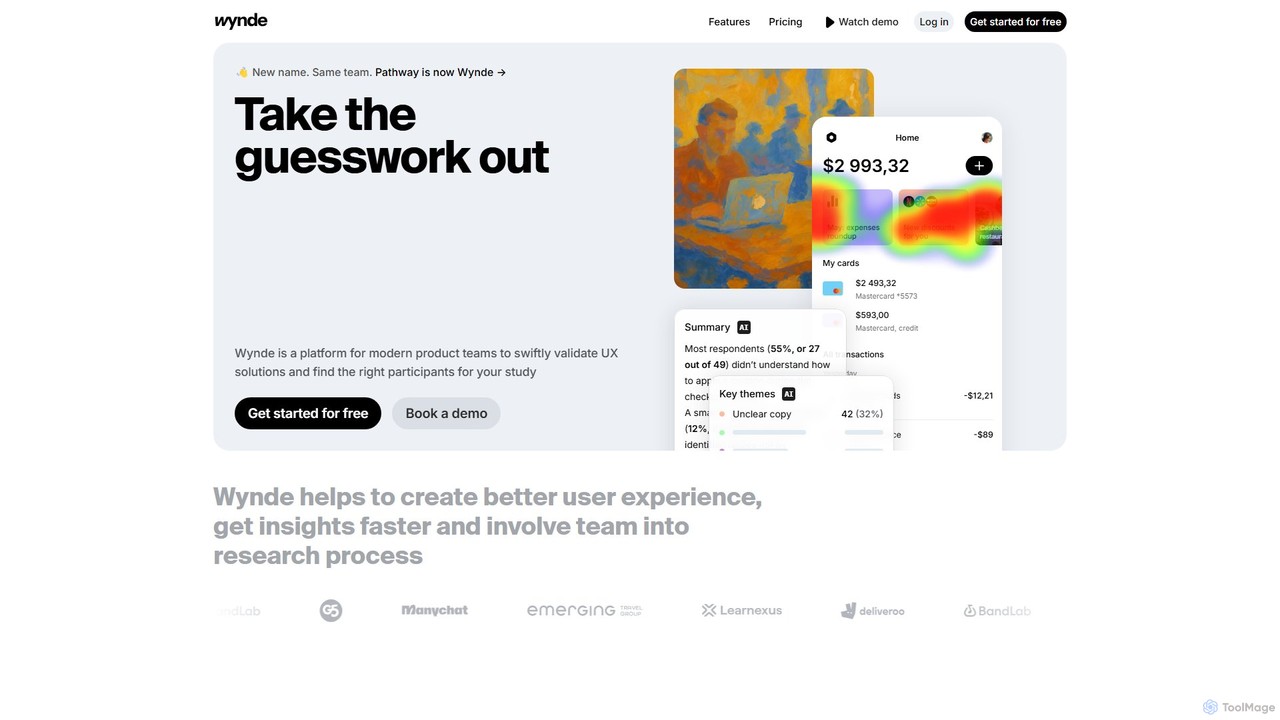
Wynde is an AI-powered user research platform for product teams to validate UX solutions. It enables rapid creation of usability tests, surveys, and interviews for Figma prototypes and websites. Key features include AI-driven contextual follow-up questions, automated theme analysis, A/B testing, and access to a global panel with over 400 filters. Wynde helps teams get deeper insights faster and more affordably.
Prototyping
Ballpark
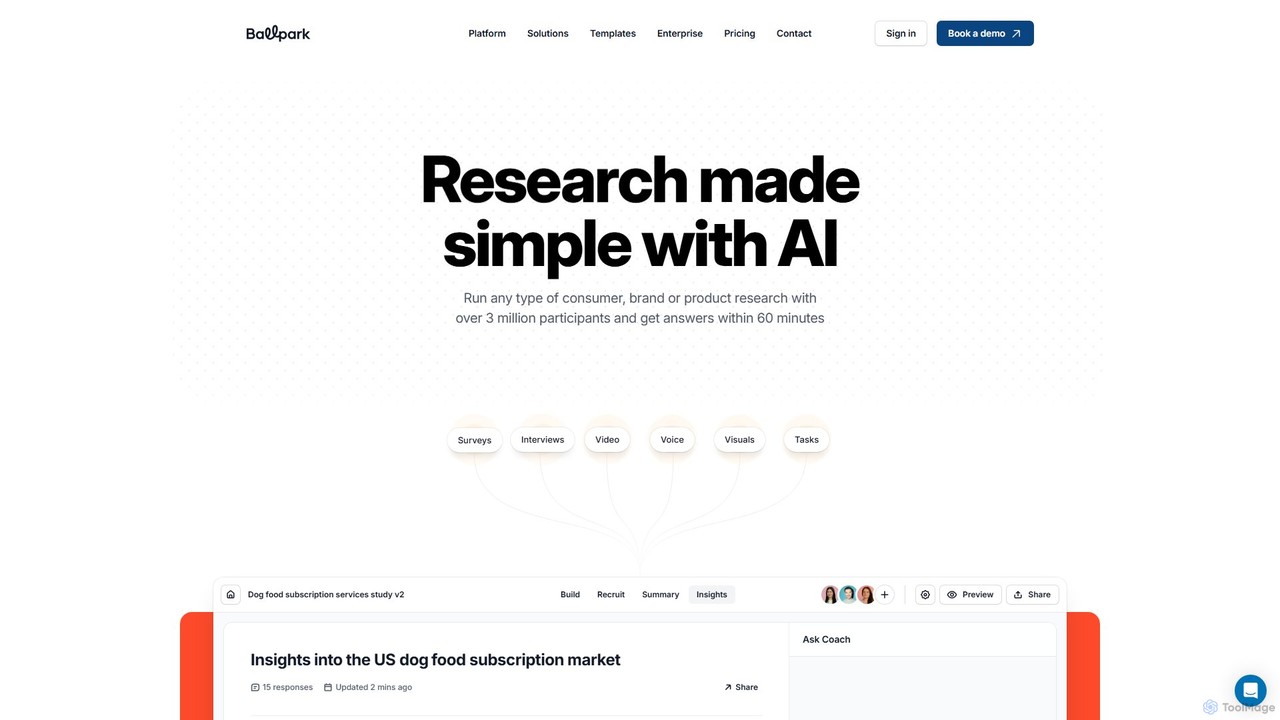
Ballpark is an all-in-one, AI-powered research platform that simplifies consumer, brand, and product research. Conduct surveys, usability tests, and live interviews with access to over 3 million global participants. Get actionable insights, AI-generated reports, and video highlight reels within minutes, making it easy for any team to make data-driven decisions.
Usability Testing
Pulse Labs
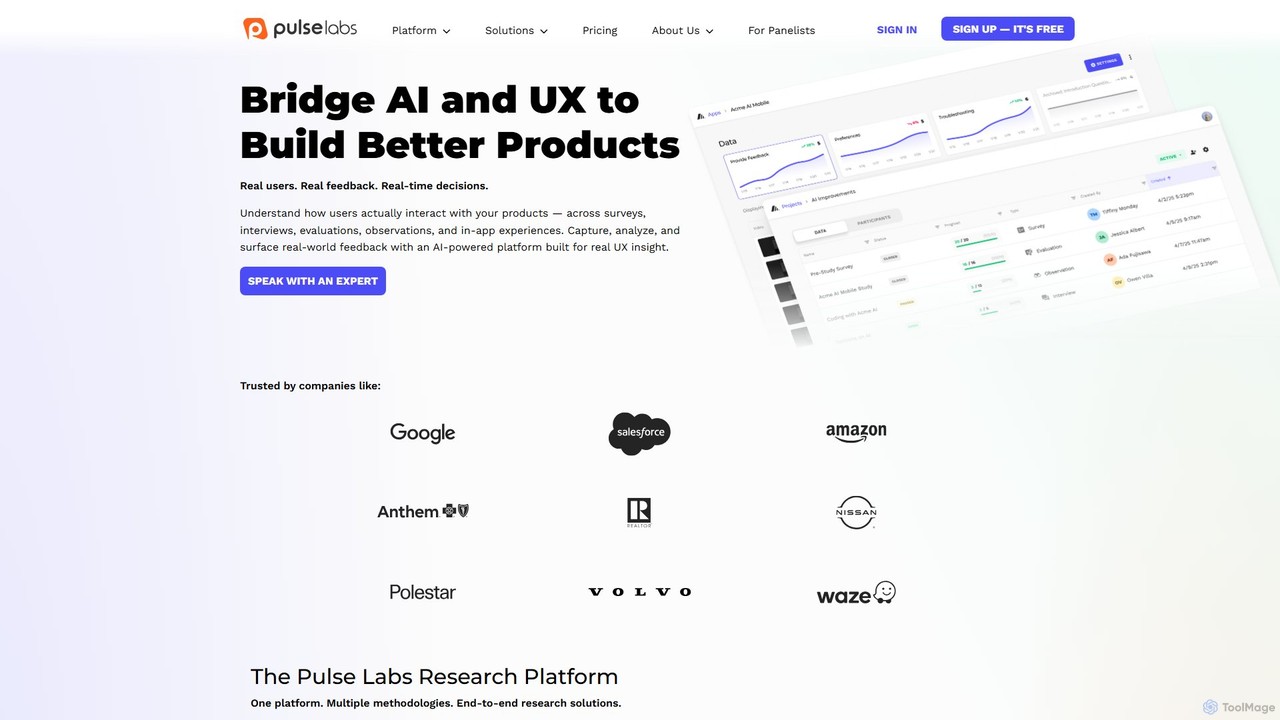
Pulse Labs is an AI-powered user research platform that helps businesses build better products by capturing and analyzing real-world user feedback. It offers a suite of tools for surveys, interviews, usability testing, and in-app feedback to provide actionable insights.
Customer Feedback
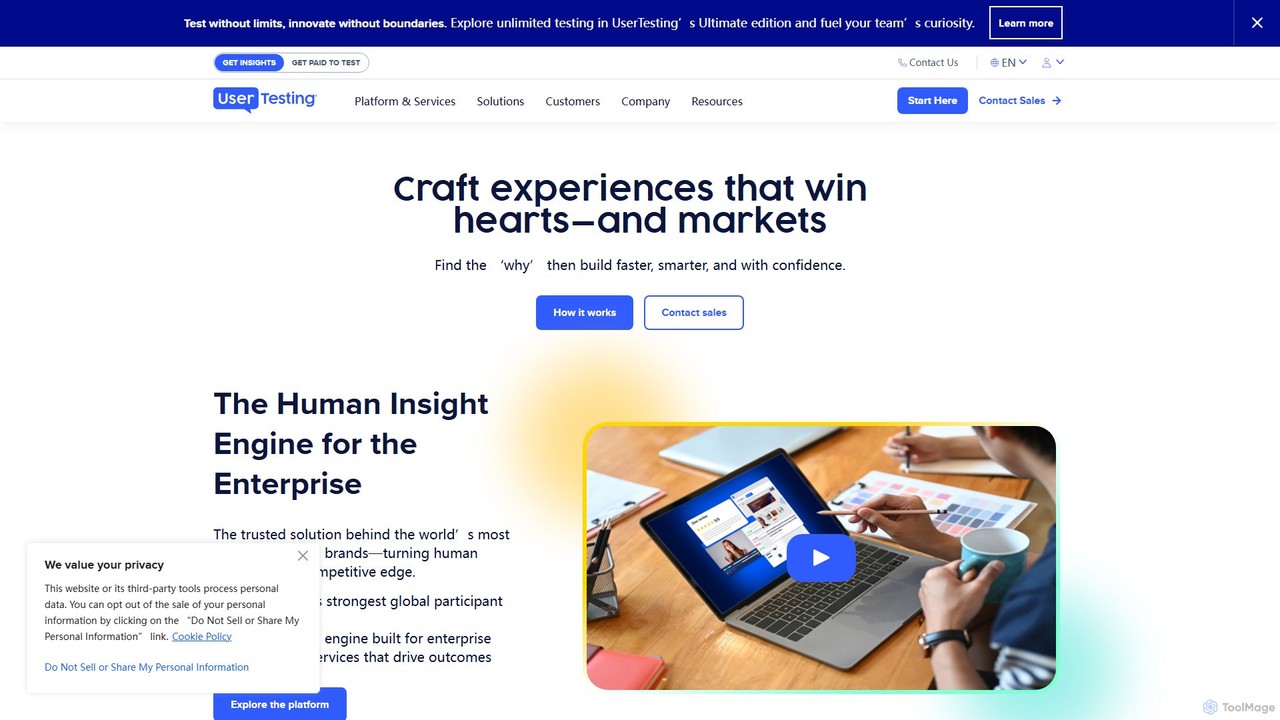
UserTesting
UserTesting is a leading human insight platform that enables organizations to see, hear, and understand real customer experiences. By leveraging a global network of participants and AI-powered analytics, it helps teams in product, marketing, and design gather video-first feedback to validate decisions, optimize experiences, and build customer-centric products with confidence.
Analytics
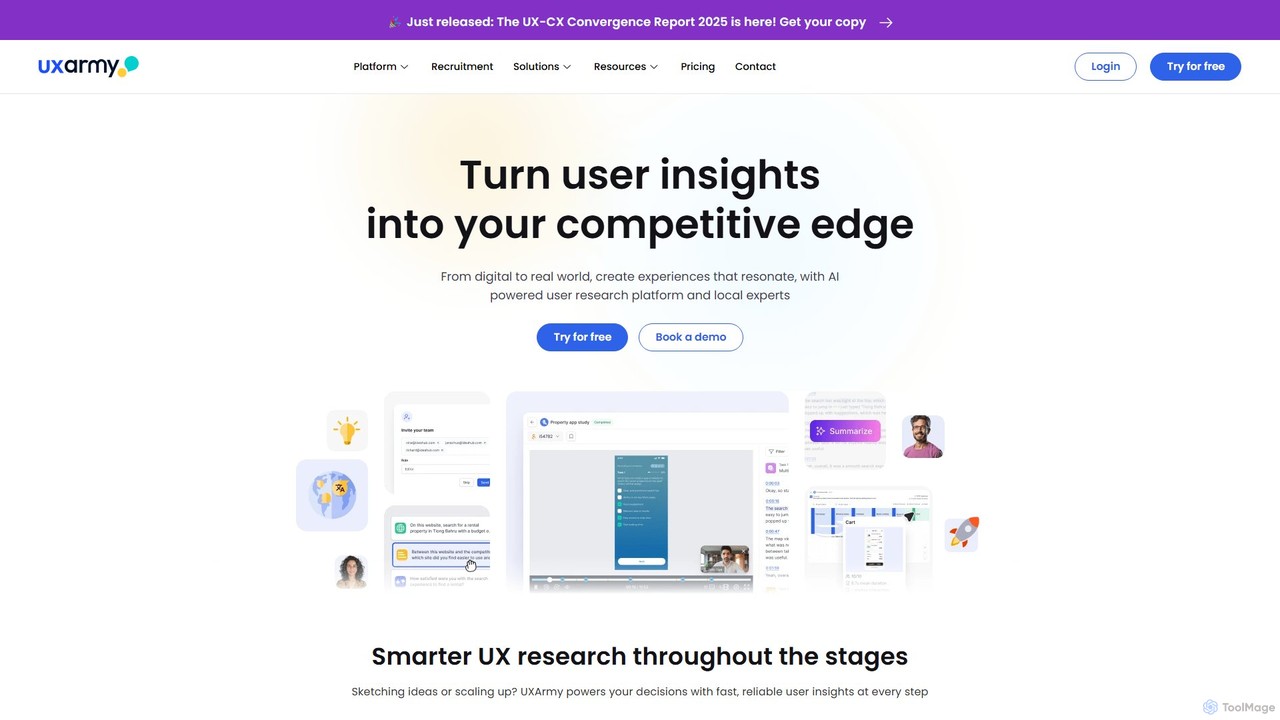
UXArmy
UXArmy is an AI-powered, all-in-one user research platform for remote usability testing and user insights. It enables teams to conduct unmoderated tests, moderated interviews, card sorting, and tree testing. With a global participant panel and AI-driven analysis, it helps businesses turn user feedback into a competitive advantage by creating better digital experiences.
Testing
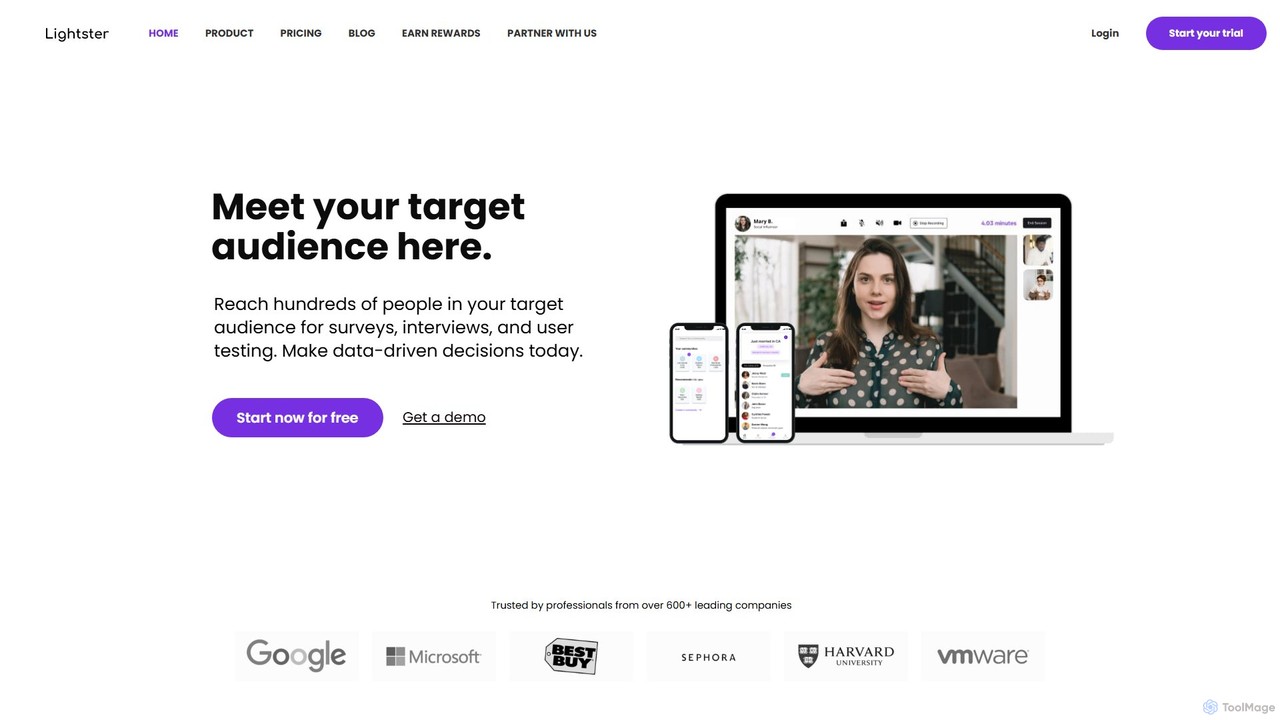
lightster
An AI-powered user research platform that connects businesses with their target audience for surveys, interviews, and unmoderated testing. Lightster helps extract key insights from user feedback, enabling data-driven decisions for product teams, founders, and researchers to achieve product-market fit faster.
Customer Feedback
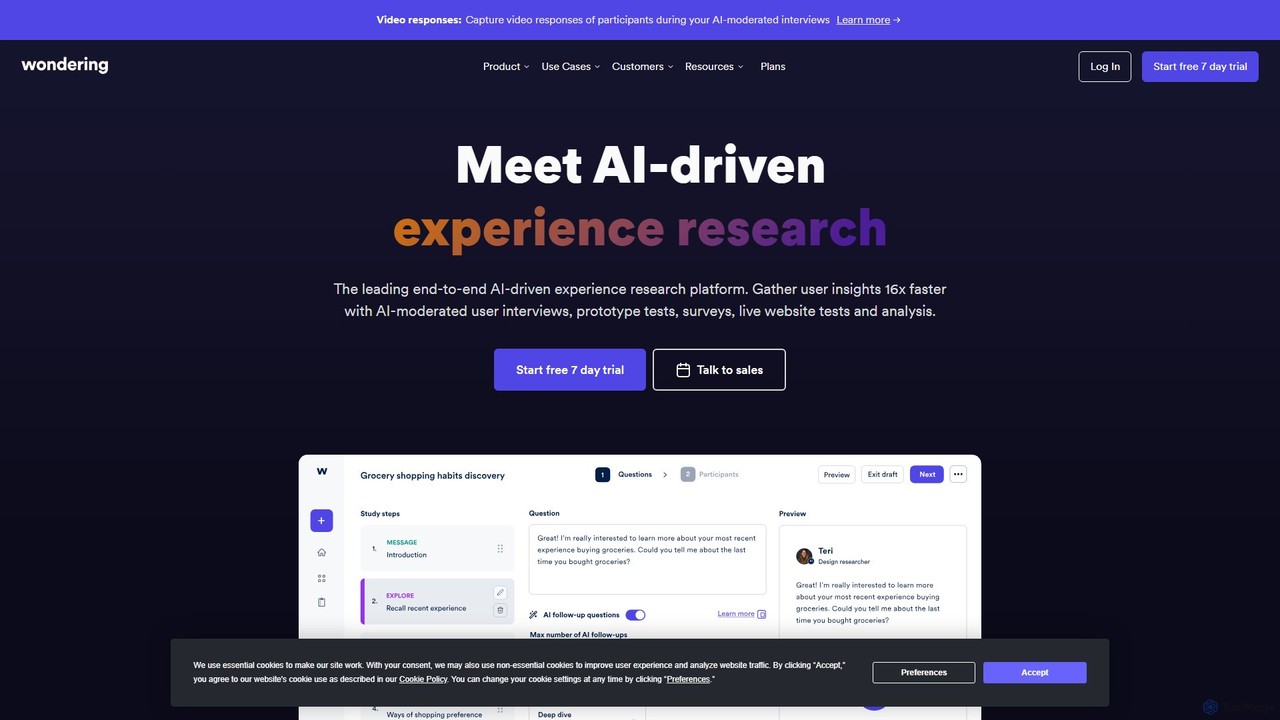
Wondering
Wondering is an AI-driven experience research platform that empowers teams to conduct and analyze user interviews, surveys, and prototype tests at scale. It uses AI to moderate conversations in over 50 languages, transcribe responses, and generate actionable insights, making high-yield research accessible and efficient for any team.
Data Analysis
Pansophic
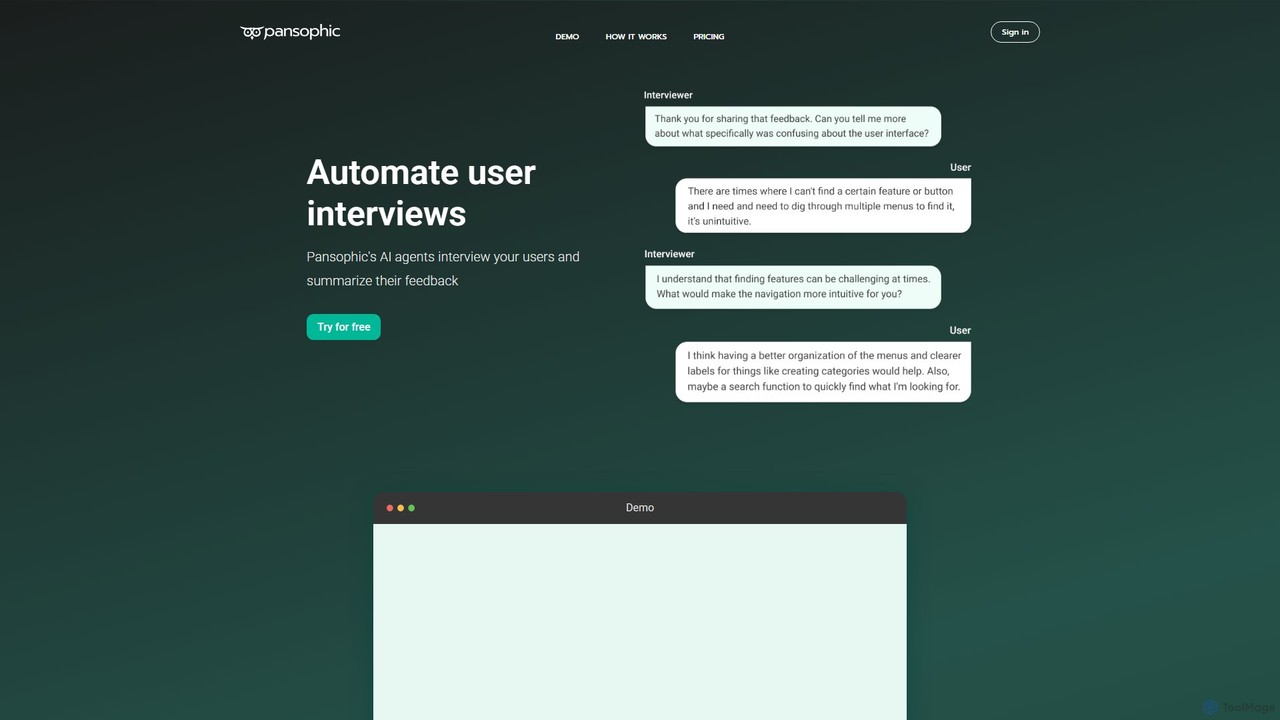
Pansophic is an AI-powered platform that automates user interviews. Its AI agents conduct 24/7, multilingual conversations with your users, then automatically analyze and summarize the feedback to provide actionable insights, sentiment analysis, and key themes, streamlining the entire user research process.
Data Analysis
Dovetail
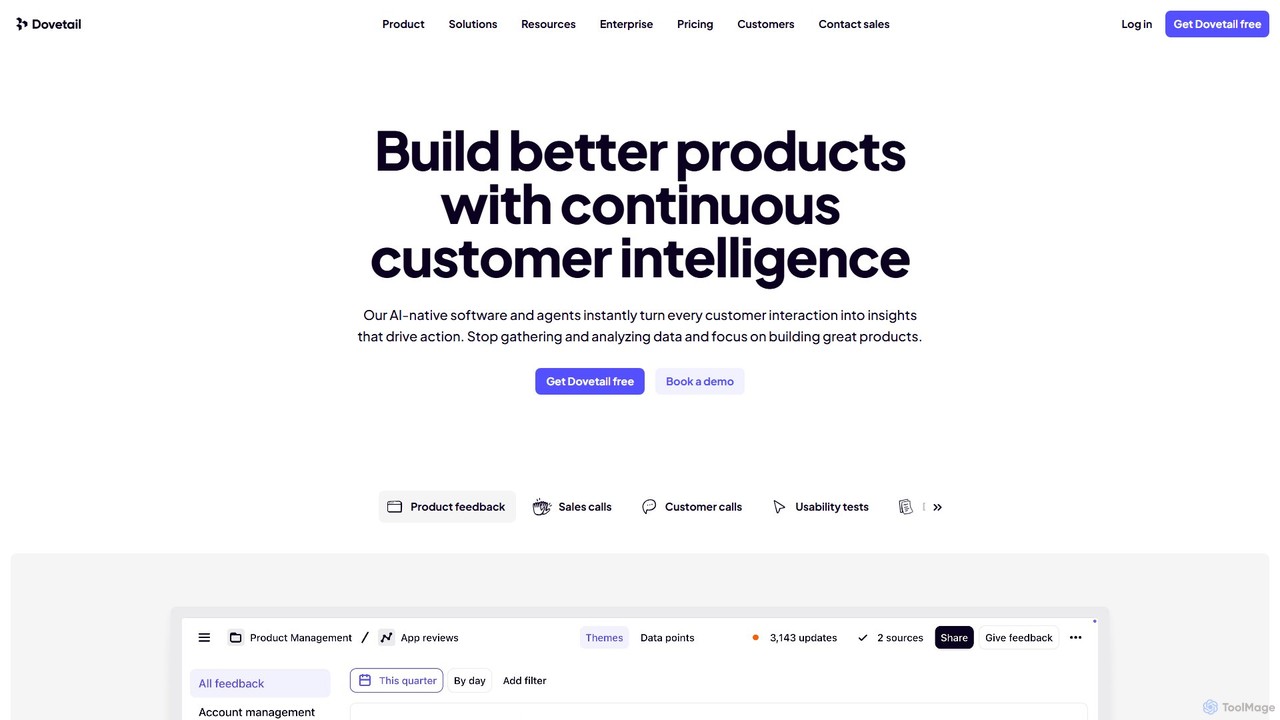
Dovetail is an AI-native customer insights hub designed to help teams build better products. It centralizes and analyzes all customer interactions—from sales calls and support tickets to surveys and usability tests. Using powerful AI, it automatically transcribes, summarizes, and identifies key themes, turning raw data into actionable intelligence. This allows product, research, and design teams to make faster, evidence-backed decisions and foster a truly customer-centric culture.
Customer Support
Blitzllama
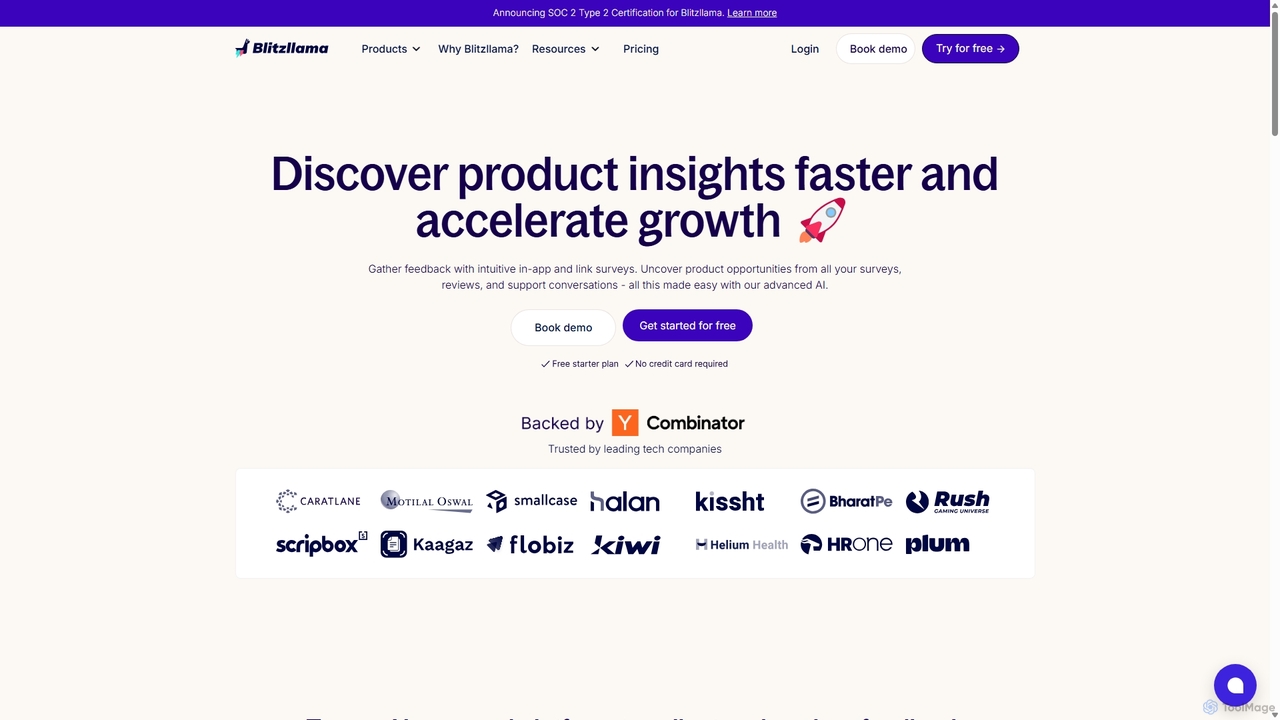
Blitzllama is an AI-powered product insights platform designed to help teams collect and analyze customer feedback. It unifies in-app surveys, app store reviews, and support conversations, using AI to automatically surface actionable insights, identify trends, and prioritize product improvements, accelerating data-driven growth.
Business Intelligence
Fforward
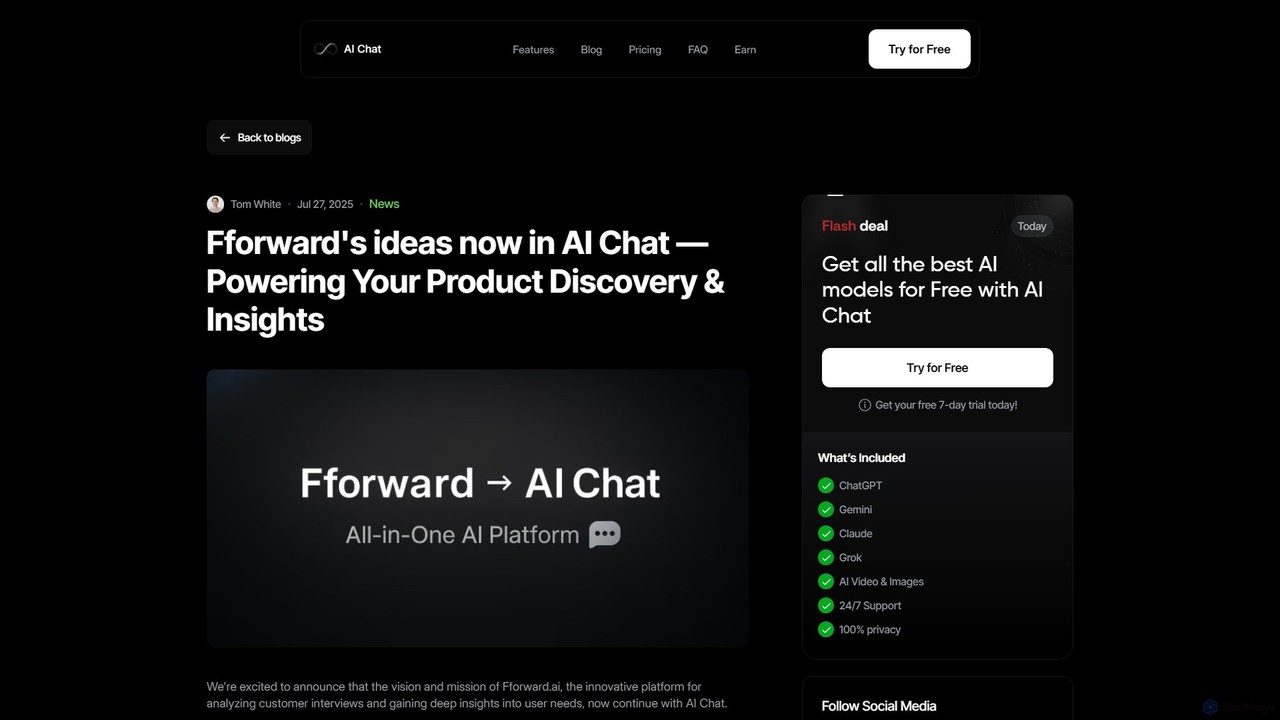
Fforward is an advanced AI-powered platform designed for product managers, UX researchers, and founders to analyze customer interviews, uncover deep user insights, and accelerate product discovery. It automates the synthesis of qualitative data to identify key needs, themes, and actionable opportunities.
Customer Support
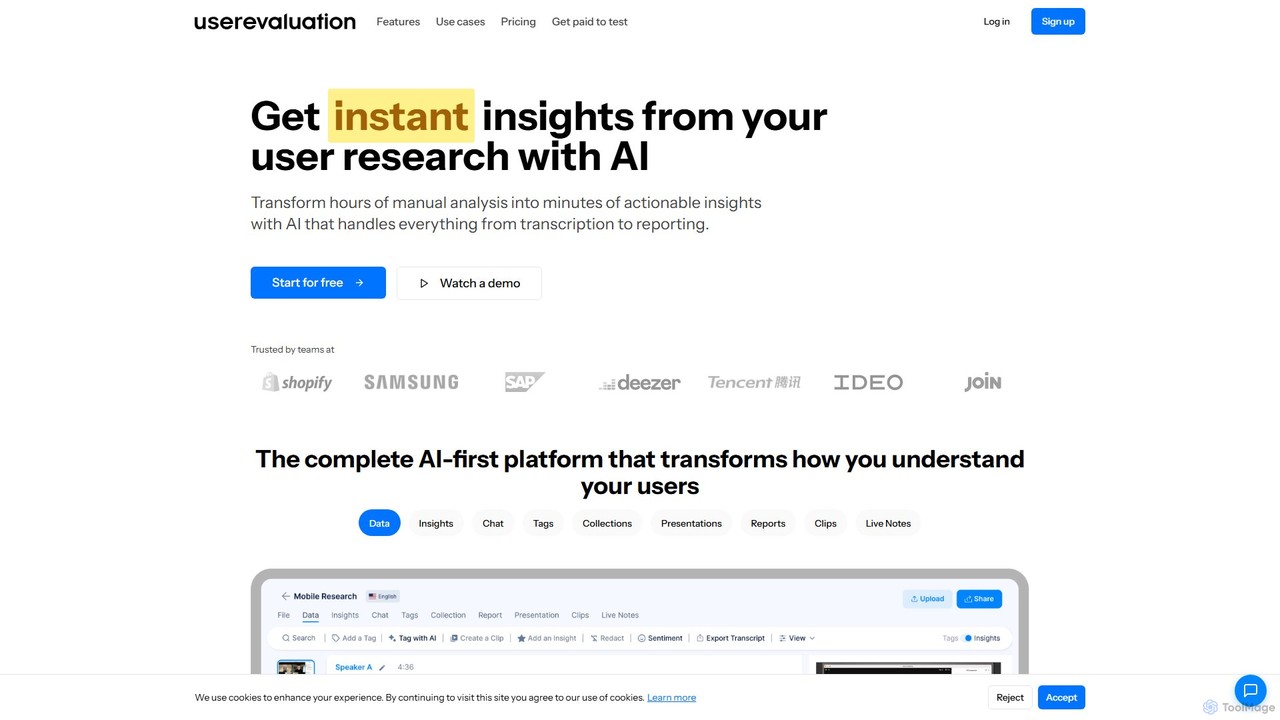
User Evaluation
User Evaluation is an AI-first user research platform designed to transform qualitative and quantitative data into actionable insights. It automates transcription, analysis, and reporting from audio, video, and text, enabling teams to understand their users faster and make data-driven decisions with confidence.
Customer Support
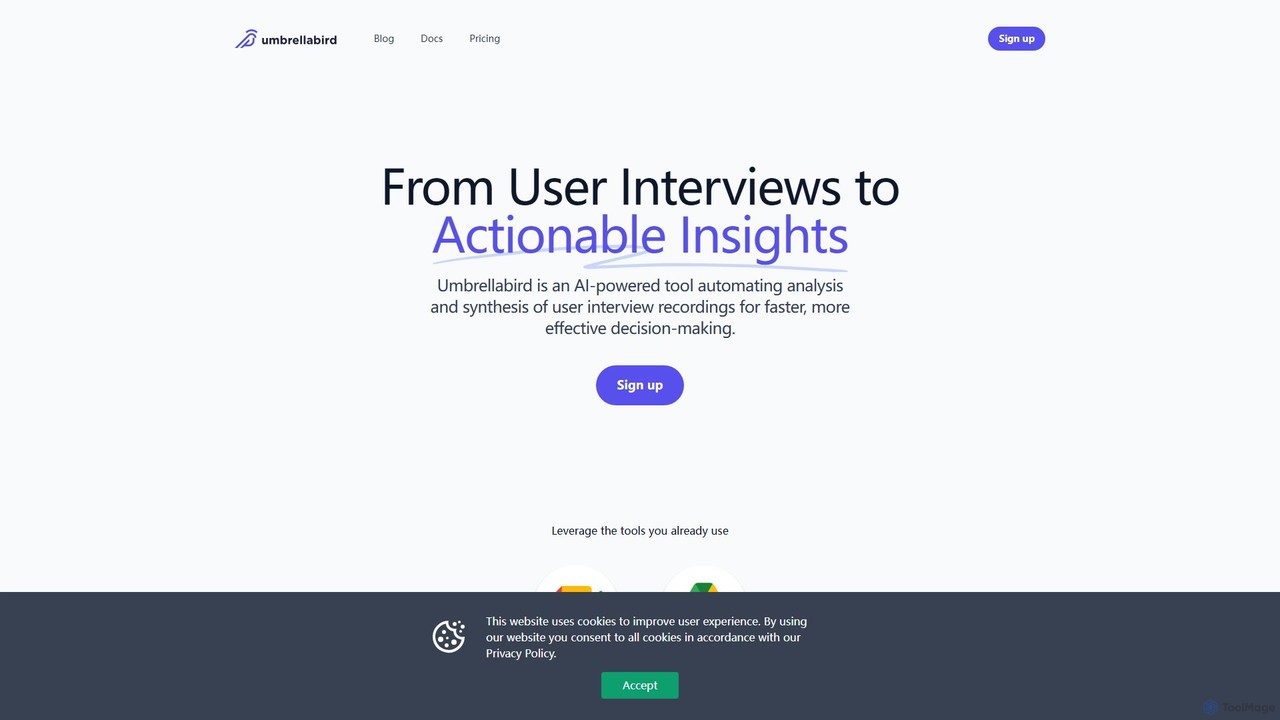
Umbrellabird
Umbrellabird is an AI-powered platform designed for product teams and UX researchers to streamline user interview analysis. It automatically transcribes audio/video recordings, extracts key insights like user pains, gains, and desired outcomes, and generates comprehensive product documents. This accelerates the process from raw data to actionable insights, enabling faster, more effective product decisions.
Transcription
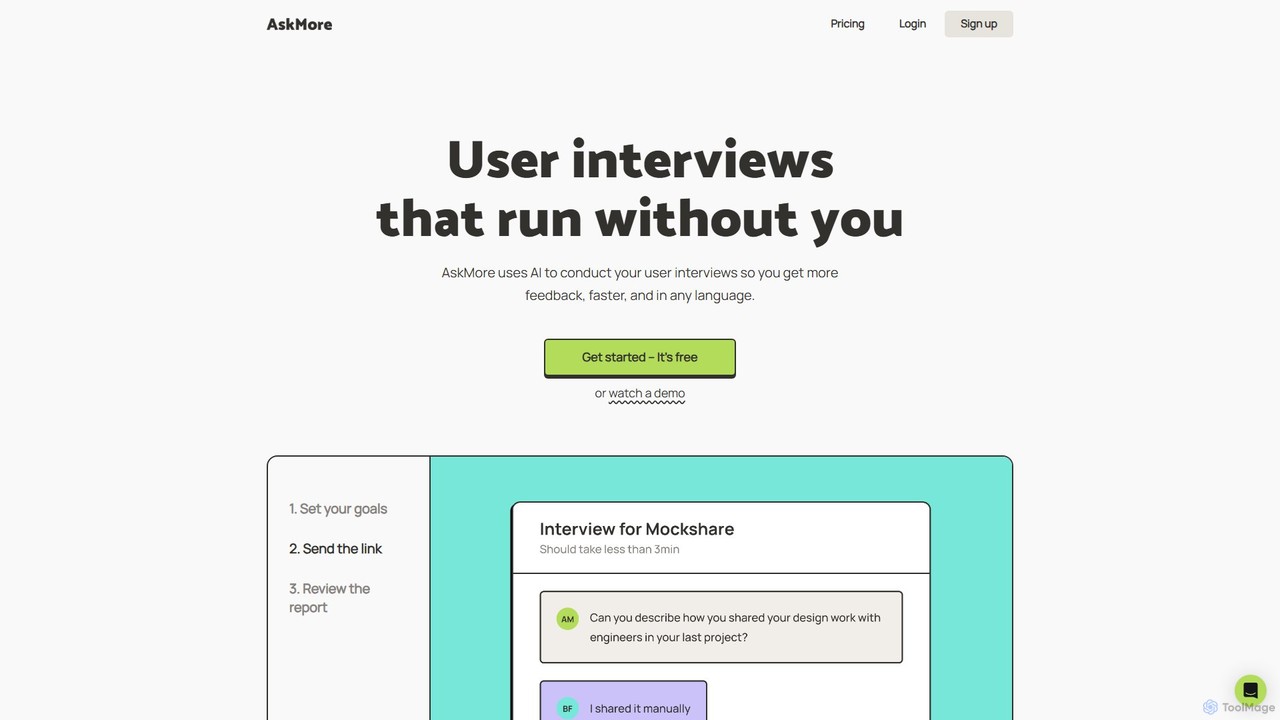
AskMore
AskMore is an AI-powered platform that automates user interviews and product research. It enables you to gather in-depth feedback from a large number of users, faster and in any language. The tool conducts interviews asynchronously, generates automated reports with key insights, and helps eliminate scheduling hassles and interviewer bias.
Analytics
Feedbase
Feedbase is an AI-powered customer feedback platform that helps businesses listen, learn, and grow. By integrating a simple, minimalistic widget onto your website, you can effortlessly collect user feedback and use an AI-powered dashboard to gain actionable insights and analytics.
Analytics