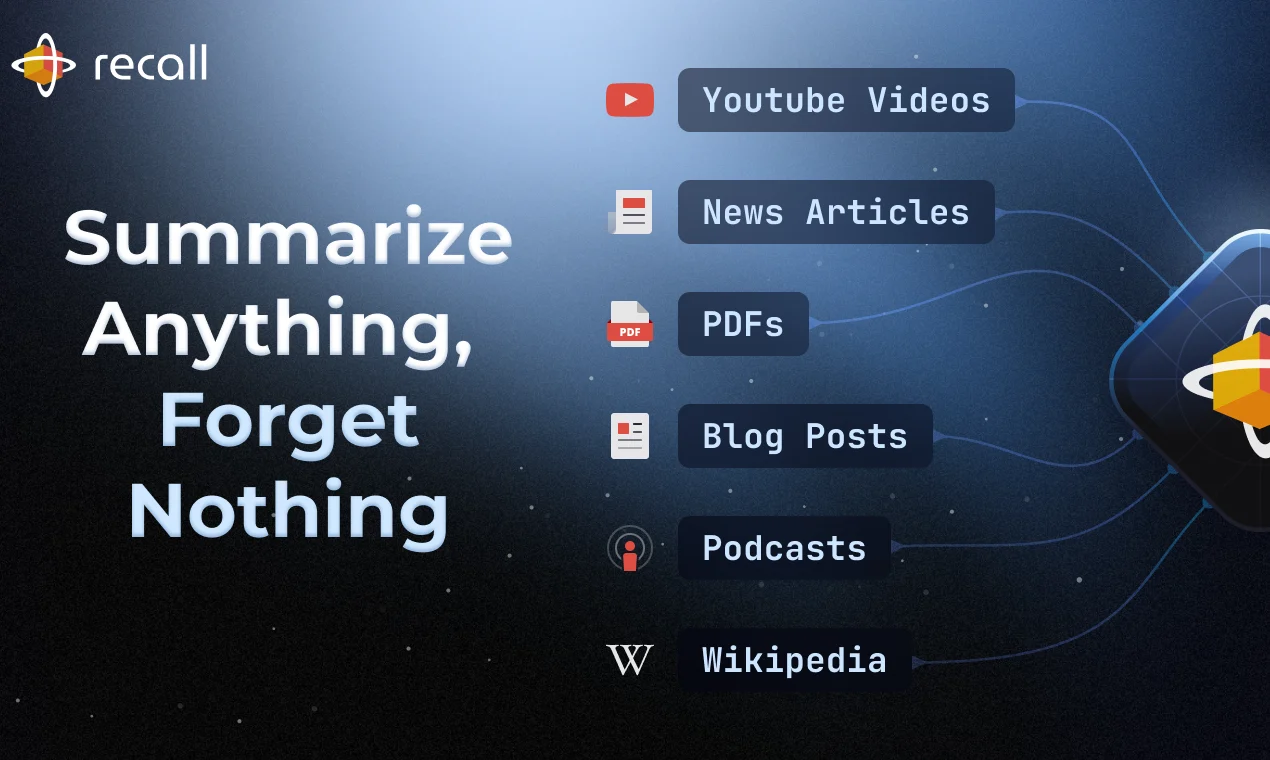
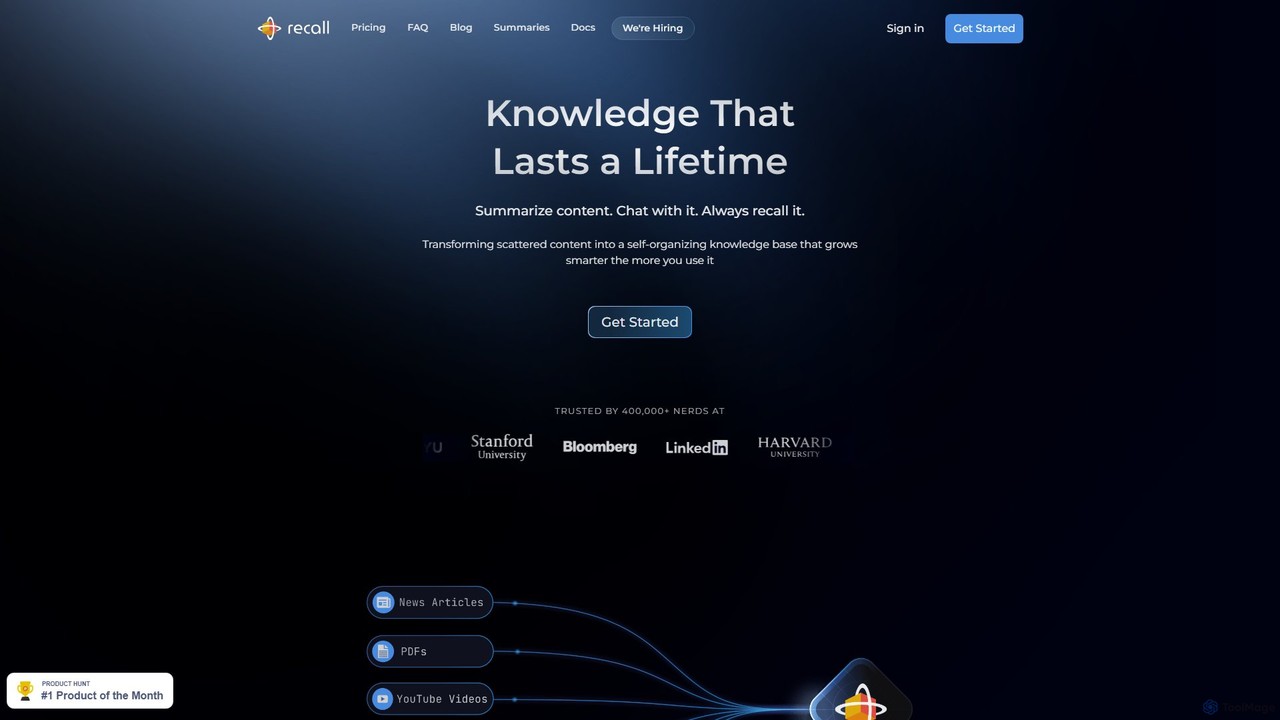
Recall is an AI-powered knowledge management tool that transforms scattered content into a self-organizing knowledge base. It summarizes articles, YouTube videos, PDFs, and more, allows you to chat with your content, and uses features like augmented browsing and spaced repetition to help you remember everything you learn.

Zhida is an AI-powered knowledge engine by Zhihu, China's largest Q&A platform. It provides deep, structured answers by leveraging a vast network of expert-curated Knowledge Repositories, moving beyond generic search to deliver reliable, in-depth insights on a wide range of topics.
Product overview
Recall Product overview
Recall is an AI-powered knowledge management tool that transforms scattered content into a self-organizing knowledge base. It summarizes articles, YouTube videos, PDFs, and more, allows you to chat with your content, and uses features like augmented browsing and spaced repetition to help you remember everything you learn.
Zhida Product overview
Zhida is an AI-powered knowledge engine by Zhihu, China's largest Q&A platform. It provides deep, structured answers by leveraging a vast network of expert-curated Knowledge Repositories, moving beyond generic search to deliver reliable, in-depth insights on a wide range of topics.
Detailed feature comparison
| Feature | Recall | Zhida |
|---|---|---|
| Primary category | Research | Research |
| Added | 2025-08-12 | 2025-08-10 |
| Pricing | Freemium | Freemium |
| Official website | www.getrecall.ai | zhida.zhihu.com |
| Product type | Website | Website |
| Performance data | ||
| User rating | Not verified | Not verified |
| Comments | 0 | 0 |
| Monthly visits | 151.5K | 1.2M |
| Monthly growth | -57% | -6.4% |
| Favorites | 112 | 132 |
| Details | View details | View details |
Recall vs Zhida monthly traffic
Compare Recall and Zhida by monthly reach, traffic trend, visit depth, top regions, and acquisition sources.
How to interpret the traffic data
In the Recall vs Zhida monthly traffic comparison, Recall currently shows 151.5K visits and Zhida shows 1.2M; Zhida has about 8 times the visible traffic of Recall, an absolute difference of about 1.1M visits. This reflects visible reach, not feature quality or paid users.
Both tools provide verified traffic details, so monthly trends, visit depth, regions, and acquisition sources can be compared on the same basis.
Recall monthly traffic:
Latest traffic
Monthly traffic trend
- 2025/9: 752.3K Monthly visits
- 2026/1: 676K Monthly visits
- 2026/2: 584.5K Monthly visits
- 2026/3: 503.3K Monthly visits
- 2026/4: 352.3K Monthly visits
- 2026/5: 151.5K Monthly visits
Top regions
Top 5 countries/regions
| Country/region | Percentage | Traffic |
|---|---|---|
| 🇺🇸United States | 60.52% | 91.7K |
| 🇦🇺Australia | 12.04% | 18.2K |
| 🇩🇪Germany | 10.42% | 15.8K |
| 🇬🇧United Kingdom | 9.54% | 14.5K |
| 🇵🇱Poland | 7.48% | 11.3K |
Traffic sources
| Source type | Percentage | Traffic |
|---|---|---|
| Direct | 78.2% | 118.5K |
| Referral | 18.71% | 28.4K |
| 3.09% | 4.7K |
Search keywords
Zhida monthly traffic:
Latest traffic
Monthly traffic trend
- 2025/9: 6M Monthly visits
- 2026/1: 4.6M Monthly visits
- 2026/2: 1.9M Monthly visits
- 2026/3: 1.4M Monthly visits
- 2026/4: 1.3M Monthly visits
- 2026/5: 1.2M Monthly visits
Top regions
Top 5 countries/regions
| Country/region | Percentage | Traffic |
|---|---|---|
| 🇨🇳China | 86.97% | 1.1M |
| 🇺🇸United States | 5.45% | 66.4K |
| 🇭🇰Hong Kong | 4.33% | 52.7K |
| 🇹🇼Taiwan | 2.1% | 25.6K |
| 🇸🇬Singapore | 1.15% | 14K |
Traffic sources
| Source type | Percentage | Traffic |
|---|---|---|
| Referral | 78.52% | 956.3K |
| Direct | 21.47% | 261.5K |
| 0.01% | 122 |
Search keywords
Usage comparison
Compare the core capabilities of Recall and Zhida
Recall Core features
Zhida Core features
Use cases
Recall Use cases
Zhida Use cases
Recall vs Zhida:In-depth comparison and selection guidance
First decide whether the products solve the same kind of need
This in-depth Recall vs Zhida comparison uses only the product records, taxonomy, audience, traffic, and community signals available on this page. Recall is primarily listed under “Research”, while Zhida is primarily listed under “Research”, so the first decision is whether your actual task matches their recorded scope.
The structured fields currently show these decision-relevant differences: Monthly visits (Recall: 151.5K; Zhida: 1.2M); Monthly growth (Recall: -57%; Zhida: -6.4%); Favorites (Recall: 112; Zhida: 132); Website (Recall: www.getrecall.ai; Zhida: zhida.zhihu.com); Added (Recall: 2025-08-12; Zhida: 2025-08-10). These facts are more useful for selection than brand visibility alone.
What market visibility and monthly traffic mean
In the Recall vs Zhida monthly traffic comparison, Recall currently shows 151.5K visits and Zhida shows 1.2M; Zhida has about 8 times the visible traffic of Recall, an absolute difference of about 1.1M visits. This reflects visible reach, not feature quality or paid users.
Both tools provide verified traffic details, so monthly trends, visit depth, regions, and acquisition sources can be compared on the same basis.
If public market visibility is an important first-pass criterion, investigate Zhida first. The final choice should still follow taxonomy, use case, and a real trial because higher traffic does not prove broader capabilities or better workflow fit.
Product positioning, use cases, and roles
Recall and Zhida currently overlap in shared categories: Research and Knowledge Management; shared tags: knowledge base. This can place both on the same shortlist, but it does not prove equal implementation, depth, or cost.
Recall's unique categories/tags are Note Taking, Summarizer, note-taking, PDF summarizer, productivity, read it later, research tool, and second brain; Zhida's are Search Engines, AI search, content generation, expert system, Q&A, RAG, research assistant, and Zhihu. These unique fields are the strongest differentiators: validate the product whose recorded scope matches the task instead of following traffic alone.
What ratings, comments, and favorites can tell you
Recall has no verified rating, 0 comments, 112 favorites, and 110 likes;Zhida has no verified rating, 0 comments, 132 favorites, and 123 likes。
Neither product has enough rating or comment samples for a credible reputation ranking.
Selection guidance by actual need
When to evaluate Recall first
Put Recall on the priority trial list when the task aligns with “Research” and especially Note Taking, Summarizer, note-taking, PDF summarizer, productivity, and read it later. This follows recorded positioning and does not imply unlisted capabilities are absent.
Recall also currently records: pricing is freemium, product type is website, 151.5K verified monthly visits, no verified user rating. Verify any hard requirement around price, platform, or reach before trial, and do not let sparse review data substitute for testing.
When to evaluate Zhida first
Put Zhida on the priority trial list when the task aligns with “Research” and especially Search Engines, AI search, content generation, expert system, Q&A, and RAG. This follows recorded positioning and does not imply unlisted capabilities are absent.
Zhida also currently records: pricing is freemium, product type is website, 1.2M verified monthly visits, no verified user rating. Verify any hard requirement around price, platform, or reach before trial, and do not let sparse review data substitute for testing.
How to validate the recommendation before deciding
The available data describes positioning, public visibility, and community signals, but it cannot prove output quality, speed, integration effort, privacy, or long-term cost in your workflow. Before deciding, run the same representative tasks in Recall and Zhida, then record completion time, accuracy, manual corrections, and the real paid threshold. A like-for-like trial turns this comparison into a defensible adoption decision.
Comparison FAQ
How should I choose between Recall and Zhida?
Where does this comparison data come from?
What do unknown fields mean?
Related AI tools

iki
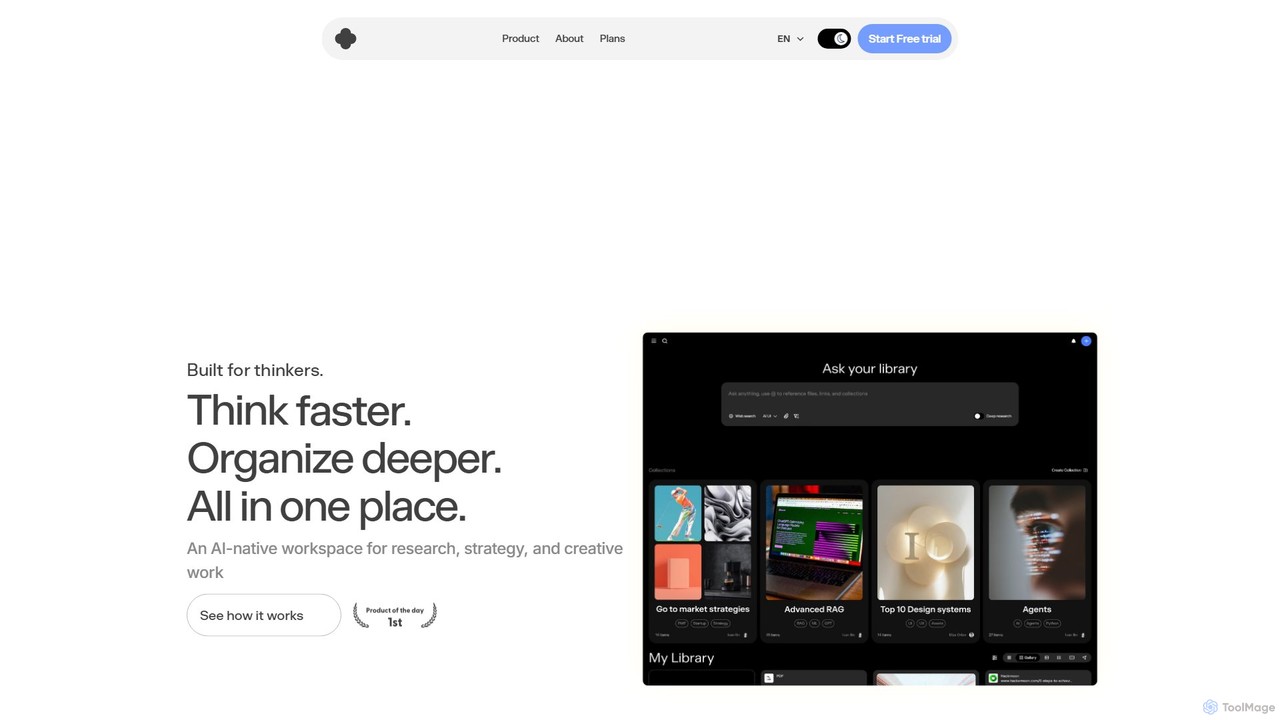
iki is an AI-native workspace designed for research, strategy, and creative work. It acts as a second brain, allowing you to capture content from any source (webpages, PDFs, videos) and uses an AI assistant to summarize, analyze, and generate insights based on your personal knowledge base, not the general internet. It supports both individual and team collaboration.
Knowledge Management
Briefy
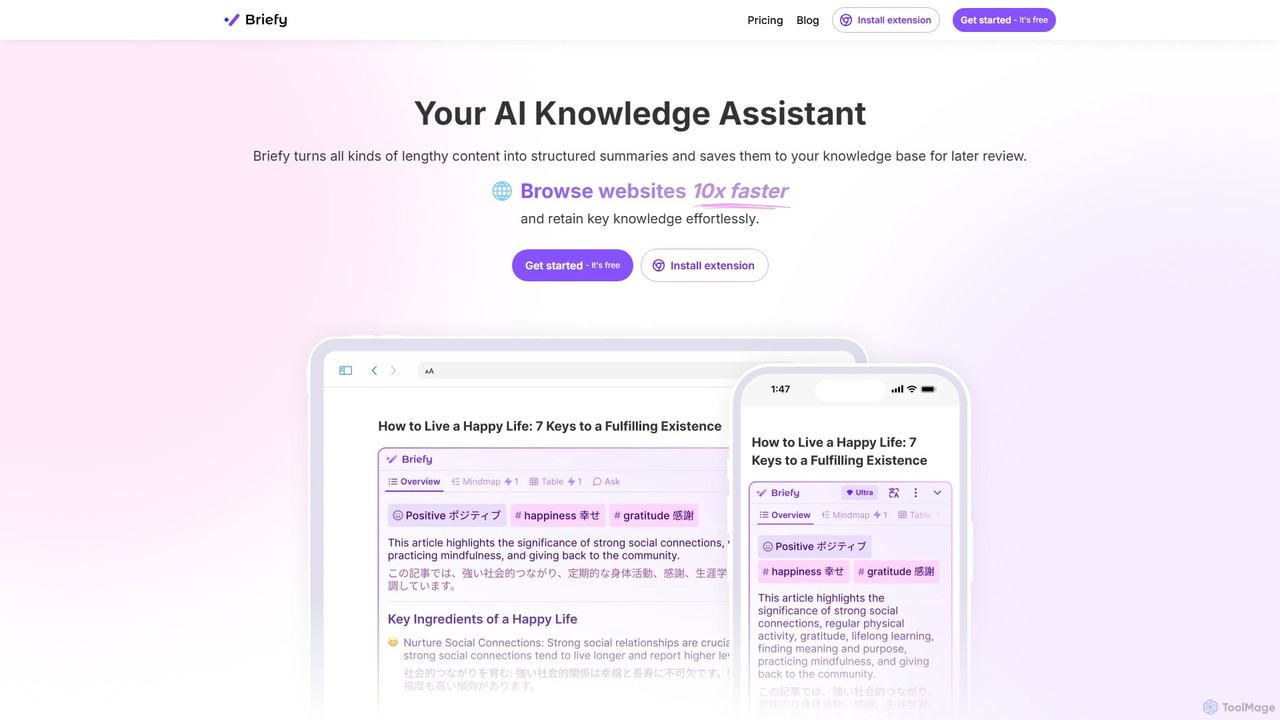
Briefy is an AI-powered knowledge assistant that transforms lengthy content like articles, videos, and PDFs into structured summaries. It helps you conduct research 10x faster, retain key knowledge, and build a personal, searchable knowledge base for later review and interaction.
Research
MyMemo
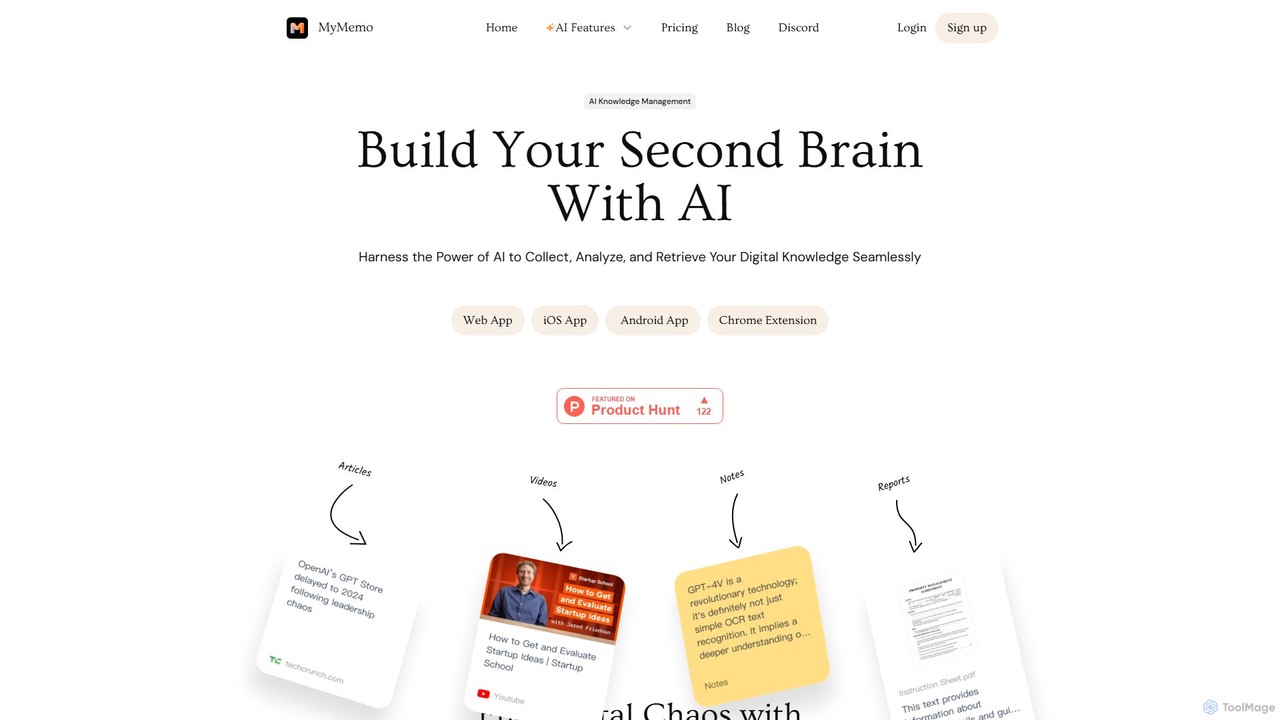
MyMemo is an AI-powered knowledge management tool that acts as your 'second brain'. It helps you effortlessly collect, analyze, and retrieve digital knowledge from various sources like articles, videos, and notes, transforming scattered information into an intelligent, searchable personal database.
Knowledge Management
WantRead
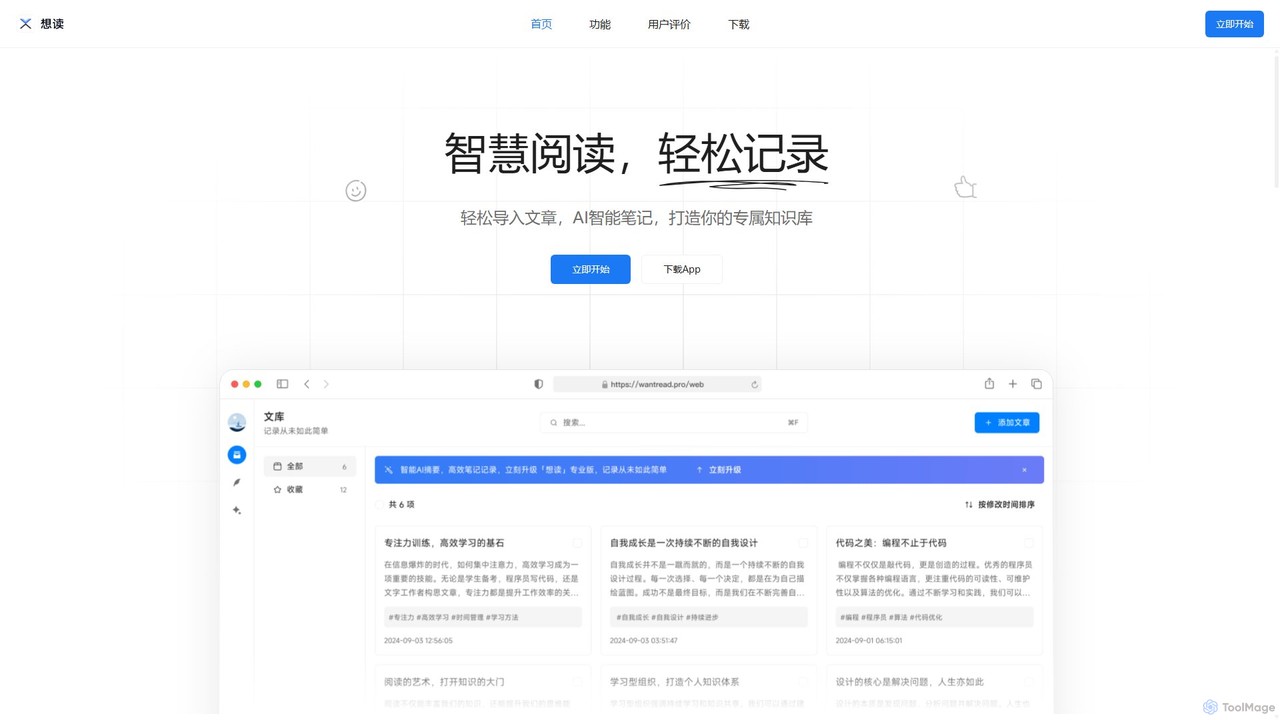
WantRead is an AI-powered reading assistant and knowledge management tool. It helps you import articles, generate intelligent summaries, take notes seamlessly, and build a searchable personal knowledge base. Interact with your content through a specialized AI that provides precise answers based solely on your library.
Research
Mem
Mem is an AI-powered, self-organizing workspace designed to act as your personal knowledge base. It captures your notes, ideas, and meeting transcripts, then uses AI to connect related information, summarize content, and help you generate new insights without manual organization.
Personal
ArcaNotes
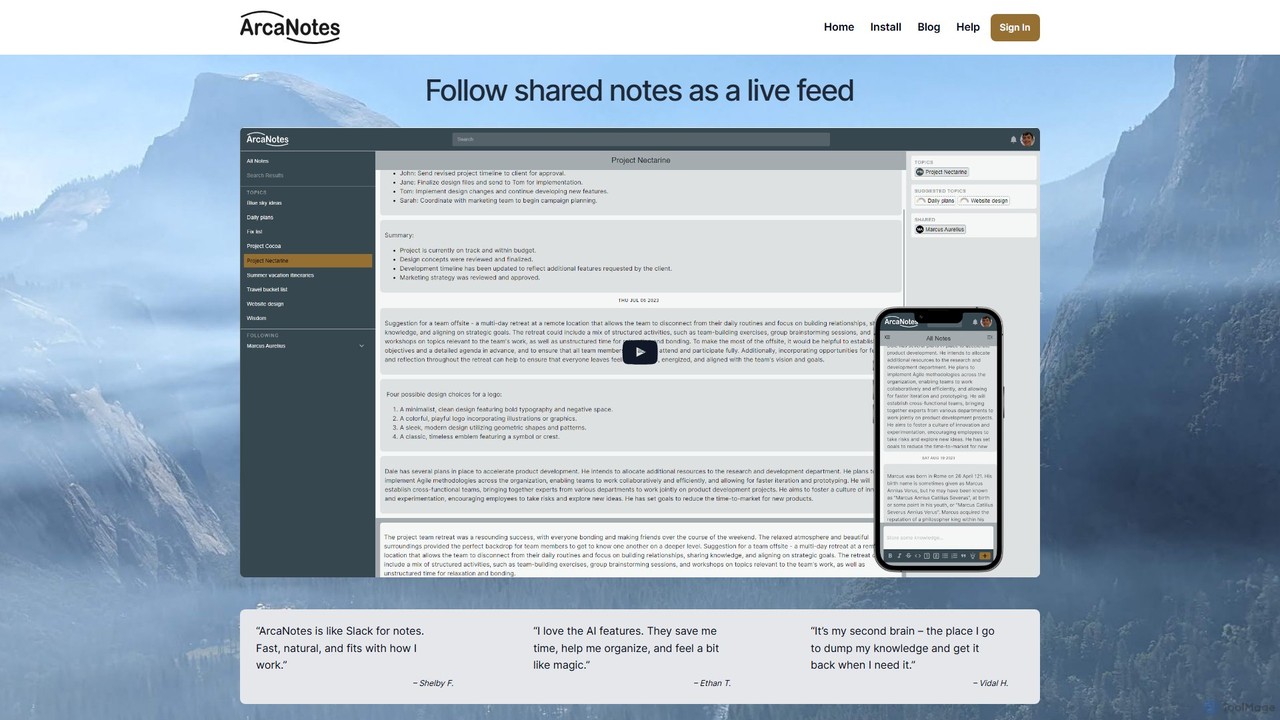
ArcaNotes is an AI-enhanced micro-note app designed for elevated productivity and knowledge management. It acts as your second brain, allowing you to quickly capture, organize, and retrieve information. With on-device AI, it offers intelligent topic suggestions, natural language Q&A with your notes, and collaborative sharing features, all while prioritizing user privacy with robust encryption.
Personal Assistant
RecapioGPT
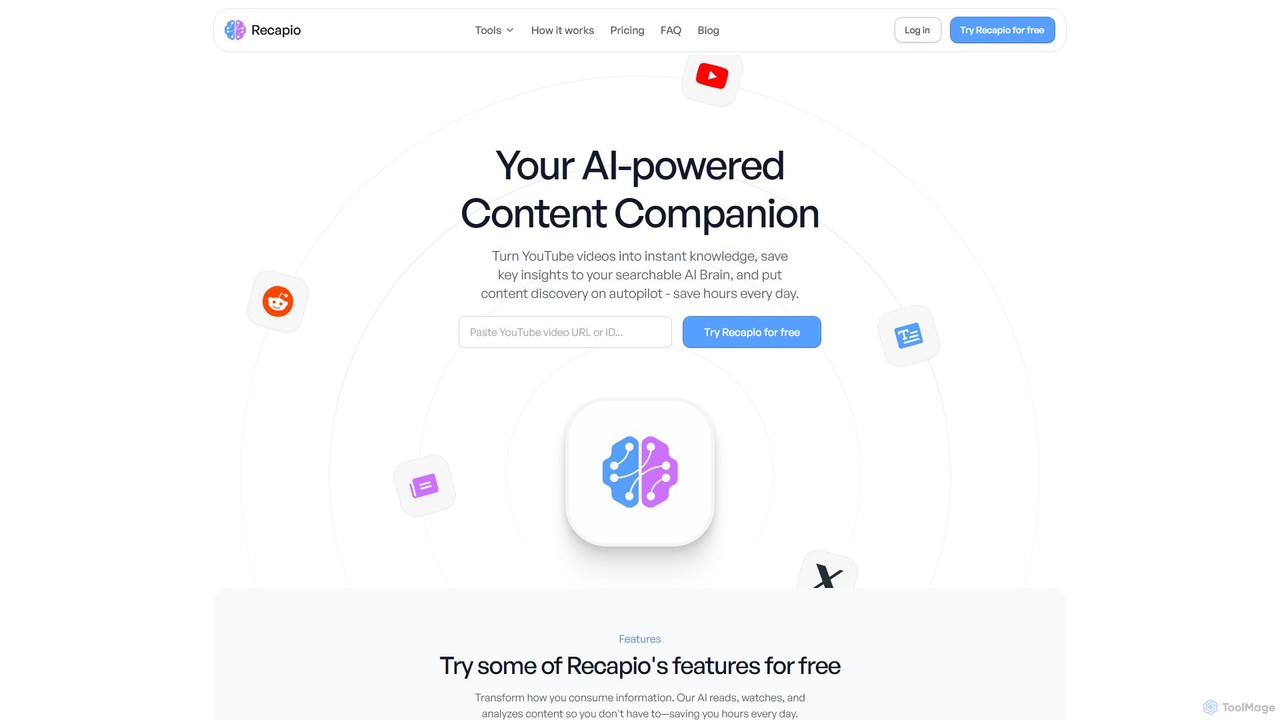
RecapioGPT is an AI-powered second brain and content summarizer that transforms YouTube videos, articles, and web posts into a searchable knowledge base. Chat with your content, get daily recaps, and organize insights to save time and learn smarter.
Research
Iweaver
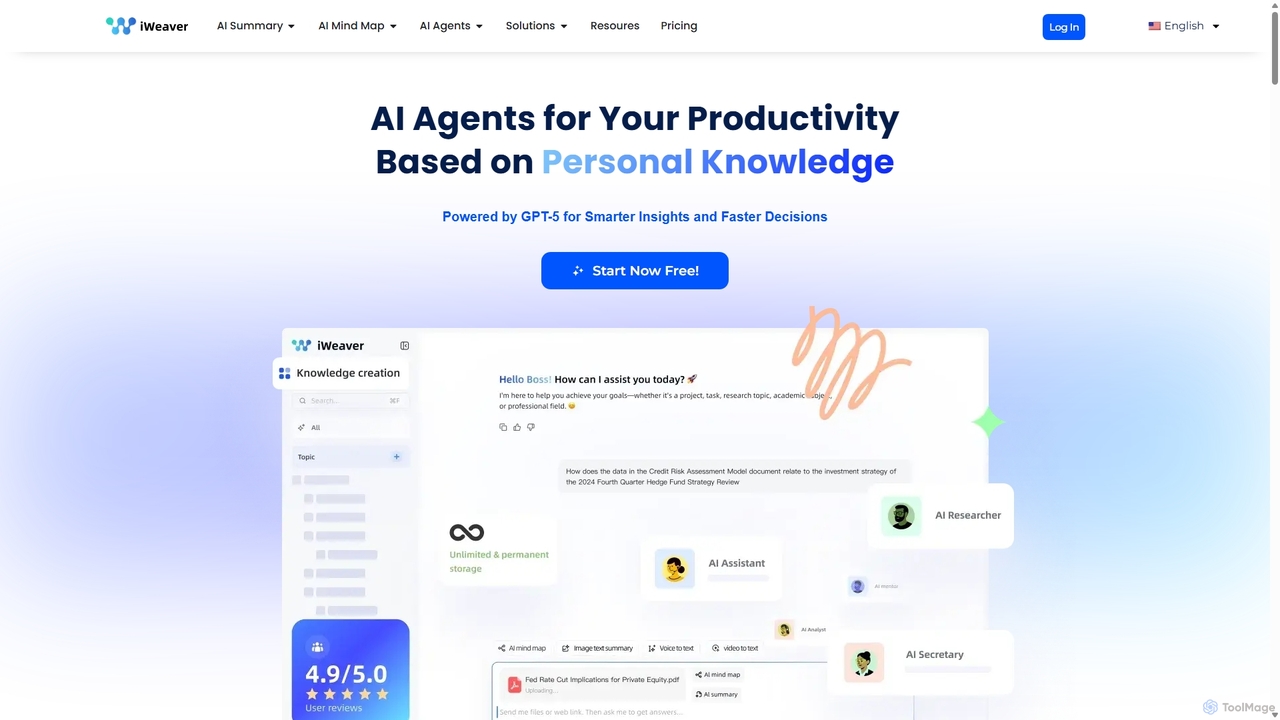
Iweaver is an AI-powered personal knowledge management platform that transforms your documents, images, and videos into an intelligent knowledge base. Utilize over 200 specialized AI agents to automate tasks, generate summaries, create mind maps, and get precise answers from your data. It learns your work habits to provide personalized, context-aware assistance, streamlining workflows for professionals in finance, research, law, and content creation.
Study Tools
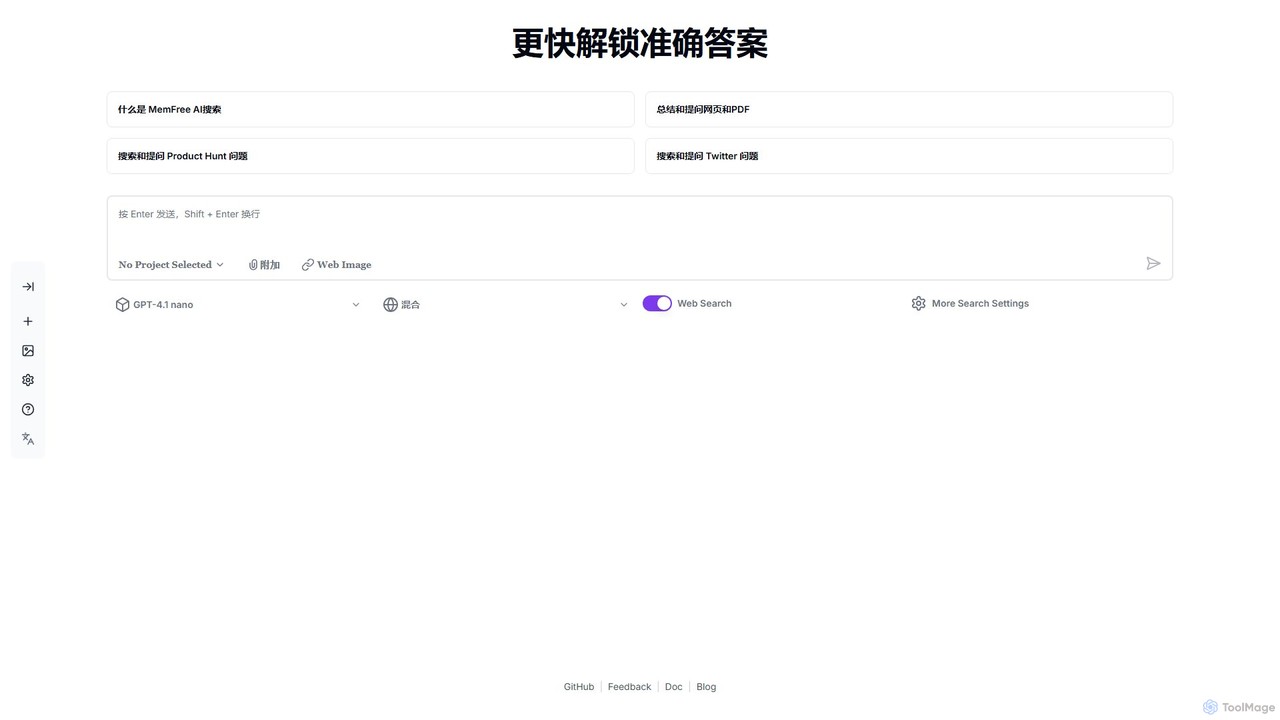
MemFree
MemFree is a hybrid AI search engine that acts as your second brain. It combines web search with your personal knowledge base (bookmarks, files, images) to deliver accurate, summarized answers, saving you time and replacing multiple AI subscriptions.
Knowledge Management
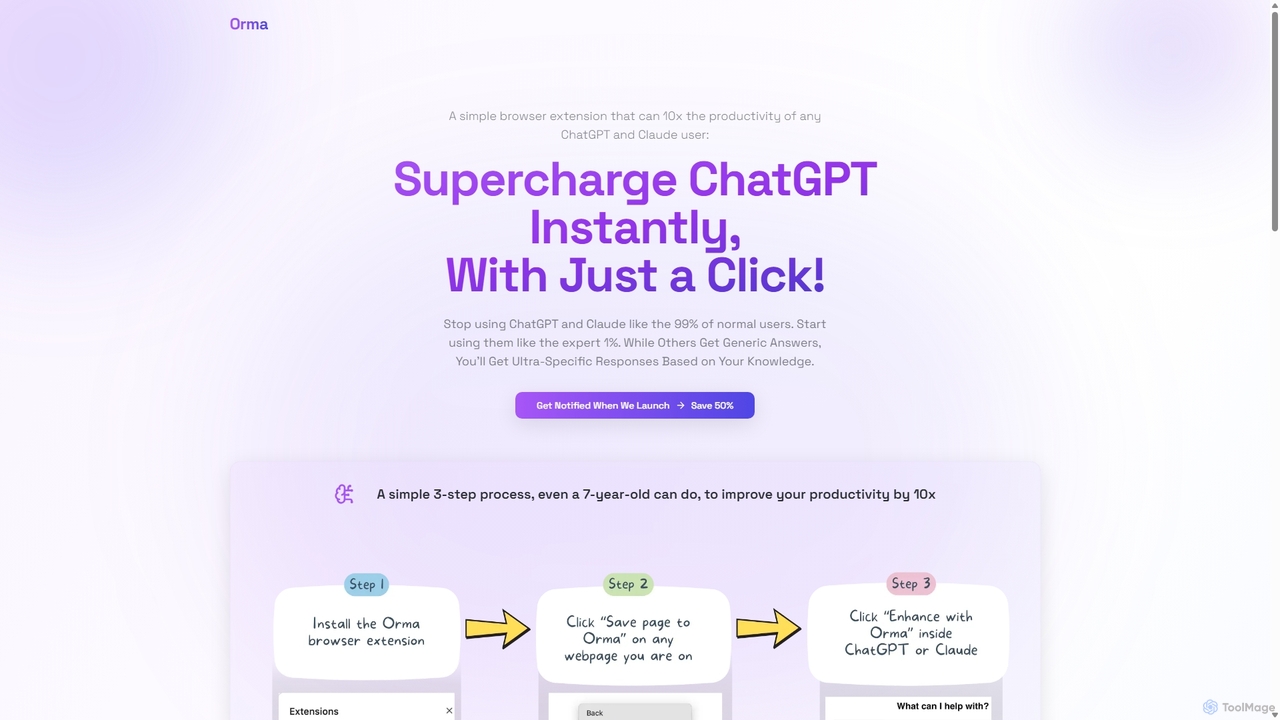
Orma
Orma is a browser extension that transforms your web browsing into a personal knowledge base, or 'digital memory layer'. It allows you to intelligently capture web content and seamlessly integrate it with AI models like ChatGPT and Claude. This turns generic AI responses into highly specific, personalized insights based on your own curated knowledge, boosting productivity by up to 10x.
Search Tools
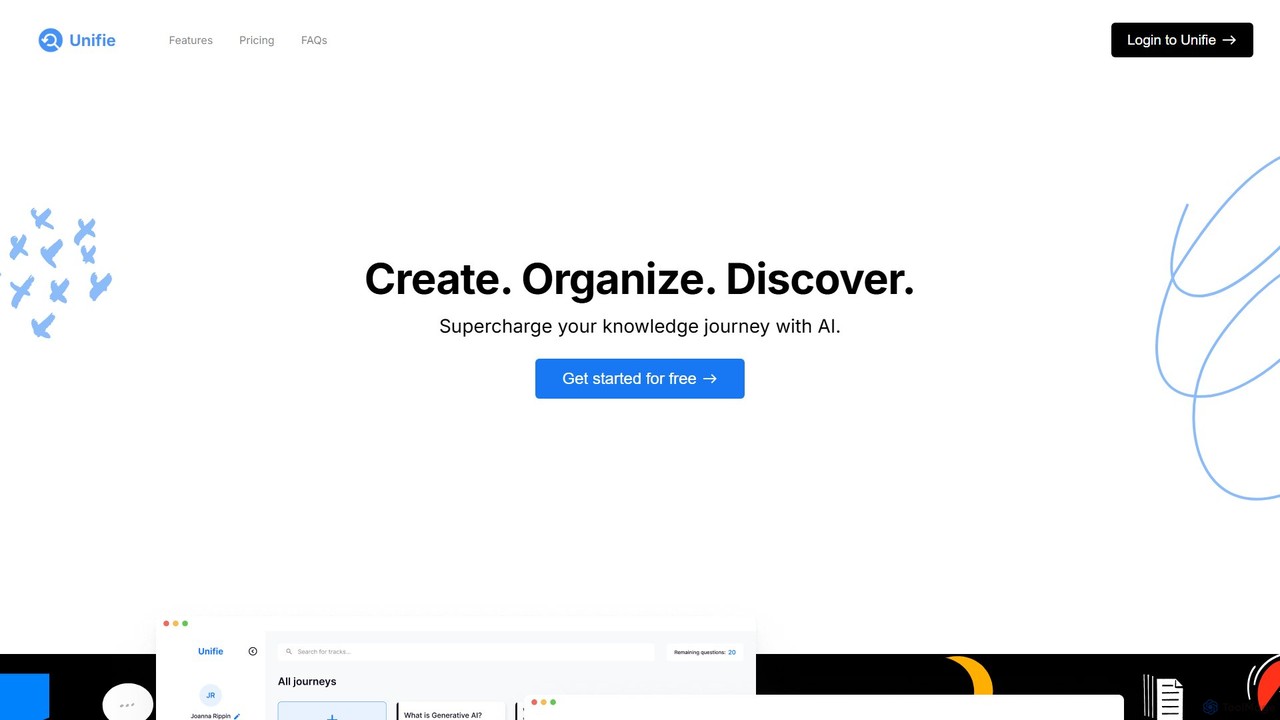
Unifie
Unifie is an AI-powered knowledge companion designed to streamline your research, learning, and creation process. It helps you create, organize, and discover information by integrating online sources and personal documents, while preserving your train of thought. Capture ideas with text and voice notes, and build a powerful personal knowledge base.
Knowledge Management
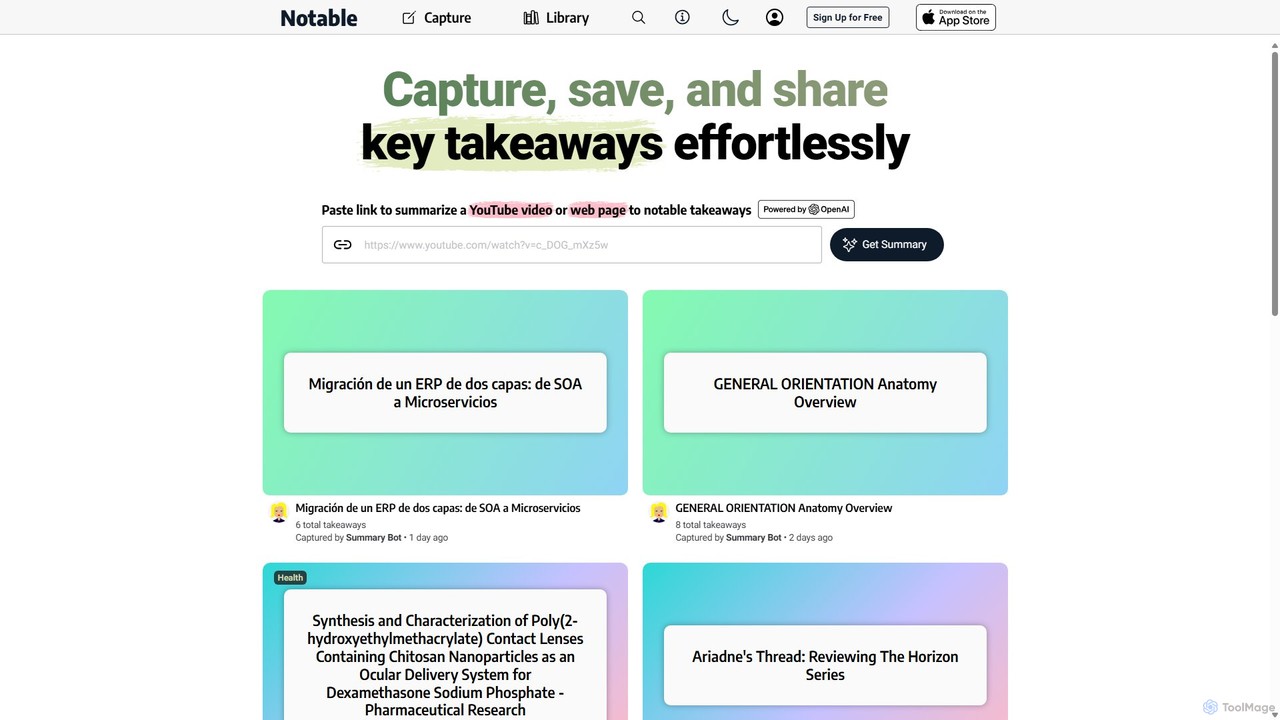
Notable AI
Notable AI is an intelligent tool designed to capture, summarize, and organize key takeaways from web pages and YouTube videos. Simply paste a link, and the AI generates concise summaries, helping you build a personal knowledge library and share insights effortlessly.
Research
Knowbase.ai
Knowbase.ai is an AI-powered knowledge base that transforms your files into an interactive chatbot. Upload documents, presentations, audio, video, or YouTube links, and ask questions in natural language to get instant, accurate answers from your own data.
Transcription
Lilys AI
Lilys AI is a powerful knowledge assistant that instantly summarizes diverse content formats, including YouTube videos, audio files, PDFs, websites, and Excel sheets. It extracts key insights, creates structured notes, and allows you to build a searchable personal knowledge base. Ideal for students, researchers, and professionals looking to save time and accelerate learning by quickly grasping the core ideas from lengthy materials.
Research
remio
remio is a local-first AI assistant that unifies all your data—notes, files, and web content—into a single, private knowledge base. It allows you to capture information from anywhere, find answers instantly with AI-powered search, and organize your knowledge securely on your device, boosting your productivity and creativity.
Personal Assistant