

Story Diffusion Overview
Story Diffusion is a groundbreaking open-source AI model that specializes in generating coherent and consistent visual stories. Unlike traditional text-to-image models that create standalone images, Story Diffusion is engineered to produce a sequence of images that maintain the identity of characters, the artistic style, and the overall environmental context. This makes it an invaluable tool for creators looking to visualize narratives, such as comic strips, storyboards for film and animation, or illustrated social media content.
The core innovation of Story Diffusion lies in its ability to overcome the common issue of 'character drift,' where a character's appearance changes from one generated image to the next. By using a sophisticated attention mechanism and a consistent self-attention module, the model ensures that once a character is defined, it remains recognizable across different poses, expressions, and scenes within the generated sequence. This allows for the creation of compelling and believable visual narratives directly from text descriptions.
How to use Story Diffusion
Using Story Diffusion typically involves interacting with a web-based interface or running the model's code in a suitable environment. The general workflow is as follows:
- Write a Detailed Prompt: Start with a descriptive text prompt. This prompt should not only describe the character and the setting but also outline the sequence of actions or scenes you want to depict. For example, 'A young knight with a silver helmet, first looking at a map, then riding a horse through a forest, then arriving at a castle.'
- Set Parameters: Depending on the interface, you may be able to set parameters such as the desired artistic style (e.g., 'anime style,' 'photorealistic,' 'watercolor'), the number of images in the sequence, and other generation settings.
- Generate the Story: The model processes the prompt and generates a grid of images, with each image representing a step in the story. The output is a cohesive visual sequence that follows your narrative.
- Refine and Iterate: If the result is not perfect, you can refine your prompt to be more specific or adjust the parameters and regenerate the sequence. Some advanced implementations may allow you to provide a reference image to guide the character's appearance.
Core Features of Story Diffusion
- Consistent Image Sequence Generation: Its primary function is to produce a series of related images that tell a story, rather than isolated pictures.
- High Character Consistency: Ensures that characters retain their key features, clothing, and appearance across all frames of the generated story.
- Stable Artistic Style: Maintains a uniform visual style (e.g., Ghibli-inspired, cyberpunk, fantasy art) throughout the entire image sequence.
- Text-to-Story Functionality: Translates a single, comprehensive text prompt into a multi-panel visual narrative.
- Layout and Composition Control: The model is designed to create logical scene progressions, paying attention to character placement and background continuity.
- Open-Source Accessibility: As an open-source project, it is accessible to developers and researchers, fostering community improvements and adaptations.
Use Cases for Story Diffusion
Story Diffusion is a versatile tool for various creative and professional fields:
- Comic and Graphic Novel Creation: Artists and writers can rapidly prototype or even create final panels for their comics, ensuring their characters look the same on every page.
- Film and Animation Storyboarding: Directors and storyboard artists can quickly generate visual sequences to plan shots, camera angles, and scene progressions for films, TV shows, and animations.
- Marketing and Advertising: Marketers can create engaging visual stories for social media campaigns, product advertisements, or brand narratives.
- Children's Book Illustration: Authors and illustrators can produce a full set of illustrations for a children's book with a consistent main character.
- Game Development: Game designers can use it to create concept art, narrative cutscenes, or character design sheets.
Advantages of Story Diffusion
The main advantage of Story Diffusion is its ability to solve the consistency problem that has long plagued AI image generation for storytelling. This leads to several key benefits:
- Enhanced Efficiency: Drastically reduces the time and effort required to create a visual story compared to drawing manually or trying to edit multiple AI-generated images to match.
- Creative Empowerment: Enables writers, marketers, and other creators without advanced drawing skills to bring their visual stories to life.
- Narrative Cohesion: Produces a final product that is more professional and believable because the visual elements are consistent and connected.
- Cost-Effective Prototyping: Allows for rapid exploration of different story ideas and visual styles at a minimal cost before committing to full production.
Pricing and Plans
Story Diffusion is an open-source model, which means the software itself is free. However, accessing and running the model requires significant computational power (a high-end GPU). Therefore, the cost depends on the method of access:
- Free Demos: Platforms like Hugging Face may host free, public demos. These are typically subject to queues, usage limits, and may not offer the full range of features.
- Pay-as-you-go Services: Cloud platforms like Replicate, Google Colab Pro, or other GPU rental services allow you to run Story Diffusion and pay based on the amount of processing time you use. This is a flexible option for users who need more power without buying hardware.
- Local Installation: For those with a powerful local computer and the necessary technical skills, the model can be downloaded and run locally at no cost beyond the initial hardware investment and electricity.
Essentially, the model follows a freemium model where the code is free, but convenient and powerful access often requires payment.
Story Diffusion Alternatives

Story Diffusion
Story Diffusion is an AI-powered tool for generating long-range, consistent visual stories from text prompts. It excels at creating sequences of images and videos where characters and styles remain coherent, making it ideal for storytellers, content creators, and artists to visualize narratives, comics, and storyboards effortlessly.
Creative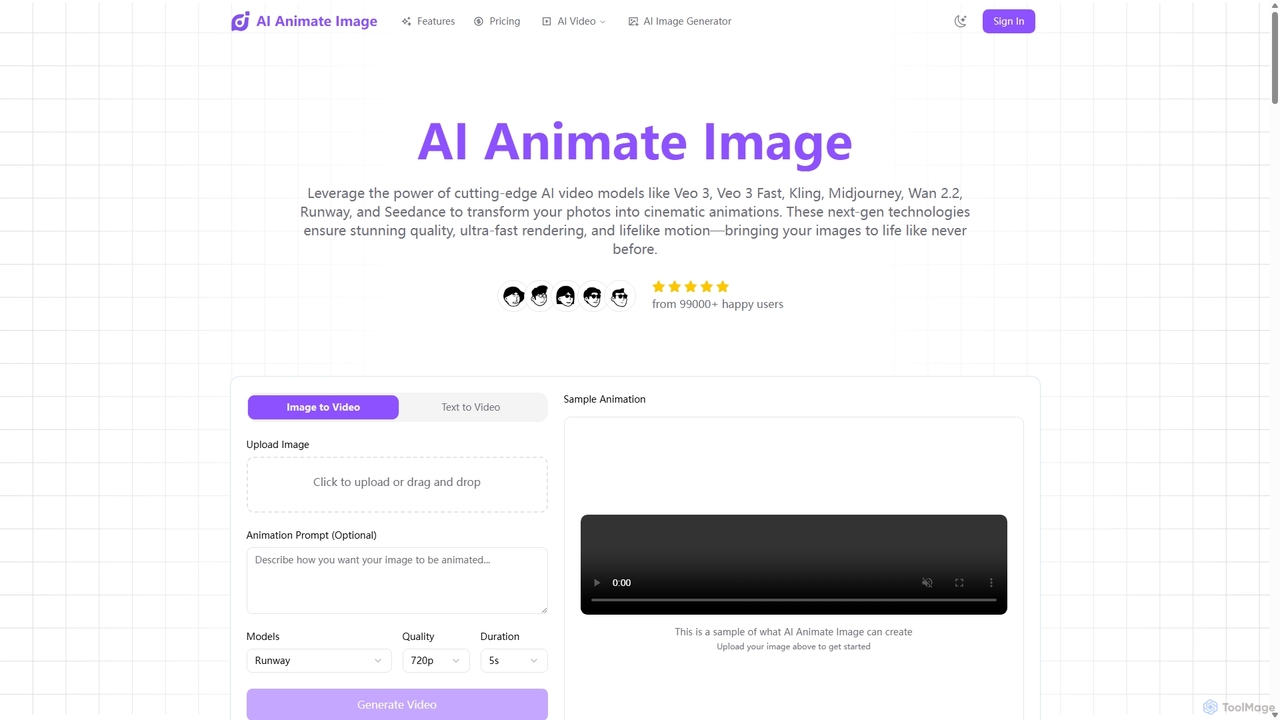
Aianimateimage
Aianimateimage is a comprehensive AI-powered platform that transforms static images into captivating animations and generates stunning visuals from text. Utilizing advanced models like Veo 3, Kling, and GPT-4o, it offers tools for image-to-video, text-to-video, and text-to-image creation. It's designed for creators, marketers, and artists to produce professional-quality animated content and images effortlessly through a user-friendly, browser-based interface.
Image Generation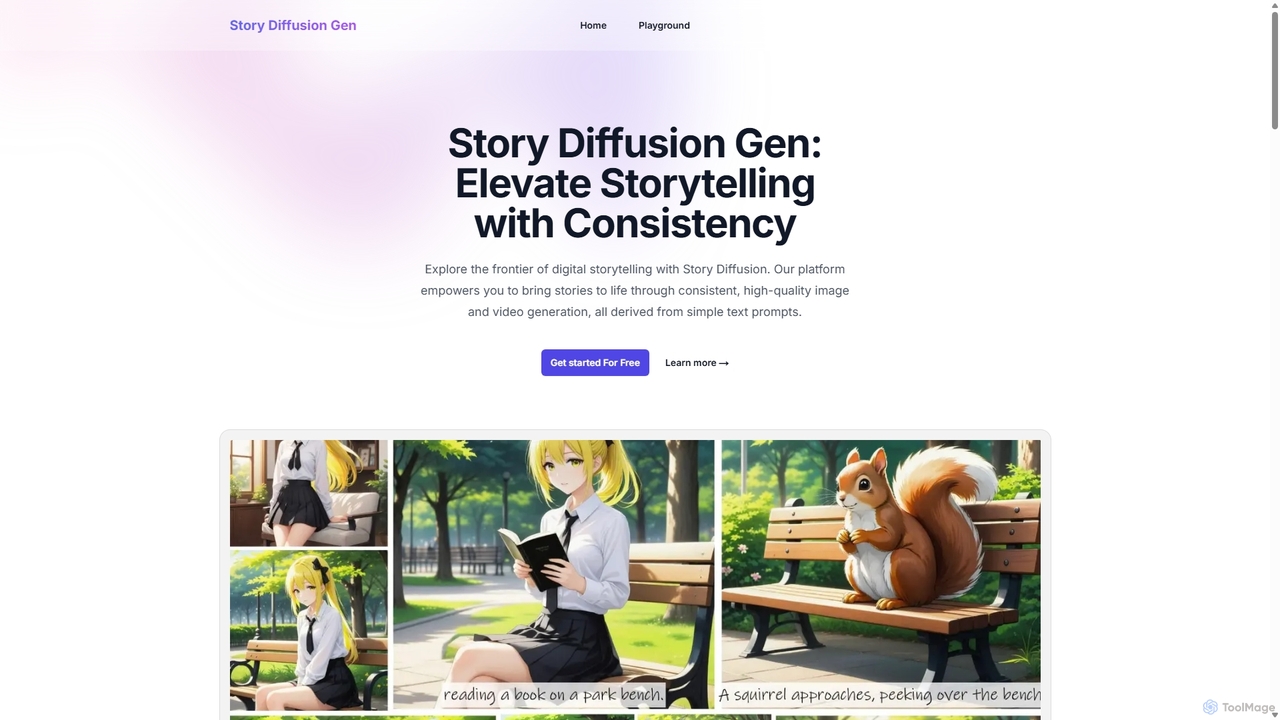
Story Diffusion Gen
Story Diffusion Gen is an advanced AI platform for creating visually consistent narratives. It transforms text prompts into high-quality, character-consistent images, long-range videos, and comics, making it ideal for storytellers, artists, and content creators seeking to maintain visual continuity in their digital projects.
Comics Generation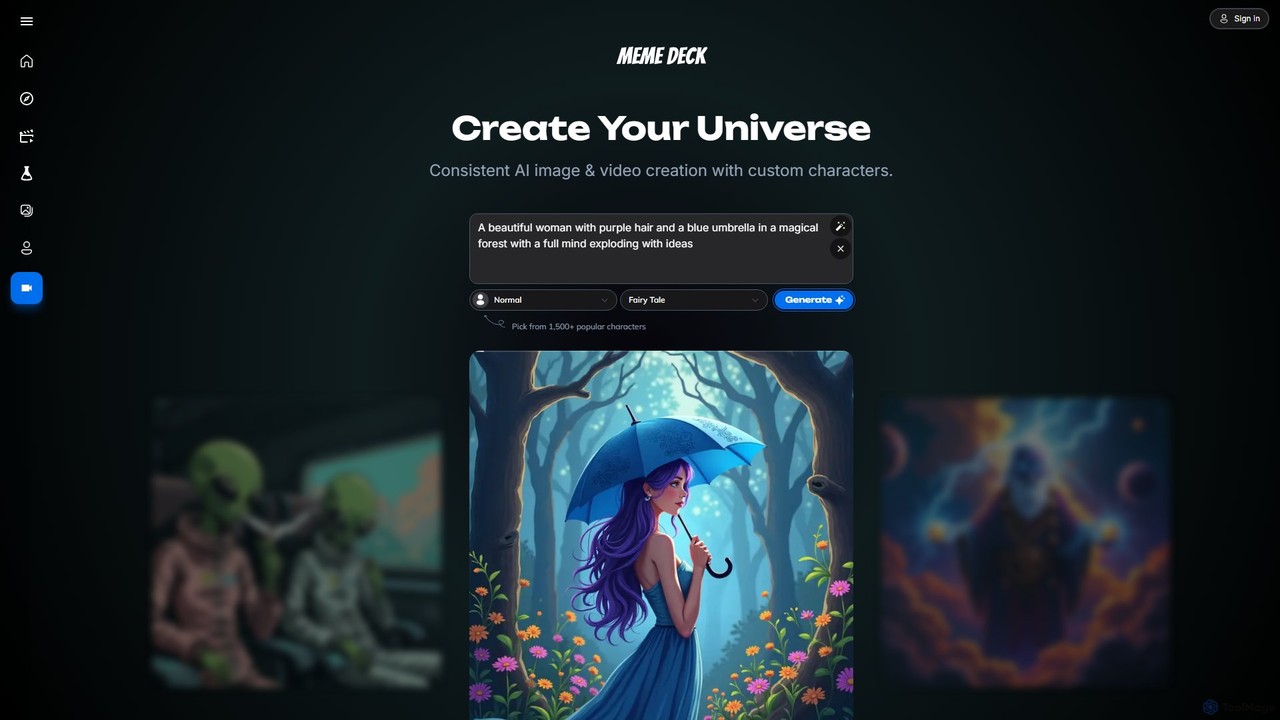
MemeDeck
MemeDeck is an AI-powered platform for creating images and short animated videos with consistent characters. Easily train the AI on your own custom character or choose from a vast library to generate engaging content for social media, brand building, and Web3 communities.
Image Generation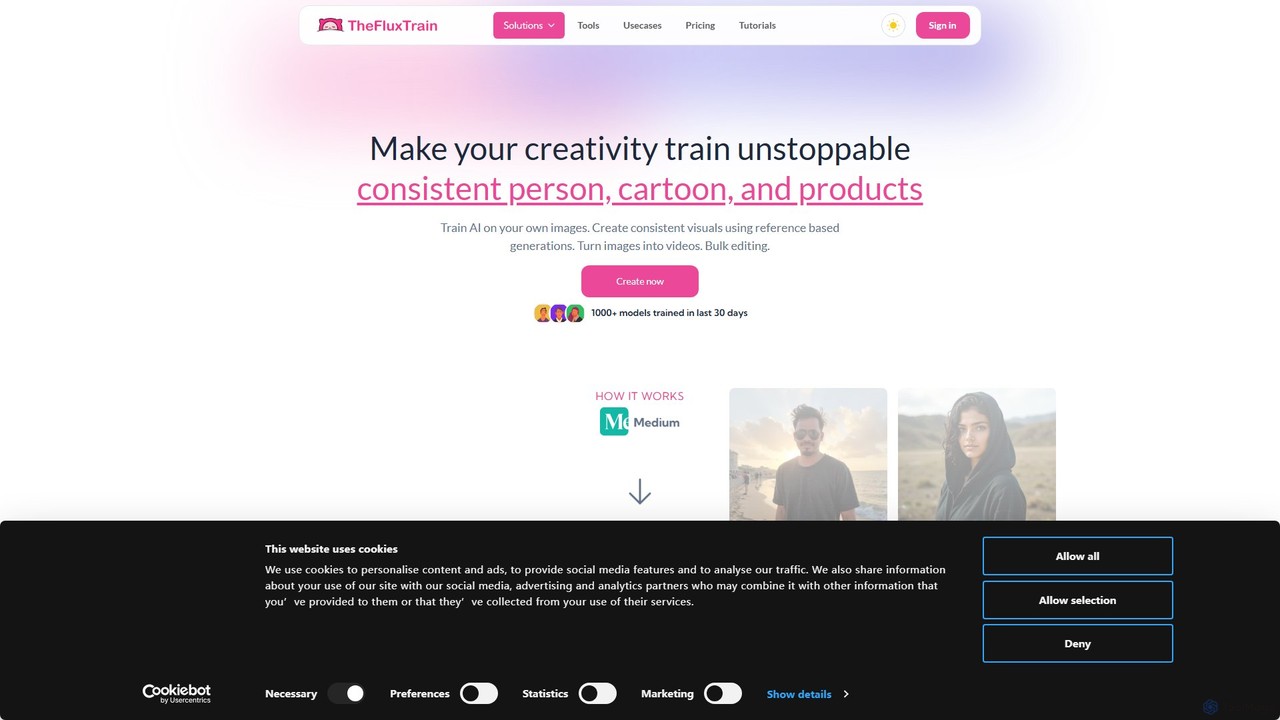
thefluxtrain
thefluxtrain is an AI-powered platform that transforms text into personalized visual stories. It enables creators, marketers, and educators to generate unique storyboards, comics, and short animated videos from simple prompts. Maintain character consistency across scenes and choose from a variety of artistic styles to bring your narratives to life effortlessly.
StoryboardingStory Diffusion Categories
Story Diffusion Embed Widget
Copy this embed code to place the badge on your blog, article, or product site and send readers directly to this ToolMage detail page.

Related AI tools
Story Diffusion Gen
Story Diffusion Gen is an advanced AI platform for creating visually consistent narratives. It transforms text prompts into high-quality, character-consistent images, long-range videos, and comics, making it ideal for storytellers, artists, and content creators seeking to maintain visual continuity in their digital projects.
Comics Generationthefluxtrain
thefluxtrain is an AI-powered platform that transforms text into personalized visual stories. It enables creators, marketers, and educators to generate unique storyboards, comics, and short animated videos from simple prompts. Maintain character consistency across scenes and choose from a variety of artistic styles to bring your narratives to life effortlessly.
Storyboarding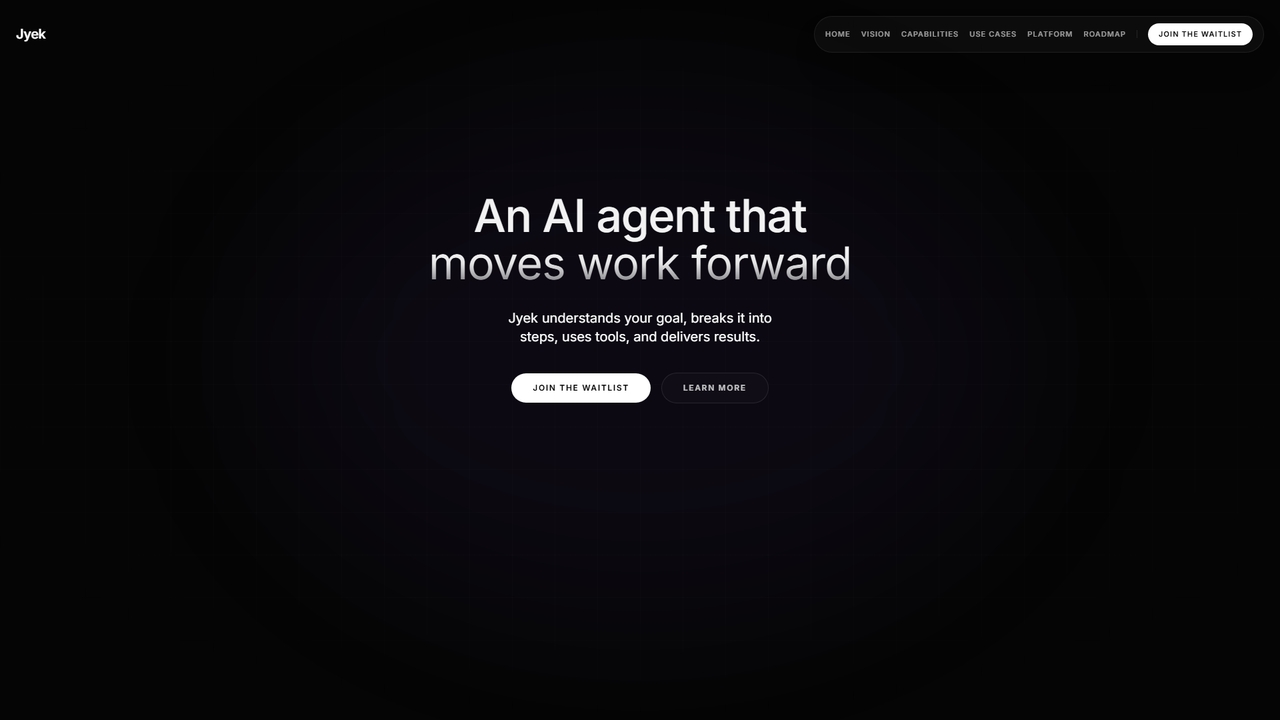
Jyek
Jyek is an AI agent platform that understands objectives, creates execution plans, uses tools, and delivers verifiable results for complex, multi-step tasks.
Automation
Storia
Storia is an AI-powered creative platform that transforms your ideas into captivating illustrated stories and comics. Simply provide a text prompt, and Storia's advanced generative models will produce unique characters, scenes, and narrative panels, making visual storytelling accessible to everyone.
Generative Art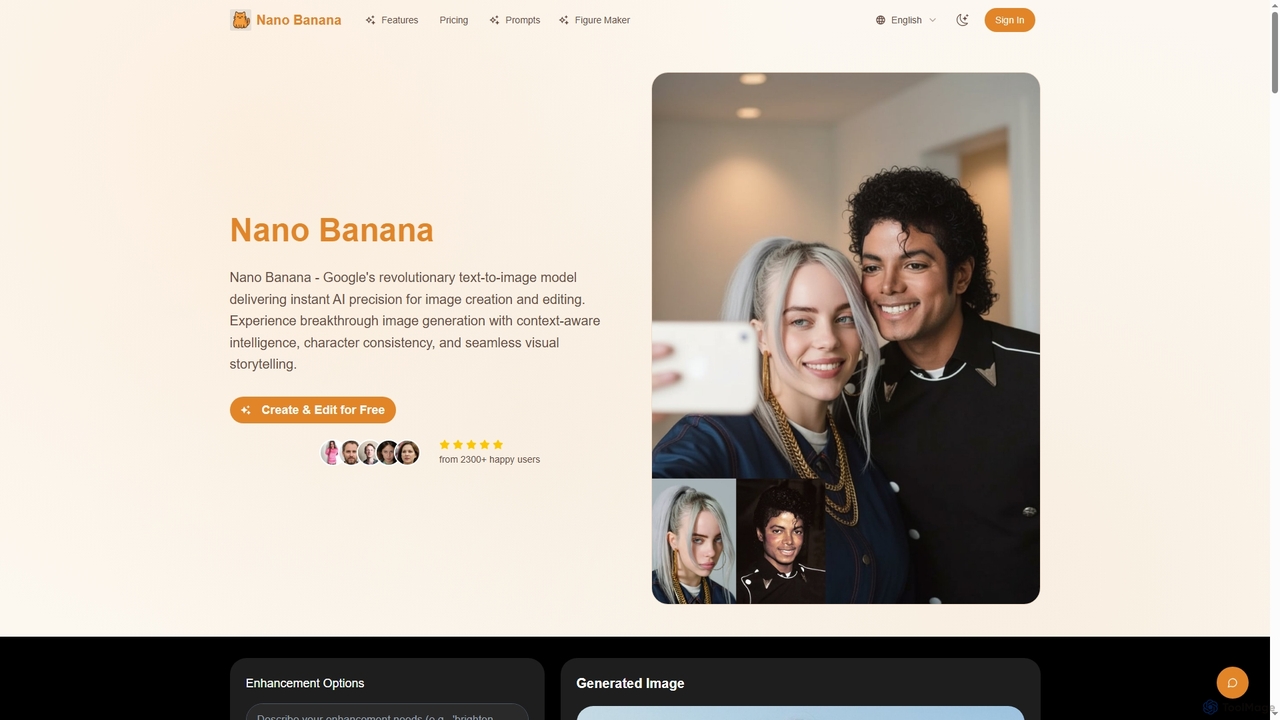
Nano Banana
Nano Banana is Google's revolutionary AI text-to-image model, offering instant precision for image creation and editing. It leverages context-aware intelligence and advanced neural architecture to ensure character consistency, seamless visual storytelling, and high-quality outputs across various creative workflows, from character design to product visualization.
Ai Character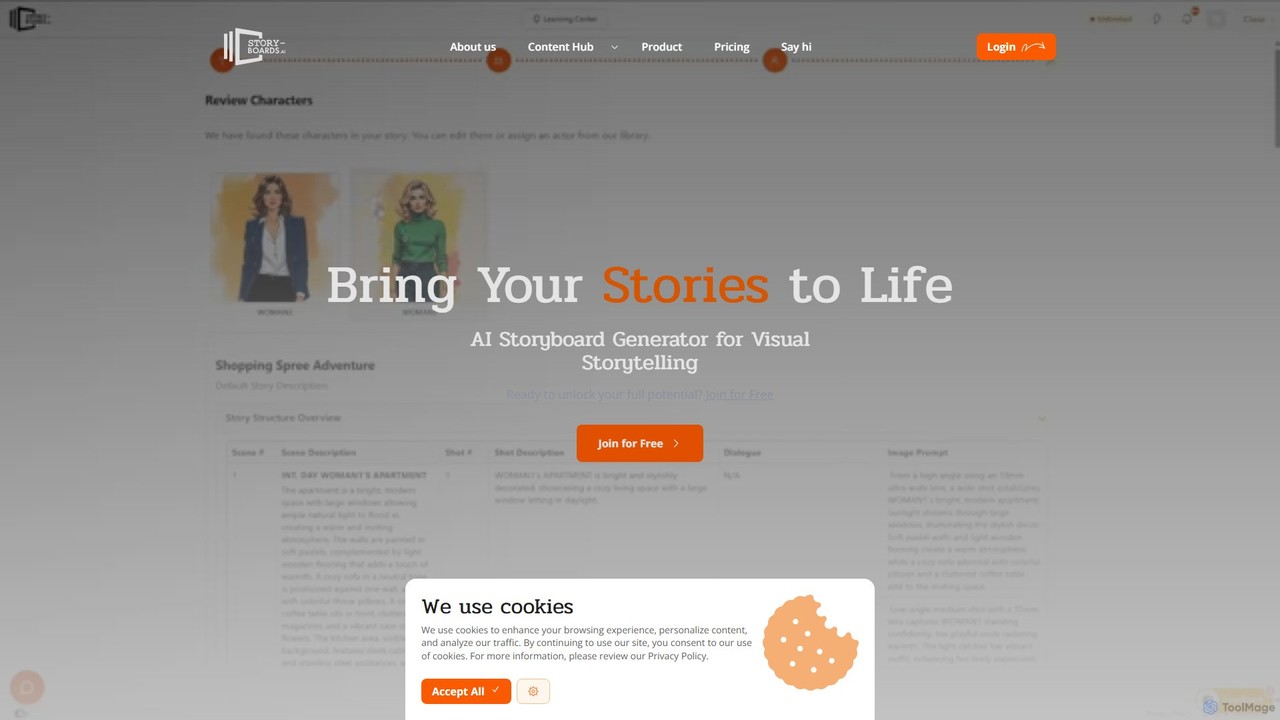
story_boards.ai
story_boards.ai is an AI-powered platform that transforms scripts and ideas into vivid visual storyboards. Designed for filmmakers, ad creators, and storytellers, it streamlines the pre-production process by generating consistent characters, suggesting scene compositions, and enabling team collaboration, turning text into compelling visuals in minutes.
Image Generation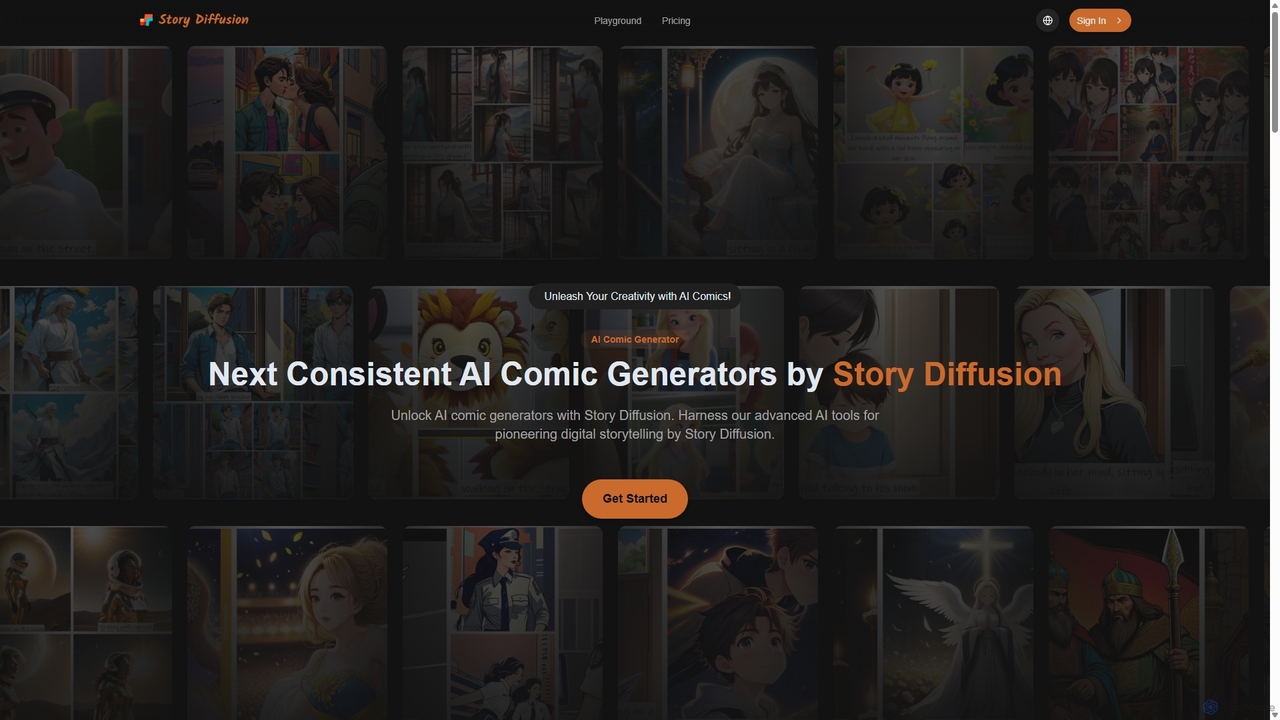
StoryDiffusion
StoryDiffusion is an advanced AI comic generator that empowers creators to produce high-quality, visually consistent comics and stories. By leveraging cutting-edge AI, it ensures character integrity across multiple panels, transforming simple text prompts into dynamic visual narratives. It's designed for artists, writers, and storytellers of all skill levels.
Comic Generator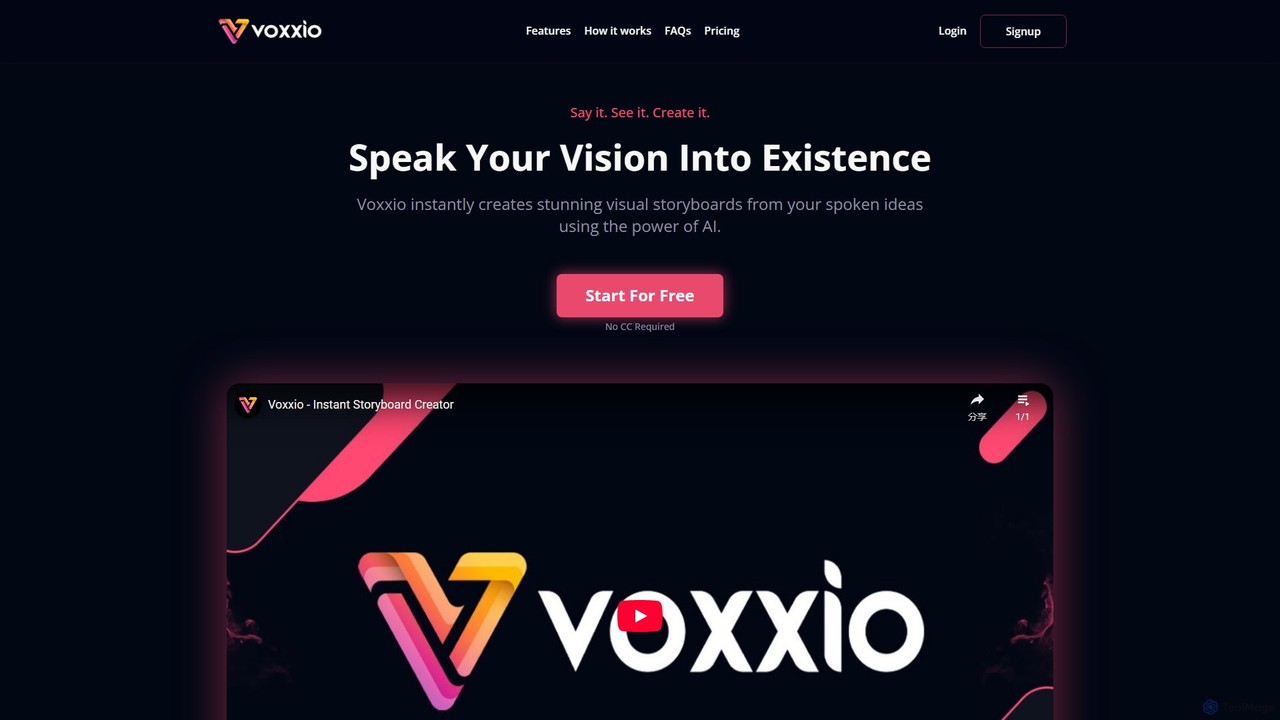
Voxxio
Voxxio is a revolutionary AI storyboard generator that transforms your spoken or written ideas into stunning visual narratives instantly. Designed for creators of all types—filmmakers, writers, advertisers, and educators—it eliminates the need for artistic skills, allowing you to visualize concepts, plan scenes, and bring stories to life with unprecedented speed and ease.
Image GenerationStory Diffusion
Story Diffusion is an AI-powered tool for generating long-range, consistent visual stories from text prompts. It excels at creating sequences of images and videos where characters and styles remain coherent, making it ideal for storytellers, content creators, and artists to visualize narratives, comics, and storyboards effortlessly.
Creative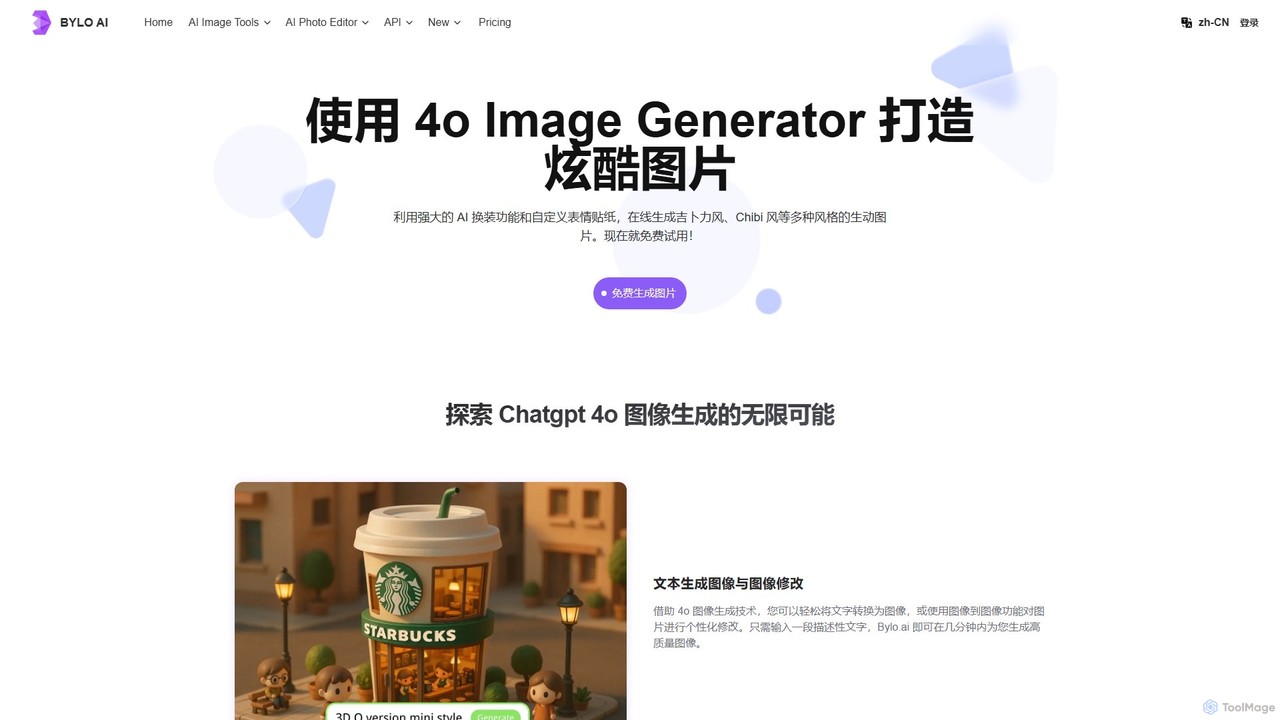
Bylo.ai
Bylo.ai is a powerful and versatile AI image generator powered by GPT-4o. It allows users to create stunning visuals from text or images, offering a wide range of styles like Ghibli and Pixar, alongside a unique "style-free" mode for complete creative control. The platform also includes a comprehensive suite of AI editing tools for background removal, photo restoration, and creative transformations like AI outfit changes and comic creation. It's designed for designers, marketers, and creators seeking high-quality, flexible, and easy-to-use image generation.
Ai Art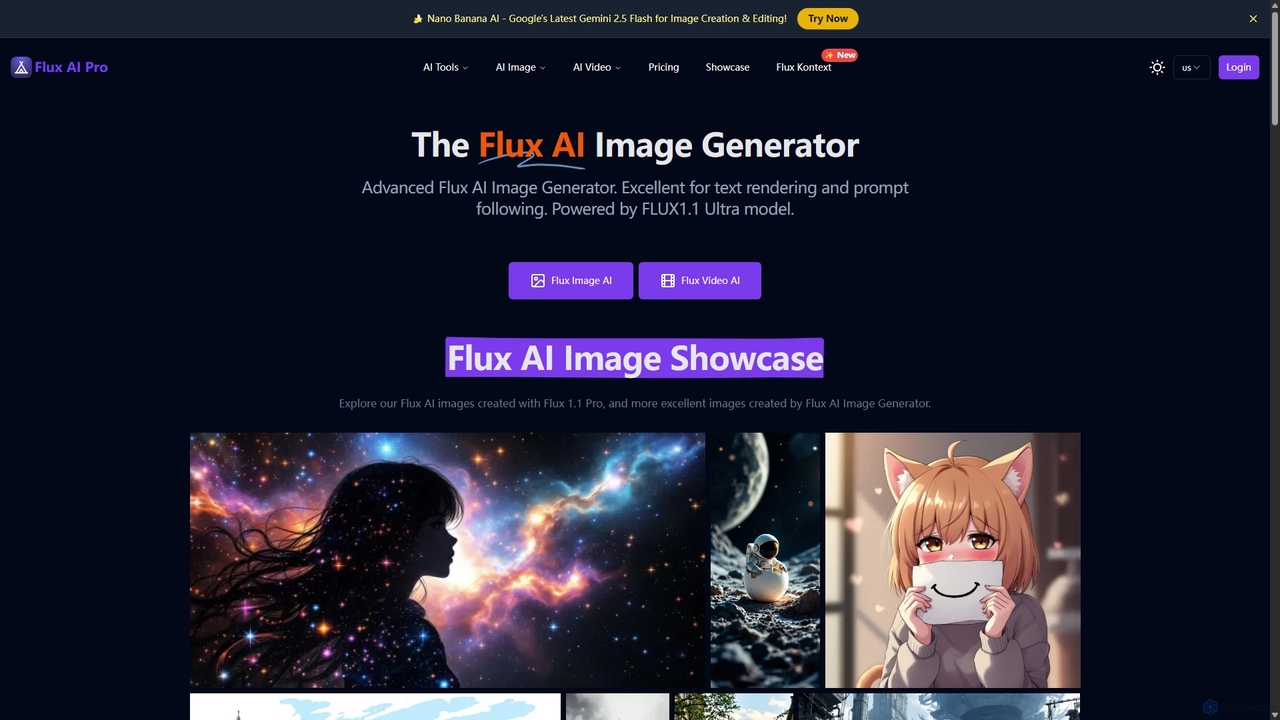
Flux AI Pro
A powerful AI content creation suite featuring advanced image and video generators. Powered by proprietary FLUX.1 models, it excels in photorealism, prompt adherence, and in-image text rendering. Offers a comprehensive toolkit including image editing, upscaling, and character consistency, catering to both creative professionals and enthusiasts with flexible pricing plans.
Art Generation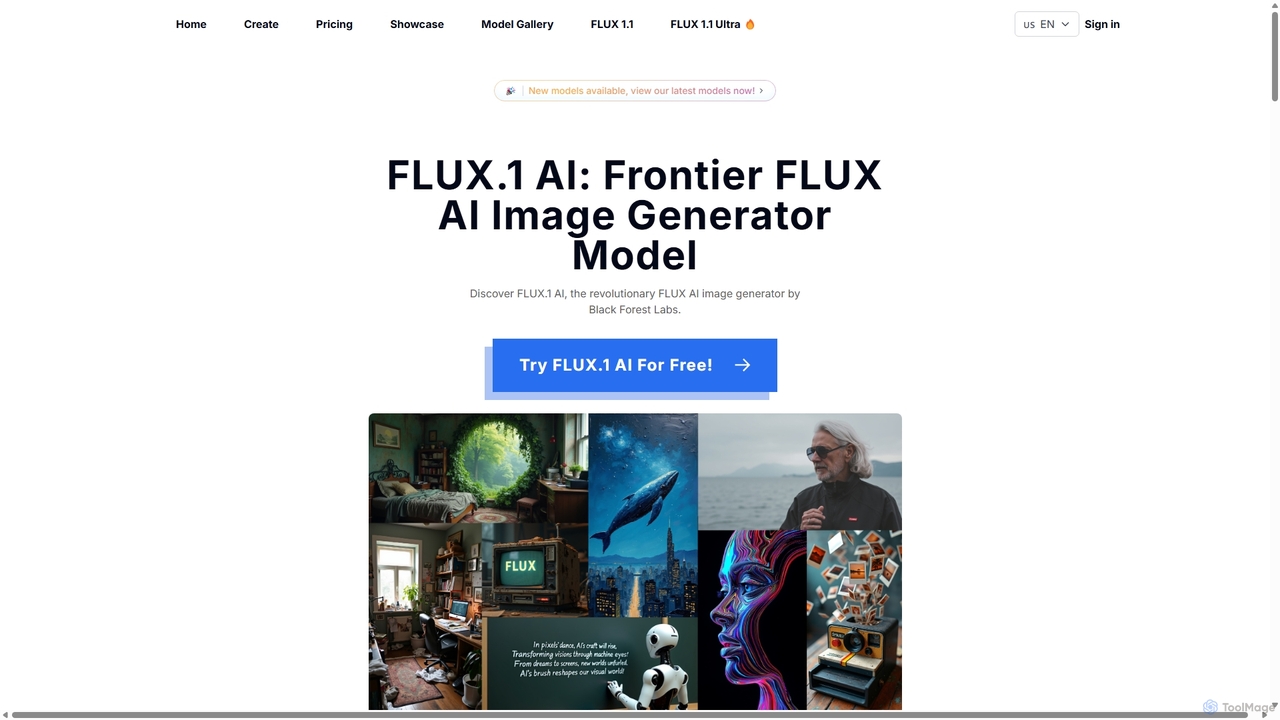
Flux1ai
Flux1ai is a revolutionary text-to-image AI generator by Black Forest Labs. It offers a suite of models tailored for different needs, from rapid generation to professional-grade photorealism. It excels in prompt adherence, visual quality, and style diversity, making it a powerful tool for artists, designers, and developers.
Generative Art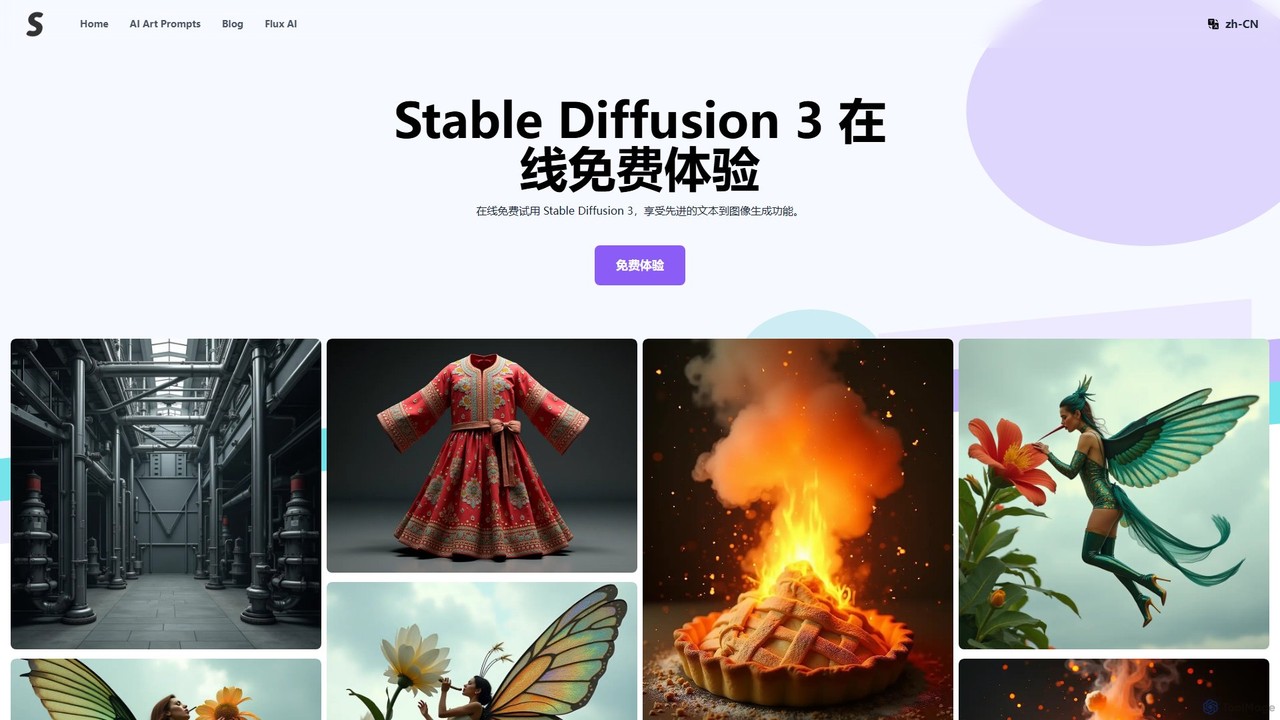
Stable Diffusion 3
Stable Diffusion 3 is a state-of-the-art text-to-image AI model from Stability AI. It offers significant improvements in image quality, prompt following, and especially text rendering within images. It also features image-to-video capabilities through Stable Video Diffusion. Users can access it via API, self-hosting, or online platforms for free trials.
Generative Art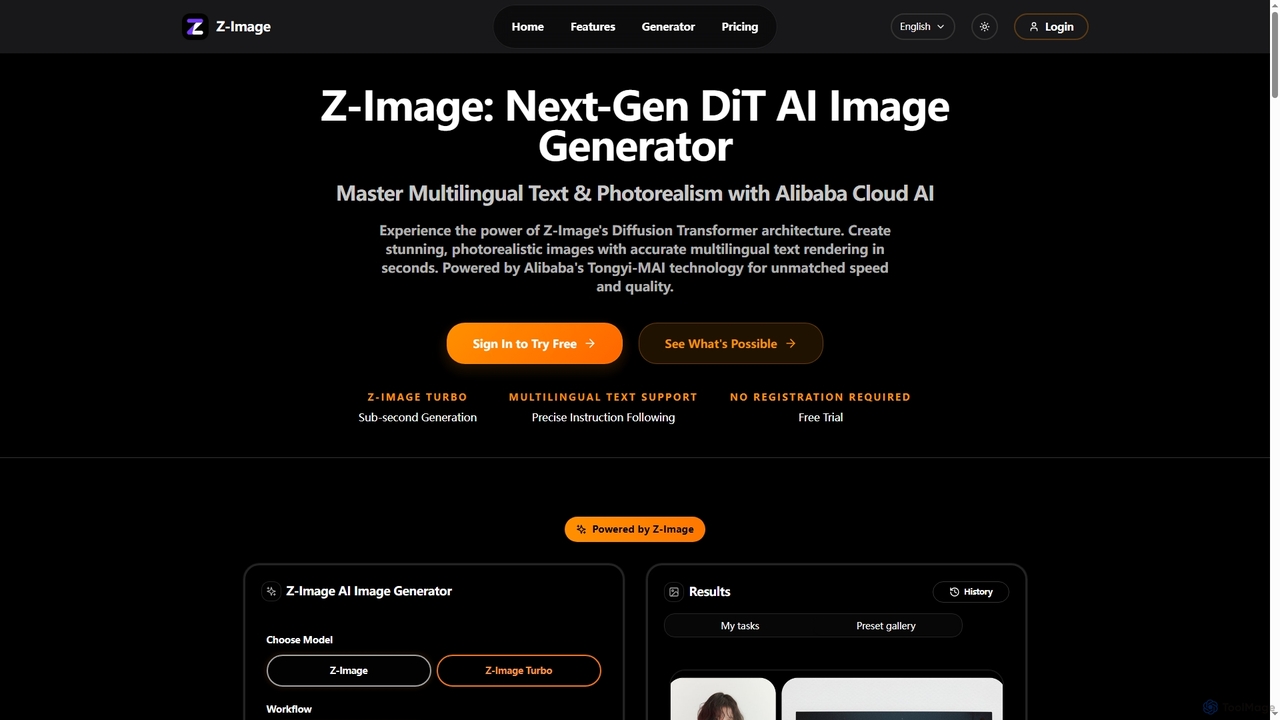
Z-Image
Z-Image is a next-generation AI image generator powered by Diffusion Transformer (DiT) architecture and Alibaba's Tongyi-MAI technology. It creates professional-grade, 4K photorealistic images from text descriptions in seconds. Its standout features include highly accurate multilingual text rendering within images and consistent character appearance across multiple generations, making it ideal for marketing and commercial use.
Illustration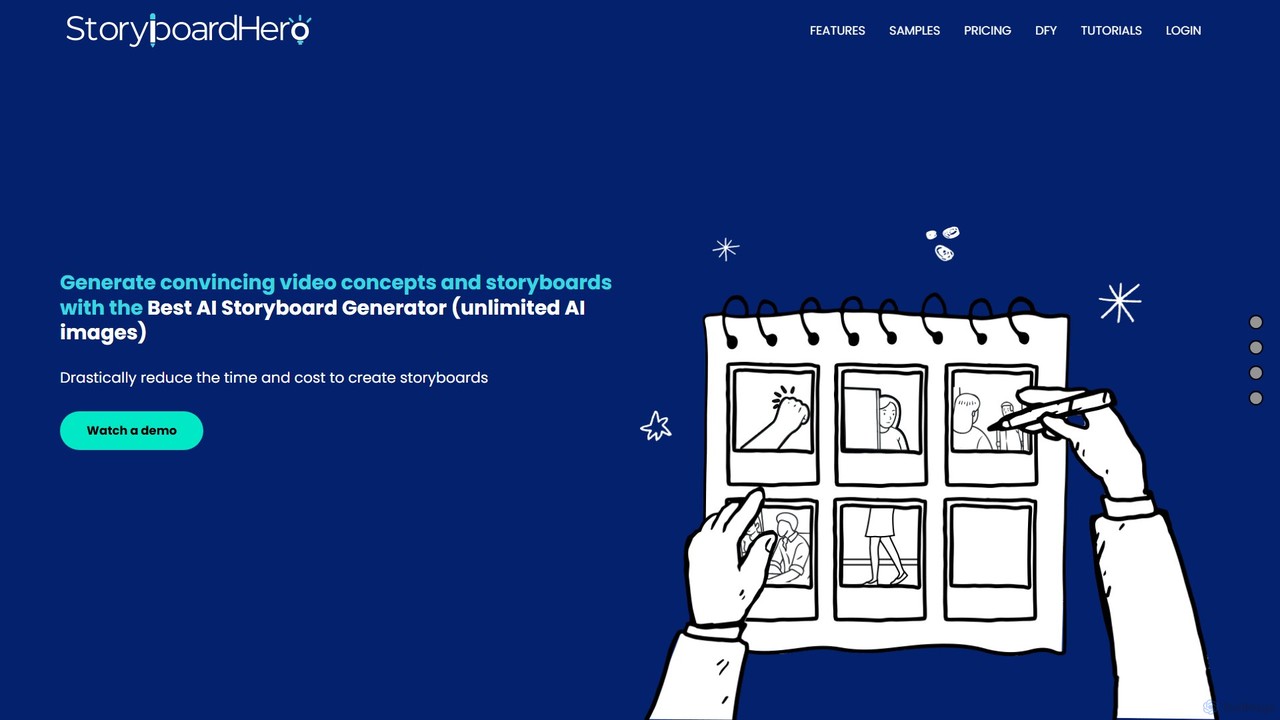
Storyboard Hero
Storyboard Hero is an AI-powered platform designed for video agencies and creators to generate compelling video concepts, scripts, and storyboards in minutes. It streamlines the pre-production process by automating scriptwriting and image generation, ensuring character consistency, and facilitating team collaboration, ultimately saving significant time and cost.
Image Generation
Story Diffusion Comments (0)
Sign in to comment.
Sign inNo comments yet.