

System Overview
System is a pioneering AI platform designed to address the world's most complex challenges by shifting the paradigm from siloed knowledge to an interconnected, systems-based understanding. At its core is the System Graph, a quantitative model that represents the world as a single, intricate system. This platform is built for researchers, data scientists, and organizations who need to synthesize vast amounts of scientific literature to uncover deep, quantitative relationships between variables in fields like healthcare, climate science, and social sciences.
By leveraging state-of-the-art Large Language Models (LLMs), advanced graph technology, complexity science, and causal inference techniques, System automates the extraction of statistical findings from verified sources such as peer-reviewed studies, the PubMed database, GWAS Catalog, and expert-curated databases. This process generates millions of normalized, quantitative relationships, allowing users to move beyond simple keyword searches to a systemic analysis of causes and effects.
How to use System
System is primarily accessed and utilized through its powerful API, designed for developers, researchers, and data analysts. Users can integrate the System Graph into their own applications and models to perform complex analyses.
- API Integration: Connect to the System Graph using GraphQL or REST APIs. This allows you to programmatically query the vast network of concepts and relationships.
- Formulate Queries: Instead of searching for documents, you query for relationships between variables. For example, a researcher could query the system to understand the upstream causes and downstream effects of a specific biomarker or the social and environmental determinants of a disease like stroke.
- Synthesize Evidence: The platform automatically synthesizes findings from thousands of sources, providing a meta-analytical view of the evidence. It presents statistical associations (e.g., odds ratios, hazard ratios) with complete provenance, linking every piece of data back to its original source.
- Build Models: Use the extracted quantitative data to build predictive models, develop population health roadmaps, or conduct robust literature reviews for evidence-based decision-making.
Core Features of System
- System Graph: A large-scale, quantitative model of interconnected systems, unifying different scales (e.g., molecular to epidemiological) and domains (e.g., health to climate).
- AI-Powered Data Extraction: Utilizes sophisticated LLMs to extract quantitative findings from a continuously expanding corpus of verified sources like PubMed and other scientific databases.
- Quantitative & Causal Inference: Focuses on statistical relationships (e.g., hazard ratios, correlation coefficients) and uses causal inference techniques to link them, enabling a deeper, systemic understanding.
- Complete Knowledge Provenance: Offers full transparency by tracing every relationship and finding back to its original peer-reviewed source, minimizing the risk of AI 'hallucinations'.
- Continuous Updates: The graph is updated daily with new findings, ensuring there is no knowledge cut-off and the model remains current.
- High Interoperability: Nodes and variables are interoperable with established biomedical ontologies like UMLS, SNOMED CT, LOINC, and MeSH, facilitating integration with existing health data systems.
- Flexible API Access: The entire graph is accessible and queryable via GraphQL, REST APIs, or natural language, providing robust tooling for custom applications.
Use Cases for System
System is trusted by leading organizations for complex research and data synthesis:
- Medical and Health Research: The Novartis Foundation uses System in its AI4HealthyCities initiative to identify key drivers of cardiovascular health, understand relationships between determinants and outcomes, and inform public health strategies.
- Evidence Synthesis and Literature Review: Atropos Health leverages System for accurate and robust literature reviews, evaluating the quality and relevance of citations to synthesize evidence efficiently.
- Understanding Complex Diseases: Researchers can explore the systemic nature of conditions like cognitive dysfunction, mapping out the intricate web of genetic, environmental, and social factors.
- Climate and Health Analysis: The platform can be used to model the changing and complex relationship between climate factors and health outcomes.
Advantages of System
System offers a distinct advantage over traditional research methods and standard LLM-based models. While foundation models are trained on a wide range of unverified sources, System exclusively uses trusted, verified scientific literature. Its architecture is based on normalized entities and quantitative relationships, not just token embeddings, which allows for deterministic, systemic reasoning and eliminates the risk of hallucination. This focus on quantitative, verifiable data from trusted sources makes it an indispensable tool for scientific and clinical decision-making.
Pricing and Plans
System is an enterprise-grade platform primarily serving research institutions, foundations, and corporations. Pricing information is not publicly listed on the website. Interested parties are encouraged to contact the System team directly through their website to learn more about API access, partnerships, and customized plans tailored to their specific needs.
Traffic
Latest traffic
Status
Monthly traffic trend
- 2025-9: 16.6K
- 2026-1: 18.2K
- 2026-2: 7.9K
- 2026-3: 14.8K
- 2026-4: 11.6K
- 2026-5: 12.5K
Geography
Top 5 countries / regions
- 🇺🇸United States34.3%
- 🇮🇳India28.1%
- 🇹🇭Thailand20.2%
- 🇵🇰Pakistan11.9%
- 🇫🇷France5.5%
Top keywords
| Keyword | Cost per click |
|---|---|
| system | $1.63 |
| system ai | $0.00 |
| system.com | $0.00 |
| system graph | $0.00 |
| systems | $1.68 |
System Alternatives

MedHeed
MedHeed is an AI-powered platform for healthcare professionals, designed to accelerate medical research and clinical decision-making. It uses advanced NLP to analyze and synthesize vast amounts of medical literature, clinical trial data, and treatment guidelines, providing users with curated, evidence-based insights in real-time.
Medical Research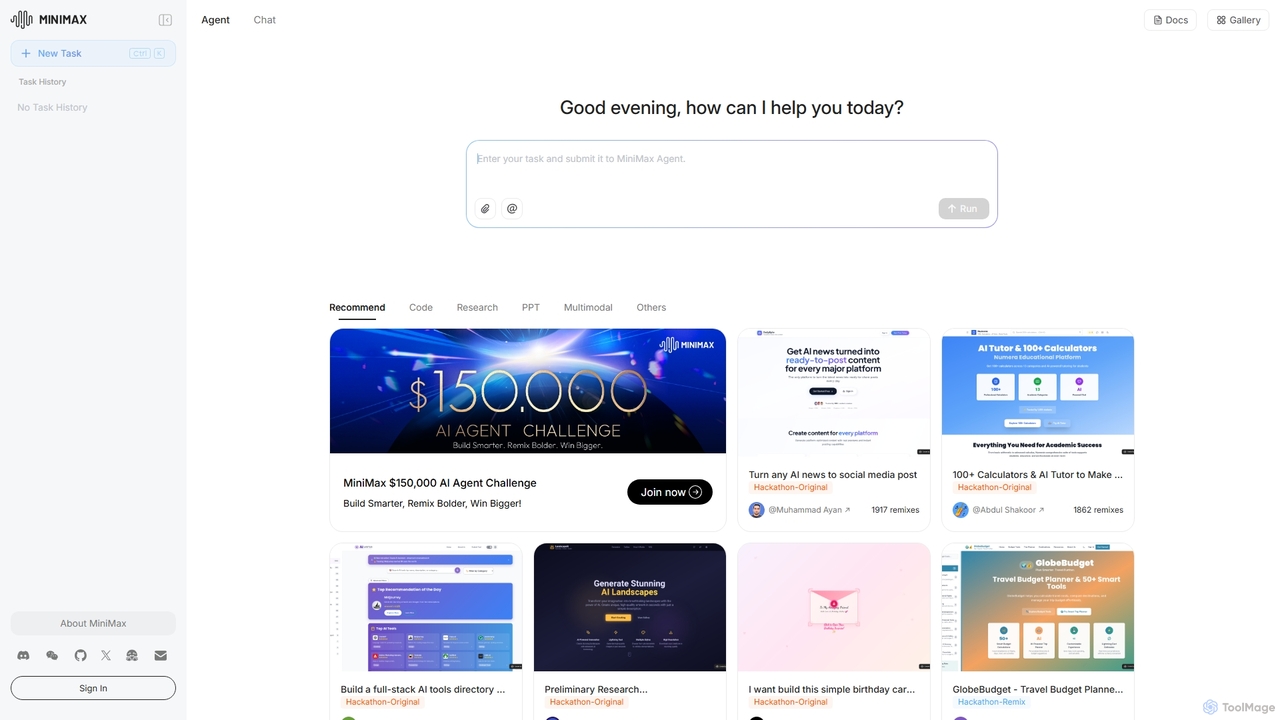
MiniMax Agent
MiniMax Agent is a powerful AI agent platform designed to automate complex tasks, from building full-stack websites and generating presentations to conducting in-depth research. By leveraging natural language prompts, users can minimize effort and maximize intelligence, creating sophisticated digital products and content with unprecedented speed and efficiency. The platform features a collaborative gallery for sharing and remixing projects.
Low Code No Code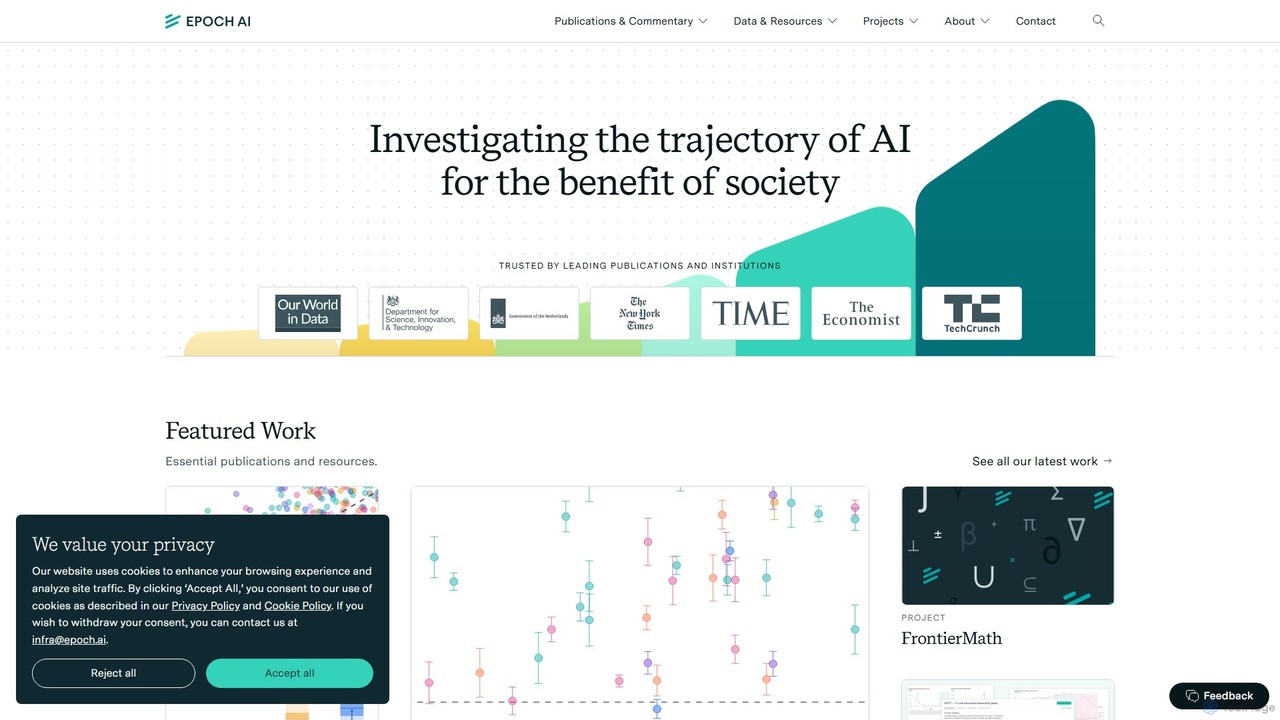
Epoch AI
Epoch AI is a research institute dedicated to investigating the trajectory of artificial intelligence. It provides data-driven analysis, in-depth reports, and advanced benchmarks to help policymakers, researchers, and the public understand the rapid progress and future implications of AI. Key areas of focus include AI model capabilities, training compute, hardware trends, and economic costs.
Technology Trends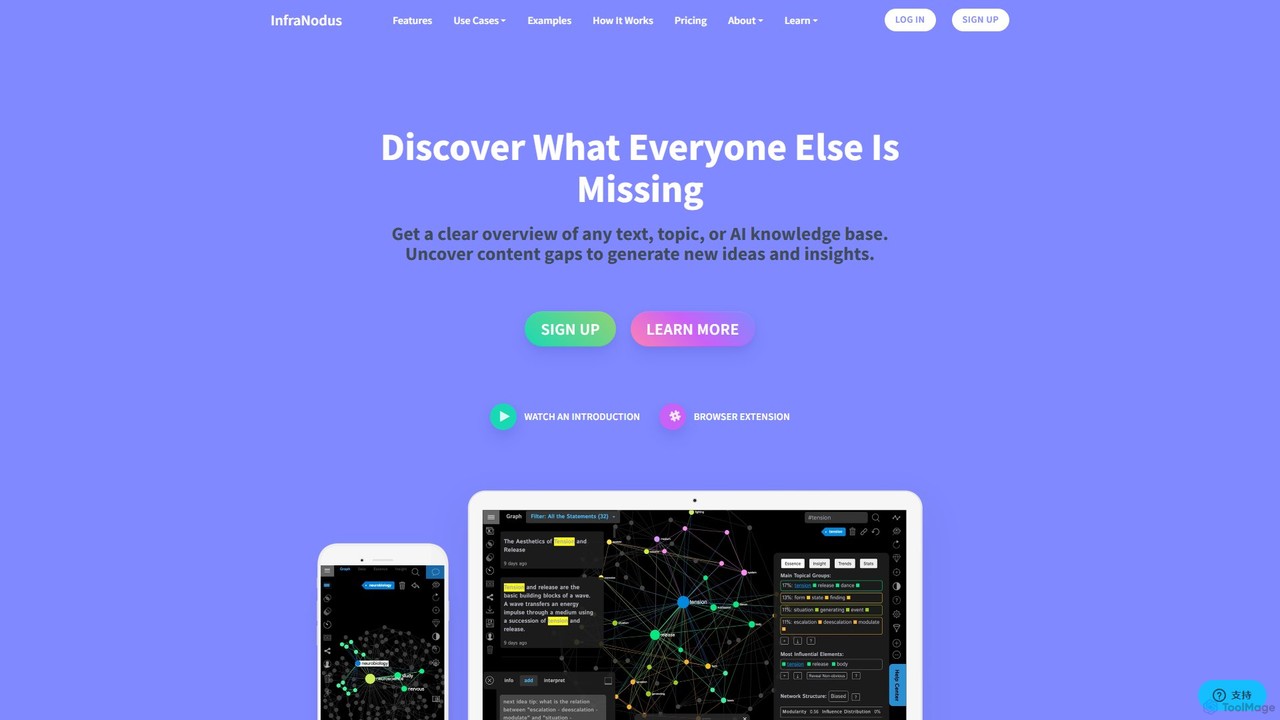
InfraNodus
InfraNodus is an AI-powered text analysis and visualization tool that transforms any text into an interactive knowledge graph. It helps researchers, writers, and strategists to identify key topics, uncover structural gaps, and generate novel insights using network analysis and GPT-4. It's designed to enhance thinking, not replace it.
Seo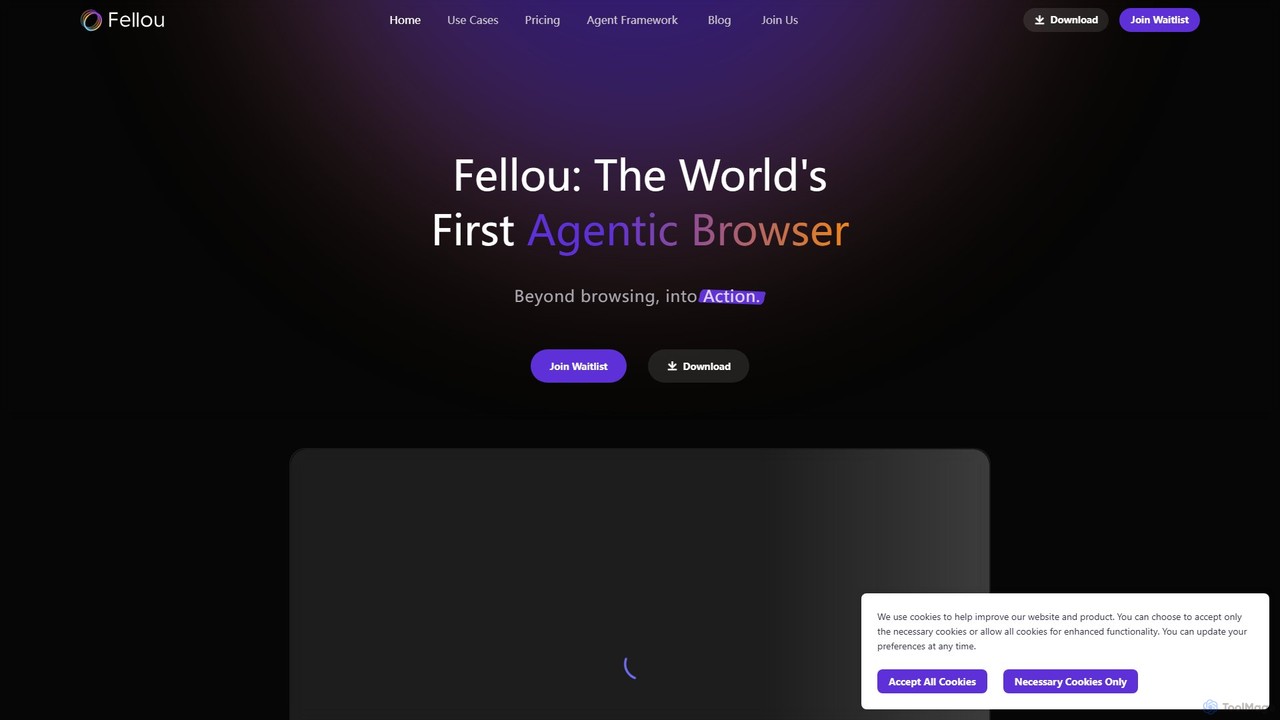
Fellou
Fellou is the world's first agentic browser, designed to transform browsing into action. It functions as an AI-powered digital partner that automates complex workflows, conducts deep research across public and private websites, and generates insightful reports. With no-code automation and a powerful developer framework, Fellou streamlines tasks from data analysis to social media management, significantly boosting productivity.
Ai BrowserSystem Categories
System Embed Widget
Copy this embed code to place the badge on your blog, article, or product site and send readers directly to this ToolMage detail page.

Related AI tools
MedHeed
MedHeed is an AI-powered platform for healthcare professionals, designed to accelerate medical research and clinical decision-making. It uses advanced NLP to analyze and synthesize vast amounts of medical literature, clinical trial data, and treatment guidelines, providing users with curated, evidence-based insights in real-time.
Medical Research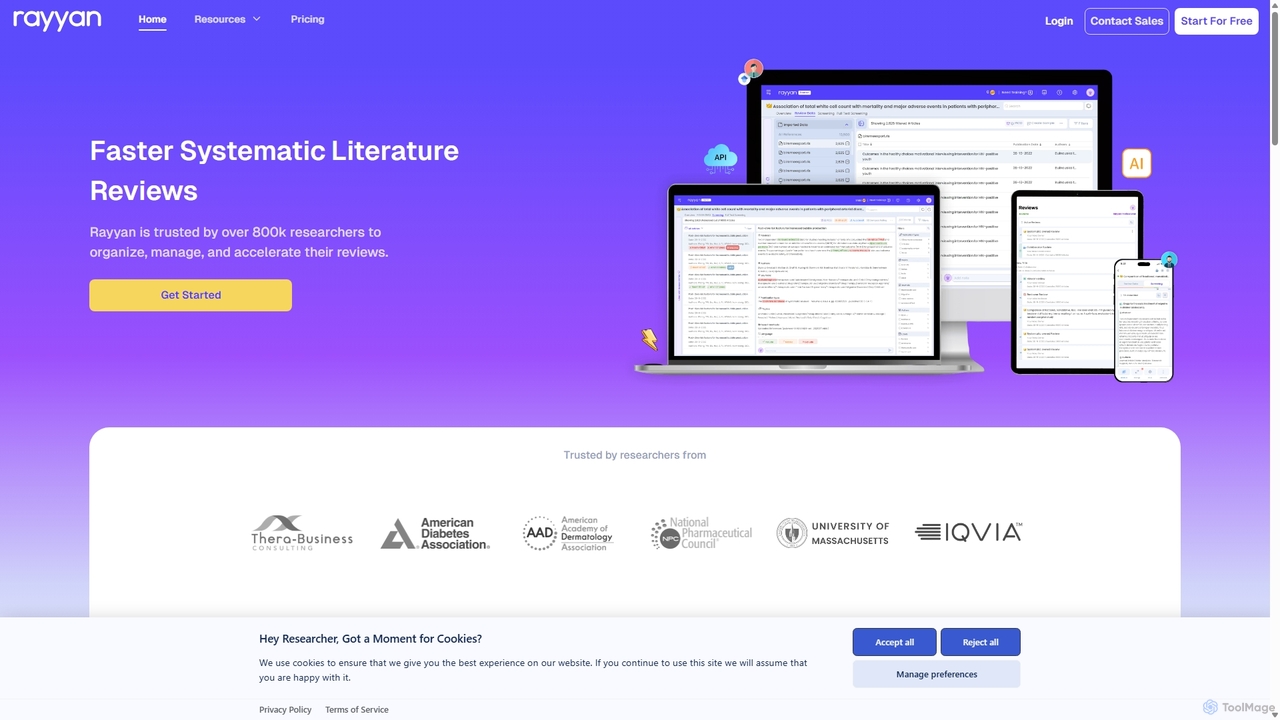
Rayyan
Rayyan is an AI-powered platform designed for researchers to accelerate systematic and literature reviews. It streamlines the process with features like automated screening, duplicate detection, and real-time collaboration, saving researchers up to 90% of their screening time. Trusted by over 800,000 users, it supports the entire review lifecycle from data import to final reporting.
Academic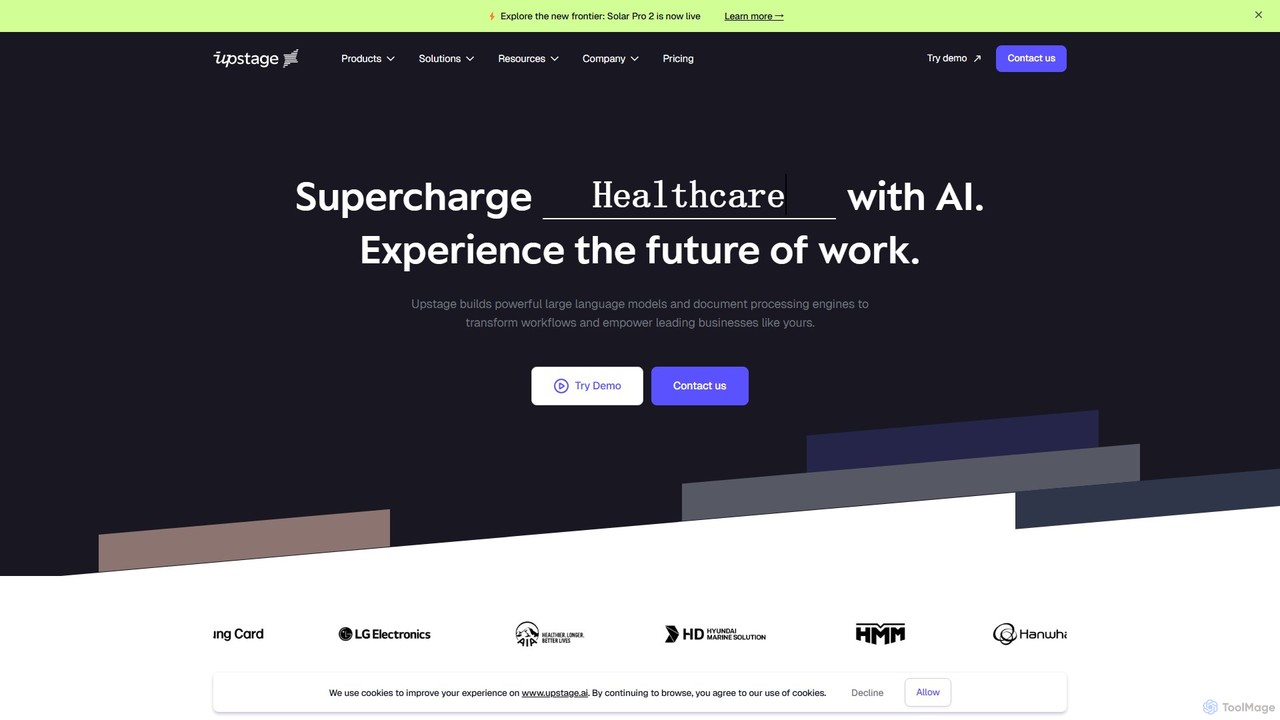
Upstage
Upstage provides high-performance, enterprise-grade AI models for businesses. Its suite includes the powerful Solar LLM for language tasks, advanced Document AI for parsing and extracting data with high accuracy, and flexible deployment options (API, on-premise, cloud) to automate complex workflows.
Llms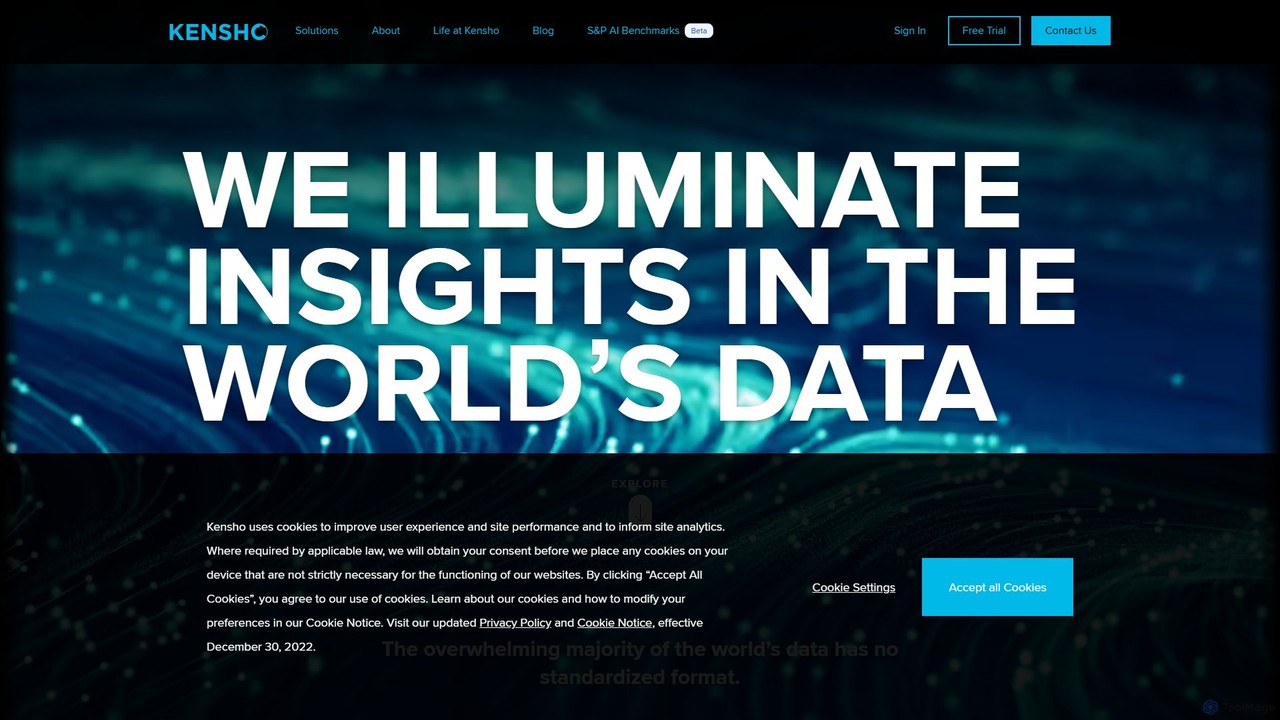
Kensho
Kensho, the AI and innovation hub for S&P Global, provides a suite of advanced AI solutions to structure unstructured data. Its tools offer high-accuracy audio transcription (Scribe), named entity recognition (NERD), PDF data extraction (Extract), and company data linking (Link), primarily for the finance and business sectors.
Data Analysis
Golden
Golden is an AI-powered business intelligence platform that transforms scattered web data into a structured, searchable knowledge graph. It provides comprehensive profiles on millions of companies, tracking real-time signals like funding, executive changes, and market trends to help sales, investment, and AI teams make data-driven decisions.
Market Intelligence
Diffbot
Diffbot is an AI-powered platform that transforms the unstructured web into a massive, structured Knowledge Graph. It offers APIs for web data extraction, crawling, and natural language processing, enabling businesses to access clean, organized data on organizations, news, products, and more for applications in finance, market intelligence, and risk management.
Market Intelligence
Wren AI
Wren AI is a Generative Business Intelligence (GenBI) platform that transforms natural language questions into SQL, charts, and summaries. It empowers business, product, and customer success teams to get instant data insights without coding. It also offers an embeddable API for SaaS platforms to provide white-label conversational analytics to their own customers.
Business Intelligence
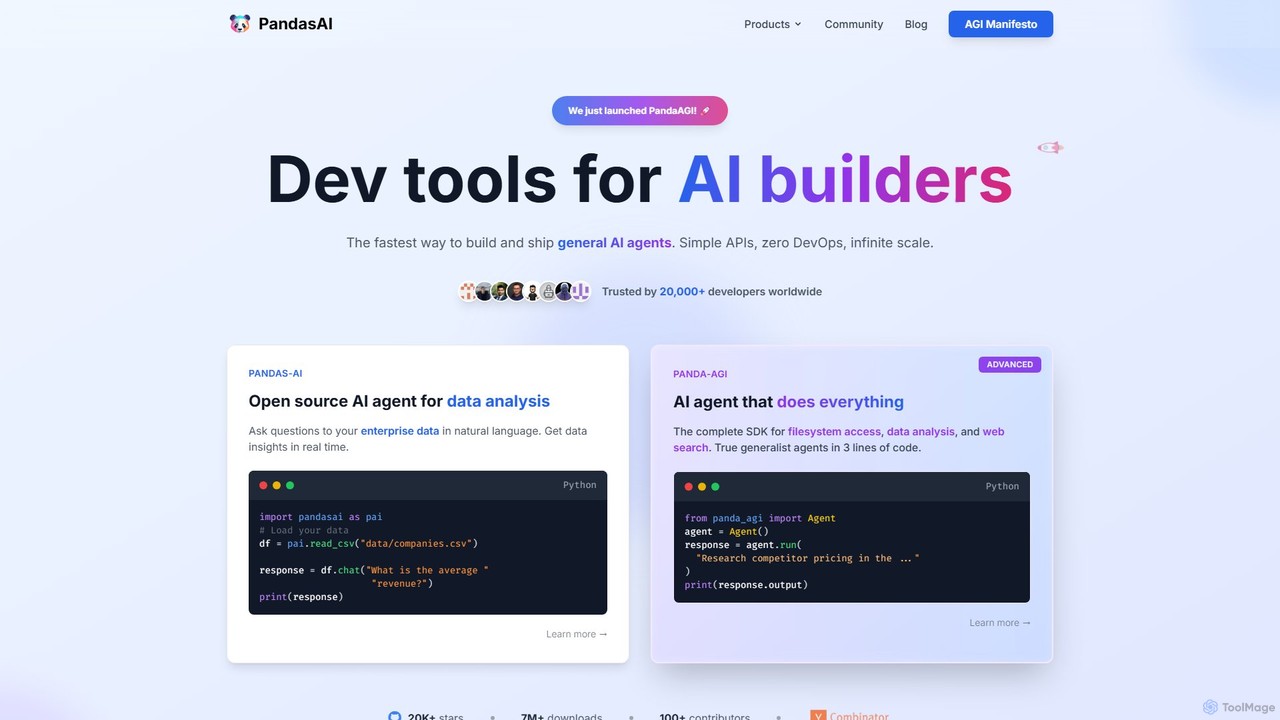
PandasAI
PandasAI offers a suite of developer tools for building AI applications. It features an open-source library for conversational data analysis using natural language and PandaAGI, an advanced SDK for creating generalist AI agents that can perform complex tasks like web searches and filesystem access.
Data Analysis
imentiv
imentiv is a multimodal emotion recognition platform that uses AI to analyze human emotions, sentiments, and personality traits from video, audio, text, and images. It provides deep, actionable insights for industries like media, marketing, psychology, and HR.
Recruitment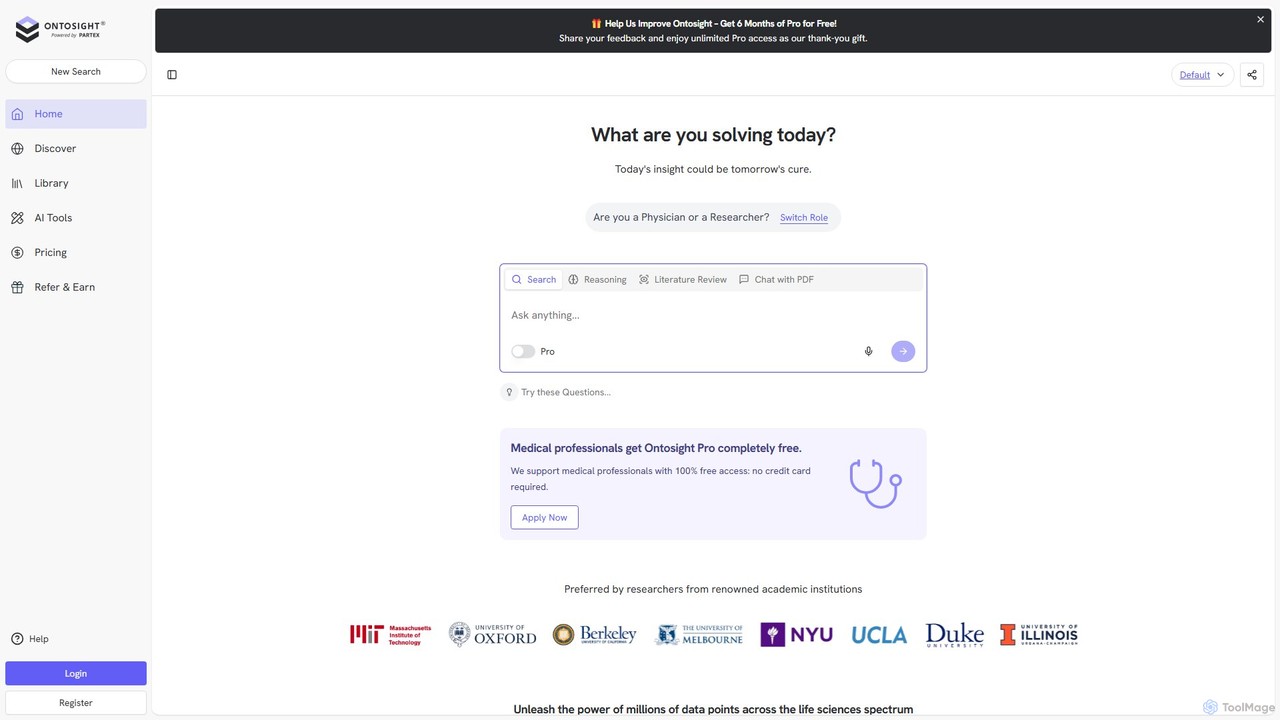
Ontosight
Ontosight is an AI-powered research assistant designed for physicians, scientists, and students in the life sciences and medical fields. It accelerates research by providing direct, cited answers from millions of scientific papers. Features include advanced search, literature review automation, PDF interaction, and a paraphrasing tool to enhance writing and collaboration.
Academic
Jyek
Jyek is an AI agent platform that understands objectives, creates execution plans, uses tools, and delivers verifiable results for complex, multi-step tasks.
Automation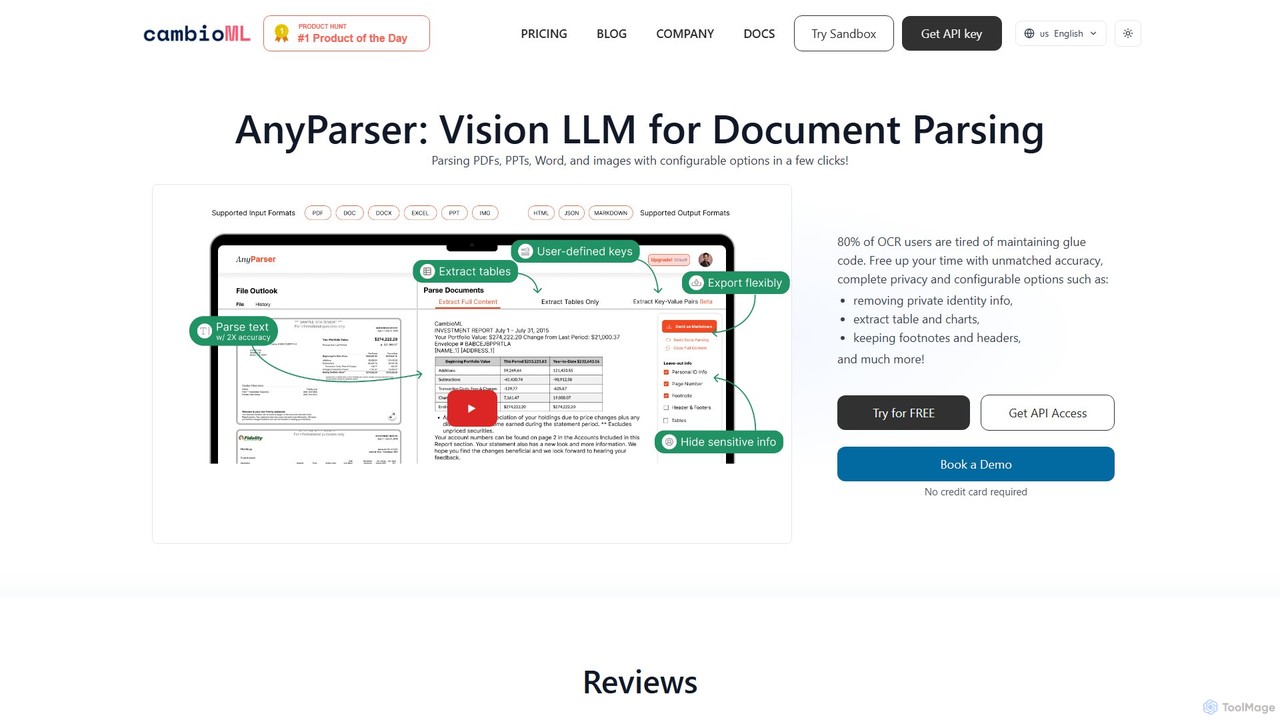
CambioML
CambioML offers the AnyParser API, a powerful Vision LLM designed for high-accuracy document parsing. It extracts text, tables, charts, and key-value pairs from PDFs, images, and Office documents. With features like PII redaction, configurable outputs, and real-time processing, it's ideal for developers and businesses in finance, research, and data analysis to automate data extraction workflows while ensuring privacy and efficiency.
Data Extraction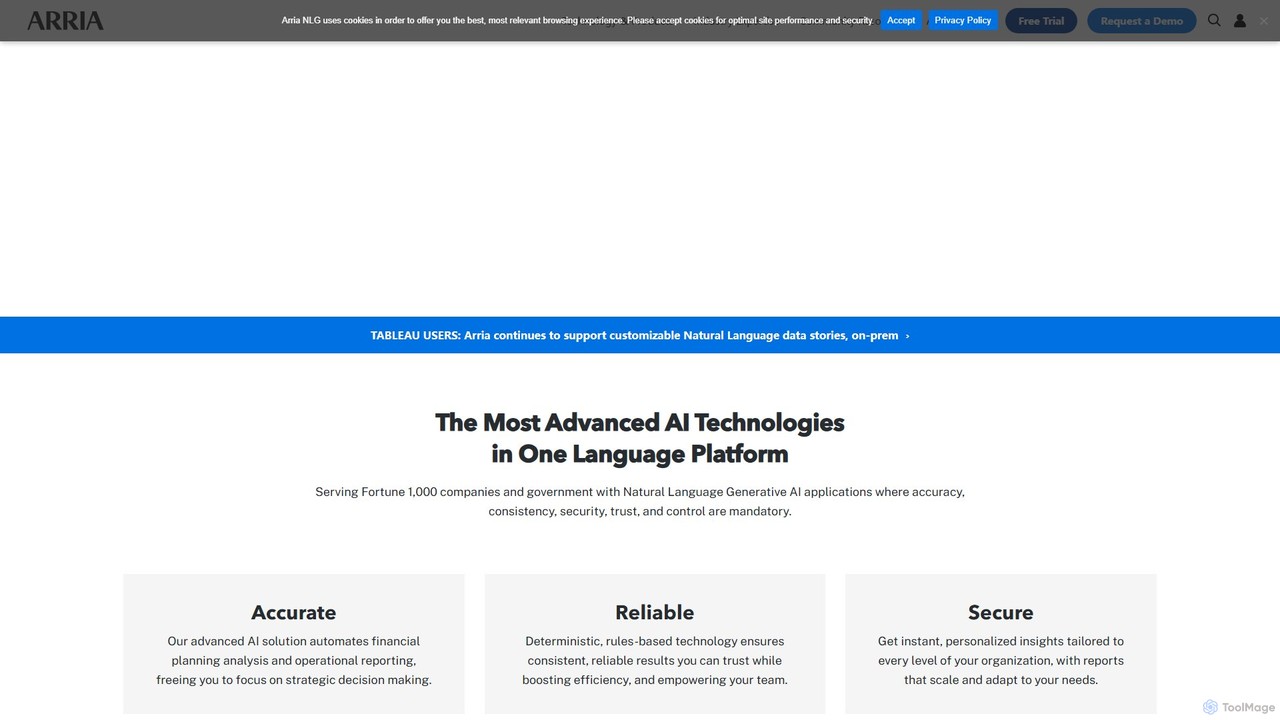
Arria
Arria is an enterprise-grade Generative AI platform specializing in Natural Language Generation (NLG). It transforms complex structured data into accurate, easy-to-understand narratives. Designed for sectors where accuracy and security are critical, Arria automates reporting, enhances business intelligence, and provides data-driven insights at scale, ensuring consistency and trust in all generated content.
Business Intelligence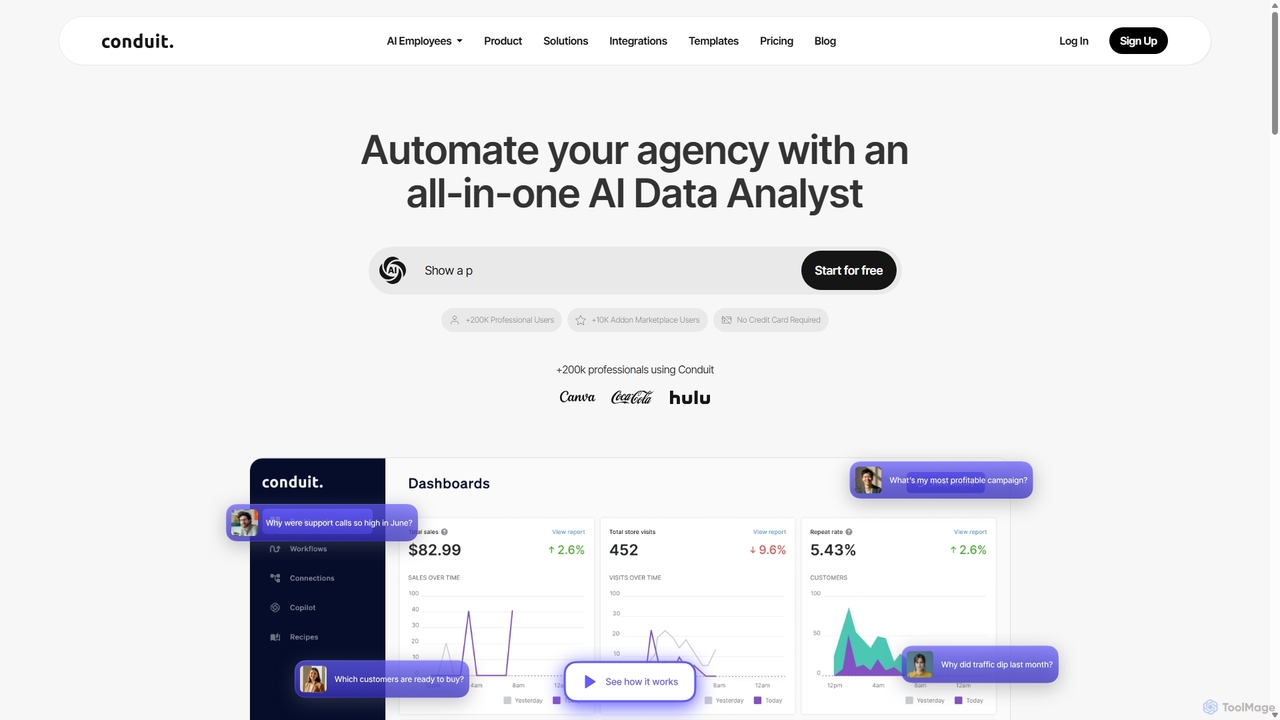
Conduit
Conduit is an all-in-one AI data analyst platform designed to automate agencies and businesses. It centralizes data from hundreds of sources like CRMs, ad platforms, and databases, enabling users to build automated workflows, create interactive dashboards, and query their data using a natural language AI copilot. It's built for marketing teams, data analysts, and developers to save time, improve accuracy, and make faster, data-driven decisions.
Business Intelligence
System Comments (0)
Sign in to comment.
Sign inNo comments yet.