Epoch AI
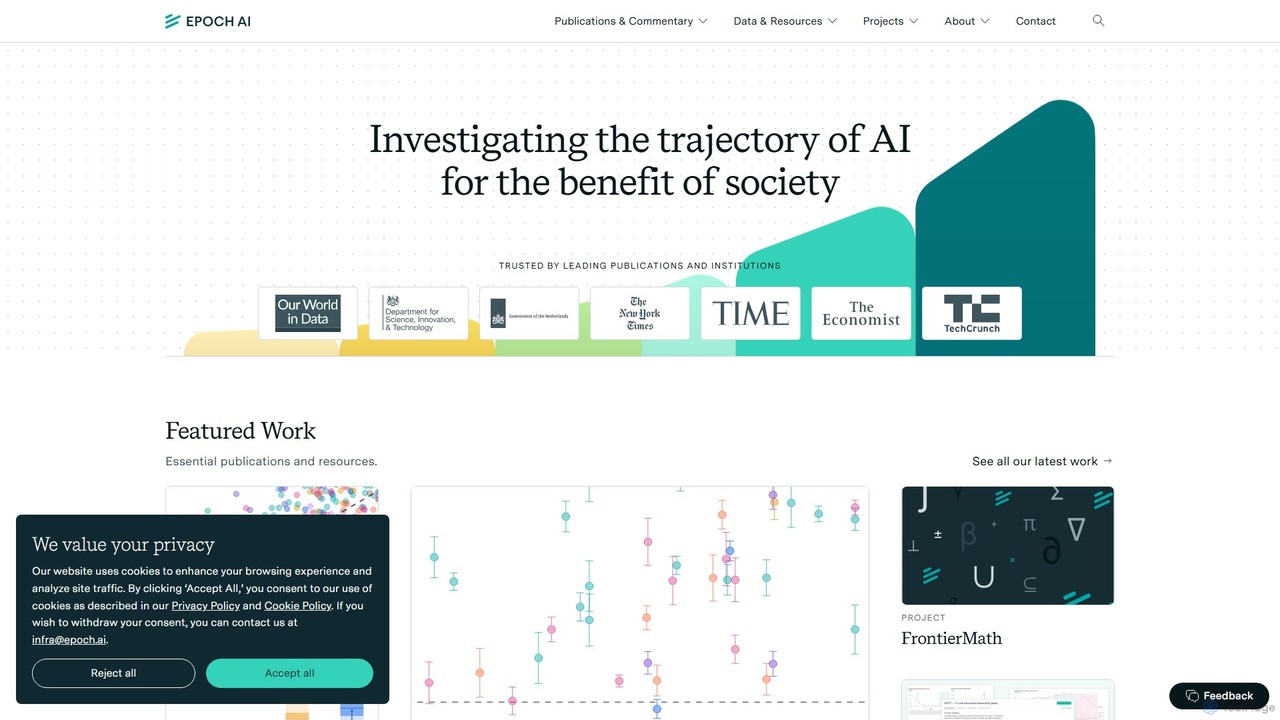
Epoch AI is a research institute dedicated to investigating the trajectory of artificial intelligence. It provides data-driven analysis, …
Epoch AI is a research institute dedicated to investigating the trajectory of artificial intelligence. It provides data-driven analysis, in-depth reports, and advanced benchmarks to help policymakers, researchers, and the public understand the rapid progress and future implications of AI. Key areas of focus include AI model capabilities, training compute, hardware trends, and economic costs.
About Technology Trends
Technology Trends tools are AI-powered platforms for tracking, analyzing, and visualizing emerging technological developments. They utilize machine learning to process vast datasets from patents, academic papers, news, and funding data to identify patterns and forecast future trajectories. These tools provide users in education, research, and business with structured insights into the innovation landscape, enabling them to understand complex tech ecosystems. They transform raw information into actionable intelligence for strategic decision-making and learning.
Core Features
- Trend Identification & Forecasting: Automatically detects emerging technologies and predicts their growth potential and adoption rates.
- Data Visualization: Creates interactive maps, graphs, and timelines to illustrate technology lifecycles and relationships.
- Competitive Landscape Analysis: Maps key players, including companies, research institutions, and startups within a specific tech domain.
- Source Aggregation: Gathers and synthesizes information from diverse sources like patents, scientific publications, and market reports.
Use Cases
These tools are primarily used by university researchers, corporate strategists, R&D departments, and investment analysts. For instance, a student can use them to find a novel thesis topic by identifying research gaps, while a company can monitor competitor innovations and avoid technological obsolescence. They are essential for anyone needing to stay ahead in a rapidly evolving technological environment.
How to Choose
When selecting a Technology Trends tool, consider the breadth and quality of its data sources. Evaluate the sophistication of its analytical features, such as its forecasting accuracy and pattern recognition capabilities. The clarity and interactivity of its data visualizations are also crucial for ease of understanding. Finally, assess the customization options and alert features to ensure the tool aligns with your specific monitoring needs.

Technology TrendsUse Cases
Informing Corporate Strategy with Tech Intelligence
A corporate strategist for a manufacturing firm uses a technology trends platform to monitor the rise of automation and IoT in their sector. By analyzing patent filings from competitors and tracking academic research on robotics, they identify an emerging trend in predictive maintenance sensors. The platform's visualizations show a rapid increase in investment and publications in this niche. Based on this data-driven insight, the strategist recommends a strategic partnership with an IoT startup, helping their company stay competitive and avoid being disrupted.
Guiding Academic Research and Identifying Thesis Topics
A postgraduate student in computer science is looking for a novel research topic. They use a technology trends tool to map the landscape of 'Explainable AI' (XAI). The tool aggregates thousands of recent papers and visualizes them into sub-fields. The student notices that while research on XAI for image recognition is saturated, there is a significant research gap in XAI for natural language generation. This insight allows them to define a unique and relevant thesis topic with a high potential for original contribution, saving weeks of manual literature review.
Evaluating Venture Capital Investment Opportunities
An analyst at a venture capital firm is tasked with evaluating a startup in the quantum computing space. They use a technology trends tool to assess the maturity and momentum of the startup's specific approach. The platform analyzes funding rounds for similar companies, the publication velocity of key researchers, and patent filing trends. The data reveals that while the overall field is growing, the startup's chosen technology path has seen declining research interest. This critical intelligence helps the firm avoid a risky investment and focus on more promising areas within the quantum sector.
Planning a Career Path in Technology
A software developer wants to upskill to remain relevant in the job market. They use a technology trends tool to compare the growth trajectories of different programming languages and frameworks. The tool shows that while demand for Python in data science remains strong, there is an explosive growth in demand for Rust in systems programming and blockchain. The developer also sees a corresponding rise in salaries and job postings for Rust developers. This insight helps them decide to invest their learning time in Rust, positioning them for high-demand roles in the future.
Informing Public Policy on Technology
A government policy advisor is drafting a report on national competitiveness in artificial intelligence. Using a technology trends platform, they analyze and compare R&D spending, patent output, and talent migration related to AI across different countries. The tool generates a report showing their country is leading in AI research but lagging in commercial patent applications. This specific, data-backed insight allows the advisor to recommend policies that incentivize the commercialization of academic research, directly addressing a key strategic weakness identified by the tool.
Enhancing Curriculum Development in Higher Education
A university curriculum committee for an engineering school wants to ensure their courses are up-to-date. They use a technology trends tool to analyze which skills and technologies are most frequently mentioned in job descriptions for recent graduates. The analysis reveals a high demand for skills in 'digital twin' technology, a topic currently absent from their curriculum. The committee uses this data to justify the creation of a new course, ensuring their students graduate with relevant, in-demand skills that match industry needs.