Writefull X
Writefull X is an AI-powered academic writing suite designed for students and researchers. It offers a set of …
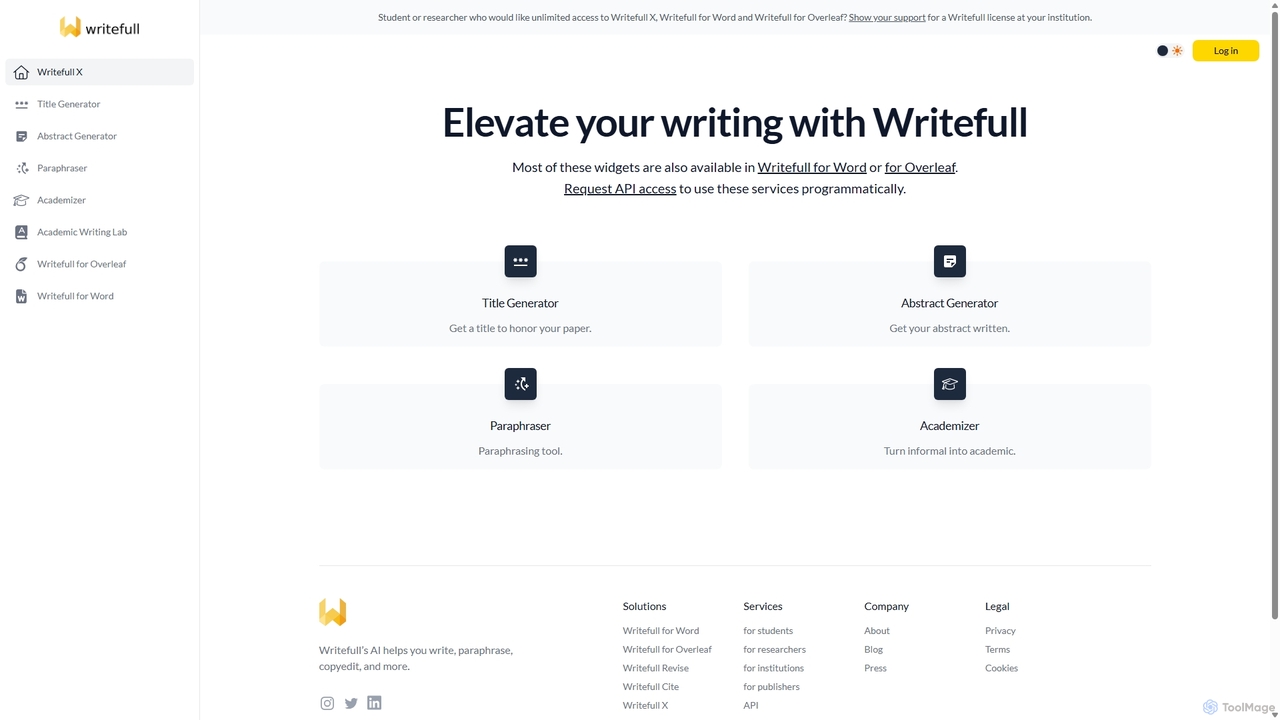
Writefull X is an AI-powered academic writing suite designed for students and researchers. It offers a set of free tools, including a Title Generator, Abstract Generator, Paraphraser, and Academizer, to enhance the quality and efficiency of scientific papers, essays, and theses. With integrations for Word and Overleaf, it provides real-time language feedback and writing assistance directly within your workflow, ensuring your writing is clear, concise, and professional.
About Proofreading
AI Proofreading tools are specialized AI-powered applications designed to meticulously review written text for grammatical errors, spelling mistakes, punctuation issues, and stylistic inconsistencies. Leveraging advanced natural language processing (NLP) and machine learning algorithms, these tools go beyond basic spell checkers to offer comprehensive suggestions for improving clarity, conciseness, and overall writing quality. They are invaluable for refining academic papers, professional documents, and any text requiring a high degree of linguistic precision and adherence to specific style guides.
Core Features
- Grammar and Spelling Correction: Automatically identifies and suggests corrections for a wide range of grammatical errors, punctuation mistakes, and typographical errors.
- Style and Readability Enhancement: Provides recommendations to improve sentence structure, word choice, tone, and overall readability, ensuring the text is clear and engaging.
- Conciseness and Clarity Suggestions: Helps eliminate jargon, redundant phrases, and overly complex sentences, making the writing more direct and impactful.
- Vocabulary Enrichment: Offers context-aware synonyms and alternative phrasing to enhance vocabulary and avoid repetition.
- Adherence to Style Guides: Some tools can be customized to check against specific academic or professional style guides, ensuring consistency in formatting and citation.
Use Cases
These tools are primarily utilized by students, researchers, academics, and professionals in fields requiring rigorous written communication. They are essential for preparing high-stakes documents such as dissertations, research articles, grant applications, and scholarly essays, where precision and error-free language are paramount. AI proofreading ensures that complex ideas are communicated clearly and professionally, upholding academic integrity and credibility.
How to Choose
When selecting an AI proofreading tool, consider its accuracy in detecting nuanced errors, especially in specialized academic or technical language. Evaluate its ability to offer constructive stylistic suggestions and its customization options for specific style guides (e.g., APA, MLA). Look for robust language support, seamless integration with writing platforms, and transparent privacy policies, particularly when handling sensitive academic content. User interface and pricing models should also align with individual or institutional needs.

ProofreadingUse Cases
Refining Academic Papers for Submission
Students and researchers utilize AI proofreading tools to meticulously review their essays, theses, and dissertations before submission. The tools identify and correct grammatical errors, punctuation mistakes, and stylistic inconsistencies, ensuring the document adheres to academic standards. This process helps to enhance clarity, improve readability, and present a polished, professional piece of work, ultimately contributing to better grades or successful publication.
Polishing Research Proposals and Grant Applications
Academics and grant writers employ AI proofreaders to ensure their research proposals and grant applications are impeccably written. These tools help eliminate errors that could detract from the proposal's credibility, refine complex sentences for maximum impact, and ensure conciseness. A well-proofread proposal significantly increases the chances of securing funding by presenting a clear, persuasive, and error-free argument to reviewers.
Enhancing Journal Article Manuscripts
Researchers preparing manuscripts for peer-reviewed journals use AI proofreading to elevate the linguistic quality of their submissions. Beyond basic error correction, the tools offer suggestions for academic tone, sentence flow, and adherence to specific journal style guides. This proactive step helps authors present their findings with precision and clarity, reducing the likelihood of rejection due to language issues and streamlining the editorial process.
Improving Conference Abstracts and Presentations
Presenters leverage AI proofreading tools to perfect their conference abstracts, presentation scripts, and accompanying materials. The tools ensure that these concise summaries are free from errors, impactful, and clearly convey the core message of their research. A well-proofread abstract is crucial for attracting attendees and making a strong first impression, while polished presentation notes enhance delivery confidence.
Standardizing University and Institutional Communications
University administrators and staff use AI proofreaders to maintain a high standard of written communication across official documents, announcements, and website content. The tools help ensure consistency in tone, terminology, and grammar, reflecting professionalism and institutional credibility. This application is vital for clear communication with students, faculty, and the public, avoiding misunderstandings and upholding the institution's reputation.
Assisting Non-Native English Speaking Academics
International students and researchers whose first language is not English rely on AI proofreading tools to significantly improve their English writing proficiency in academic contexts. These tools provide targeted feedback on grammar, syntax, and idiomatic expressions, helping users to articulate complex ideas more accurately and confidently. It acts as a supportive learning aid, bridging language gaps and fostering academic success.