wisio
wisio is an AI-powered co-pilot for scientific writing, designed to assist researchers and students. It streamlines the writing …
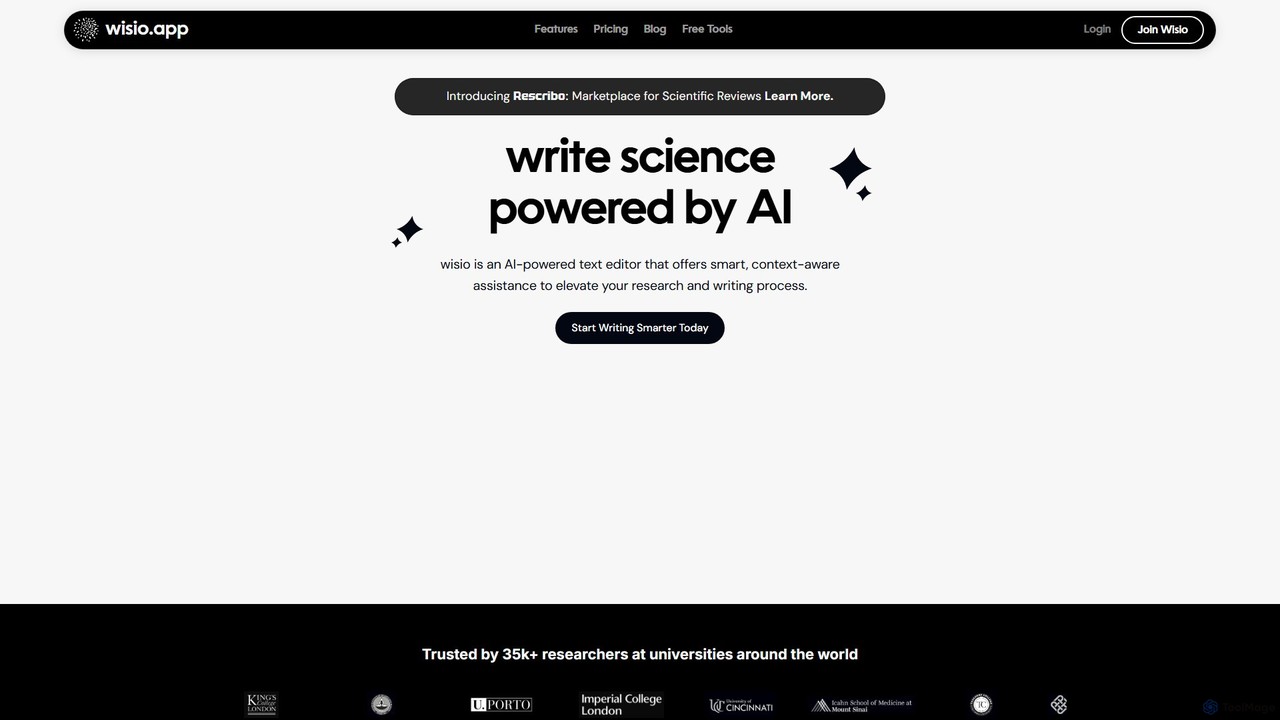
wisio is an AI-powered co-pilot for scientific writing, designed to assist researchers and students. It streamlines the writing process with features like smart referencing from databases, AI-powered text completion, translation into scientific English, paraphrasing, and real-time grammar correction.
About Scientific Writing
AI Scientific Writing tools are specialized assistants designed to streamline the creation of research papers, theses, and technical reports. These platforms utilize large language models trained on vast scientific literature to help with literature synthesis, data summarization, and manuscript drafting in precise academic styles. Their primary value lies in accelerating the research-to-publication cycle, enhancing the clarity of complex ideas, and ensuring adherence to specific formatting standards like APA, MLA, or Chicago. This focus on empirical data and structured argumentation distinguishes them from general academic writing aids.
Core Features
- Literature Review Synthesis: Automatically analyzes and summarizes key findings from multiple research papers to build a coherent background.
- Structured Section Drafting: Generates drafts for specific sections like 'Introduction', 'Methods', or 'Results' based on user prompts and data inputs.
- Citation & Reference Management: Suggests relevant citations during writing and automatically formats bibliographies in various academic styles.
- Technical Language Enhancement: Refines phrasing for precision, objectivity, and adherence to the specific terminology of a scientific field.
- Data Interpretation Assistance: Helps articulate the significance of statistical results or experimental data in the 'Discussion' section.
Use Cases
These tools are primarily used by academic researchers, PhD students, and scientists in R&D departments. They are invaluable when preparing manuscripts for journal submission, writing grant proposals, or compiling comprehensive literature reviews. For instance, a medical researcher can use these tools to quickly summarize the last five years of studies on a specific protein, then draft a methods section based on their lab protocols.
How to Choose
When selecting an AI Scientific Writing tool, consider the following: First, evaluate the breadth and quality of its scientific database and its support for your specific discipline. Second, check its integration with reference managers like Zotero or EndNote. Third, assess the accuracy of its citation generation and its flexibility in handling different formatting styles. Finally, consider the user interface and whether it facilitates a collaborative writing process with colleagues.

Scientific WritingUse Cases
Drafting a Manuscript for Journal Submission
A PhD student in biology needs to write their first research paper. Using an AI scientific writing tool, they input their experimental data, methodology, and key findings. The tool helps structure the paper according to the IMRaD format (Introduction, Methods, Results, and Discussion), generates a first draft of the methods section based on the provided protocols, and suggests relevant literature for the introduction. It also ensures consistent terminology and formats the bibliography in the target journal's required style, significantly reducing the time spent on formatting and initial drafting.
Conducting a Comprehensive Literature Review
A researcher in computer science is starting a new project and needs to understand the current state-of-the-art. They use an AI tool to search and analyze hundreds of relevant papers. The tool categorizes papers by methodology, summarizes the key contributions of each, and identifies research gaps. This allows the researcher to quickly build a comprehensive understanding of the field, create a structured literature review chapter for their thesis, and pinpoint a novel direction for their own work, a process that would manually take weeks.
Improving Clarity and Precision in Technical Reports
An engineer at an R&D firm is writing a technical report on a new alloy. The language needs to be extremely precise and objective. The engineer uses an AI writing assistant to check for ambiguity, refine technical descriptions, and suggest more concise phrasing. The tool can also cross-reference terminology with a database of materials science papers to ensure standard terms are used correctly. This helps produce a highly professional and clear report, reducing the risk of misinterpretation by stakeholders.
Preparing a Grant Proposal with Strong Justification
A medical research team is applying for funding. They use an AI tool to strengthen their grant proposal. The AI helps summarize preliminary data compellingly, identifies and cites seminal papers to support their hypothesis, and refines the 'Significance and Innovation' section to be more impactful. By analyzing successful grant proposals in its database, the tool can also suggest structural improvements to enhance persuasiveness, increasing the proposal's chances of being funded.
Paraphrasing and Avoiding Plagiarism in a Thesis
A graduate student is writing their dissertation and needs to incorporate findings from many sources without plagiarizing. They use an AI scientific writing tool's paraphrasing feature, which is specifically trained on academic texts. It rephrases complex sentences while preserving the original scientific meaning and technical accuracy. The tool also integrates with a plagiarism checker, allowing the student to instantly verify the originality of their text and ensure they maintain academic integrity throughout their work.
Translating and Polishing Papers for International Journals
A research group in a non-English speaking country wants to publish in a top-tier international journal. They use an AI tool that not only translates their manuscript into English but also polishes the language to meet the high standards of academic publishing. The tool corrects grammatical errors, improves sentence structure, and replaces awkward phrasing with standard scientific expressions. This ensures their groundbreaking research is not hindered by language barriers, increasing its visibility and impact on a global scale.