
Academic Best in category 1 results Research Management AI Tool

Popular AI tools in the Research Management field of Academic include Moara, etc., helping you quickly improve efficiency.

Moara

Moara

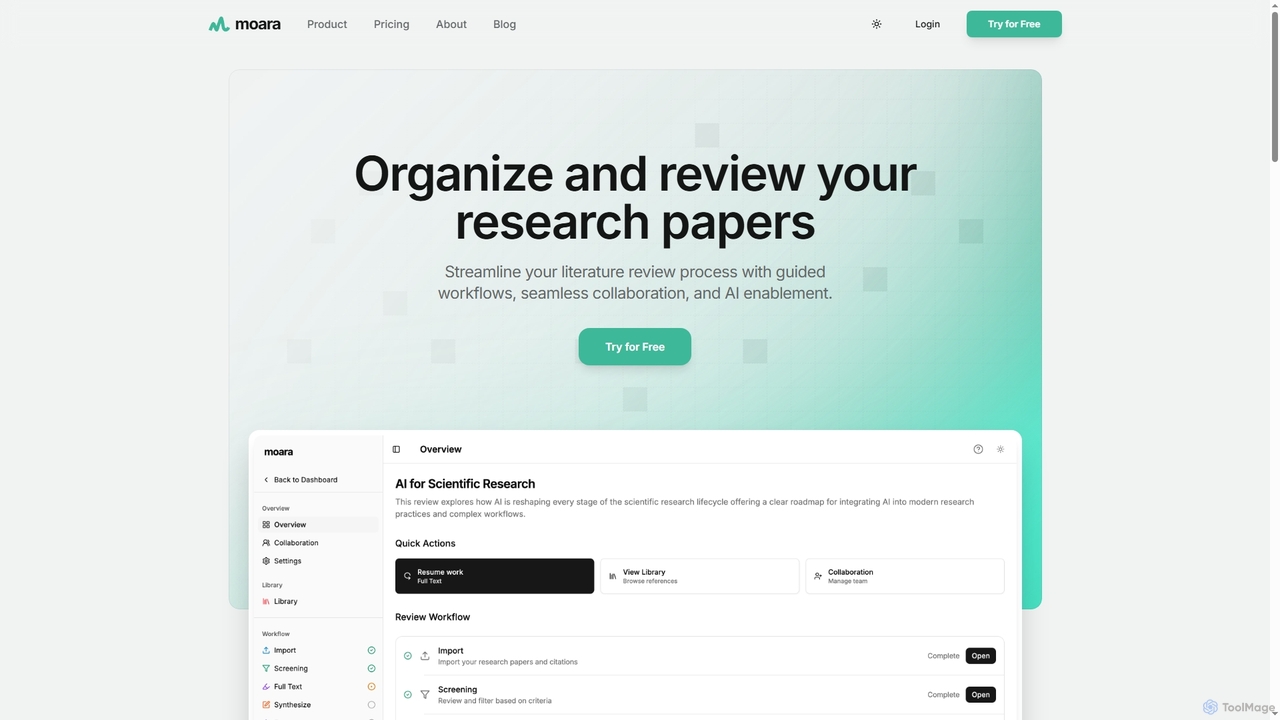
Moara is an AI-powered research platform designed to streamline the entire literature review process, from discovery and organization …

10.1K

About Research Management

Research Management tools are a category of AI-powered solutions designed to streamline and enhance various stages of the academic and scientific research workflow. These tools leverage artificial intelligence, including natural language processing and machine learning, to automate tedious tasks, accelerate discovery, and improve the overall efficiency and quality of research output. They empower researchers to manage information, data, and collaborations more effectively, from initial literature review to final publication.

Core Features

  • Automated Literature Review: Quickly identify, filter, and analyze relevant scientific papers and articles based on research topics.
  • Semantic Search & Information Extraction: Perform intelligent searches across vast databases and extract key data points, methodologies, and findings.
  • Data Analysis Assistance: Aid in processing, interpreting, and visualizing complex datasets to uncover patterns and insights.
  • Reference & Citation Management: Automatically organize research sources, generate citations, and format bibliographies according

    Applicable Scenarios

    Researchers across various disciplines, including academia, pharmaceuticals, and technology, utilize these tools. PhD students can efficiently manage their thesis research, while R&D teams in corporations can accelerate product development cycles by quickly synthesizing market and scientific data. Grant writers can also leverage AI to identify funding opportunities and draft compelling proposals.

    How to Choose

    When selecting an AI research management tool, consider its core functionalities, such as literature review capabilities, data analysis support, and reference management features. Evaluate its integration with existing academic databases and other research software. Assess the user interface for ease of use and the level of technical support offered. Finally, compare pricing models and ensure it aligns with your budget and specific research needs.

Research ManagementUse Cases

1

Streamlining Literature Review for PhD Students

A PhD student facing a vast amount of academic literature can use AI research management tools to quickly identify the most relevant papers for their thesis. By inputting their research question and keywords, the tool can perform semantic searches across databases, summarize key findings from hundreds of articles, and highlight methodological gaps, saving weeks of manual review time and ensuring comprehensive coverage.

2

Accelerating Data Analysis for Scientific Research

Scientists working with large, complex datasets, such as genomic or climate data, can leverage AI research management tools to accelerate their analysis. These tools can identify correlations, detect anomalies, and generate preliminary visualizations much faster than traditional methods. This allows researchers to focus on interpreting meaningful insights rather than spending excessive time on data preprocessing and basic statistical analysis, significantly speeding up the discovery process.

3

Drafting Research Proposals and Grant Applications

Academics and research institutions often spend considerable time drafting proposals for grants and funding. AI research management tools can assist by generating initial drafts based on project outlines, identifying relevant funding opportunities, and even suggesting improvements for clarity and impact. This significantly reduces the administrative burden, allowing researchers to allocate more time to the scientific aspects of their proposals and increase their chances of securing funding.

4

Efficient Reference and Citation Management

Researchers often struggle with managing hundreds of references and ensuring correct citation formats for different journals. AI research management tools automate this process by allowing users to import references from various sources, organize them into projects, and instantly generate bibliographies in specific styles (e.g., APA, MLA, Chicago). This eliminates manual formatting errors and saves significant time during manuscript preparation, ensuring academic integrity and compliance.

5

Synthesizing Research Findings for Meta-Analysis

Medical researchers conducting meta-analyses need to synthesize findings from numerous studies to draw broader conclusions. AI research management tools can assist by extracting key outcomes, effect sizes, and patient demographics from multiple papers. They can then identify common themes, discrepancies, and potential biases across studies, providing a structured overview that significantly streamlines the complex process of synthesizing vast amounts of information for systematic reviews.

6

Facilitating Collaborative Research Projects

Research teams often span different institutions and geographies, making collaboration challenging. AI research management tools offer centralized platforms for sharing documents, tracking project progress, and managing tasks. Features like automated version control, intelligent suggestion for co-authors, and real-time collaborative editing enhance team productivity and ensure all members are aligned, streamlining the entire research project lifecycle from inception to publication.

Research ManagementFrequently Asked Questions