Best of the Year 15 results Academic AI Tools

Popular AI tools in the Academic field include Jenni AI、Paperpal、ThesisAI、Sourcely、Thesify、Yomu、Writefull X、Moara、wisio、EduWiz AI, etc., helping you quickly improve efficiency.

Moara

Moara

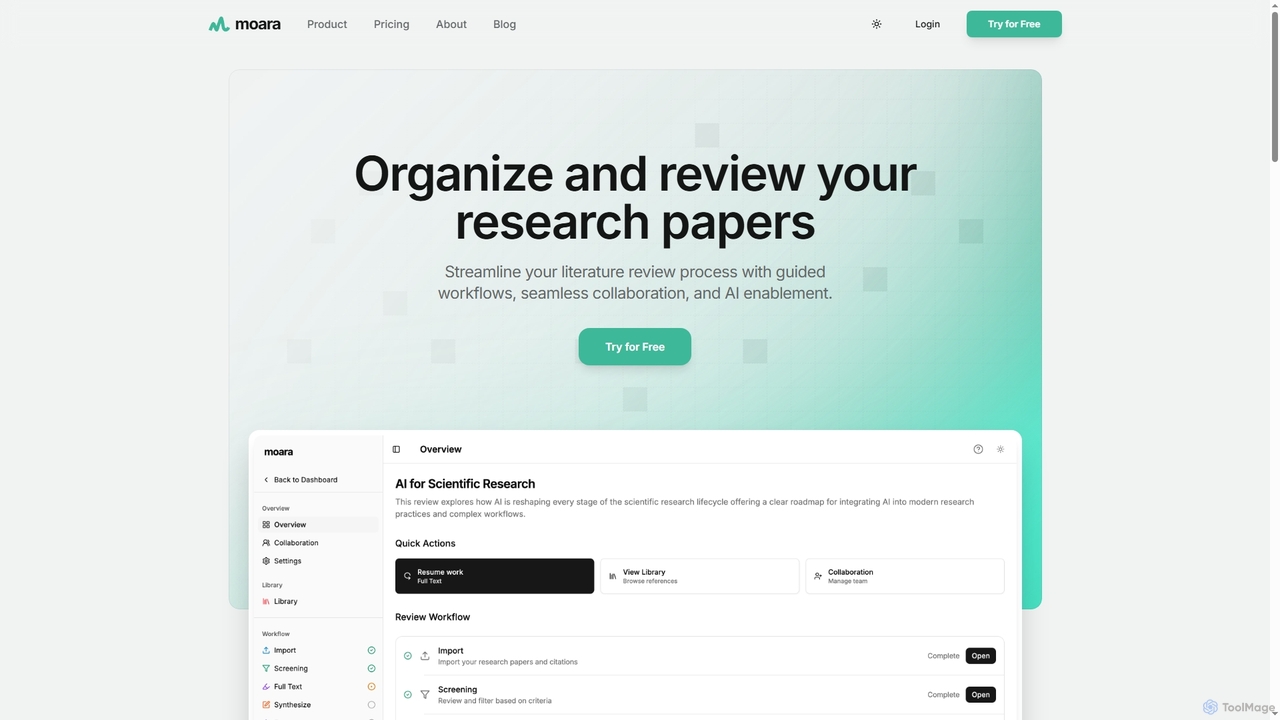
Moara is an AI-powered research platform designed to streamline the entire literature review process, from discovery and organization …

9.1K
Writefull X

Writefull X

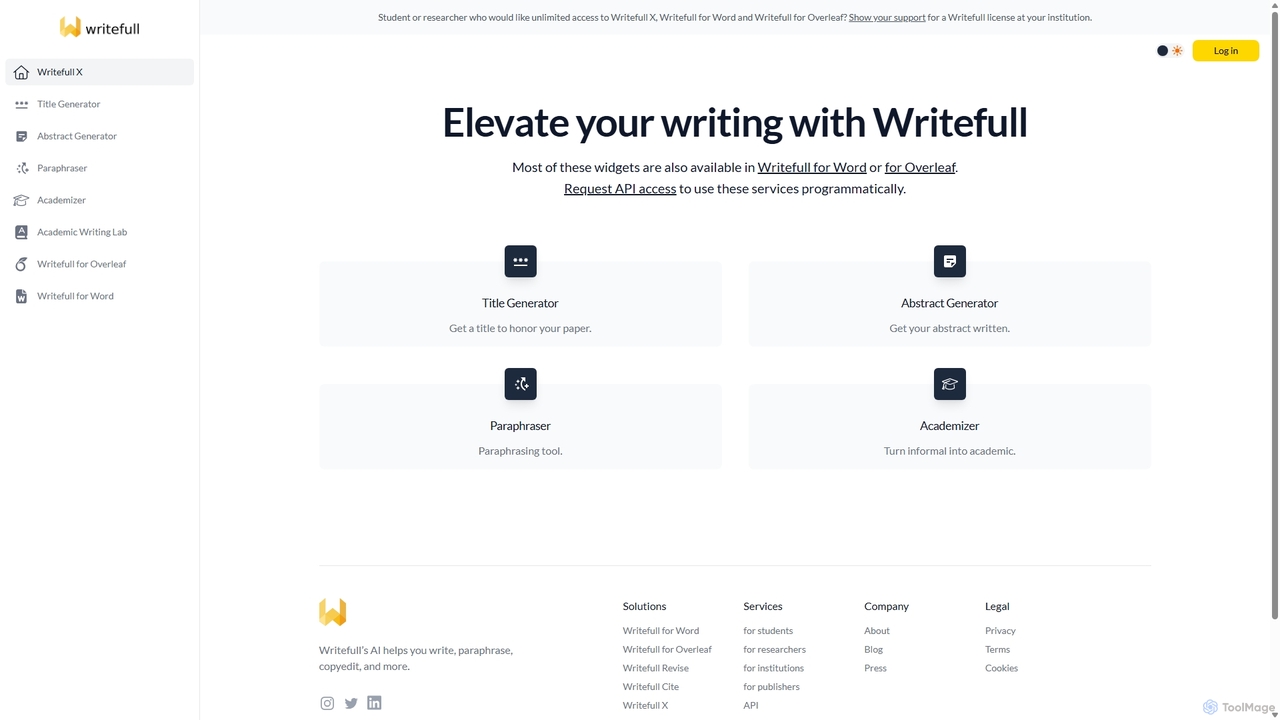
Writefull X is an AI-powered academic writing suite designed for students and researchers. It offers a set of …

52.5K
Isaac

Isaac

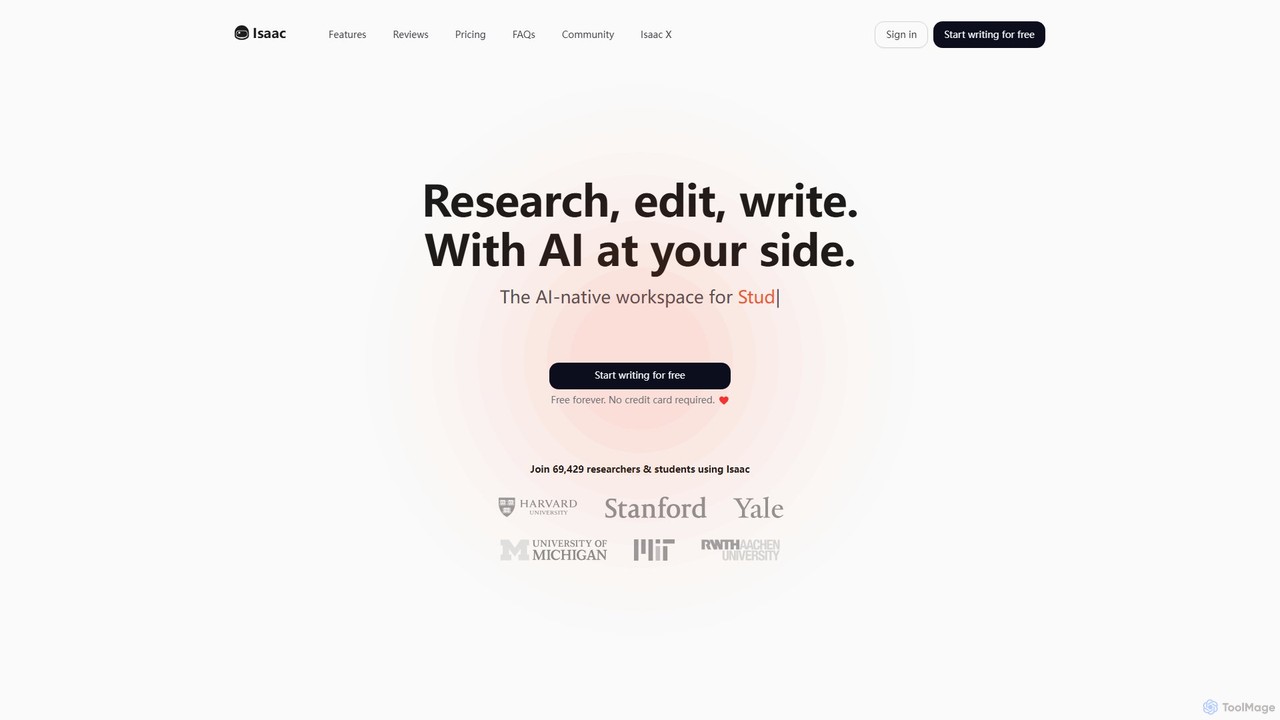
Isaac is an AI-native workspace designed for scientists, researchers, and students. It integrates the entire academic writing workflow, …

2.8K
Yomu

Yomu

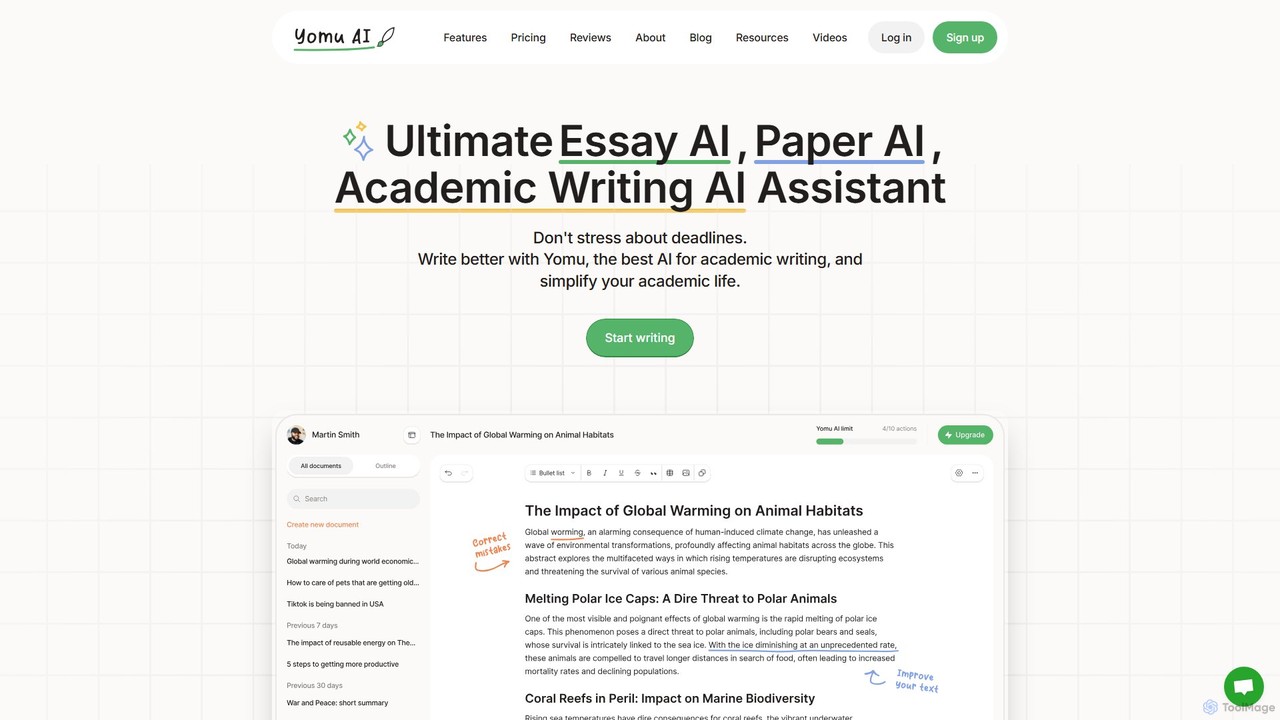
Yomu is an AI-powered academic writing assistant designed for students and researchers. It streamlines the process of writing …

121.6K
Paperpal

Paperpal

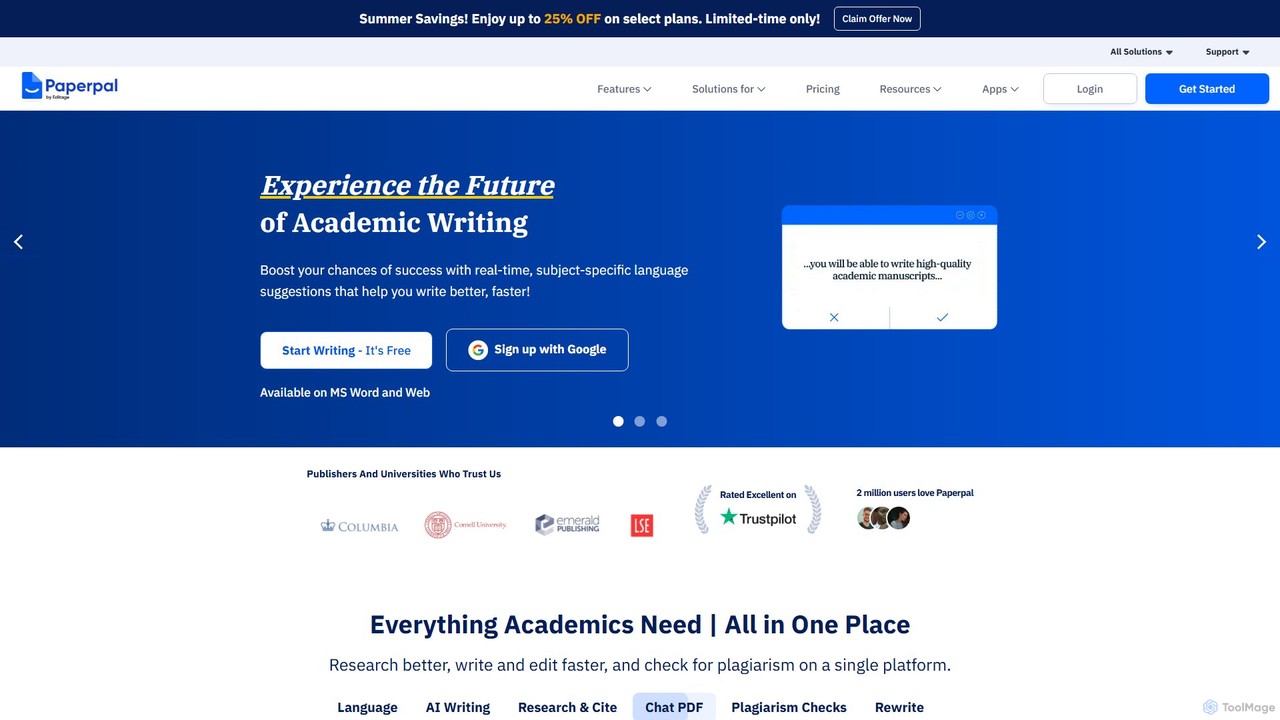
Paperpal is an AI-powered academic writing assistant for researchers, students, and academics. It offers a comprehensive suite of …

1.4M
v0 report

v0 report

v0 report is an advanced AI document generator that automates the creation of professional-quality reports, essays, research papers, …

3.3K
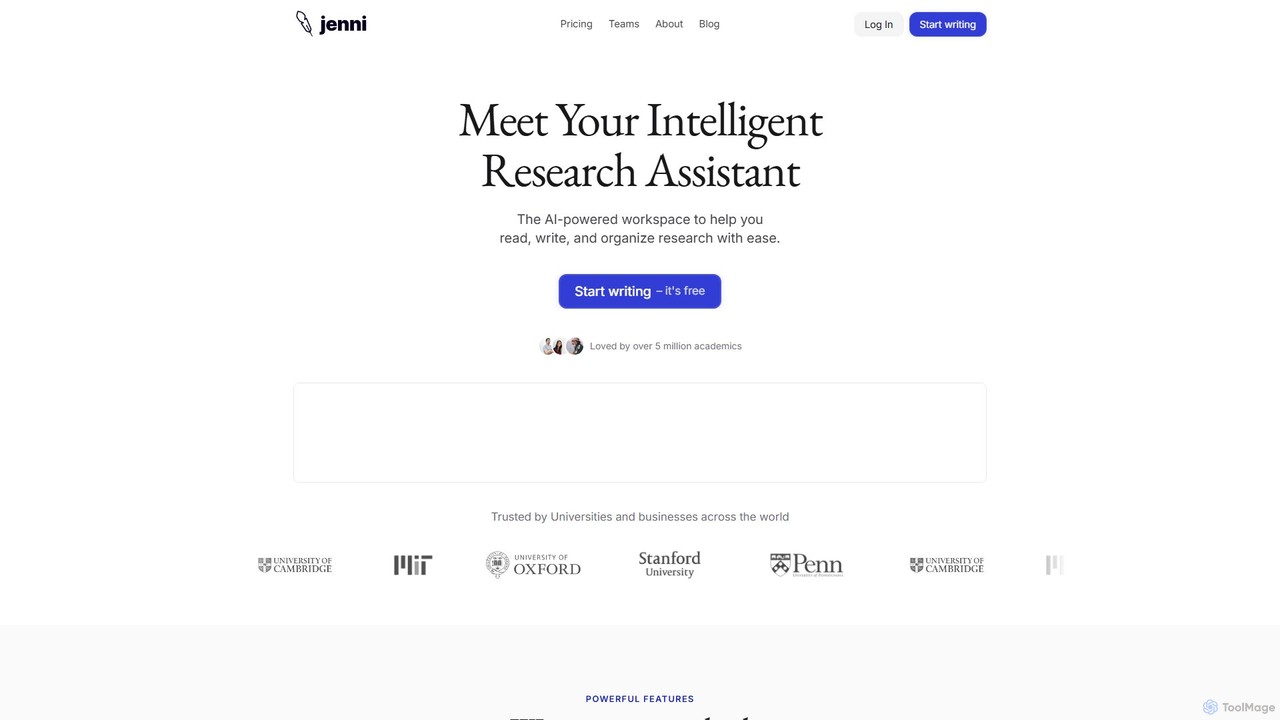
Jenni AI

Jenni AI

Jenni AI is an intelligent research assistant and AI writing partner designed for academics, students, and researchers. It …

1.6M
essaycheck

essaycheck

An AI-powered platform by IELTS Podcast designed to help students prepare for the IELTS exam. It offers an …

2.0K
ThesisAI

ThesisAI

ThesisAI is an AI-powered research assistant designed to streamline academic writing. It processes up to 100 research papers …

211.4K
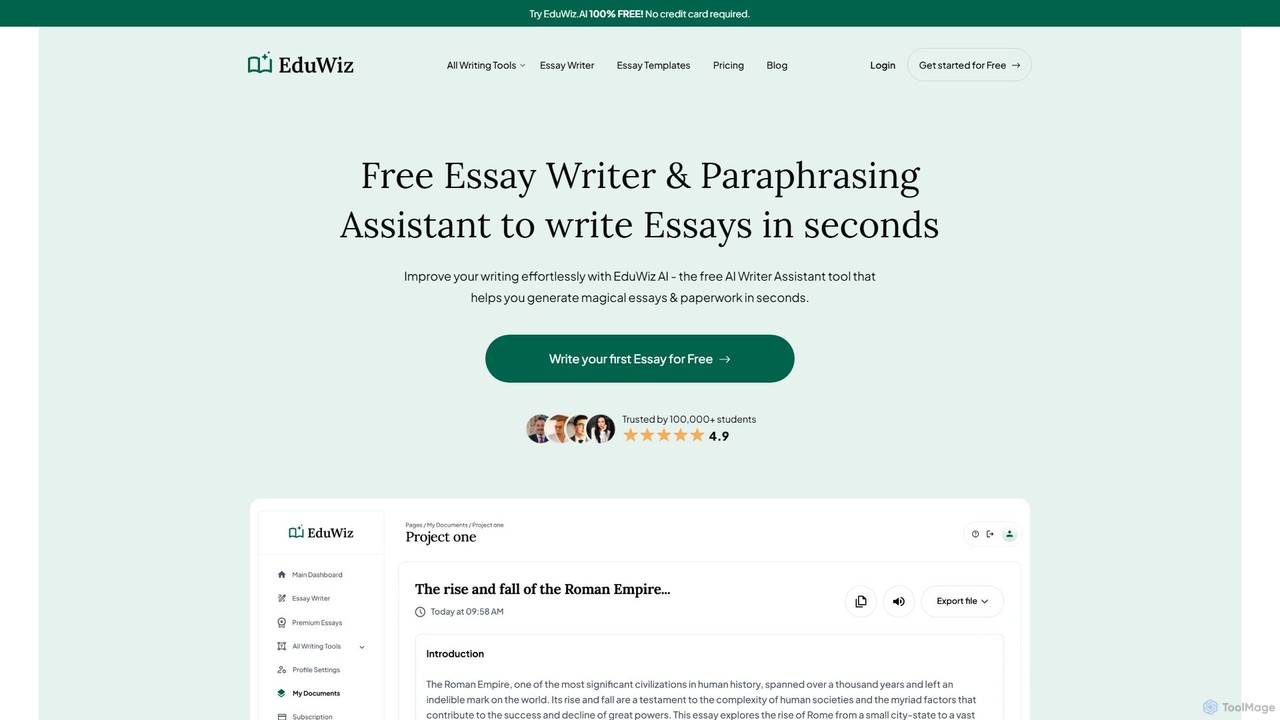
EduWiz AI

EduWiz AI

EduWiz AI is an all-in-one AI writing assistant designed for students, teachers, and writers. It offers a suite …

3.9K
ResearchBuddy

ResearchBuddy

ResearchBuddy is an AI-powered platform designed to automate and streamline the literature review process for researchers, students, and …

2.1K
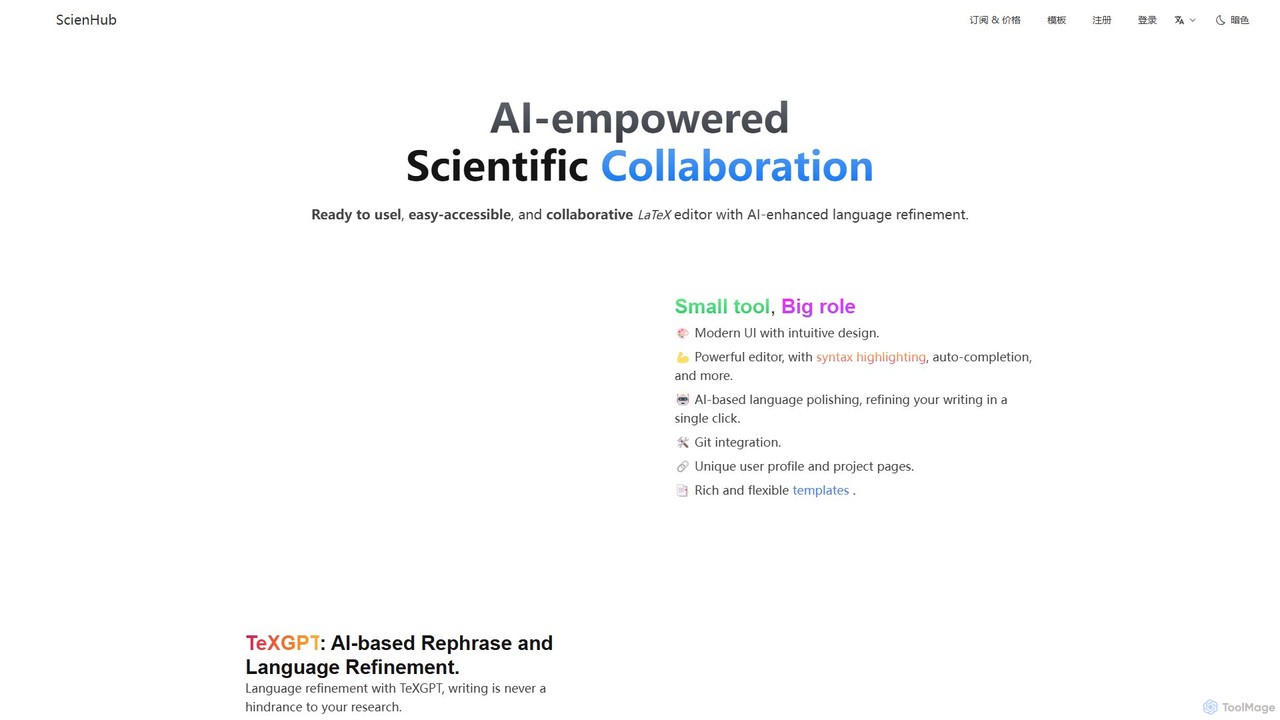
ScienHub

ScienHub

ScienHub is an AI-powered, collaborative online LaTeX editor designed for researchers, academics, and students. It streamlines scientific writing …

2.9K
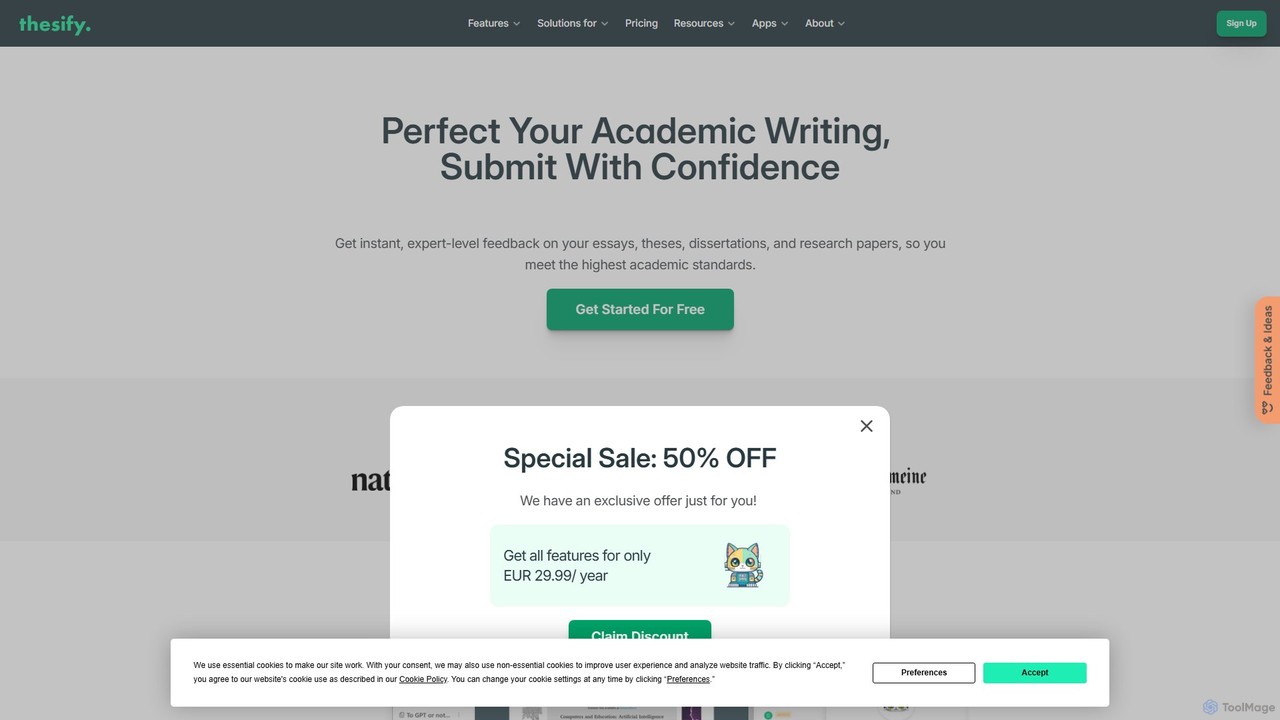
Thesify

Thesify

Thesify is an ethical AI-powered academic writing assistant for students and researchers. It provides instant, in-depth feedback on …

140.6K
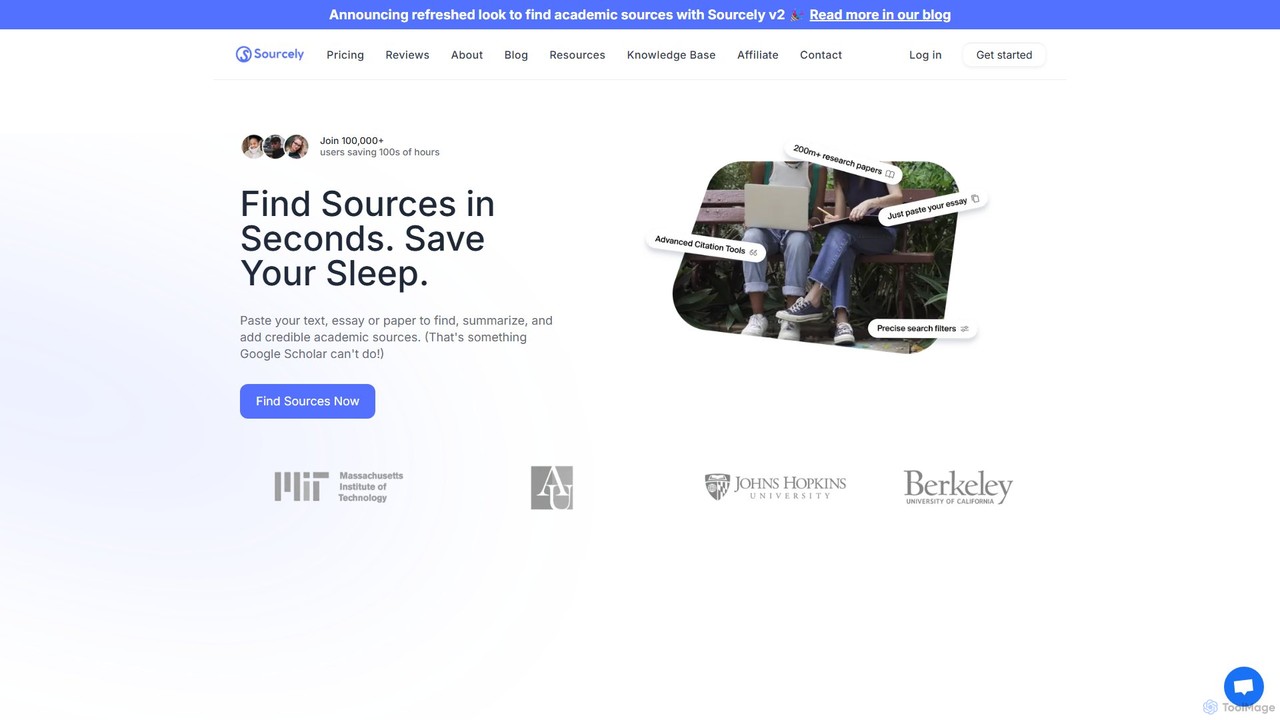
Sourcely

Sourcely

Sourcely is an AI-powered academic research assistant for students and researchers. It streamlines finding, summarizing, and citing credible …

171.4K
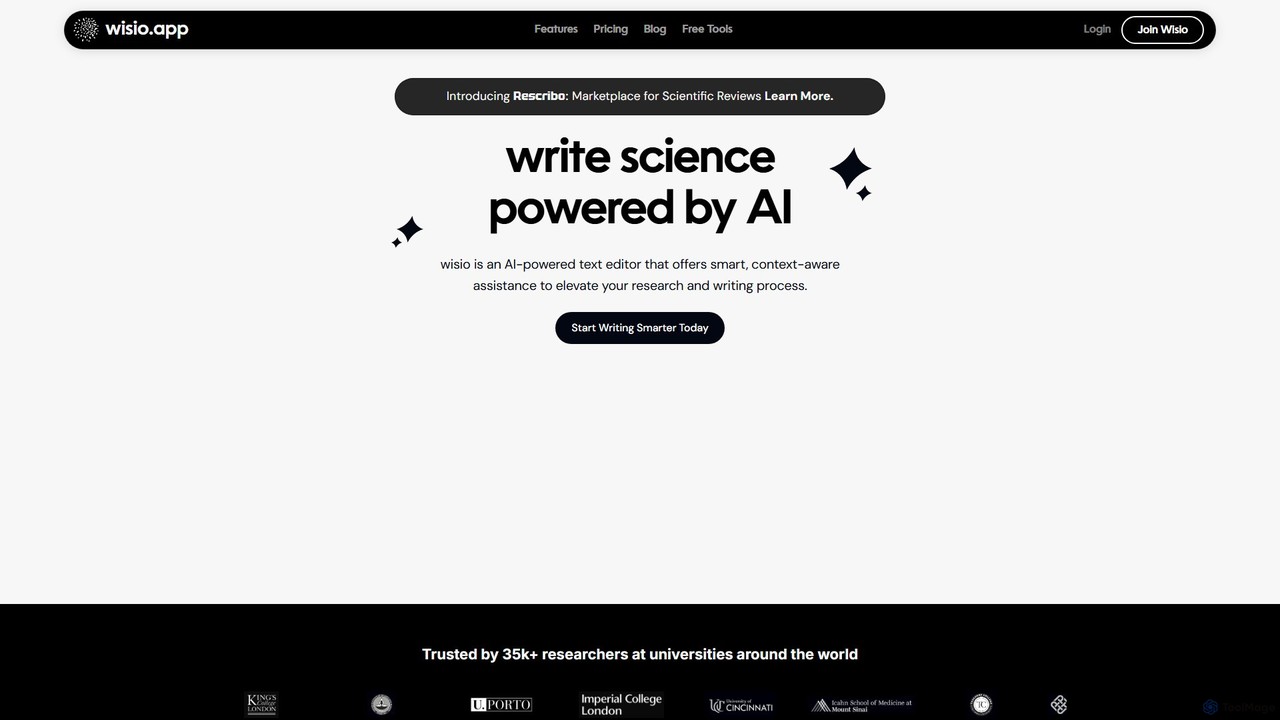
wisio

wisio

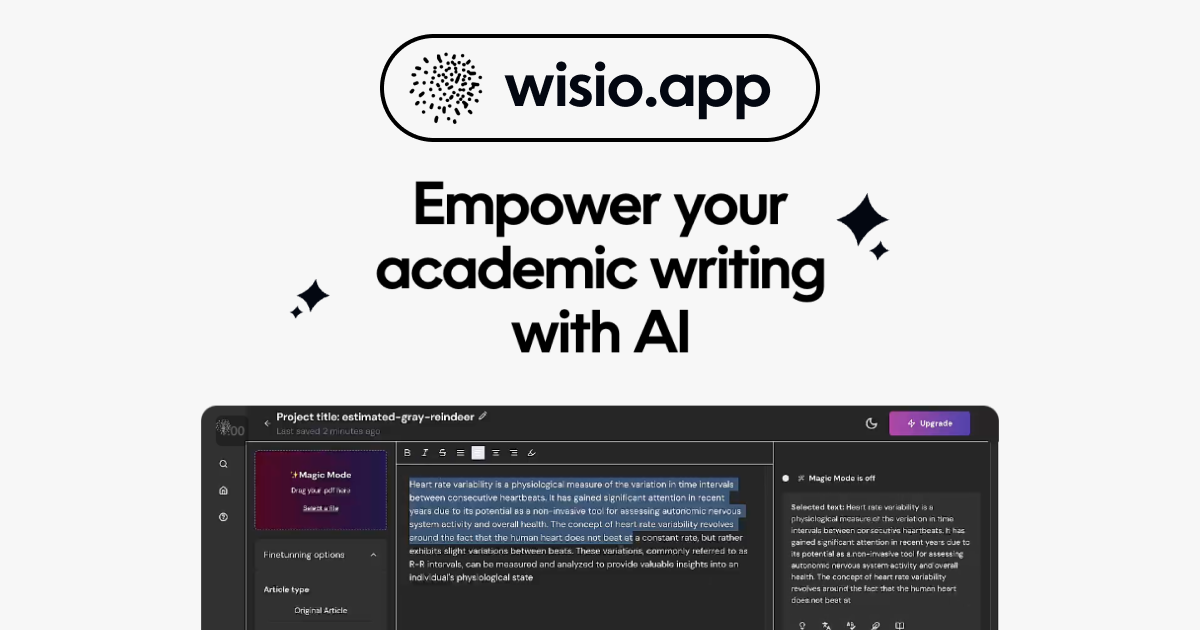
wisio is an AI-powered co-pilot for scientific writing, designed to assist researchers and students. It streamlines the writing …

4.4K

About Academic

AI Academic tools are a class of software designed to support students, researchers, and educators throughout the scholarly process. These tools leverage natural language processing (NLP) and machine learning to enhance tasks such as literature discovery, data analysis, and academic writing. By streamlining complex workflows, they enable users to accelerate research, improve writing quality, and manage scholarly information more effectively. Key capabilities often include advanced search, automated summarization, and intelligent citation management.

Core Features

  • Literature Discovery & Summarization: Quickly find relevant papers and generate concise summaries of complex articles.
  • Advanced Writing Assistance: Provides grammar, style, and clarity suggestions tailored for an academic tone.
  • Automated Citation Management: Automatically generates and formats citations in various styles like APA, MLA, and Chicago.
  • Plagiarism Detection: Scans documents to identify potential unoriginal content and ensure academic integrity.
  • Data Analysis & Visualization: Assists in interpreting complex datasets and creating charts or graphs to represent findings.

Use Cases

These tools are widely used by PhD candidates conducting systematic literature reviews, university students drafting essays and dissertations, and faculty members preparing research papers for publication. They are also valuable in scientific labs for analyzing experimental data and in the humanities for textual analysis.

How to Choose

When selecting an AI Academic tool, consider the accuracy of its information and analysis, the breadth of its integrated databases (e.g., Scopus, Web of Science), compatibility with reference managers like Zotero or EndNote, and its data privacy policy, especially when handling sensitive research data.

AcademicUse Cases

1

Accelerating Systematic Literature Reviews

A PhD researcher in medical science needs to review thousands of published studies. Instead of manually screening each title and abstract, they use an AI academic tool to filter articles based on predefined criteria. The tool then clusters relevant papers by theme and generates summaries of key findings and methodologies. This process reduces the time spent on initial screening from months to weeks, allowing the researcher to focus on in-depth analysis of the most critical studies.

2

Enhancing Academic Writing and Clarity

An undergraduate student is writing their final year dissertation. They use an AI writing assistant trained on academic texts. The tool provides real-time feedback on grammar, sentence structure, and clarity. It suggests ways to rephrase convoluted sentences to be more concise and flags sections where the tone is too informal for a scholarly paper. This helps the student refine their manuscript to meet high academic standards before submission.

3

Automating Bibliography and Citation Formatting

A team of social scientists is co-authoring a journal article with over 150 sources. Manually formatting each citation is tedious and error-prone. They use an AI tool that integrates with their word processor. The tool automatically generates in-text citations and builds the bibliography in the required journal style (e.g., APA 7th edition). When a source is added or removed, the entire reference list updates automatically, ensuring accuracy and saving hours of work.

4

Simplifying Complex Research Papers

A student new to a field needs to understand a dense, technical research paper. They use an AI tool to analyze the document. The tool breaks down complex jargon, explains core concepts in simpler terms, and provides a structured summary of the study's purpose, methods, results, and implications. This enables the student to quickly grasp the key information and build a foundational understanding without getting lost in the technical details.

5

AI-Assisted Analysis of Qualitative Data

A sociologist has hundreds of pages of interview transcripts for a qualitative study. Manually coding this data for thematic analysis is extremely time-consuming. They employ an AI academic tool to process the transcripts. The AI identifies recurring keywords, concepts, and sentiments, suggesting potential thematic codes. While the researcher makes the final interpretive decisions, the AI's initial pass significantly speeds up the coding process and helps uncover patterns that might have been missed.

6

Ensuring Originality with Plagiarism Checks

Before submitting a manuscript to a peer-reviewed journal, a professor wants to ensure it contains no unintentional plagiarism. They upload the document to an AI-powered plagiarism checker. The tool compares the text against a massive database of academic journals, books, and web pages. It generates a detailed originality report, highlighting passages that are too similar to existing sources and providing links to the original material, allowing for proper citation or rephrasing.

AcademicFrequently Asked Questions