EcoSemantic
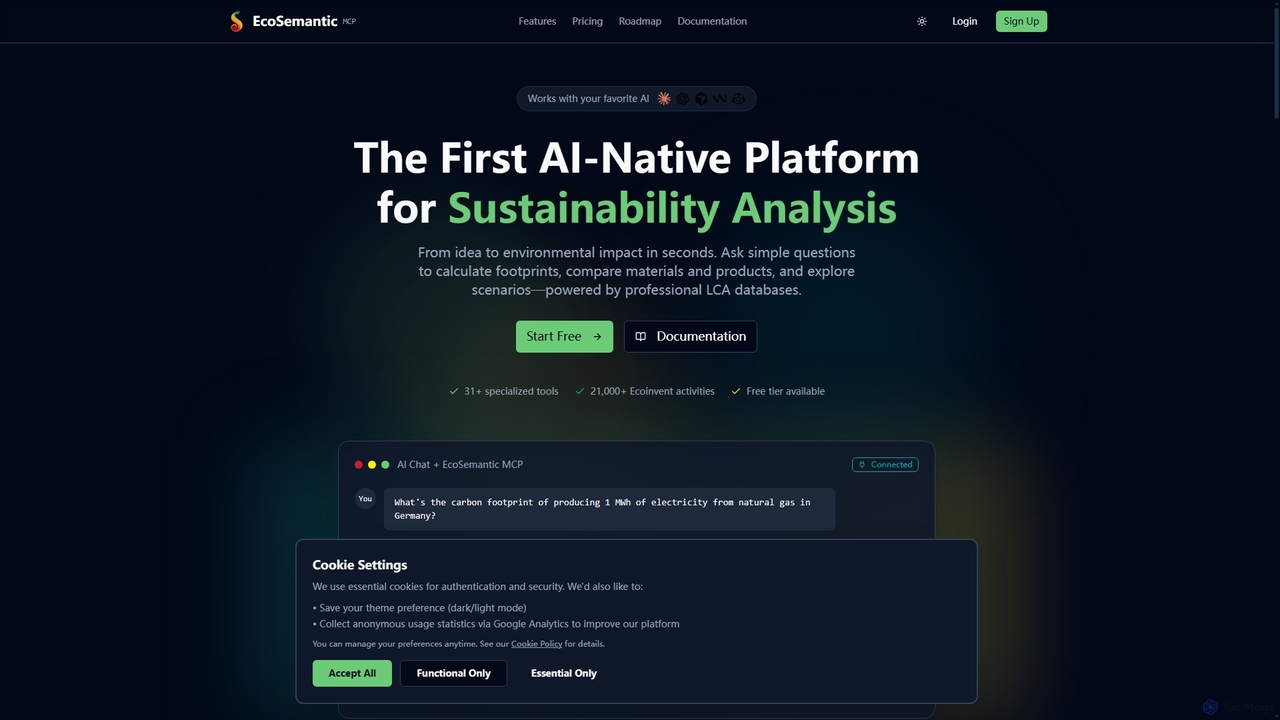
EcoSemantic is an AI-native platform that transforms complex Life Cycle Assessment (LCA) analysis into a conversational experience. It …
EcoSemantic is an AI-native platform that transforms complex Life Cycle Assessment (LCA) analysis into a conversational experience. It allows users to query professional environmental data from Ecoinvent databases using natural language, calculate footprints, compare materials, and explore sustainability scenarios in seconds.
Moara
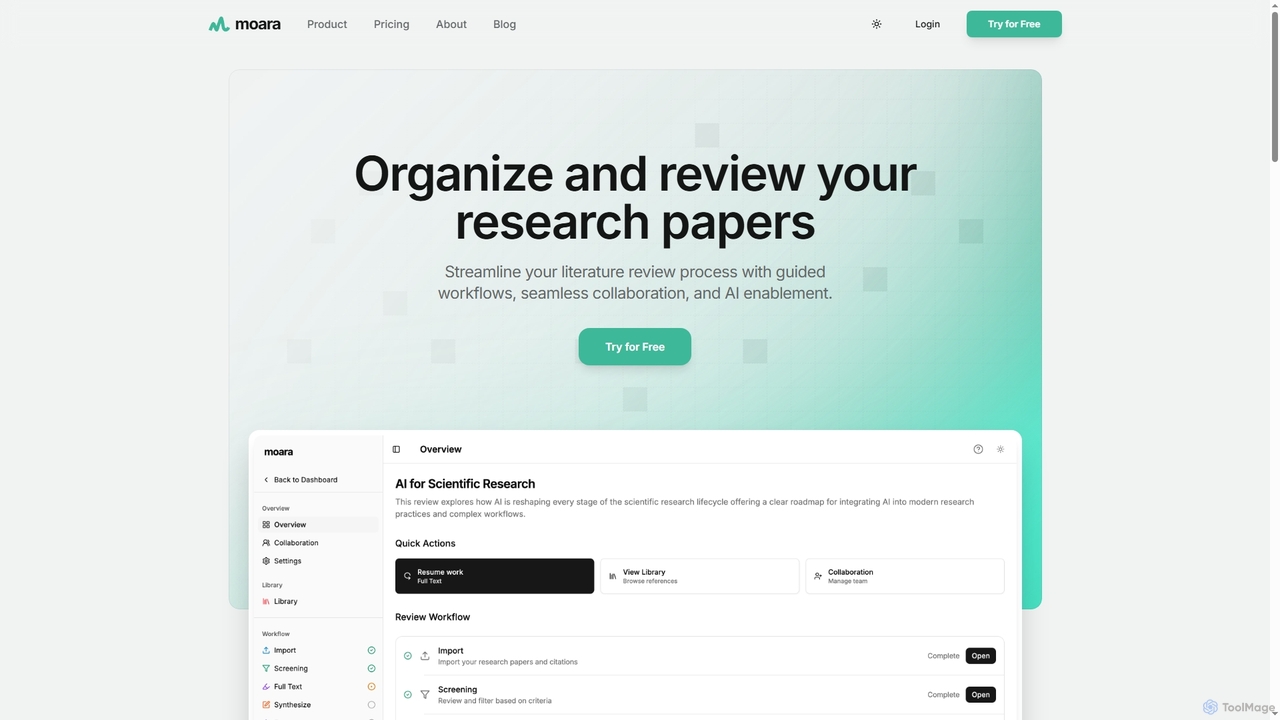
Moara is an AI-powered research platform designed to streamline the entire literature review process, from discovery and organization …
Moara is an AI-powered research platform designed to streamline the entire literature review process, from discovery and organization to analysis and synthesis. It empowers researchers, students, librarians, and R&D teams to conduct rigorous and transparent academic work with enhanced speed and structure.
About Research Assistant
Research Assistant tools are a category of AI-powered applications designed to streamline and enhance various stages of the research process. These tools leverage advanced natural language processing (NLP), machine learning, and data analysis techniques to assist users in discovering, synthesizing, and organizing information. They significantly reduce the manual effort involved in academic, market, or scientific research, enabling deeper insights and faster progress. By automating repetitive tasks, AI Research Assistants empower researchers, students, and professionals to focus on critical thinking and analysis.
Core Features
- Automated Literature Review: Quickly scan, summarize, and extract key information from vast collections of academic papers, articles, and reports.
- Data Extraction & Synthesis: Identify and pull relevant data points from unstructured text, then synthesize findings across multiple sources.
- Citation & Reference Management: Generate citations in various styles and manage research bibliographies efficiently.
- Topic Modeling & Trend Analysis: Discover emerging themes, patterns, and trends within large datasets or bodies of text.
- Research Question Formulation: Assist in refining research questions by identifying gaps in existing literature or suggesting relevant angles.
Applicable Scenarios
Academics and students utilize these tools for thesis writing, dissertation research, and literature reviews, drastically cutting down time spent on information gathering. Market researchers employ AI Research Assistants to analyze industry reports, competitor data, and consumer feedback for strategic planning. Scientific researchers benefit from accelerated analysis of experimental data and rapid synthesis of findings from complex scientific publications, speeding up discovery and innovation cycles.
How to Choose
When selecting an AI Research Assistant, consider its data source compatibility (e.g., academic databases, web, proprietary files), the depth of analysis it offers (e.g., simple summarization vs. complex trend identification), and its output formats (e.g., exportable summaries, structured data, citation lists). Evaluate integration capabilities with existing research workflows and tools, and assess the accuracy and reliability of its AI models to ensure trustworthy results. Finally, consider the user interface intuitiveness and available collaboration features for team projects.

Research AssistantUse Cases
Automating Literature Reviews for Academic Papers
PhD students and academic researchers use AI Research Assistants to rapidly scan thousands of scholarly articles, identify relevant studies, and extract key findings. The tool can summarize papers, highlight methodologies, and pinpoint gaps in existing research, significantly reducing the time spent on manual review and helping to build a comprehensive bibliography for dissertations or journal submissions.
Synthesizing Market Trends for Business Strategy
Market analysts and business strategists leverage these tools to process vast amounts of industry reports, news articles, and social media data. The AI can identify emerging market trends, analyze competitor strategies, and synthesize consumer sentiment, providing actionable insights for product development, marketing campaigns, and overall business strategy formulation.
Extracting Key Data from Scientific Publications
Scientists and medical researchers utilize AI Research Assistants to efficiently extract specific data points, experimental protocols, and results from complex scientific papers. This accelerates meta-analyses, systematic reviews, and the identification of potential drug targets or research hypotheses, streamlining the process of scientific discovery and evidence-based decision-making.
Generating Comprehensive Research Reports
Consultants and professional researchers use AI Research Assistants to compile and structure information from diverse sources into coherent reports. The tool can organize extracted data, generate summaries of sections, and even suggest narrative flows, transforming raw information into polished, professional research documents with minimal manual formatting.
Identifying Research Gaps and Novel Hypotheses
Researchers struggling to define a unique research question can employ AI Research Assistants to analyze existing literature and identify under-explored areas or contradictions. By mapping out the landscape of current knowledge, the AI helps in formulating novel hypotheses and designing studies that contribute original insights to their field.
Managing Citations and Bibliographies for Publications
Authors and editors use AI Research Assistants to automatically generate and manage citations and bibliographies in various academic styles (e.g., APA, MLA, Chicago). This ensures accuracy and consistency across publications, saving considerable time and preventing errors in the final manuscript submission process.