ToolMage
Sign in

Best 1 Content Generation AI tools for Ai Assistants

Popular Content Generation AI tools in Ai Assistants include Muset, helping you work more efficiently.

Muset

Muset

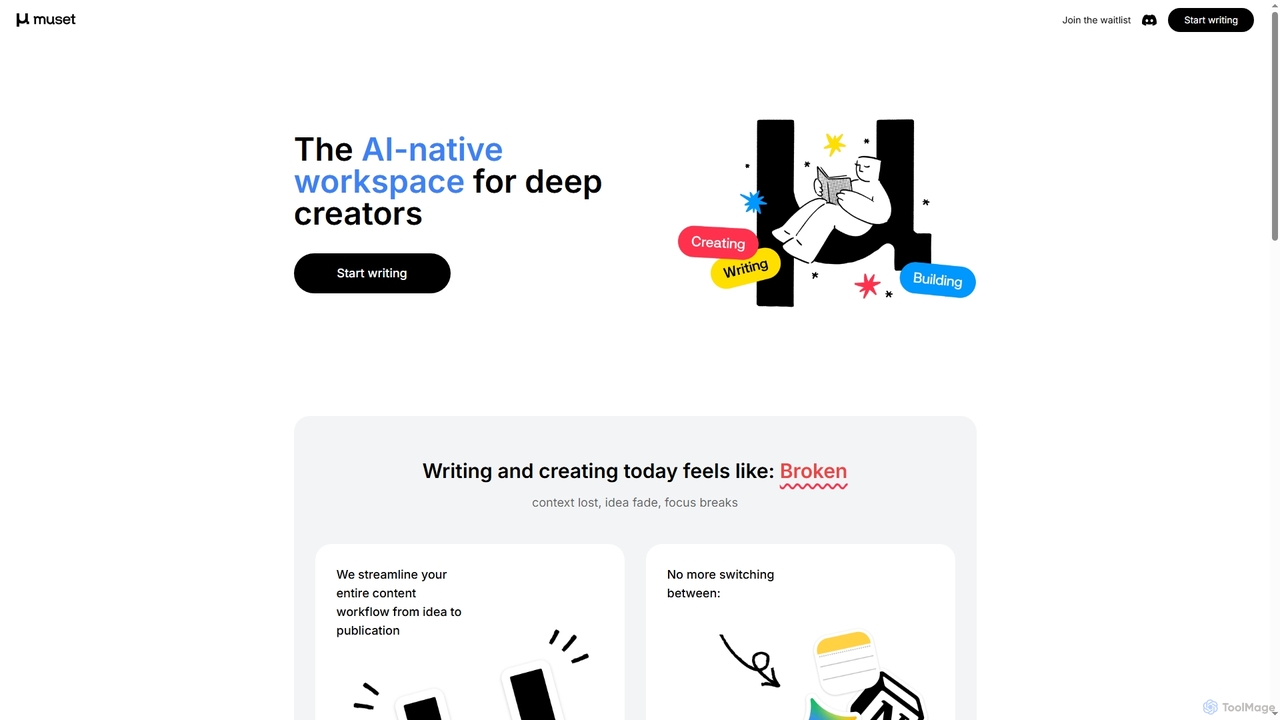
Muset is an AI-native workspace designed for deep creators, streamlining the entire content workflow from idea generation to publication. It acts as a context-aware co-creation agent to prevent lost context and focus breaks.

Content Generation
Visits 14.6KFavorites 143Likes 145

About Content Generation

Content Generation tools are a specialized type of AI assistant designed to automatically create original written, visual, or audio content from user prompts. They leverage large language models (LLMs) and other generative models to produce text, code, and descriptions that are coherent and contextually relevant. These tools are widely used to accelerate content creation workflows, overcome creative blocks, and scale marketing efforts. Unlike general AI assistants that focus on tasks and information retrieval, content generators specialize in producing new, unique outputs.

Core Features

  • Text Generation: Creates articles, emails, and social media posts from keywords or outlines.
  • Multi-format Templates: Offers pre-built structures for various content types like blog posts, ad copy, and scripts.
  • Tone and Style Customization: Adjusts the output's voice to be professional, casual, witty, or match a brand's style.
  • Prompt-based Creation: Generates content based on detailed natural language instructions provided by the user.

Use Cases

These tools are ideal for marketing teams, content creators, SEO specialists, and e-commerce managers. For instance, a marketer can generate dozens of ad copy variations in minutes, while a blogger can create a structured first draft of an article from a simple outline, significantly reducing production time.

How to Choose

When selecting a tool, consider the quality and coherence of the output, the range of supported content templates, integration capabilities with platforms like WordPress or social media schedulers, and the pricing model (e.g., per word, subscription-based, or credits).

Content Generation use cases

1

Drafting Blog Posts and Articles

Content marketers and bloggers use these tools to overcome writer's block and accelerate production. By providing a topic, target keywords, and a brief outline, the AI can generate a structured draft in minutes. This draft includes an introduction, body paragraphs with relevant subheadings, and a conclusion. This process can reduce initial writing time by over 70%, allowing creators to focus their efforts on refining the content, adding unique insights, and ensuring factual accuracy.

2

Creating Social Media Content Calendars

Social media managers can automate the creation of a content calendar. By inputting a campaign theme, promotional details, or a key topic, the AI generates a series of posts for platforms like Twitter, LinkedIn, and Instagram. The output often includes text, relevant hashtags, and suggestions for calls-to-action. This allows managers to quickly populate their schedule for weeks or even a month in advance, ensuring consistent brand messaging and freeing up time for community engagement and performance analysis.

3

Generating Marketing Email Campaigns

Email marketers use AI to craft compelling copy for entire campaigns. By defining the target audience, product benefits, and the desired call-to-action, the tool can produce a sequence of emails, from engaging subject lines to persuasive body text. It can also generate multiple variations for A/B testing, helping marketers quickly identify the most effective messaging to improve open rates, click-through rates, and overall campaign ROI without spending hours on manual copywriting.

4

Writing Product Descriptions for E-commerce

E-commerce managers responsible for hundreds or thousands of products face the daunting task of writing unique descriptions for each. A content generation tool can automate this process. By uploading a CSV file with product names and key features (e.g., material, dimensions, color), the AI can generate persuasive, SEO-friendly descriptions in bulk. This not only saves a massive amount of time but also ensures a consistent brand voice and helps improve product page visibility in search engine results.

5

Scriptwriting for Videos and Podcasts

Video creators and podcasters can streamline their pre-production process using AI script generators. By providing a topic, desired length, and key talking points, the tool can produce a structured script. This includes an introduction to hook the audience, main segments with logical flow, and an outro with a call-to-action. While the output serves as a strong foundation, creators can then inject their personality and expertise, significantly cutting down on the time spent organizing thoughts and structuring the narrative from scratch.

6

Brainstorming Creative Ad Copy and Slogans

Advertising professionals and creative teams use these tools as a brainstorming partner. When facing a creative block or needing fresh perspectives, they can input a brand's core message, target audience, and key value propositions. The AI then generates dozens of unique headlines, slogans, and ad copy concepts in various tones. This rapid ideation process sparks new creative directions and provides a wide array of options to test and refine, ultimately leading to more impactful campaigns.

Content Generation FAQ

What are AI Content Generation tools?

AI Content Generation tools are applications that use artificial intelligence, primarily large language models (LLMs), to create original text based on user input. Unlike simple templates or grammar checkers, they produce unique, coherent content for specific tasks like writing articles, social media posts, and marketing copy. They function as creative partners to help users accelerate content production, brainstorm ideas, and overcome writer's block.

How to choose the right Content Generation tool?

To choose the right tool, consider these key factors:

  • Output Quality: Evaluate if the generated content is coherent, accurate, and requires minimal editing. Test different tools with the same prompts.
  • Content Templates: Ensure the tool offers templates specific to your needs, such as blog posts, ad copy, product descriptions, or scripts.
  • Customization and Control: Look for features that allow you to set the tone of voice, style, and target audience to align with your brand.
  • Integrations: Check if it connects with your existing workflow tools, like a CMS (e.g., WordPress) or social media schedulers, to streamline publishing.
  • Pricing Model: Compare subscription plans, credit-based systems, or pay-per-use models to find one that fits your budget and usage volume.
What is the difference between an AI Content Generator and a general AI Assistant?

The key difference is specialization. An AI Content Generator is built specifically for creating new, original content from scratch. It excels at tasks like writing articles, ad copy, and creative stories, offering specialized templates and controls for tone and style. A general AI Assistant (the parent category) has a broader focus on performing tasks and retrieving information. It can summarize text, answer questions, or schedule meetings, but its content creation abilities are often less advanced and lack the specialized features of a dedicated generator.

Can AI-generated content rank on Google?

Yes, AI-generated content can rank on Google, provided it is high-quality, original, and helpful to the user. Google's guidelines prioritize content that demonstrates expertise, experience, authoritativeness, and trustworthiness (E-E-A-T), regardless of how it was created. Using AI as a tool to assist in creating well-researched, human-edited, and valuable content is an effective strategy. Simply publishing raw, unedited AI output without adding value is unlikely to perform well in search results.

Who should use AI Content Generation tools?

These tools are valuable for a wide range of professionals and businesses. Key users include:

  • Content Marketers: To scale content production for blogs, websites, and lead magnets.
  • Social Media Managers: To quickly generate posts, captions, and ideas for multiple platforms.
  • E-commerce Businesses: To write product descriptions and marketing copy at scale.
  • SEO Specialists: To create drafts for articles, meta descriptions, and other SEO-focused content.
  • Small Business Owners: To create professional marketing materials without a large in-house team.

Essentially, anyone who needs to produce written content regularly can benefit from the speed and efficiency these tools offer.