SEO.AI
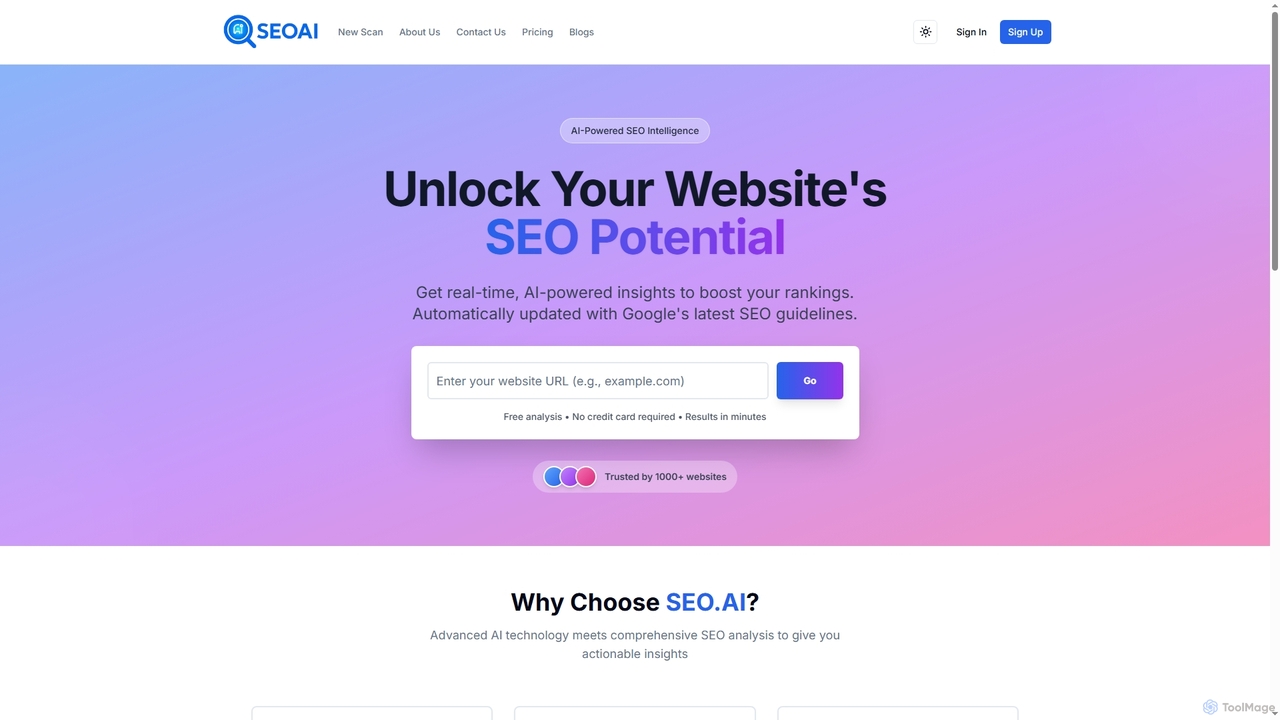
SEO.AI is an AI-powered website scanning and analysis tool that provides real-time, actionable insights to boost search engine …
SEO.AI is an AI-powered website scanning and analysis tool that provides real-time, actionable insights to boost search engine rankings. It automatically updates with Google's latest guidelines, offering comprehensive reports and optimization recommendations for modern websites.
About Seo Assistant
Seo Assistant tools are a specialized category of AI-powered applications designed to optimize websites for search engines. These tools leverage artificial intelligence and machine learning to analyze vast amounts of data, providing insights and automating tasks across various SEO disciplines. They help users improve search engine rankings, drive organic traffic, and streamline complex SEO workflows, making them an indispensable part of a comprehensive digital marketing strategy within the broader AI Assistants ecosystem.
Core Features
- Keyword Research & Analysis: Identify high-ranking keywords, analyze search volume, competition, and user intent.
- Content Optimization: Provide real-time suggestions for on-page content, meta descriptions, and headings to enhance SEO performance.
- Technical SEO Audits: Scan websites for technical issues like broken links, crawl errors, site speed, and mobile-friendliness.
- Competitor Analysis: Monitor competitor keyword rankings, backlink profiles, and top-performing content strategies.
- Backlink Management: Discover potential backlink opportunities and track the health and quality of existing backlinks.
Use Cases
Digital marketers utilize these tools to refine campaign strategies, content creators ensure their articles achieve high visibility, and website owners leverage them to significantly improve their site's overall search engine presence and organic reach. They are crucial for anyone aiming to enhance online discoverability.
How to Choose
When selecting an AI SEO Assistant, consider its feature set (e.g., keyword, content, technical SEO capabilities), integration with your existing marketing tools, data accuracy, and real-time update frequency. Evaluate the user interface for ease of use and ensure it aligns with your team's technical proficiency and budget requirements.
Seo AssistantUse Cases
Automating Keyword Research for New Content
Content strategists and SEO specialists can leverage AI SEO assistants to efficiently identify relevant, high-volume, and low-competition keywords for upcoming blog posts or articles. By inputting a topic, the tool generates keyword ideas, analyzes SERP data, and groups related terms, saving hours of manual research. This enables the creation of a data-driven content calendar with keywords likely to attract organic traffic, potentially improving content ranking potential by over 30%.
Optimizing Existing Blog Posts for Higher Rankings
Bloggers and digital marketers can use AI SEO assistants to improve the search engine performance of their published articles. By inputting an existing article, the assistant provides real-time suggestions for keyword density, readability, meta descriptions, and internal linking, ensuring the content meets current SEO standards. This process helps increase organic visibility for key articles, leading to a significant boost in page views and improved search rankings, often by 20% or more.
Conducting Technical SEO Audits for Website Health
Webmasters and SEO consultants can utilize AI SEO assistants to perform comprehensive technical SEO audits. The assistant crawls the website, pinpointing critical issues such as broken links, slow-loading pages, duplicate content, and crawl errors, then suggests actionable solutions. This proactive approach enhances site crawlability and indexability, reducing technical SEO errors by up to 50% and contributing significantly to better overall site health and improved search engine rankings.
Analyzing Competitor SEO Strategies
Marketing analysts and business owners can gain a competitive edge by using AI SEO assistants to dissect competitor strategies. These tools monitor competitor keyword rankings, backlink profiles, and top-performing content, revealing gaps in their strategy or areas for improvement in one's own. This insight allows for refinement of SEO strategy, potentially capturing new market segments and improving keyword positions against rivals, leading to a stronger market presence.
Generating SEO-Friendly Product Descriptions for E-commerce
E-commerce managers and product listing specialists can streamline content creation by using AI SEO assistants to generate unique, keyword-rich product descriptions. By providing product details and target keywords, the assistant crafts optimized descriptions, titles, and meta tags, ensuring each product page is highly discoverable on search engines. This significantly improves product page visibility in search results, leading to increased organic traffic to product listings and a potential rise in sales conversions.
Streamlining Local SEO for Brick-and-Mortar Businesses
Small business owners and local marketing managers can enhance their online visibility for local searches using AI SEO assistants. These tools help optimize Google My Business profiles, track local keyword rankings, and manage local citations, ensuring consistent and accurate business information across various online platforms. This results in improved local search rankings and map pack visibility, driving more foot traffic and local inquiries directly to the physical business location, boosting local customer engagement.