BarRaiser
BarRaiser is an AI-powered Interview Intelligence Platform designed to streamline the hiring process. It helps companies conduct structured …
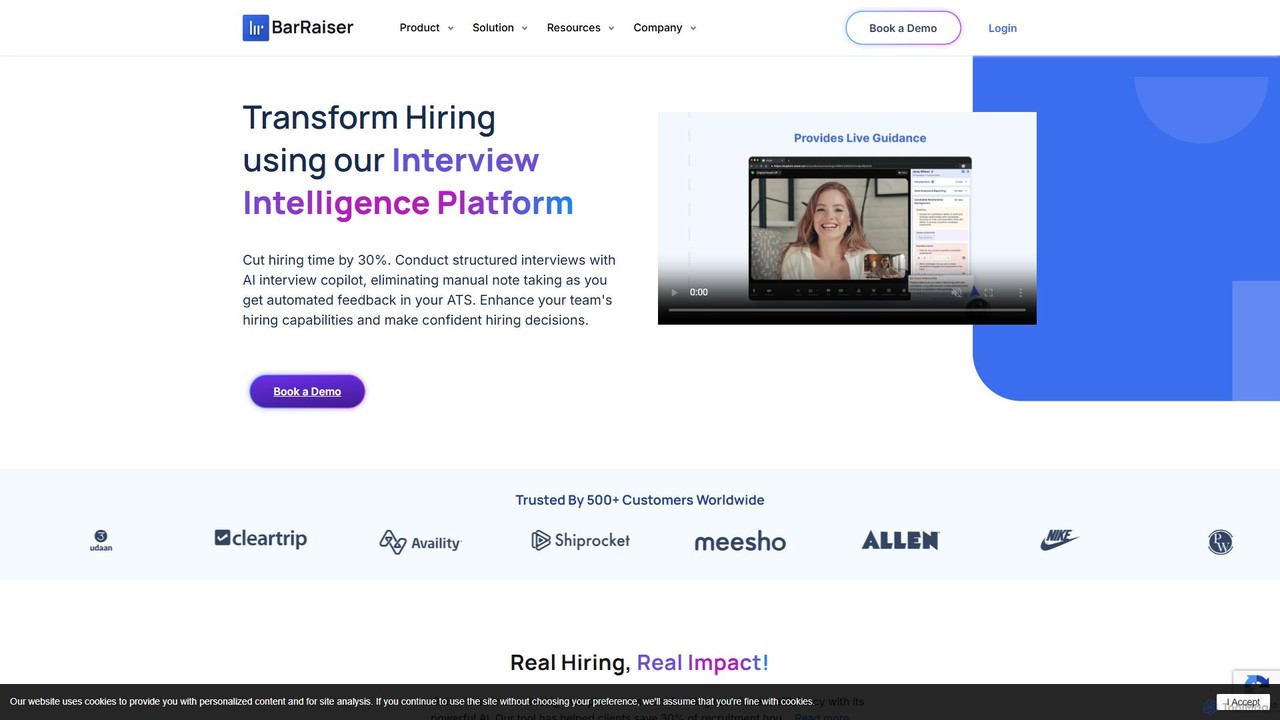
BarRaiser is an AI-powered Interview Intelligence Platform designed to streamline the hiring process. It helps companies conduct structured interviews, reduce unconscious bias, and make data-driven hiring decisions. By leveraging an AI co-pilot, automated note-taking, and real-time feedback, BarRaiser aims to reduce hiring time by 30% and significantly improve recruitment efficiency and quality.
BarRaiser
BarRaiser is an AI-powered Interview Intelligence Platform designed to streamline the hiring process. It helps companies conduct structured …
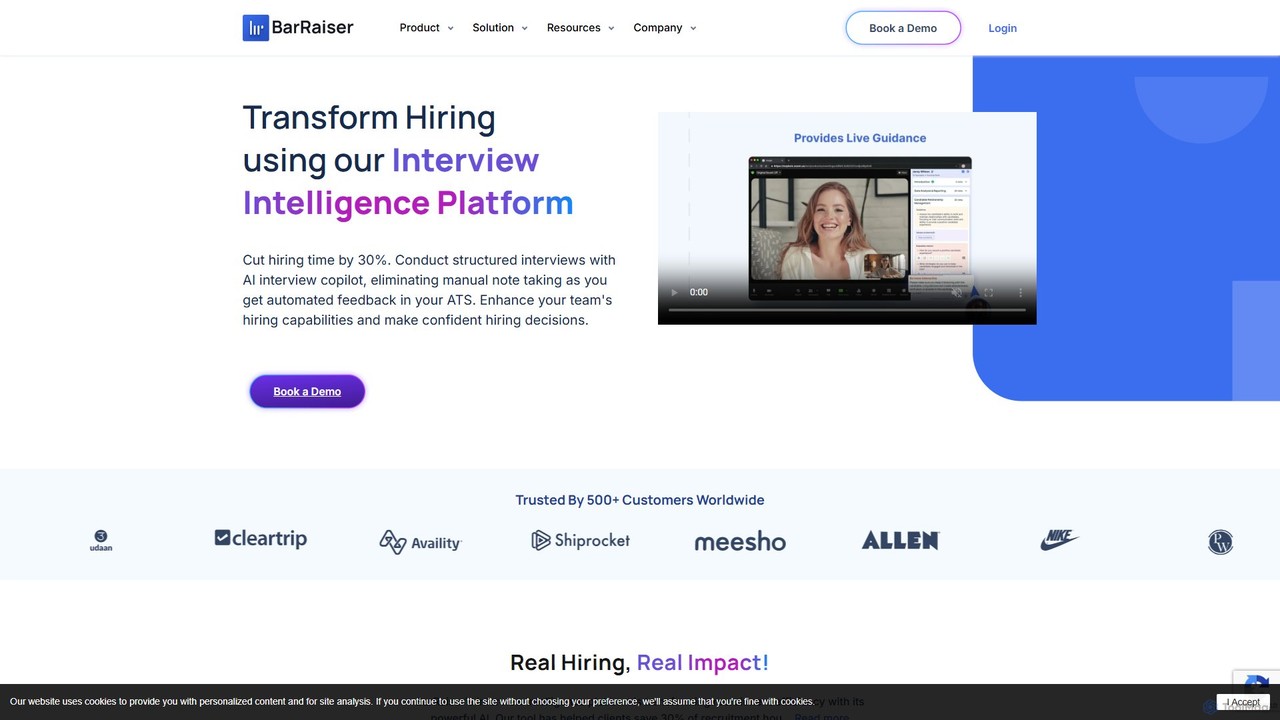
BarRaiser is an AI-powered Interview Intelligence Platform designed to streamline the hiring process. It helps companies conduct structured interviews, reduce unconscious bias, and make data-driven hiring decisions. By leveraging an AI co-pilot, automated note-taking, and real-time feedback, BarRaiser aims to reduce hiring time by 30% and significantly improve recruitment efficiency and quality.
BarRaiser
BarRaiser is an AI-powered Interview Intelligence Platform designed to streamline the hiring process. It helps companies conduct structured …
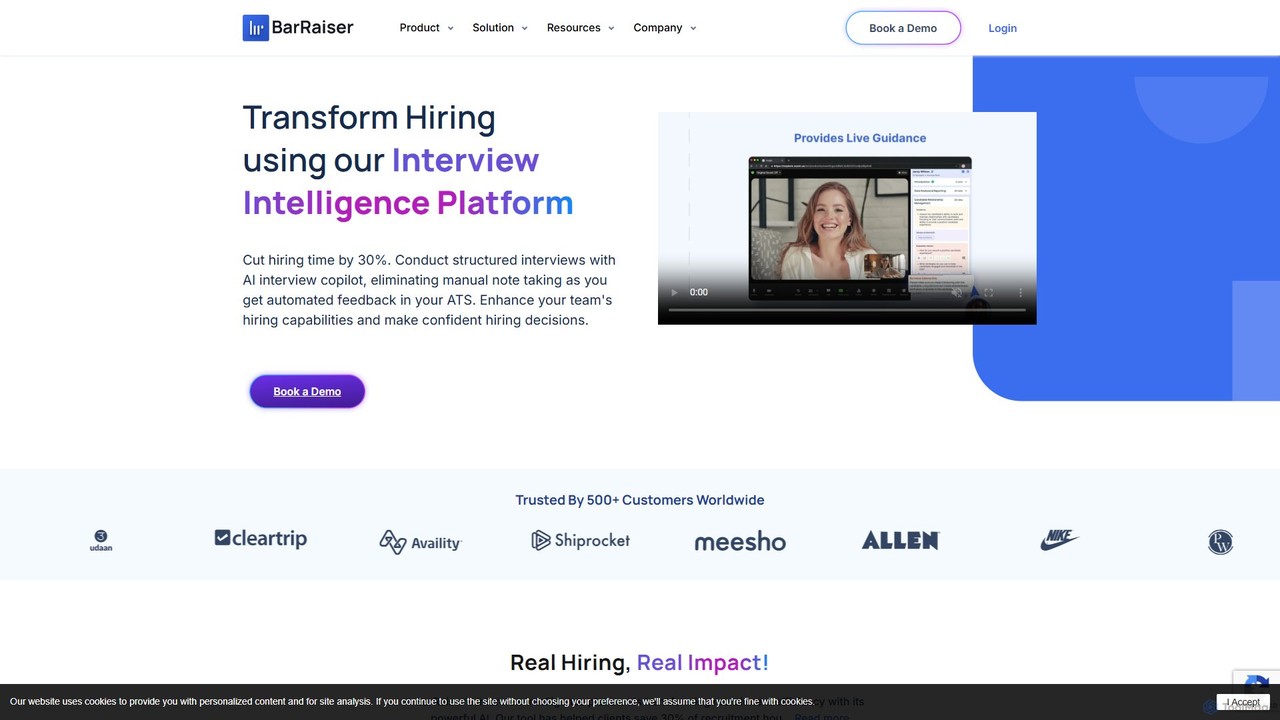
BarRaiser is an AI-powered Interview Intelligence Platform designed to streamline the hiring process. It helps companies conduct structured interviews, reduce unconscious bias, and make data-driven hiring decisions. By leveraging an AI co-pilot, automated note-taking, and real-time feedback, BarRaiser aims to reduce hiring time by 30% and significantly improve recruitment efficiency and quality.
About Assistants
AI Assistants are specialized AI-powered tools designed to help users perform specific tasks, automate workflows, and provide personalized support across various domains. Unlike general AI chatbots, which primarily focus on conversational interaction, assistants are often proactive, integrated into existing applications, and capable of executing commands or delivering actionable insights. They leverage advanced natural language processing (NLP) and machine learning to understand complex requests, learn from user interactions, and adapt their assistance over time, significantly enhancing productivity and efficiency.
Core Features
- Task Automation: Automate repetitive administrative, creative, or technical tasks, from scheduling to content generation.
- Contextual Understanding: Interpret user intent and context beyond simple keywords, providing more relevant and accurate assistance.
- Integration Capabilities: Seamlessly connect with third-party applications, databases, and communication platforms to access and process information.
- Proactive Suggestions: Offer timely recommendations, reminders, or solutions based on observed user behavior and ongoing tasks.
- Personalization: Adapt responses and functionalities to individual user preferences, work styles, and historical interactions.
Use Cases
AI Assistants are invaluable for professionals seeking to streamline operations, enhance decision-making, and offload routine work. They are widely adopted in customer service for automating initial inquiries, by content creators for drafting and brainstorming, and by developers for code assistance and debugging. Businesses leverage them to improve internal communication, manage projects, and analyze data more efficiently.
How to Choose
When selecting an AI Assistant, consider its specific task capabilities and the breadth of its automation features. Evaluate its integration ecosystem to ensure compatibility with your existing tools and workflows. Assess the level of personalization and learning capabilities, as well as data privacy and security protocols. Finally, consider the ease of setup, user interface, and the availability of support resources to ensure a smooth implementation and adoption.

AssistantsUse Cases
Drafting Marketing Copy and Social Media Posts
Marketing specialists and content creators utilize AI assistants to rapidly generate diverse marketing copy, social media captions, blog outlines, and email newsletters. By inputting product details or campaign goals, the assistant can produce multiple creative variations, significantly reducing the time spent on initial drafting and brainstorming, allowing teams to focus on strategy and refinement.
Assisting Developers with Code Generation and Debugging
Software developers and engineers leverage AI coding assistants to accelerate their development process. These tools can generate boilerplate code, suggest syntax corrections, identify potential bugs, refactor code, and explain complex functions. This assistance helps developers write cleaner code faster, reduces debugging time, and improves overall code quality and efficiency.
Automating Tier-1 Customer Support Inquiries
Customer service teams deploy AI assistants to handle a high volume of common customer questions and provide instant, accurate answers from knowledge bases. These assistants can resolve routine issues, guide users through troubleshooting steps, and efficiently route complex or sensitive inquiries to human agents, thereby improving response times and freeing up human agents for more critical tasks.
Summarizing Documents and Extracting Key Information
Researchers, analysts, and business professionals use AI assistants to quickly process and understand large volumes of text-based information, such as reports, academic papers, legal documents, or market analyses. The assistant can summarize lengthy documents, extract key facts, identify trends, and answer specific questions, saving hours of manual reading and information synthesis.
Managing Schedules and Automating Email Responses
Busy professionals and executives rely on AI assistants to streamline their daily administrative tasks. These assistants can schedule meetings, manage calendars, set reminders, draft routine emails, and organize tasks based on priorities. This automation helps users maintain better organization, reduce administrative overhead, and allocate more time to strategic responsibilities.
Generating Creative Ideas and Design Concepts
Designers, artists, and creative teams employ AI assistants to overcome creative blocks and accelerate the ideation phase. Assistants can generate initial concepts for logos, suggest color palettes, create mood boards, or provide variations on design elements based on textual prompts. This capability stimulates new ideas, expands creative possibilities, and accelerates the initial design exploration process.