ToolMage
Sign in

Best 1 Music AI tools for Ai Content Generation

Popular Music AI tools in Ai Content Generation include SoundBug, helping you work more efficiently.

SoundBug
Freemium

SoundBug

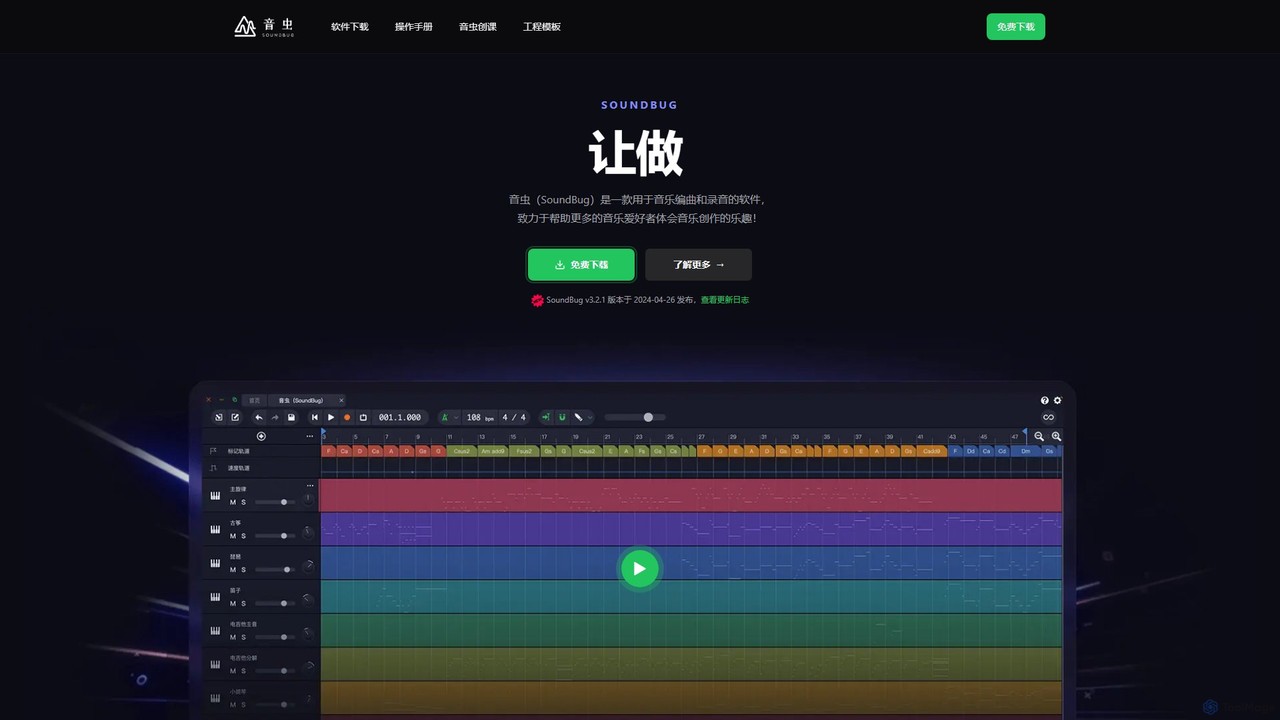
SoundBug is an AI-powered music production software designed for beginners, students, and music enthusiasts. It simplifies music arrangement, recording, and composition with a user-friendly interface, over 600 built-in virtual instruments, and intelligent arrangement features. Available for Windows and Mac, it lowers the barrier to music creation, making it accessible to everyone.

Music
Visits 6.8KFavorites 133Likes 124

About Music

AI Music tools are a specialized category within AI Content Generation, leveraging artificial intelligence to create, modify, and enhance musical compositions. These tools utilize advanced algorithms, including deep learning and neural networks, to understand musical patterns, generate melodies, harmonies, and rhythms, and even produce full tracks. They empower musicians, producers, and content creators to explore new sonic possibilities, automate repetitive tasks, and accelerate their creative workflows.

Core Features

  • Automated Composition: Generates original melodies, harmonies, and full instrumental pieces based on user-defined parameters like genre, mood, and instrumentation.
  • Sound Design & Synthesis: Creates unique soundscapes, textures, and synthetic instruments, often with granular control over sonic characteristics.
  • Audio Mastering & Mixing: Applies AI-driven processing to optimize audio levels, equalization, and dynamics for professional-sounding tracks.
  • Style Transfer & Remixing: Transforms existing audio into different musical styles or generates new variations and remixes from source material.

Use Cases

AI Music tools are invaluable for various creative and production scenarios. Songwriters can overcome creative blocks by generating new melodic ideas, while video producers can quickly create bespoke background scores without licensing issues. Podcasters and content creators use them to produce unique intro/outro music and sound effects, enhancing their brand identity and audience engagement.

How to Choose

Selecting the right AI Music tool involves considering several factors. Evaluate the tool's genre compatibility and the level of customization it offers for generated music. Assess its integration capabilities with existing Digital Audio Workstations (DAWs) and other production software. Consider the pricing model, output quality, and the user interface's ease of use, especially for those new to AI-powered music creation.

Music use cases

1

Generate Background Music for Videos

Video content creators, YouTubers, and filmmakers can use AI music tools to quickly generate unique, royalty-free background scores tailored to their video's mood and length. By inputting keywords like "upbeat," "cinematic," or "ambient," they can receive multiple musical options, saving time and avoiding costly licensing fees for commercial projects.

2

Compose Original Song Ideas

Songwriters and composers facing creative blocks can leverage AI to generate fresh melodic lines, chord progressions, or rhythmic patterns. The AI acts as a collaborative partner, providing diverse musical starting points that can be further developed, refined, and personalized, accelerating the initial ideation phase of songwriting.

3

Remix and Re-imagine Existing Tracks

DJs, music producers, and artists can utilize AI music tools to remix their own tracks or public domain audio, creating new versions with different genres, tempos, or instrumentation. This allows for rapid experimentation with sound, generating unique edits for live performances, or producing alternative versions for different platforms.

4

Create Unique Sound Effects for Games/Apps

Game developers and app designers can employ AI music tools to generate a wide array of custom sound effects (SFX) that perfectly match their project's aesthetic. Instead of relying on generic sound libraries, they can describe desired sounds like "futuristic laser blast" or "magical spell cast" and receive bespoke audio assets, enhancing immersion.

5

Automate Audio Mastering for Demos

Independent musicians and podcasters can use AI mastering tools to achieve a professional-sounding final mix for their demos or episodes without needing expensive studio equipment or expertise. The AI analyzes the audio and applies optimal compression, EQ, and limiting, ensuring consistent loudness and clarity across different playback systems.

6

Personalized Music Learning and Practice

Music students and educators can benefit from AI tools that generate custom backing tracks for practice, adapt to a learner's skill level, or even provide real-time feedback on performance. This personalized approach helps in developing improvisation skills, understanding complex harmonies, and making practice sessions more engaging and effective.

Music FAQ

What are AI Music tools?

AI Music tools are software applications that use artificial intelligence, primarily machine learning and deep learning algorithms, to assist in the creation, production, and manipulation of music. They can generate original compositions, remix existing tracks, create sound effects, and even automate mastering processes, making music creation more accessible and efficient.

How do AI Music tools work?

AI Music tools typically work by being trained on vast datasets of existing music. They learn patterns in melody, harmony, rhythm, and timbre. When a user provides parameters (e.g., genre, mood, instrumentation), the AI uses these learned patterns to generate new musical sequences or apply transformations to existing audio, often employing techniques like neural networks and generative adversarial networks (GANs).

How to choose the best AI Music tool for my needs?

To choose the best AI Music tool, consider your primary goal: composition, sound design, mastering, or remixing. Evaluate the tool's supported genres, customization options, and the quality of its output. Check for compatibility with your existing Digital Audio Workstation (DAW) and assess its user-friendliness. Finally, compare pricing models and available features to ensure it aligns with your budget and workflow.

What's the difference between AI Music generation and traditional music production?

Traditional music production relies entirely on human creativity, performance, and manual mixing/mastering. AI Music generation, while still guided by human input, automates parts of the creative or technical process, such as generating melodies or applying mastering effects. AI tools act as powerful assistants, speeding up workflows and offering new creative avenues, rather than fully replacing human artists.

Who can benefit from using AI Music tools?

A wide range of individuals can benefit from AI Music tools. This includes professional musicians and producers seeking inspiration or efficiency, content creators (YouTubers, podcasters) needing royalty-free background music, game developers requiring unique sound effects, and even hobbyists or students looking to explore music creation without extensive technical knowledge or expensive equipment.