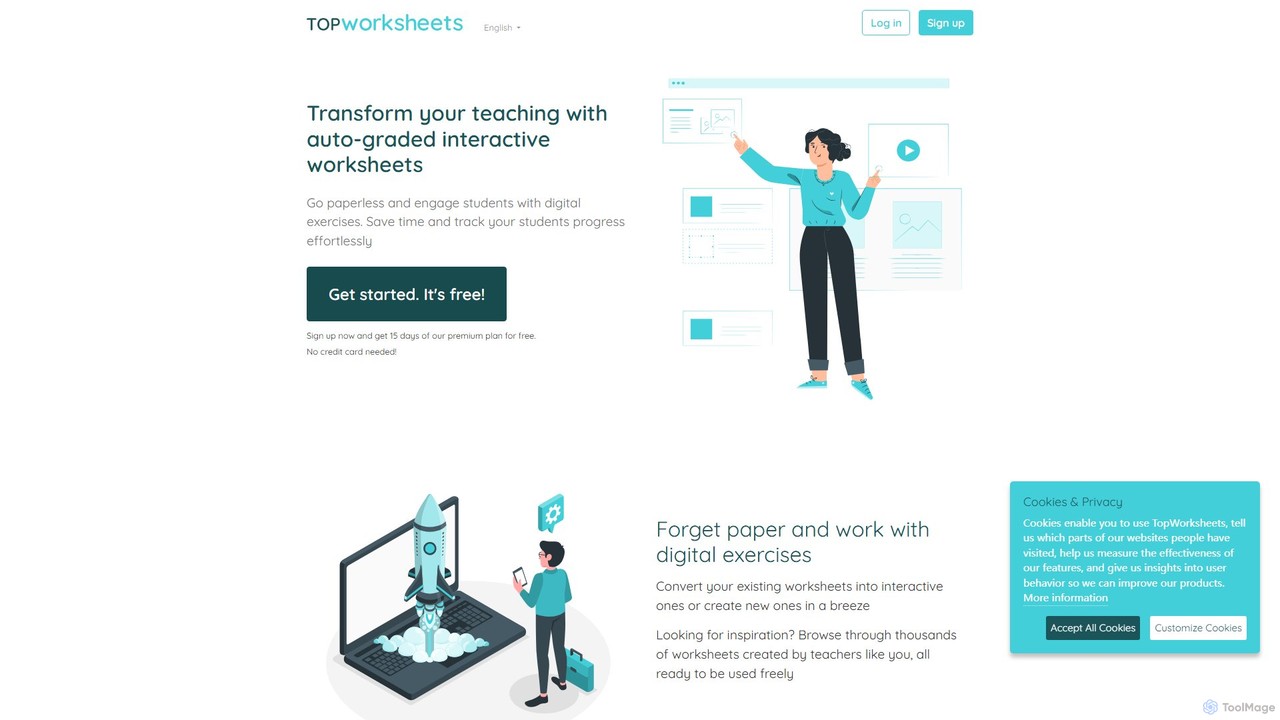
Question Generation tools are AI-powered applications that automatically create questions from given text, documents, or data. These tools leverage natural language processing (NLP) and machine learning to understand content context and formulate relevant, diverse questions. They significantly streamline content creation, assessment design, and interactive learning experiences by automating the question-formulation process. This capability is invaluable for educators, content creators, and researchers seeking to quickly generate quizzes, study guides, or interview prompts.
Core Features
- Automated Question Formulation: Generates various question types (e.g., multiple-choice, true/false, open-ended) based on input text.
- Contextual Understanding: Analyzes the semantic meaning of content to produce relevant and accurate questions.
- Difficulty Level Adjustment: Allows users to specify the desired complexity of generated questions, from basic recall to critical thinking.
- Source Material Integration: Processes diverse inputs like articles, PDFs, web pages, or video transcripts to extract key information for questioning.
- Customizable Output Formats: Provides options to export questions in formats suitable for quizzes, flashcards, or assessment platforms.
Use Cases
Question Generation tools are widely adopted across various sectors. Educators use them to rapidly create quizzes and homework assignments from lecture notes or textbooks, saving hours of manual work. Content marketers leverage these tools to develop engaging FAQs for articles or product pages, improving user engagement and SEO. Corporate trainers can generate assessment questions for e-learning modules, ensuring comprehension of training materials. Researchers utilize them to formulate interview questions or survey prompts based on literature reviews, ensuring comprehensive data collection.
How to Choose
When selecting a Question Generation tool, consider its accuracy in understanding source material and generating relevant questions. Evaluate the variety of question types it supports and its ability to adjust difficulty levels. Check for integration capabilities with existing learning management systems or content platforms. Assess the customization options for output formats and the tool's overall ease of use. Finally, compare pricing models and the availability of customer support to ensure it meets your budget and operational needs.