ToolMage
Sign in

Best 1 Anime AI tools for Animation

Popular Anime AI tools in Animation include VideoGPT, helping you work more efficiently.

VideoGPT
Freemium

VideoGPT

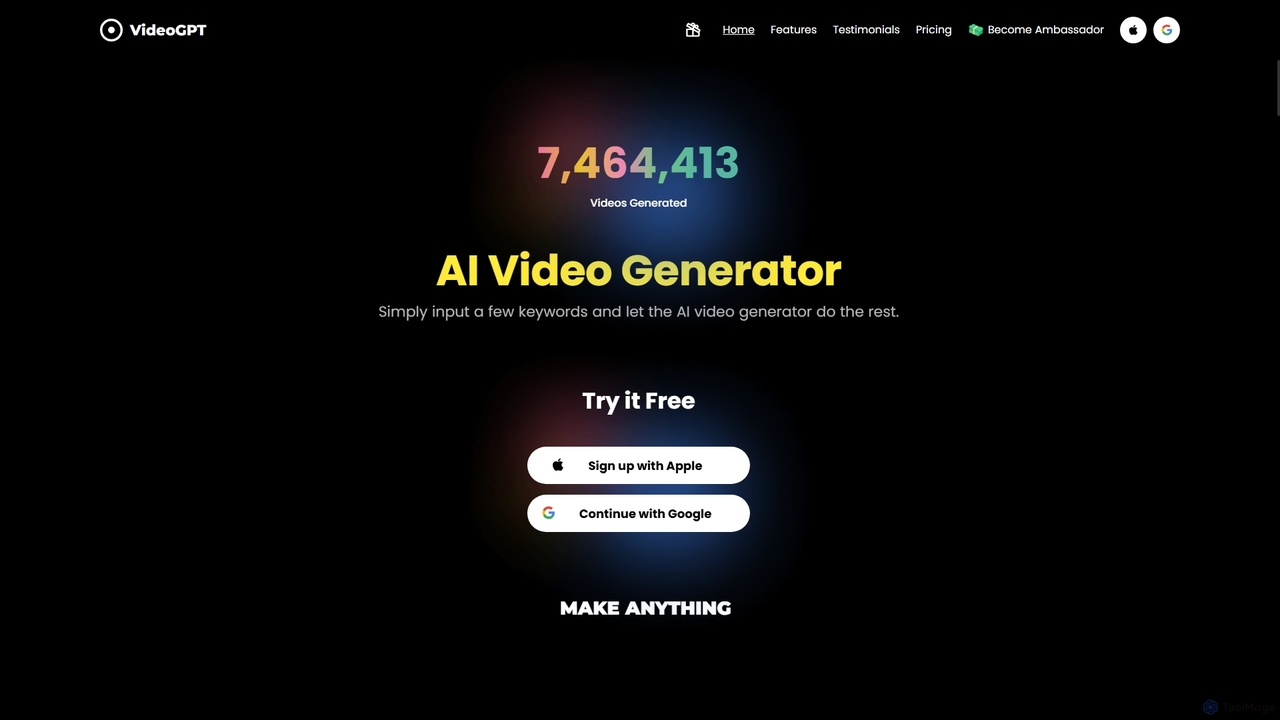
VideoGPT is a powerful AI video generator that transforms text prompts into stunning videos in seconds. It specializes in creating anime, cinematic, and realistic style videos, complete with ultra-realistic AI voiceovers and an extensive music library. Ideal for content creators, marketers, and businesses looking to produce engaging content for platforms like YouTube and TikTok without any video editing skills.

Anime
Visits 50.1KFavorites 121Likes 124

About Anime

AI Anime tools are a specialized category of AI generators focused on creating images and animations in the distinct Japanese anime and manga style. They utilize generative models trained on vast datasets of anime artwork to accurately replicate aesthetic conventions, from character designs to specific background styles. These tools enable artists, creators, and fans to rapidly produce high-quality, style-consistent anime visuals for concept art, illustrations, and personal projects, significantly lowering the barrier to creation.

Core Features

  • Style-Specific Models: Access to pre-trained models for various anime sub-genres like shonen, shojo, moe, or retro 90s aesthetics.
  • Anime Character Customization: Detailed controls for anime-specific traits such as eye shape and color, hair highlights, and common character expressions.
  • Pose and Composition Control: Advanced features to define precise character poses, gestures, and scene layouts, ensuring greater artistic control.
  • Background Generation: Creates typical anime settings like Japanese classrooms, vibrant cityscapes, or fantasy landscapes that match the character's style.
  • Image-to-Anime Conversion: Transforms photographs or existing sketches into fully rendered anime-style artwork.

Use Cases

These tools are primarily used by indie game developers for asset creation, VTuber designers for character concepts, and authors for light novel or webtoon illustrations. They are also widely adopted by hobbyists and fans for creating original characters (OCs), fan art, and unique social media avatars.

How to Choose

When selecting an AI Anime tool, evaluate the diversity and quality of its available style models. Consider the level of control over character features and posing. Assess its ability to understand anime-specific terminology in prompts and its support for negative prompts to refine outputs. Finally, match the pricing model (e.g., subscription vs. per-generation credits) to your project's scope and frequency of use.

Featured tool rankings

Anime use cases

1

Creating VTuber and Original Character (OC) Concepts

A character designer needs to develop a new VTuber model. Instead of starting from scratch, they use an AI Anime tool to generate dozens of visual concepts. By inputting detailed prompts like 'cyberpunk magical girl with silver hair and heterochromia, wearing a tech-infused kimono,' they can explore a wide range of styles and designs in minutes. This process provides a strong visual foundation, saving days of initial sketching and allowing the team to focus on refining the final chosen design for rigging and animation.

2

Generating Illustrations for Light Novels or Webtoons

An independent author writing a webtoon needs high-quality illustrations but has a limited budget for artists. They use an AI Anime generator to create key character portraits, emotional reaction panels, and detailed background scenes. By using a consistent AI model and specific style prompts, they maintain a uniform art style throughout the series. This allows them to publish episodes more frequently and visually enrich their storytelling without the high cost of commissioning traditional artists for every panel.

3

Designing Assets for Indie Visual Novels

A small team developing a visual novel uses AI Anime tools to accelerate asset production. They generate character sprites with multiple expressions (happy, sad, angry) by providing a base character design and prompting for variations. The tools also create a wide array of detailed backgrounds, such as classrooms, city streets, and fantasy forests. This approach significantly reduces the time and cost associated with manual asset creation, allowing the small team to compete with larger studios by producing a visually rich game on a budget.

4

Rapid Prototyping for Anime-Style Game Characters

A game artist is brainstorming character designs for a new JRPG. Using an AI Anime tool, they can quickly visualize dozens of variations for a single character concept. They can test different armor sets, hairstyles, and weapon designs by simply changing text prompts. This allows the art director and design team to review and iterate on a wide variety of visual ideas in a single afternoon, a process that would traditionally take weeks of manual sketching. The final approved concept is then handed to a 3D modeler for production.

5

Creating Unique Anime-Style Profile Pictures (PFP)

A social media user wants a unique avatar that stands out. Instead of using a generic image, they use an AI Anime tool to create a personalized profile picture. They can upload their own photo for an 'image-to-image' conversion, which reinterprets their likeness in an anime style. Alternatively, they can write a detailed description of their ideal character. The result is a high-quality, custom-made anime portrait for use on platforms like Discord, Twitter, or Twitch, reflecting their personality or online persona.

6

Producing Doujinshi and Fan Art Content

A fan artist wants to create a doujinshi (fan-made comic) but struggles with drawing complex backgrounds or consistent character poses. They use an AI Anime tool as an assistant. The AI generates detailed backgrounds like cityscapes or intricate interiors based on simple descriptions. It can also produce character reference poses, which the artist can then trace or adapt. This hybrid workflow allows the artist to focus their energy on storytelling, panel layout, and character expressions, significantly speeding up the production of their fan project.

Anime FAQ

What are AI Anime tools?

AI Anime tools are a specialized type of AI image generator specifically trained to create artwork in the Japanese anime and manga style. Unlike general-purpose AI art generators that produce a wide range of styles, these tools focus on the specific aesthetics, character archetypes, and visual language of anime. They use models trained on millions of anime images to generate new, original artwork based on text or image prompts. Key features often include style-specific models (e.g., for different decades or genres), detailed character controls, and the ability to convert photos into an anime style.

How do AI Anime tools differ from general AI Image Generators?

The primary difference lies in their training data and specialization. General AI image generators (like Midjourney or DALL-E) are trained on a vast, diverse dataset of images to create a wide variety of styles, from photorealism to abstract art. AI Anime tools, however, are trained on a curated dataset consisting almost exclusively of anime and manga art. This specialization results in:

  • Higher Stylistic Accuracy: They better understand and replicate the nuances of anime, such as specific eye styles, hair shading, and line art.
  • Specific Controls: They often offer features tailored to anime creation, like models for 'chibi' or 'retro' styles.
  • Better Terminology Understanding: They are more adept at interpreting anime-specific prompts (e.g., 'ahoge', 'tsundere expression').
In short, while a general generator can create anime-like images, a specialized tool provides more consistent, accurate, and controllable results within that specific style.

How to choose the right AI Anime tool?

Choosing the right AI Anime tool depends on your specific needs. Consider these factors:

  • Style Variety and Quality: Does the tool offer high-quality models for the specific anime sub-genres you're interested in (e.g., 90s retro, modern moe, dark fantasy)?
  • Customization and Control: How much control do you have over the output? Look for features like negative prompts, image-to-image, ControlNet or similar posing tools, and support for LoRA models for fine-tuning.
  • Ease of Use: Is the interface intuitive? Some tools are simple web apps, while others require more technical setup (like local installations of Stable Diffusion). Choose based on your comfort level.
  • Community and Resources: A strong user community often means more shared custom models, tutorials, and support, which can greatly enhance your creative possibilities.

Who are AI Anime tools for?

AI Anime tools cater to a wide range of users. They are valuable for professional and aspiring artists, including illustrators, concept artists, and indie game developers, who can use them to accelerate their workflow and brainstorm ideas. They are also extremely popular among content creators, such as VTuber designers and webtoon authors, for producing assets quickly. Additionally, a large user base consists of hobbyists, fans, and social media users who enjoy creating original characters (OCs), fan art, or personalized anime-style avatars without needing traditional drawing skills.

Can I use my own photos to create anime art?

Yes, many AI Anime tools feature an 'image-to-image' (img2img) or 'photo-to-anime' function. This allows you to upload a photograph, sketch, or another image as a starting point. The AI then reinterprets this source image in an anime style, often preserving the original composition, colors, and subject's pose. The degree of transformation can usually be adjusted, allowing you to create anything from a lightly stylized version of your photo to a complete anime-style reimagining. This feature is very popular for creating personalized avatars and stylized portraits.