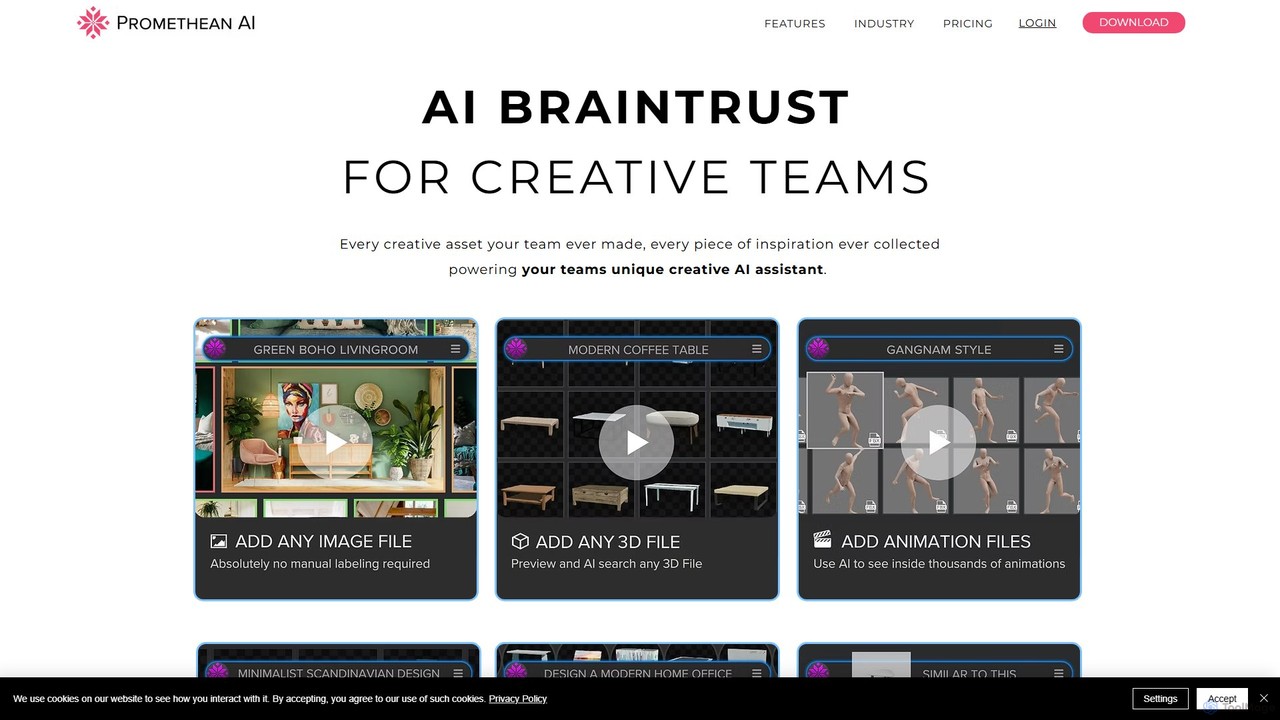
AI VFX tools are specialized applications that leverage artificial intelligence to create, enhance, or automate visual effects in video and film production. These tools utilize machine learning algorithms for tasks like object tracking, background generation, and stylistic transformations, significantly streamlining post-production workflows. They enable artists and filmmakers to achieve complex visual effects with greater speed and precision, pushing creative boundaries within the broader field of animation.
Core Features
- AI-Powered Rotoscoping: Automatically isolates foreground elements from backgrounds with high accuracy, saving manual frame-by-frame work.
- Smart Object Removal: Intelligently identifies and removes unwanted objects or elements from footage, seamlessly filling in the background.
- Automated Compositing: Simplifies the integration of multiple visual elements into a single, cohesive scene, adjusting lighting and perspective.
- Style Transfer & Enhancement: Applies artistic styles or enhances visual quality, such as upscaling resolution or de-noising footage.
- Generative Backgrounds: Creates realistic or stylized backgrounds based on textual prompts or existing scene elements.
Use Cases
Film and television studios use AI VFX for complex scene enhancements, character de-aging, and environmental extensions. Independent filmmakers leverage these tools to achieve high-budget visual effects on limited resources. Marketing agencies apply AI VFX for dynamic product visualizations and engaging promotional content.
How to Choose
When selecting AI VFX tools, consider the specific effects needed (e.g., rotoscoping, object removal, generative AI). Evaluate the tool's integration capabilities with existing editing software, its processing speed, and the quality of its AI-generated output. Assess the learning curve and available support, as well as the pricing model based on project scale and usage frequency.