ToolMage
Sign in

Best 1 Vocal Removal AI tools for Audio Editing

Popular Vocal Removal AI tools in Audio Editing include Aisong, helping you work more efficiently.

Aisong
Freemium

Aisong

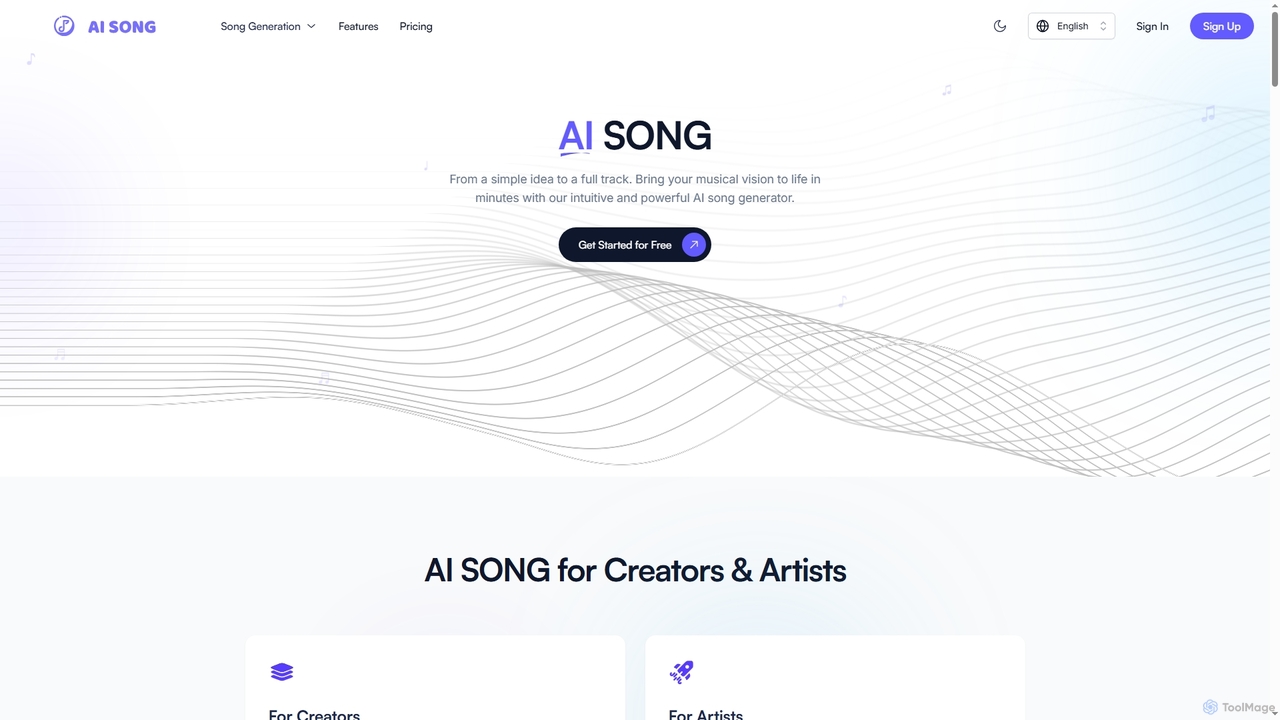
Aisong is an intuitive AI song generator and music production toolkit designed for creators and artists. It enables users to transform simple ideas into full tracks, generate lyrics, remove vocals, and even create music videos, all with the power of artificial intelligence.

Vocal Removal
Visits 5.6KFavorites 107Likes 101

About Vocal Removal

Vocal Removal tools are a specialized class of audio editing software that uses artificial intelligence to isolate and extract vocals from a mixed audio track. These tools leverage advanced source separation algorithms to distinguish vocal patterns from instruments, effectively deconstructing a song. The primary value is the ability to create clean instrumental (karaoke) versions and acapella (vocals only) tracks from any source audio. This technology empowers creators to produce remixes, covers, and samples without needing original multi-track recordings.

Core Features

  • AI-Powered Vocal Separation: Accurately isolates and removes vocal tracks from a song while preserving the instrumental background.
  • Multi-Stem Separation: Many tools can also separate other instruments like drums, bass, and piano into individual tracks, known as stems.
  • Acapella Extraction: Generates a vocals-only track, useful for remixing, sampling, and vocal analysis.
  • High-Quality Audio Output: Processes audio with minimal artifacts, delivering clean instrumental and vocal files in formats like WAV or MP3.
  • Batch Processing: Allows users to process multiple songs simultaneously, saving time for large projects.

Use Cases

These tools are widely used by music producers for creating remixes, DJs for crafting unique mashups, and karaoke enthusiasts for generating backing tracks. Content creators also use them to produce instrumental versions of popular songs for their videos, while musicians use them for practice and transcription by isolating specific instrument parts.

How to Choose

When selecting a Vocal Removal tool, evaluate the quality of the audio separation—look for minimal artifacts and bleed between tracks. Consider the number of stems it can generate (e.g., vocals, drums, bass). Also, assess the processing speed, the user-friendliness of the interface, and the pricing model, whether it's a subscription or a pay-per-track service.

Vocal Removal use cases

1

Creating Karaoke Backing Tracks

A karaoke enthusiast wants to sing a newly released hit song at a party, but an official instrumental version isn't available. They use an AI Vocal Removal tool to upload the original MP3 file. The AI processes the song in under a minute, separating the lead vocals from the background music. The user then downloads the high-quality instrumental track, ready to be used as a backing track for their performance, ensuring a fun and authentic karaoke experience.

2

DJ Remixing and Mashup Production

A DJ is preparing a set for a live event and wants to create a unique mashup. They plan to mix the instrumental of a classic funk track with the acapella of a modern pop song. Using a vocal removal tool, they process both songs. From the first song, they extract a clean instrumental. From the second, they extract a clear acapella. This allows them to layer the two tracks perfectly in their DJ software, creating an original and crowd-pleasing remix that wouldn't be possible otherwise.

3

Music Practice and Learning

A guitarist is learning to play a complex rock solo. To practice effectively, they need to hear the backing band clearly without the original guitar part. They use a multi-stem separation tool, which is an advanced form of vocal remover. They upload the song and the AI separates it into four stems: vocals, drums, bass, and 'other' (which includes the guitar). They mute the 'other' stem and play along with the bass and drums, helping them perfect their timing and integration with the rhythm section.

4

Background Music for Video Content

A YouTuber is creating a travel vlog and wants to use a popular, upbeat song to match the video's energy. However, the original song's lyrics would clash with their voiceover narration. They use a vocal removal service to generate an instrumental version of the track. This allows them to use the recognizable and energetic melody as background music without distracting the audience from their commentary. It enhances the video's professional quality while respecting the viewer's focus.

5

Music Production and Sampling

A music producer is inspired by the bassline in an old soul record but doesn't want to sample the entire track with vocals. They use an AI stem separator to isolate the bass guitar. The tool provides a clean bass track, free from vocal bleed or drum interference. The producer can then chop, loop, and process this isolated bassline as a new element in their own hip-hop beat, giving them creative freedom while building upon a classic sound.

6

Audio Analysis for Music Education

A music theory student is studying the arrangement techniques of a famous producer. To better understand the harmonic and rhythmic interplay between instruments, they use a vocal remover to get an unobstructed instrumental track. By listening without the dominant vocal melody, the student can more easily identify chord progressions on the piano, the syncopation of the bassline, and the subtle layers of synthesizers, gaining deeper insight into the producer's craft.

Vocal Removal FAQ

What are AI Vocal Removal tools?

AI Vocal Removal tools are applications that use artificial intelligence, specifically deep learning models, to separate vocals from an instrumental track in a song. Unlike older methods that used simple frequency filtering, these AI tools can identify and isolate the complex characteristics of the human voice, resulting in much cleaner instrumental and acapella tracks. They are commonly used to create karaoke tracks, remixes, and samples.

How to choose the right Vocal Removal tool?

To choose the right tool, consider these factors:

  • Audio Quality: Listen to samples. The best tools produce clean separations with minimal artifacts (robotic sounds) or bleed from other instruments.
  • Number of Stems: Do you only need vocals and instrumentals, or do you also need separate tracks for drums, bass, and other instruments?
  • Processing Speed: How quickly can the tool process a song? This is important for users with large volumes of audio.
  • Ease of Use: Look for a simple, intuitive interface that doesn't require extensive audio engineering knowledge.
  • Pricing: Compare models, such as free tiers, one-time payments, or monthly subscriptions, based on your usage needs.
What's the difference between AI Vocal Removal and Equalization (EQ)?

The difference is fundamental. Equalization (EQ) is a traditional audio editing technique that boosts or cuts specific frequency ranges. To reduce vocals, an engineer would cut frequencies around 1-4 kHz where the human voice is prominent. However, this also removes parts of other instruments in that range (like guitars and snares), resulting in a muffled, unnatural sound.

AI Vocal Removal doesn't just target frequencies. It uses a trained model to identify the unique sonic characteristics of a voice and surgically extracts it from the mix, leaving the other instruments largely intact. This results in a much cleaner and more usable instrumental track.

Is it legal to use Vocal Removal tools on copyrighted songs?

The legality depends on the intended use. Using these tools for private, personal purposes like practicing an instrument or for personal karaoke is generally considered acceptable under fair use or similar doctrines in many regions. However, if you plan to publicly share, distribute, or monetize the resulting instrumental or acapella tracks (e.g., by uploading a remix to YouTube or Spotify), you would likely need a license from the original copyright holders (the publisher and the record label). Always check your local copyright laws and the terms of service of the platform where you intend to share the content.

Besides vocals, what other instruments can these tools separate?

Many modern AI Vocal Removal tools have evolved into full 'stem separators'. While the core function is still vocal removal, they can often isolate other key components of a mix. The most common separable stems are:

  • Drums: The entire drum kit isolated as one track.
  • Bass: The bassline, whether from a bass guitar or a synthesizer.
  • Piano/Keys: Pianos, electric pianos, and organs.
  • Other: A catch-all track that usually contains guitars, synths, strings, and other melodic elements.

The ability to separate these additional instruments makes these tools incredibly versatile for producers, musicians, and DJs.