Audio Editing Best in category 1 results Voice Transformation AI Tool

Popular AI tools in the Voice Transformation field of Audio Editing include Voice Changer, etc., helping you quickly improve efficiency.

Free
Voice Changer

Voice Changer

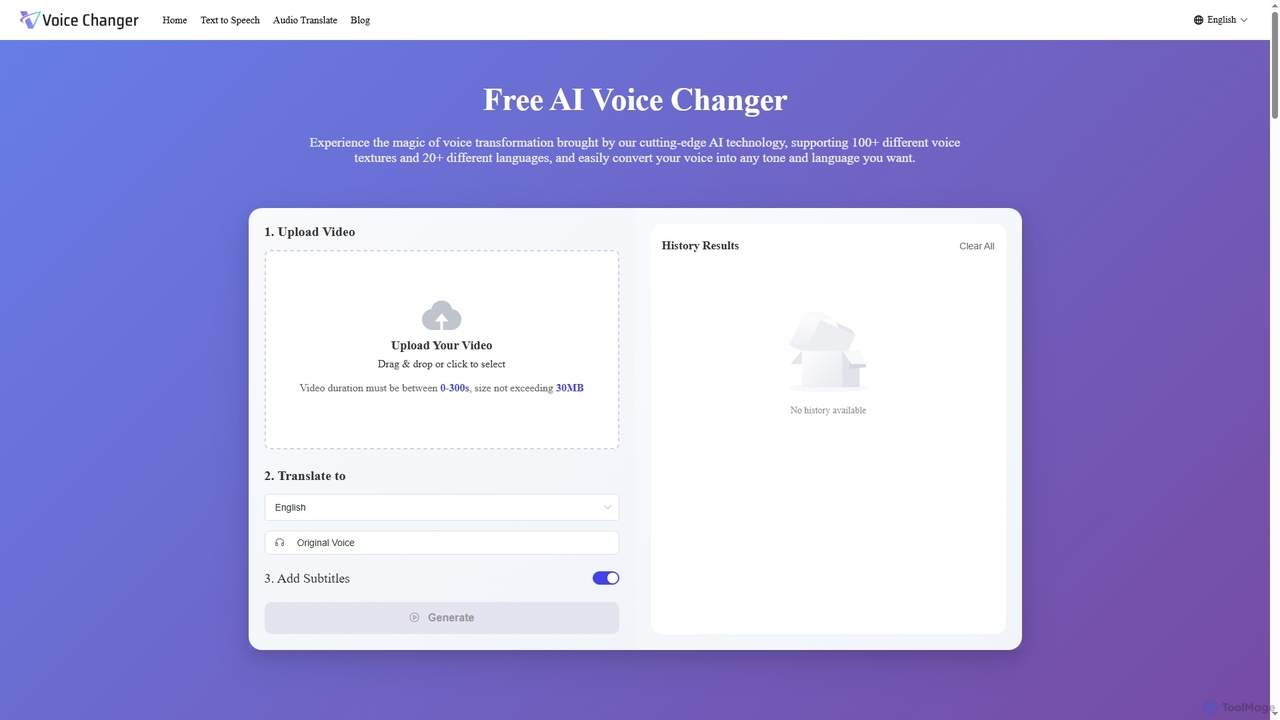
Voice Changer is a versatile AI-powered online tool offering voice transformation, text-to-speech, and audio translation. It enables users …

5.0K

About Voice Transformation

Voice Transformation tools are AI-powered applications designed to fundamentally alter or synthesize human speech by modifying its core characteristics. Leveraging deep learning models like GANs and transformers, these tools can change a voice's identity, pitch, gender, age, or emotion, and even clone a specific voice from a small audio sample. This technology moves beyond simple audio effects, enabling the creation of entirely new vocal performances for content creation, entertainment, accessibility, and personalized digital interactions. It represents a specialized area within audio editing focused on the generative manipulation of the voice itself.

Core Features

  • Voice Cloning: Replicates a specific person's voice from a short audio recording, maintaining their unique tone and inflection.
  • Real-time Voice Changing: Modifies vocal attributes like pitch, gender, and age live during calls, streaming, or gaming.
  • Expressive Text-to-Speech (TTS): Converts text to highly realistic speech with controllable emotions, accents, and speaking styles.
  • Voice-to-Voice Conversion: Maps the prosody and intonation of a source voice onto a different target voice, effectively making one person speak with another's voice.
  • Accent & Language Translation: Translates spoken content into another language while preserving the original speaker's vocal identity.

Use Cases

This technology is widely used by content creators for dubbing videos in multiple languages with a consistent voice. Game developers and animators use it to generate a wide array of unique character voices efficiently. In business, companies deploy it to create branded voice assistants or personalized audio advertisements. It also serves critical functions in accessibility, providing custom voices for individuals with speech impairments.

How to Choose

When selecting a Voice Transformation tool, first consider your primary need: real-time conversion for streaming versus high-fidelity offline processing for production. Evaluate the quality and naturalness of the output, especially for voice cloning. For developers, the availability and documentation of an API are crucial. Also, review the provider's ethical guidelines and data privacy policies, particularly regarding the use of cloned voices, to ensure responsible usage.

Voice TransformationUse Cases

1

Multilingual Dubbing for Content Creators

A YouTuber wants to expand their audience by releasing videos in Spanish and Japanese. Instead of hiring voice actors, which can be costly and inconsistent, they use a voice transformation tool. They upload a short sample of their own voice to create a clone. Then, they provide the translated scripts, and the AI generates the full narration in Spanish and Japanese, perfectly matching their original tone, cadence, and speaking style. This allows them to localize content rapidly while maintaining their unique brand identity across all languages.

2

Generating Diverse Character Voices for Game Development

An indie game developer is creating a fantasy RPG with dozens of unique non-player characters (NPCs) but has a limited budget for voice acting. Using a voice-to-voice transformation tool, they record all the lines with a single voice actor. Then, they apply different voice models to the recordings to create a wide range of characters: a deep, gravelly voice for a dwarf warrior, a high-pitched, ethereal tone for an elf mage, and a raspy, aged voice for an old shopkeeper. This process saves thousands of dollars in casting and recording costs and allows for easy iteration on character voices.

3

Creating Branded Voice Assistants for Applications

A financial technology company wants to integrate a voice assistant into its mobile banking app to provide a more personal user experience. Instead of using a generic, off-the-shelf voice like Siri or Alexa, they use a voice cloning service. They work with a professional voice actor who embodies their brand's values—calm, trustworthy, and clear. After cloning this voice, they integrate it into their app's assistant. Now, when users ask for their balance or make a transaction, they hear a unique, consistent, and reassuring brand voice, which helps build trust and brand recognition.

4

Real-time Voice Anonymization for Privacy Protection

A journalist is conducting an interview with a sensitive source who needs to remain anonymous. To protect their identity in the audio recording, the journalist uses a real-time voice changer during the video call. The software alters the source's voice pitch, tone, and other characteristics on the fly, creating a completely different and untraceable voice. This allows the journalist to publish audio or video clips from the interview without risking the source's safety, ensuring that critical stories can be told while upholding ethical standards of source protection.

5

Automated Audiobook Production with Expressive Narration

An independent author wants to release an audiobook version of their novel but cannot afford the high cost of a professional narrator and studio time. They use an advanced Text-to-Speech (TTS) tool that specializes in long-form, expressive narration. The tool allows them to assign different voice styles to different characters and control the emotional tone (e.g., suspenseful, joyful, somber) for various scenes. After inputting the manuscript, the AI generates the entire audiobook in a few hours, producing a high-quality, engaging listening experience that rivals human narration, making their work accessible to a wider audience.

6

Vocal Restoration for Archival Footage

A documentary filmmaker is working with historical audio recordings from the 1950s. The original recordings are noisy and the speaker's voice is muffled and unclear. Using an AI voice transformation tool with restoration capabilities, they process the audio. The AI not only removes background noise and hiss but also enhances the vocal frequencies, reconstructing the speaker's original voice clarity and tone based on patterns in the damaged audio. The result is a clean, intelligible, and historically accurate vocal track that makes the archival footage usable and impactful for a modern audience.

Voice TransformationFrequently Asked Questions