ToolMage
Sign in

Best 75 Customer Support AI tools for Business

Popular Customer Support AI tools in Business include Dialpad, SurveyMars, Fullstory, Dovetail, OpenPhone, Moveworks, Gooey.AI, Glitter AI, Raygun, and LogicBalls, helping you work more efficiently.

Clearstep
Paid

Clearstep

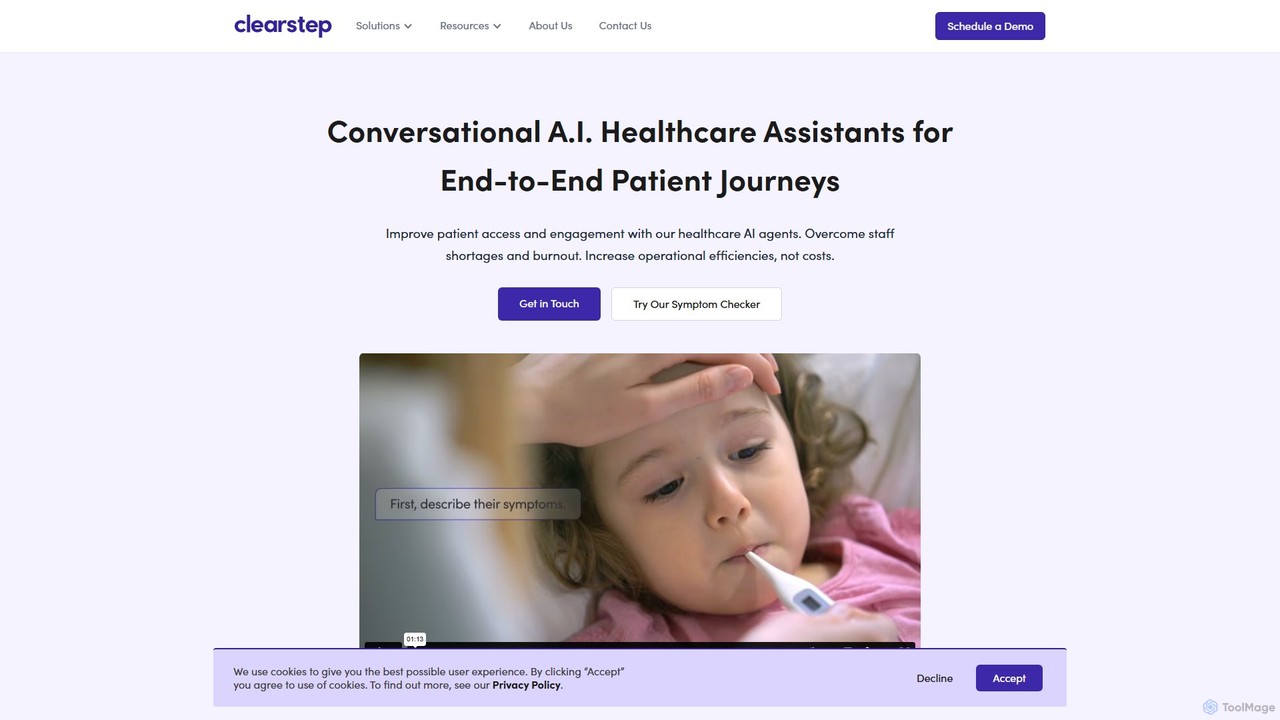
Clearstep is an AI-powered healthcare platform providing conversational AI assistants for the entire patient journey. It offers virtual triage, care navigation, and capacity optimization to help healthcare organizations improve patient access, enhance operational efficiency, and reduce staff burnout. Trusted by leading health systems, Clearstep guides patients to the right care at the right time.

Customer Support
Visits 29.5KFavorites 120Likes 117
Surfsite
Paid

Surfsite

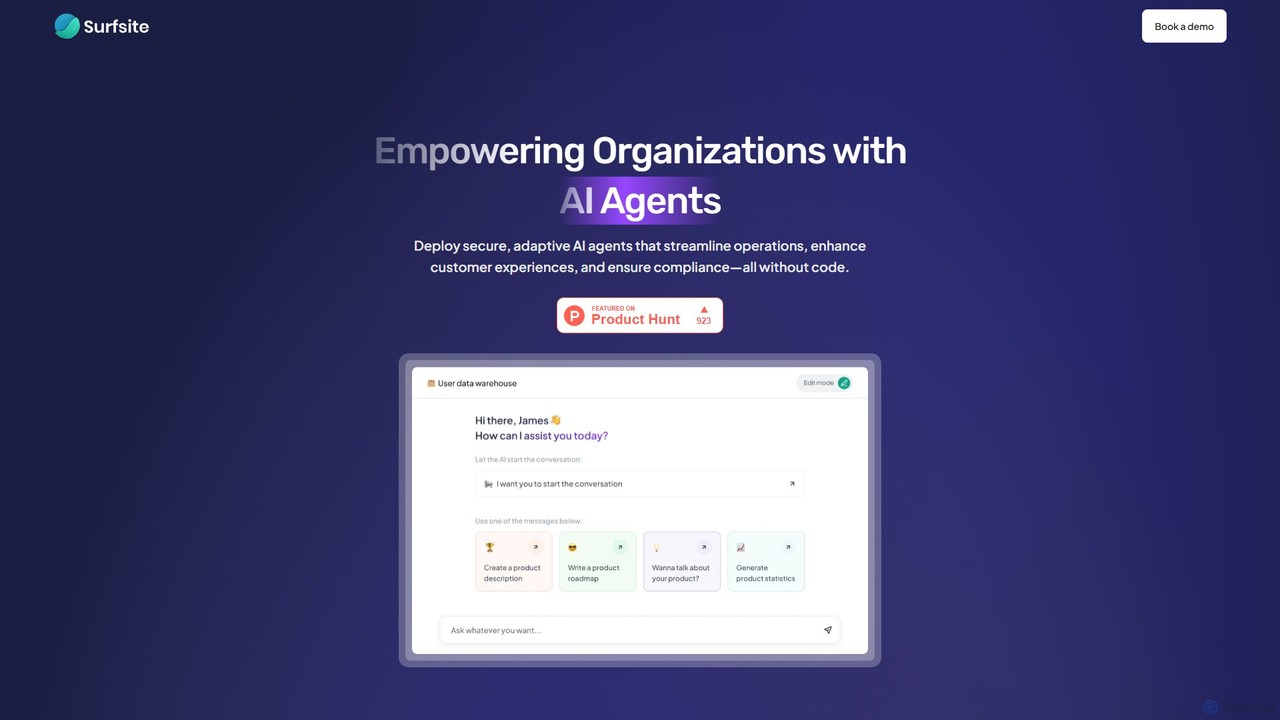
Surfsite is a no-code platform that empowers organizations to build and deploy secure, adaptive AI agents. These agents integrate with your existing tools and data, streamlining operations, enhancing customer experiences, and providing real-time analytics. It's designed for product managers, marketers, and founders to automate workflows and make data-driven decisions without writing any code.

Customer Support
Visits 5.9KFavorites 166Likes 170
Notably
Freemium

Notably

Notably is an AI-powered synthesis platform designed for user research. It helps teams of all sizes transform hours of qualitative data, such as interviews and feedback, into actionable customer insights instantly. With its AI research assistant, Posty, it automates transcription, tagging, and thematic analysis, streamlining the entire research workflow.

Customer Support
Visits 5.8KFavorites 125Likes 116

About Customer Support

AI Customer Support tools are a category of AI-powered solutions designed to enhance and automate customer interactions within the broader business operations. These tools leverage natural language processing (NLP), machine learning, and automation to provide efficient, personalized, and scalable assistance. They aim to streamline service delivery, reduce response times, and improve overall customer satisfaction by handling routine inquiries and empowering human agents.

Core Features

  • AI Chatbots & Virtual Assistants: Provide instant, 24/7 responses to common customer queries, guide users through processes, and escalate complex issues to human agents.
  • Automated Ticket Routing: Intelligently analyze incoming support requests and automatically assign them to the most appropriate department or agent based on content and urgency.
  • Sentiment Analysis: Evaluate customer emotions in real-time from text or voice interactions, allowing agents to prioritize urgent cases or tailor their approach.
  • Knowledge Base Integration: Automatically pull relevant information from a centralized knowledge base to answer questions or suggest solutions to customers and agents.
  • Personalized Recommendations: Use customer data and interaction history to offer tailored product suggestions or support resources, improving engagement.

Use Cases

Businesses across various sectors, from e-commerce to SaaS, utilize AI Customer Support tools to manage high volumes of inquiries, provide round-the-clock assistance, and free up human agents for more complex problem-solving. They are crucial for improving customer satisfaction, reducing operational costs, and maintaining consistent service quality.

How to Choose

When selecting AI Customer Support tools, consider the specific types of customer interactions you want to automate, the complexity of your typical inquiries, and the tool's integration capabilities with existing CRM or helpdesk systems. Evaluate its natural language understanding accuracy, scalability, customization options, and the level of human oversight required.

Featured tool rankings

Customer Support use cases

1

Automate Common Customer FAQ Responses

E-commerce businesses or SaaS companies can deploy AI chatbots to instantly answer frequently asked questions about products, services, shipping, or billing. This reduces the workload on human agents, provides immediate assistance to customers, and ensures consistent information delivery 24/7, significantly improving first-contact resolution rates.

2

Provide Personalized Product Recommendations

Retailers can use AI customer support tools to analyze a customer's browsing history, past purchases, and current query to suggest relevant products or upsell opportunities. This enhances the shopping experience, increases conversion rates, and drives additional sales by offering tailored suggestions directly within the chat interface.

3

Proactively Resolve Potential Customer Issues

Telecom providers or utility companies can leverage AI to monitor service usage patterns or system alerts. If a potential service disruption is detected, the AI can proactively notify affected customers via SMS or email, offer troubleshooting steps, or provide estimated resolution times, minimizing inbound support calls and improving customer trust.

4

Intelligent Lead Qualification and Routing

B2B companies can use AI virtual assistants on their websites to engage with visitors, ask qualifying questions about their needs and budget, and then intelligently route high-potential leads directly to the appropriate sales representative. This streamlines the sales funnel, saves sales team time, and ensures faster follow-ups.

5

Offer Multilingual Support for Global Customers

International businesses can implement AI customer support tools with built-in multilingual capabilities to serve customers in their native language. This breaks down language barriers, provides a more inclusive customer experience, and allows companies to scale their support globally without hiring a large, diverse team of human agents for every language.

6

Sentiment-Driven Prioritization of Support Tickets

Any business with a high volume of support inquiries can use AI to analyze the sentiment of incoming messages. Tickets expressing frustration or urgency are automatically flagged and prioritized, ensuring that critical customer issues are addressed by human agents more quickly, preventing churn and improving brand reputation.

Customer Support FAQ

What are AI Customer Support tools?

AI Customer Support tools are software applications that utilize artificial intelligence technologies like natural language processing (NLP) and machine learning to automate and enhance customer service interactions. They can understand customer queries, provide instant responses, route complex issues, and offer personalized assistance, significantly improving efficiency and customer satisfaction. These tools range from simple chatbots to sophisticated virtual assistants integrated with CRM systems.

How do AI Customer Support tools differ from traditional helpdesk software?

Traditional helpdesk software primarily focuses on organizing, tracking, and managing customer support tickets for human agents. While efficient for workflow, it lacks autonomous interaction capabilities. AI Customer Support tools, however, actively engage with customers, understand their intent, and often resolve issues without human intervention. They can learn from interactions, personalize responses, and automate tasks that would typically require an agent, offering a more proactive and scalable solution.

What are the main benefits of implementing AI in customer support?

Implementing AI in customer support offers several key benefits. Firstly, it provides 24/7 availability, ensuring customers receive instant help anytime. Secondly, it significantly reduces response times and operational costs by automating routine inquiries. Thirdly, AI tools can personalize interactions and offer consistent, accurate information, leading to higher customer satisfaction. Lastly, they free up human agents to focus on more complex, high-value issues, improving overall team productivity and morale.

Can AI Customer Support tools fully replace human agents?

No, AI Customer Support tools are not designed to fully replace human agents but rather to augment and empower them. While AI excels at handling repetitive tasks, answering FAQs, and providing quick information, human agents remain crucial for complex problem-solving, empathetic interactions, handling sensitive situations, and building long-term customer relationships. The most effective approach is a hybrid model where AI handles the routine, and humans manage the nuanced and critical interactions.

How to choose the right AI Customer Support tool for my business?

Choosing the right AI Customer Support tool involves evaluating several factors. Consider your specific business needs, such as the volume and complexity of customer inquiries, and the desired level of automation. Look for tools with strong natural language understanding (NLU) capabilities, seamless integration with your existing CRM and communication channels, and robust analytics for performance tracking. Also, assess scalability, customization options, pricing models, and the vendor's support and training offerings to ensure it aligns with your long-term strategy.