VetRec
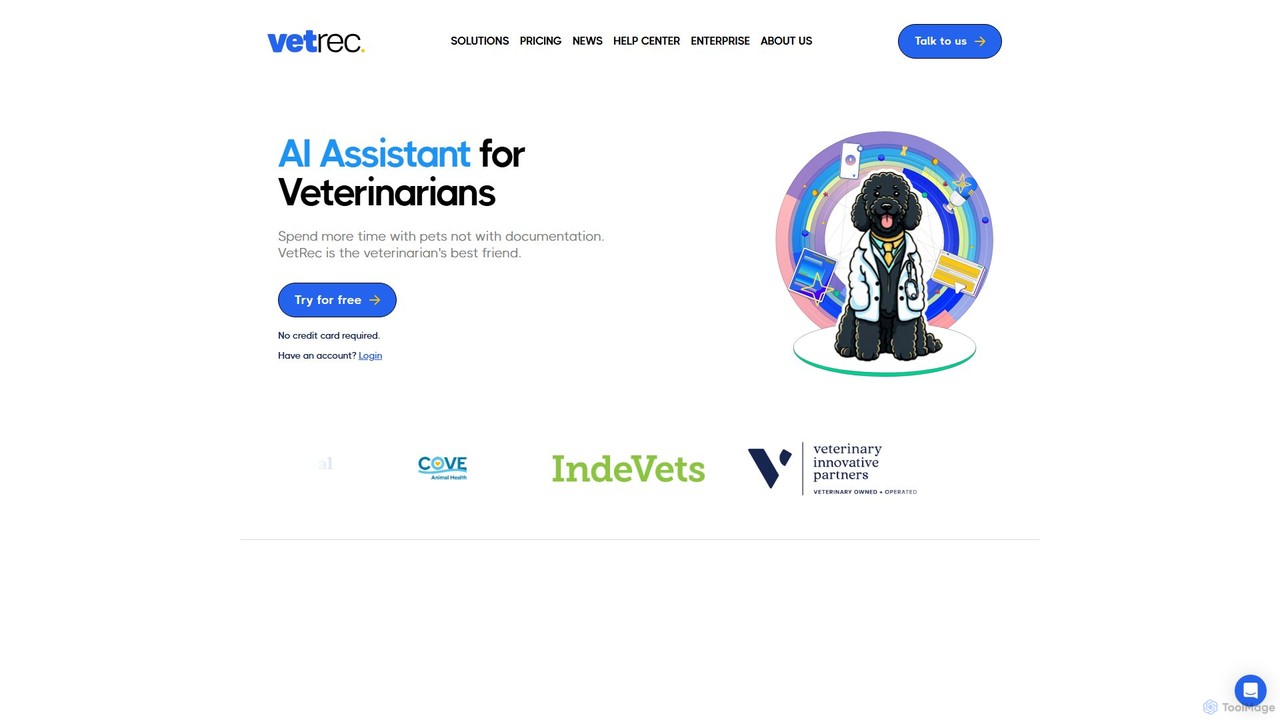
VetRec is an AI-powered scribe and assistant for veterinarians, designed to automate clinical documentation. It records consultations, generates …
VetRec is an AI-powered scribe and assistant for veterinarians, designed to automate clinical documentation. It records consultations, generates SOAP notes, summarizes medical histories, and integrates with PiMS, saving vets over two hours daily and allowing more focus on patient care.
Talkatoo
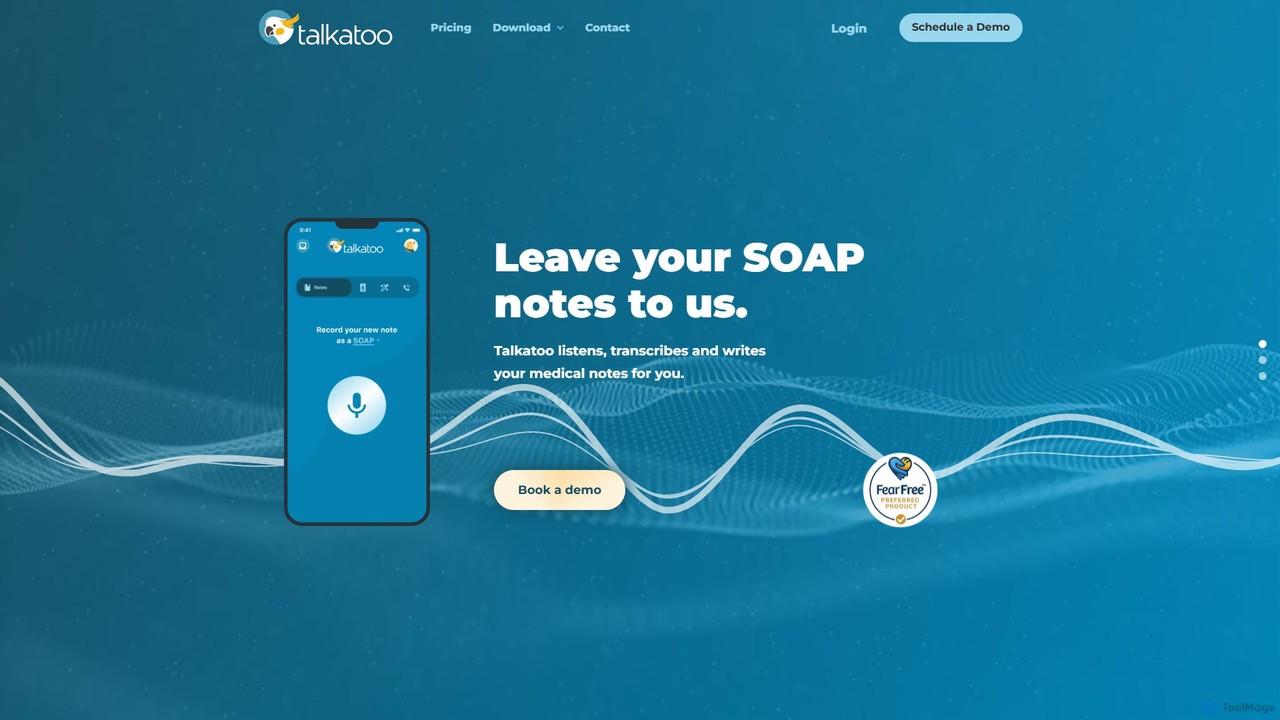
Talkatoo is an AI-powered dictation and scribe software specifically designed for veterinary professionals. It automates the creation of …
Talkatoo is an AI-powered dictation and scribe software specifically designed for veterinary professionals. It automates the creation of medical notes, such as SOAP notes, by transcribing and structuring conversations. It also offers features like call summaries and an AI assistant to streamline administrative tasks, saving veterinarians hours of paperwork.
ScribVet
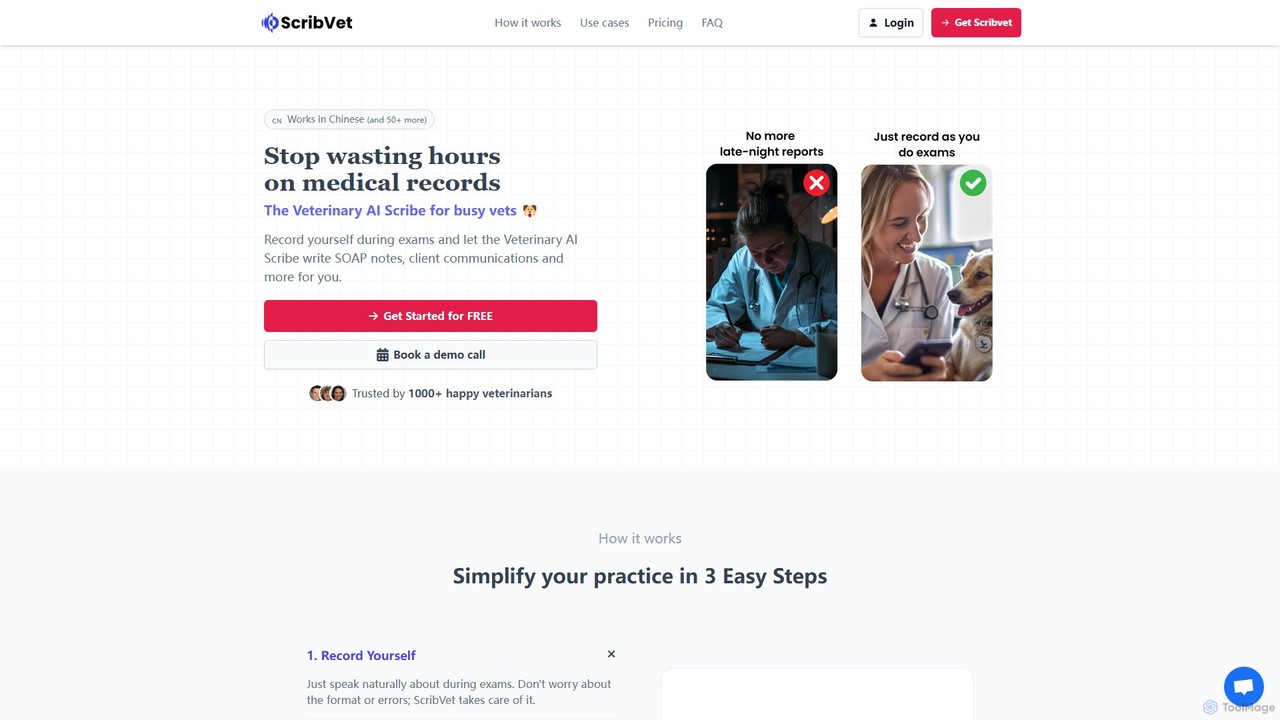
ScribVet is an AI-powered veterinary scribe designed for busy veterinarians. It records exam audio and automatically transcribes it …
ScribVet is an AI-powered veterinary scribe designed for busy veterinarians. It records exam audio and automatically transcribes it into structured SOAP notes, client communications, and other essential documents. By automating paperwork, it helps vets save hours, reduce administrative burnout, and improve work-life balance. It supports over 50 languages and offers customizable templates to fit any practice's needs.
About Documentation
AI Documentation tools are designed to automate and enhance the creation, management, and optimization of business documents and knowledge bases. Leveraging natural language processing (NLP) and machine learning, these tools streamline tasks from content generation and summarization to intelligent search and version control. They significantly improve information accessibility, accuracy, and efficiency across an organization, supporting better decision-making and operational workflows within the broader business context.
Core Features
- Automated Content Generation: Drafts reports, manuals, and articles from structured data or prompts.
- Intelligent Summarization: Condenses lengthy documents into concise, key takeaways.
- Version Control & Collaboration: Manages document revisions and facilitates team co-editing with AI insights.
- Semantic Search & Q&A: Enables users to find information quickly and get direct answers from document repositories.
- Automated Translation: Translates documents into multiple languages while preserving context.
Applicable Scenarios
Businesses across various sectors, from tech to finance, utilize these tools to manage their vast amounts of internal and external documentation. Technical writers can automate drafting user manuals, legal teams can streamline contract analysis, and HR departments can efficiently update policy documents. This ensures consistent, up-to-date information is readily available to employees and customers.
How to Choose
When selecting an AI documentation tool, consider its integration capabilities with existing systems like CRM or project management platforms. Evaluate the accuracy and flexibility of its content generation and summarization features, ensuring it aligns with your specific document types. Assess the security protocols for sensitive information and the scalability to handle your organization's growing documentation needs. Finally, review user-friendliness and support for ease of adoption.
DocumentationUse Cases
Automate Technical Manual Creation
Technical writers and product teams can use AI documentation tools to automatically generate drafts of user manuals, API documentation, and product guides. By feeding the tool product specifications, code comments, or existing data, it can structure and write initial content, significantly reducing the manual effort and ensuring consistency across complex documentation sets. This accelerates time-to-market for new products.
Streamline Policy and Procedure Updates
HR departments and compliance officers frequently update company policies, standard operating procedures (SOPs), and legal documents. AI documentation tools can monitor regulatory changes, suggest relevant updates to existing documents, and even draft new sections based on predefined templates and legal requirements. This ensures compliance and keeps internal guidelines current with minimal manual oversight.
Enhance Internal Knowledge Base Management
Large organizations often struggle with maintaining an up-to-date and easily searchable internal knowledge base. AI documentation tools can automatically categorize new articles, identify outdated information for review, and improve search functionality through semantic understanding. Employees can quickly find answers to common questions, reducing support requests and boosting productivity.
Generating Marketing Collateral from Product Data
Marketing teams can leverage AI documentation tools to transform raw product data, feature lists, and technical specifications into engaging marketing collateral such as brochures, website copy, and sales sheets. The AI can adapt the tone and style for different audiences, ensuring brand consistency and accelerating the creation of diverse promotional materials without extensive manual rewriting.
Summarize Research Papers and Reports
Researchers, analysts, and business strategists often need to quickly grasp the essence of lengthy research papers, market reports, or financial analyses. AI documentation tools can intelligently summarize these documents, extracting key findings, methodologies, and conclusions. This allows professionals to review more information in less time, facilitating faster decision-making and knowledge acquisition.
Automate Legal Document Drafting and Review
Legal professionals can utilize AI documentation tools to draft standard contracts, agreements, and legal briefs based on templates and specific case details. Furthermore, these tools can review existing documents for clauses, inconsistencies, or compliance issues, highlighting areas that require human attention. This significantly reduces the time spent on repetitive legal tasks and enhances accuracy.