Spatialzr
Spatialzr is an AI-powered platform designed for sustainable real estate investment and urban development. It leverages spatial data …
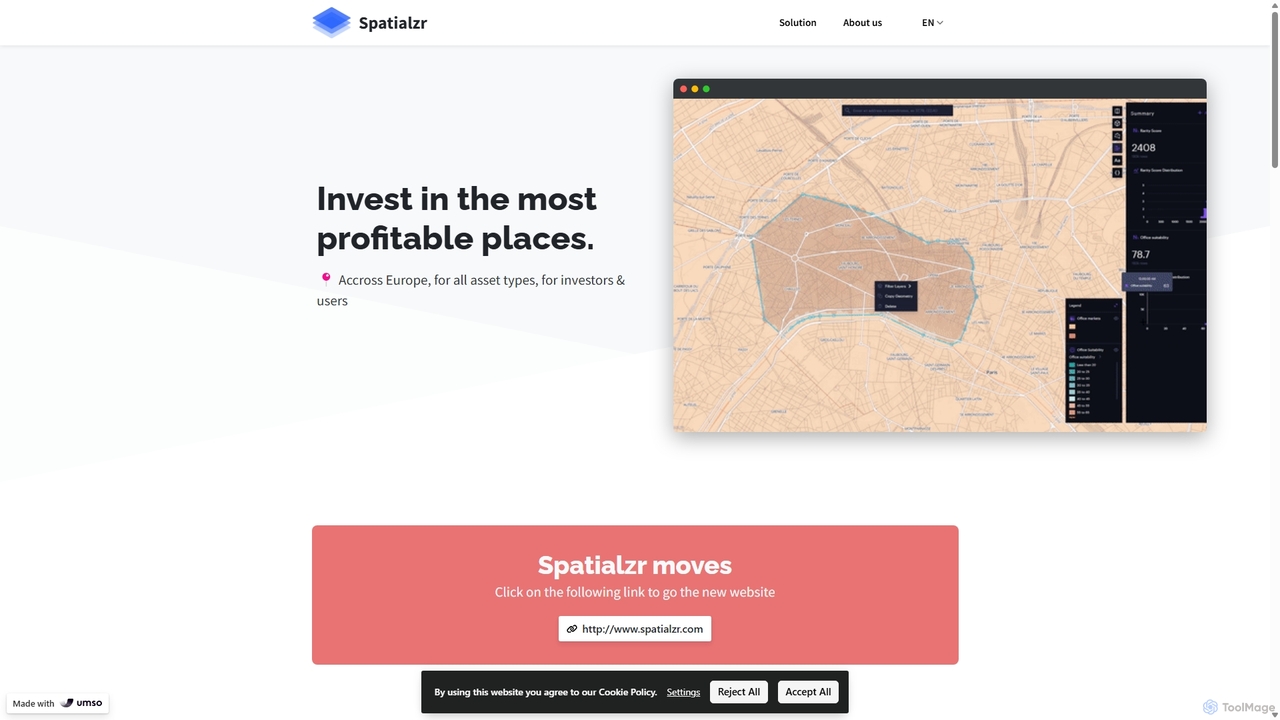
Spatialzr is an AI-powered platform designed for sustainable real estate investment and urban development. It leverages spatial data analysis and ESG principles to provide actionable insights, helping investors, developers, and planners make data-driven decisions that are both profitable and environmentally responsible. The tool promotes urban densification and resource conservation for building resilient future cities.
Carbonfact
Carbonfact is an AI-powered sustainability platform specifically for the apparel and footwear industry. It automates carbon accounting, product …
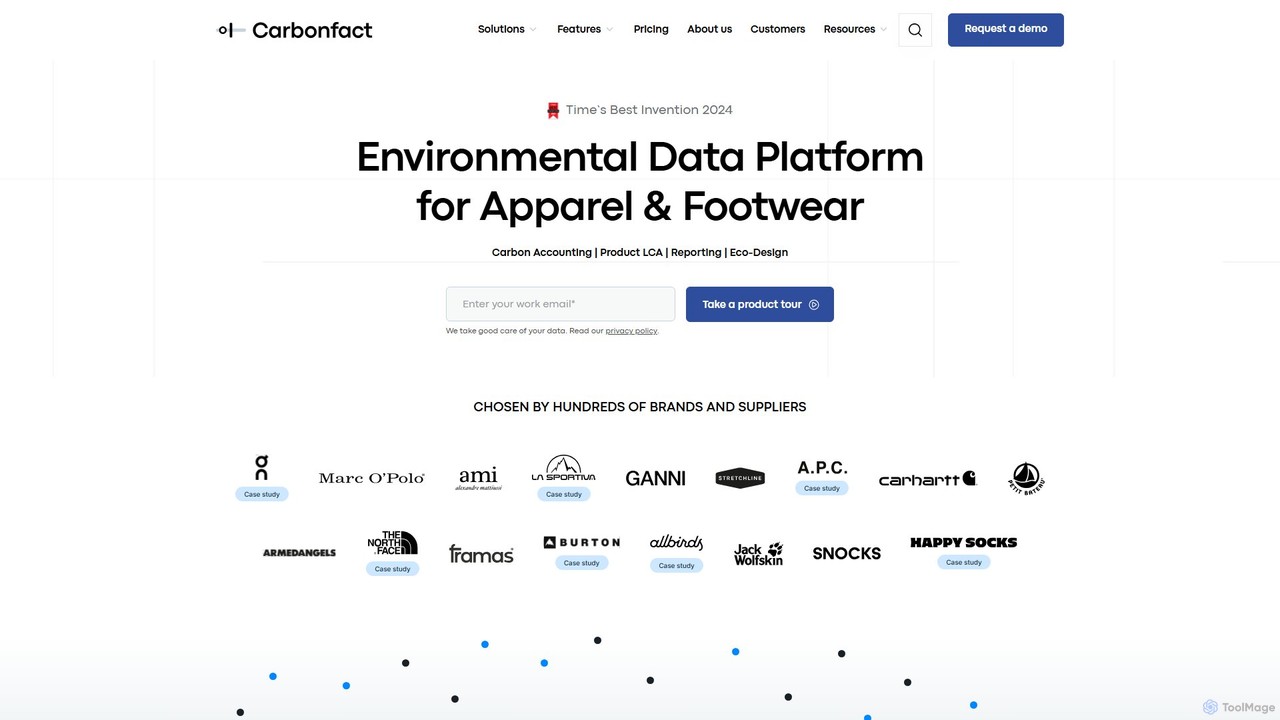
Carbonfact is an AI-powered sustainability platform specifically for the apparel and footwear industry. It automates carbon accounting, product life cycle assessments (LCAs), and compliance reporting, helping brands accurately measure, manage, and reduce their environmental impact across complex supply chains.
amberesg
Amberesg is a specialized Generative AI platform designed for sustainability professionals. It accelerates ESG (Environmental, Social, Governance) workflows …
Amberesg is a specialized Generative AI platform designed for sustainability professionals. It accelerates ESG (Environmental, Social, Governance) workflows by enabling users to analyze complex documents, generate high-quality ESG content and campaigns, and retrieve critical information from public and private sources with conversational ease.
ecotrace
ecotrace is an all-in-one, AI-powered platform designed for businesses to track, manage, and report their Scope 1, 2, …
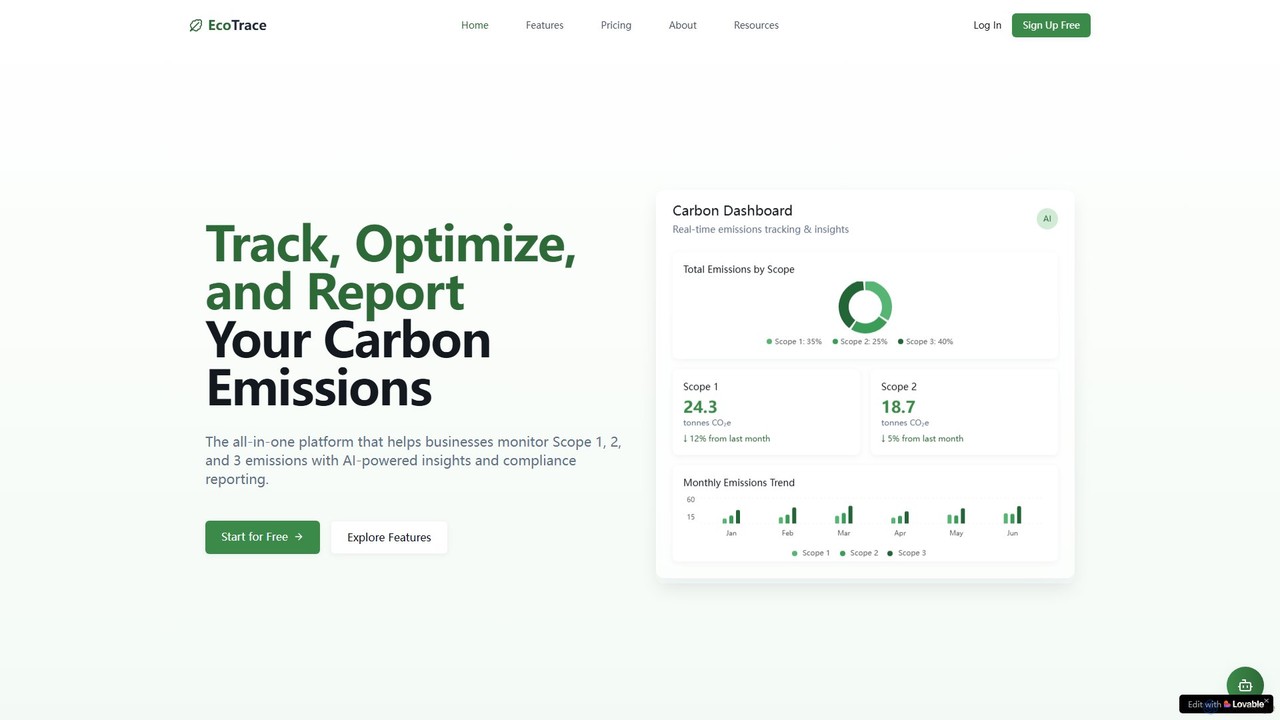
ecotrace is an all-in-one, AI-powered platform designed for businesses to track, manage, and report their Scope 1, 2, and 3 carbon emissions. It simplifies compliance with major regulatory frameworks like GHG Protocol and CSRD, provides actionable insights for reduction, and features a carbon credit marketplace for offsetting.
greenbids
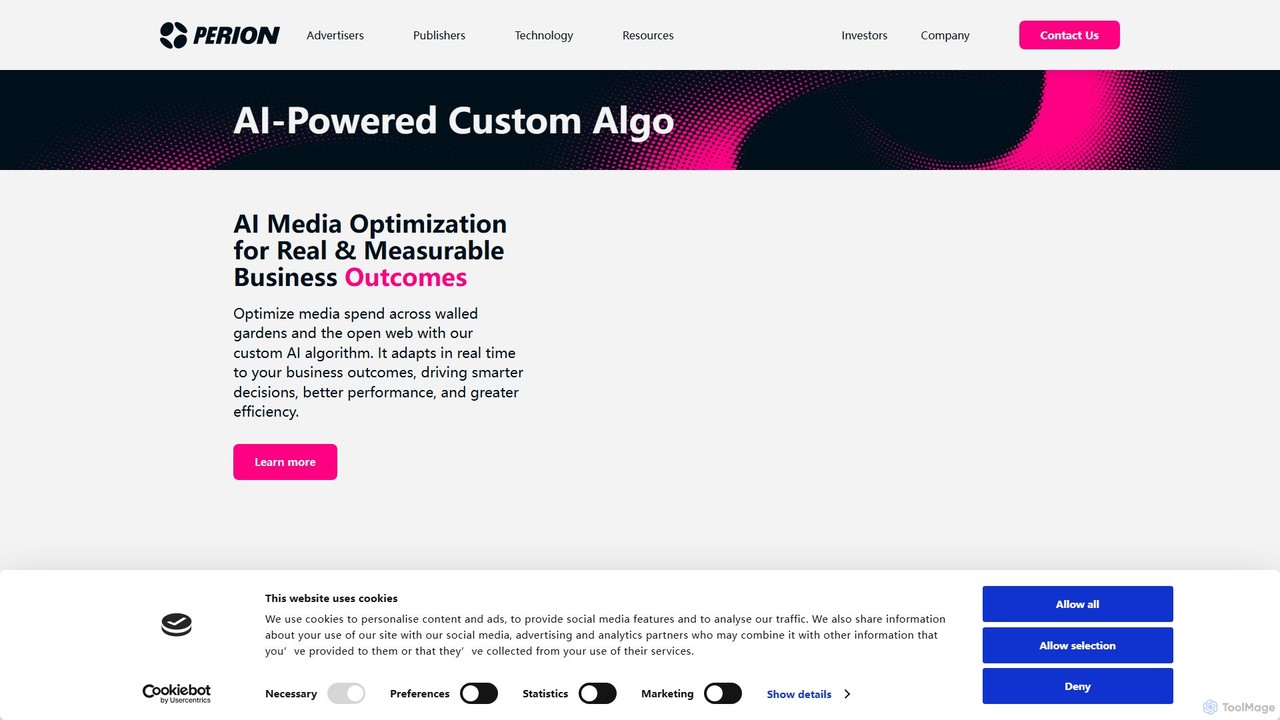
Greenbids is an AI-powered solution for the AdTech industry that reduces the carbon footprint of digital advertising campaigns. …
Greenbids is an AI-powered solution for the AdTech industry that reduces the carbon footprint of digital advertising campaigns. It optimizes programmatic bidding to select more energy-efficient ad impressions without compromising on key performance indicators (KPIs). By integrating seamlessly with major DSPs, Greenbids helps brands and agencies achieve their sustainability goals while running effective, high-performance campaigns.
CarbonChain
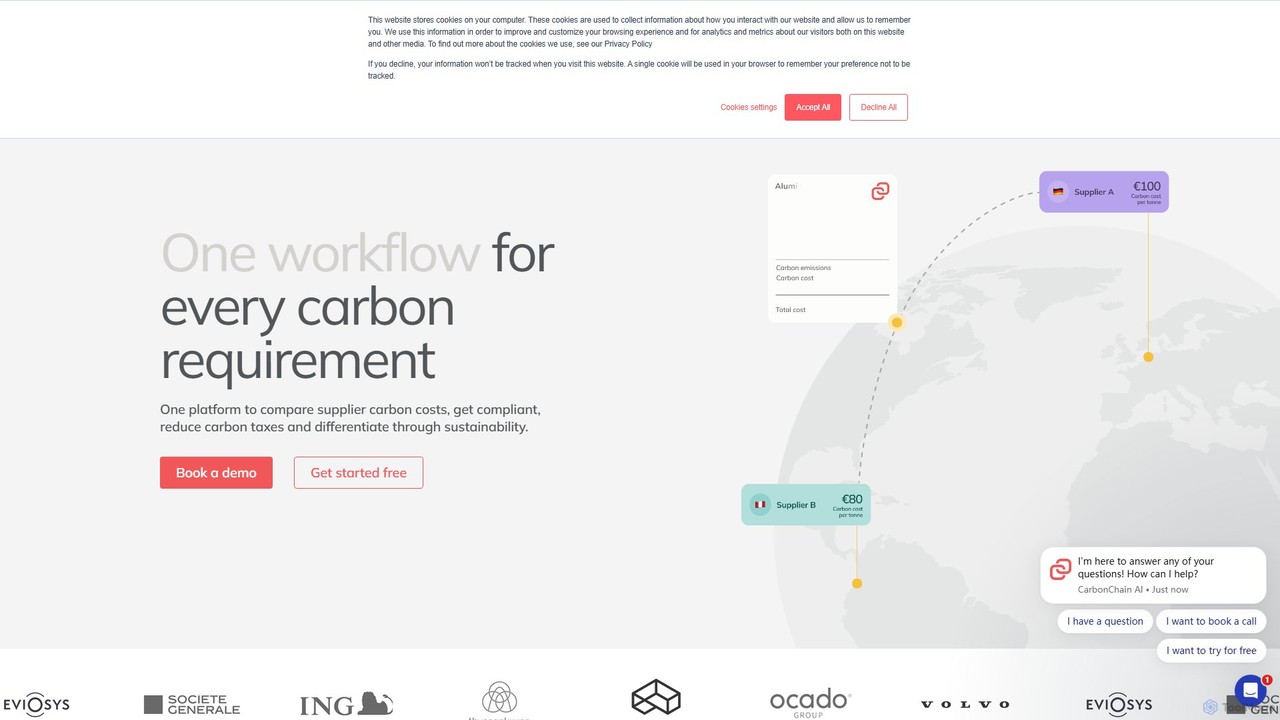
CarbonChain is an AI-powered carbon accounting platform designed for complex supply chains. It helps businesses in manufacturing, commodities, …
CarbonChain is an AI-powered carbon accounting platform designed for complex supply chains. It helps businesses in manufacturing, commodities, and finance to accurately track, manage, and reduce their carbon emissions, ensure compliance with regulations like CBAM, and drive commercial value through sustainability.
WasteAID by Ecorithms
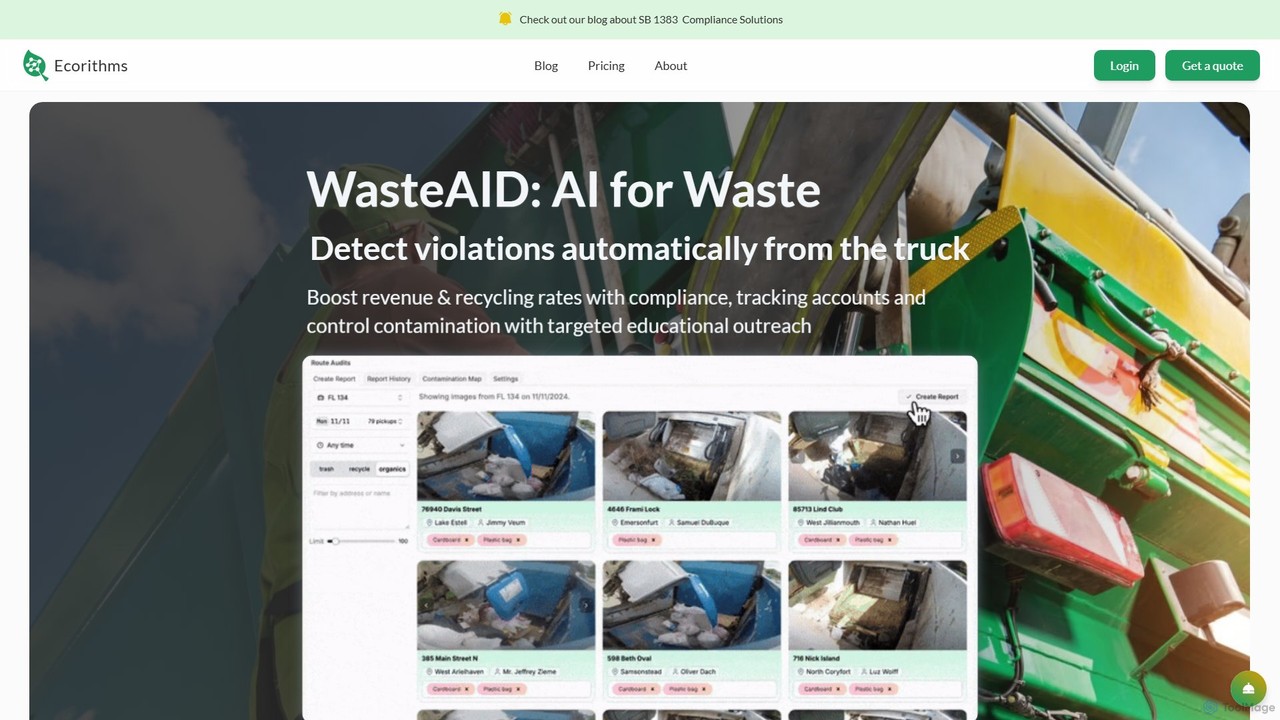
WasteAID by Ecorithms is an AI-powered waste auditing software that helps waste haulers and municipalities improve recycling rates …
WasteAID by Ecorithms is an AI-powered waste auditing software that helps waste haulers and municipalities improve recycling rates and ensure regulatory compliance. Using computer vision, it automatically analyzes truck camera footage to detect contamination in waste streams, track non-compliant accounts, and automate educational outreach. This streamlines operations, recovers costs, and supports zero-waste goals without requiring new hardware.
FolioProjects
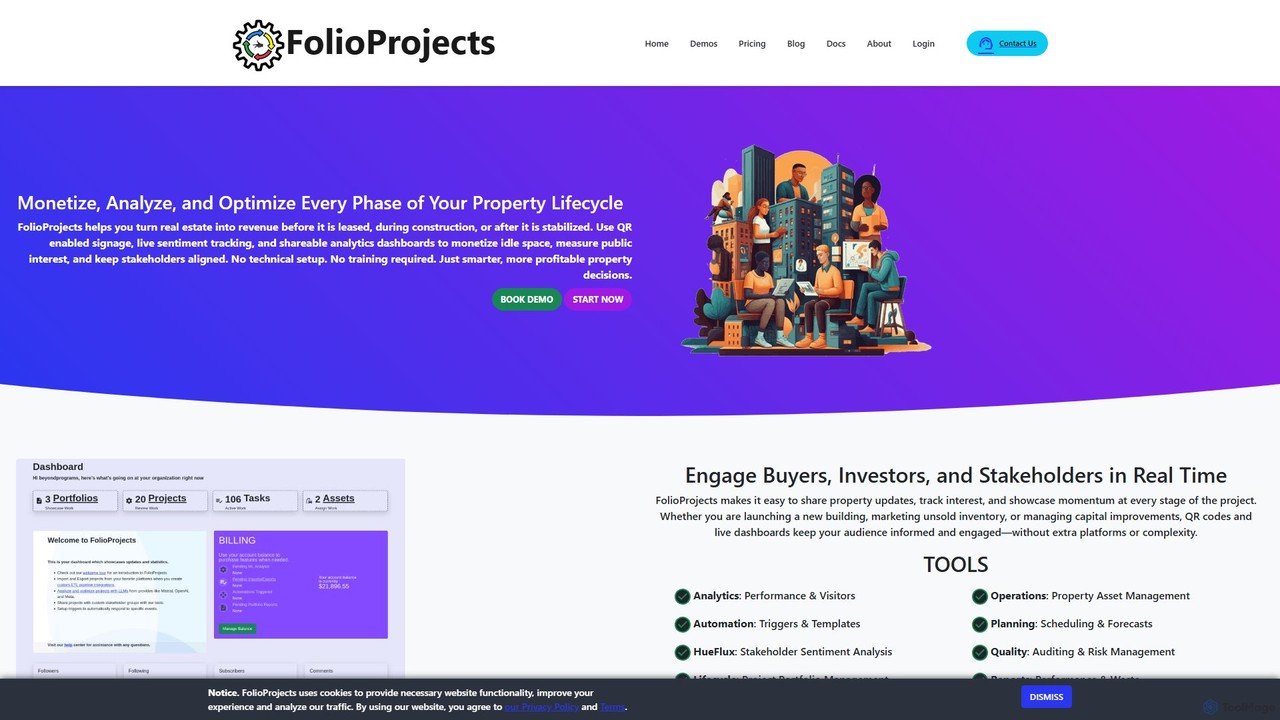
FolioProjects is an AI-powered platform providing real-time sustainability intelligence for asset portfolios. It integrates project portfolio management (PPM), …
FolioProjects is an AI-powered platform providing real-time sustainability intelligence for asset portfolios. It integrates project portfolio management (PPM), asset lifecycle management (ALM), and machine learning to offer dynamic dashboards, automated workflows, and advanced analytics. The platform is designed for asset managers, developers, and governments to track performance, manage risks, and enhance stakeholder engagement through transparent data sharing and a unique sentiment analysis system.
About Sustainability
AI Sustainability tools are a specialized category of business software that leverages artificial intelligence to measure, manage, and improve an organization's environmental, social, and governance (ESG) performance. These platforms use machine learning to analyze vast datasets from operations, supply chains, and external sources to identify patterns, predict risks, and automate reporting. They empower businesses to reduce their carbon footprint, ensure regulatory compliance, and make data-driven decisions for sustainable growth. The core value lies in transforming complex ESG data into actionable insights for strategic planning.
Core Features
- ESG Data Aggregation: Automatically collects and centralizes sustainability data from diverse sources like IoT sensors, utility bills, and ERP systems.
- Carbon Accounting: Calculates and tracks greenhouse gas (GHG) emissions across Scope 1, 2, and 3 to provide a clear carbon footprint.
- Predictive Risk Analysis: Models the potential impact of climate change, resource scarcity, and regulatory shifts on business operations.
- Automated Reporting: Generates compliance reports for frameworks such as GRI, SASB, and TCFD, reducing manual effort.
- Supply Chain Transparency: Monitors supplier performance on sustainability metrics to identify risks and opportunities for improvement.
Use Cases
These tools are crucial for industries like manufacturing, logistics, energy, and finance. Sustainability officers, compliance managers, and supply chain directors use them to automate ESG data collection, monitor progress towards climate goals, and provide transparent reports to stakeholders, investors, and regulatory bodies.
How to Choose
When selecting an AI Sustainability tool, consider its ability to integrate with your existing systems (e.g., ERP, SCM). Evaluate the scope of supported reporting frameworks and the sophistication of its predictive analytics. Also, assess the platform's industry-specific modules and its scalability to grow with your company's sustainability initiatives.

SustainabilityUse Cases
Automating Annual ESG Reporting
A compliance manager at a multinational corporation is tasked with preparing the annual ESG report. Instead of manually collecting data from dozens of spreadsheets and departmental reports, they use an AI Sustainability tool. The platform automatically pulls energy consumption data from smart meters, employee data from HR systems, and waste management metrics from operational logs. It then maps this data to the Global Reporting Initiative (GRI) framework, calculates key performance indicators, and generates a draft report in hours instead of weeks, ensuring accuracy and freeing up the team for strategic analysis.
Optimizing Supply Chain Carbon Footprint
A logistics director for a retail company wants to reduce Scope 3 emissions. They use an AI Sustainability tool to analyze their entire supply chain. The AI models various scenarios, comparing emissions from different shipping routes, transportation modes (sea vs. air), and supplier locations. It identifies that sourcing from a supplier in a closer region, despite slightly higher costs, would reduce the carbon footprint by 15%. The platform provides a clear cost-benefit analysis, enabling the director to present a data-backed case for a more sustainable sourcing strategy to management.
Predicting Climate-Related Financial Risks
An investment analyst at a financial firm needs to assess the climate risk of their portfolio. They use an AI Sustainability platform that integrates climate models with financial data. The tool simulates the impact of future scenarios, such as increased flooding in a region where a key manufacturing plant is located, or new carbon taxes on a specific industry. The output highlights which assets are most vulnerable, quantifying potential financial losses. This allows the analyst to adjust investment strategies, engage with companies on their climate resilience, and report risks to investors according to TCFD guidelines.
Monitoring Water Usage in Manufacturing
A plant manager at a beverage company aims to reduce water consumption by 20%. They deploy an AI Sustainability tool connected to IoT sensors on water mains and machinery. The AI establishes a baseline of normal water usage patterns. When it detects an anomaly—such as a sudden spike in consumption on a production line—it sends an immediate alert. This allows maintenance teams to quickly identify and fix leaks that would have otherwise gone unnoticed for days, helping the plant meet its water reduction targets and lower operational costs.
Ensuring Ethical Sourcing in Fashion
A sustainability manager for a global apparel brand needs to verify that their cotton suppliers are not using forced labor. They use an AI tool that cross-references supplier data with public records, news reports, and NGO watchlists. The AI analyzes satellite imagery to detect signs of unauthorized land clearing and monitors social media for reports of labor rights violations associated with specific facilities. It flags high-risk suppliers for on-the-ground audits, providing a proactive way to manage social risks in the supply chain and uphold the brand's ethical commitments.
Improving Energy Efficiency in Commercial Buildings
A facilities manager for a large office complex wants to reduce electricity costs and emissions. They implement an AI-powered building management system. The system analyzes real-time data from occupancy sensors, weather forecasts, and energy prices. It then automatically adjusts HVAC (heating, ventilation, and air conditioning) and lighting levels room by room to optimize energy use without compromising comfort. The AI can predict peak demand periods and pre-cool the building during off-peak hours when electricity is cheaper, leading to significant cost savings and a smaller environmental footprint.