Chatbots Best in category 1 results Ai Chatbots AI Tool

Popular AI tools in the Ai Chatbots field of Chatbots include DeftGPT, etc., helping you quickly improve efficiency.

DeftGPT

DeftGPT

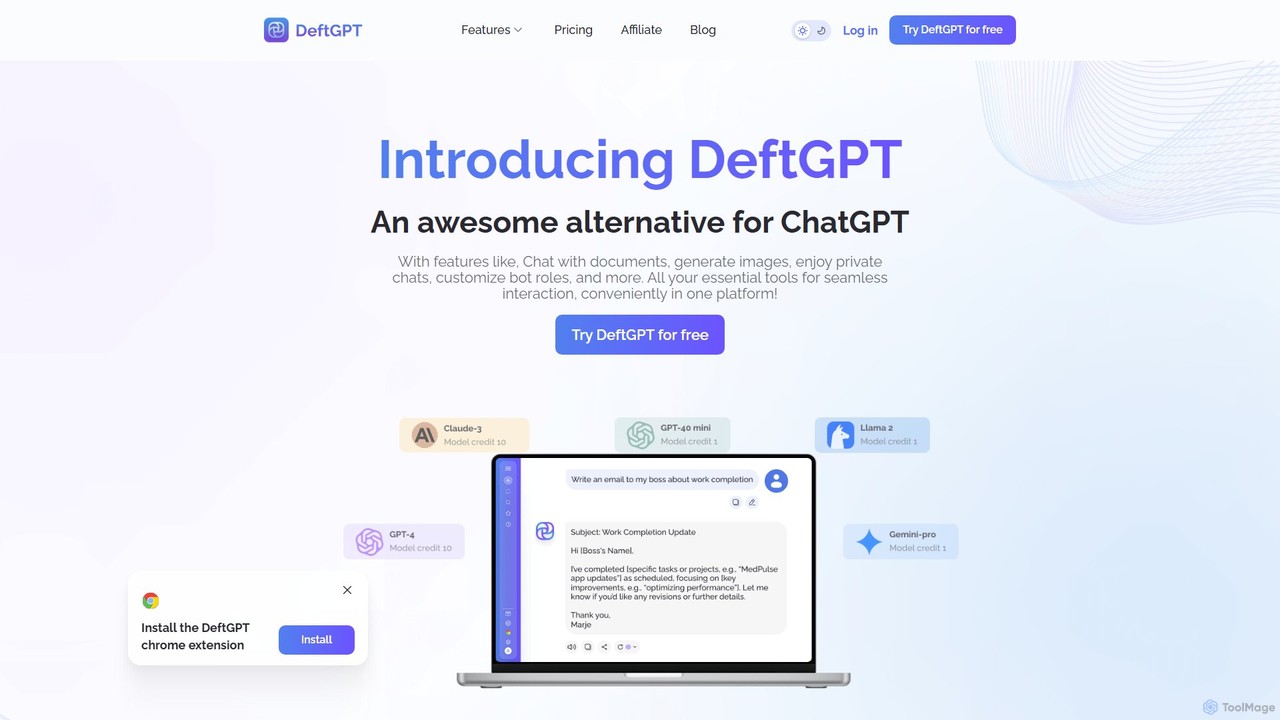
DeftGPT is a comprehensive AI platform serving as a powerful ChatGPT alternative. It integrates advanced AI chat powered …

7.1K

About Ai Chatbots

AI Chatbots are advanced conversational programs that use Natural Language Processing (NLP) and Machine Learning (ML) to understand, interpret, and respond to human language in a natural way. Unlike simpler rule-based bots, they can grasp user intent, context, and sentiment from unstructured text. This enables them to handle complex queries, personalize interactions, and continuously learn from conversations to improve their accuracy. AI Chatbots are primarily used to automate customer support, qualify sales leads, and enhance user engagement across various digital channels.

Core Features

  • Natural Language Understanding (NLU): Accurately interprets user intent, entities, and sentiment, even with typos or slang.
  • Contextual Awareness: Maintains conversation history to provide relevant and coherent responses throughout an interaction.
  • Machine Learning: Automatically improves its understanding and response quality over time by analyzing past conversations.
  • Omnichannel Integration: Deploys seamlessly across websites, mobile apps, and messaging platforms like WhatsApp and Facebook Messenger.
  • API Connectivity: Connects with external systems (e.g., CRM, ERP) to perform actions like checking order status or booking appointments.

Applicable Scenarios

AI Chatbots are widely adopted in industries like e-commerce for 24/7 customer service, SaaS for lead generation and user onboarding, and healthcare for patient intake and appointment scheduling. They serve roles from customer support agents, who use them to handle repetitive queries, to marketing teams, who deploy them to engage website visitors and capture leads automatically.

Selection Criteria

When choosing an AI Chatbot, evaluate the quality of its NLU model and its ability to handle industry-specific jargon. Assess its integration capabilities with your existing software stack (e.g., Salesforce, Zendesk). Also consider the level of customization available for conversation flows and branding, the robustness of its analytics dashboard, and its scalability to handle growing conversation volumes.

Ai ChatbotsUse Cases

1

Automate 24/7 Customer Support

An e-commerce store manager uses an AI Chatbot to provide instant, round-the-clock support. The chatbot is integrated with the store's backend systems to answer common questions like "Where is my order?" or "What is your return policy?". It uses NLU to understand variations in customer phrasing and can escalate complex issues to a human agent, along with the full conversation context. This resolves over 60% of incoming queries automatically, reducing response times and freeing up the support team to focus on high-value interactions.

2

Qualify and Route Sales Leads

A marketing manager for a B2B SaaS company deploys an AI Chatbot on their pricing page. The bot proactively engages visitors, asking qualifying questions about their company size, role, and specific needs. Based on the responses, it can instantly provide relevant case studies, schedule a demo with the appropriate sales representative, or direct them to a free trial. This process automates lead qualification, ensuring that the sales team receives only high-intent, well-qualified leads, which increases the conversion rate by 25%.

3

Automate Internal IT and HR Helpdesks

An IT manager in a large corporation uses an AI Chatbot integrated into their internal communication platform (like Slack or Microsoft Teams). Employees can ask the bot for help with common issues such as password resets, software access requests, or network troubleshooting. The bot guides them through step-by-step solutions or automatically creates a support ticket with all necessary information. This resolves 50% of Tier 1 support requests instantly, reducing the burden on IT staff and improving employee productivity.

4

Provide Personalized Product Recommendations

A marketing specialist for an online fashion retailer implements an AI Chatbot as a personal shopping assistant. The bot initiates conversations with visitors, asking about their style preferences, occasion, and budget. Using this information, it queries the product catalog in real-time and presents a curated selection of items. It can also suggest complementary products to complete an outfit. This personalized experience increases user engagement and boosts the average order value by providing relevant, timely suggestions that drive purchases.

5

Streamline Appointment and Reservation Booking

A clinic administrator uses an AI Chatbot on the clinic's website to manage patient bookings. The chatbot asks patients for their preferred date, time, and reason for the visit. It then checks the doctors' real-time availability in the scheduling system and offers open slots. Once the patient confirms, the bot books the appointment, sends a confirmation email, and can even handle rescheduling requests. This automates the entire booking process, reducing phone calls and administrative work while improving patient convenience.

6

Gather Customer Feedback and Conduct Surveys

A product manager wants to collect user feedback after a new feature launch. They configure an AI Chatbot to initiate a conversation with users who have interacted with the new feature. The chatbot asks a series of open-ended and multiple-choice questions in a natural, conversational manner, which feels less intrusive than a traditional form. It can even ask follow-up questions based on user sentiment. This approach leads to a higher survey completion rate and provides richer, more qualitative insights for product improvement.

Ai ChatbotsFrequently Asked Questions