ToolMage
Sign in

Best 2 Ai Chatbot AI tools for Chatbots

Popular Ai Chatbot AI tools in Chatbots include MultiChat AI and gptaichat, helping you work more efficiently.

MultiChat AI
Freemium

MultiChat AI

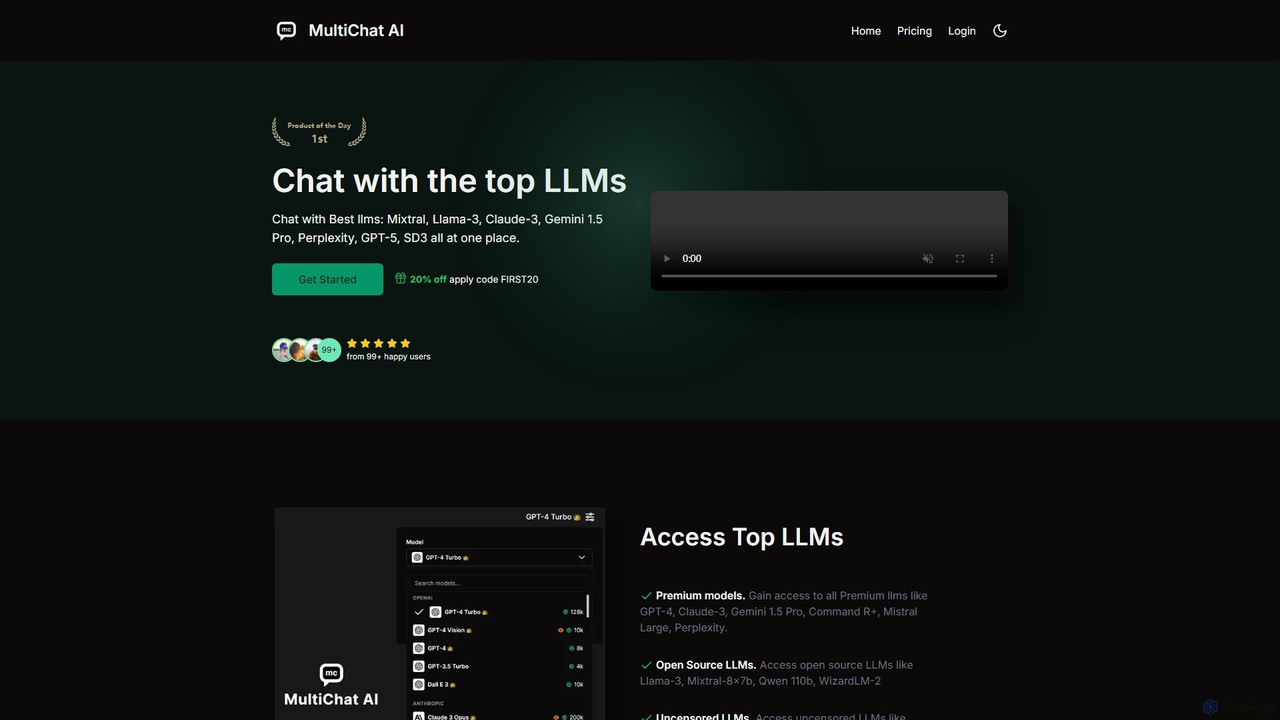
An all-in-one AI platform providing access to top-tier LLMs like GPT-4, Claude 3, and Llama 3, as well as AI image generators like DALL-E 3 and Stable Diffusion. It offers a unified dashboard for text generation, image creation, and specialized uncensored/roleplay chatbots.

Ai Chatbot
Visits 4.9KFavorites 115Likes 122
gptaichat
Free

gptaichat

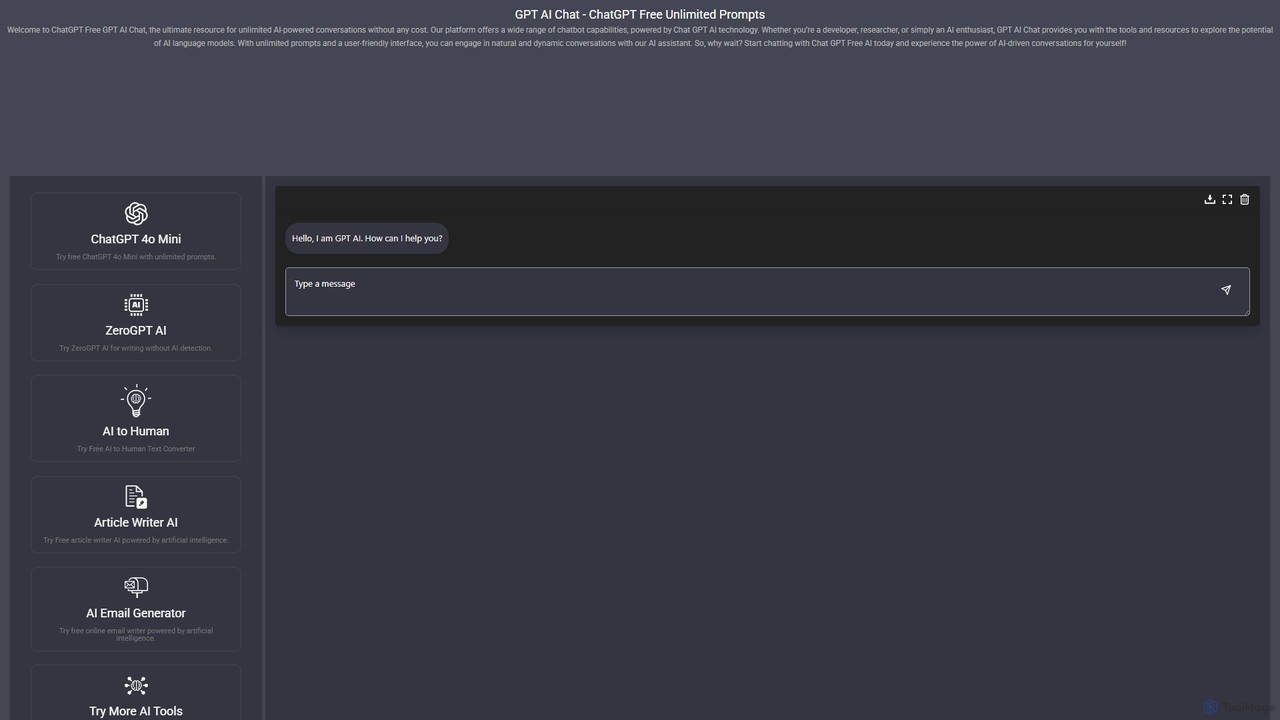
gptaichat is a free, web-based platform offering unlimited access to AI-powered conversations through advanced GPT models. It provides a user-friendly chat interface alongside a suite of AI writing tools, including an article writer and email generator, at no cost.

Ai Chatbot
Visits 4.1KFavorites 113Likes 125

About Ai Chatbot

AI Chatbots are advanced conversational agents that use artificial intelligence technologies like Natural Language Processing (NLP) and machine learning to understand and respond to human language. Unlike simpler rule-based bots, they can interpret user intent, handle complex queries, and learn from interactions to improve over time. This capability allows them to provide more personalized, context-aware, and human-like conversations. AI Chatbots are widely used to automate customer support, qualify leads, and enhance user engagement across websites and messaging platforms.

Core Features

  • Natural Language Understanding (NLU): Accurately interprets user intent, entities, and sentiment from unstructured text, going beyond simple keyword matching.
  • Contextual Memory: Maintains conversation history to understand context, enabling more coherent and relevant follow-up interactions.
  • Generative Responses: Creates new, human-like responses using large language models (LLMs) instead of relying solely on pre-written scripts.
  • Machine Learning: Continuously learns from new conversations to improve its accuracy, performance, and understanding over time.
  • Seamless Human Handoff: Intelligently identifies when a query requires human intervention and smoothly transfers the conversation to a live agent with full context.

Use Cases

AI Chatbots excel in dynamic environments requiring nuanced understanding. They are frequently deployed in e-commerce for personalized shopping assistance, in SaaS for tiered technical support, and in healthcare for patient intake and appointment scheduling. Financial institutions also use them for fraud detection alerts and personalized financial advice.

How to Choose

When selecting an AI Chatbot, evaluate the quality of its NLU engine and its ability to recognize industry-specific jargon. Consider the ease of training and maintenance, as well as its integration capabilities with your existing CRM, helpdesk, and knowledge base systems. Also, assess the analytics provided to measure performance and identify areas for improvement.

Featured tool rankings

Ai Chatbot use cases

1

Automate Personalized E-commerce Support

For e-commerce managers, handling high volumes of customer queries about order status, product details, and return policies is a major challenge. An AI Chatbot can be integrated with the store's backend systems to provide instant, personalized answers. It can understand queries like "Where is my package with the blue shoes?" by extracting entities ("package," "blue shoes") and checking the order database. This resolves over 70% of common inquiries automatically, freeing up human agents to handle complex cases and improving customer satisfaction with 24/7 availability.

2

Qualify B2B Sales Leads Dynamically

Sales development representatives often spend significant time on initial conversations to qualify leads. An AI Chatbot on a B2B website can engage visitors in natural dialogue, asking open-ended questions to understand their needs and budget. Based on the conversation, it can score the lead in real-time. High-quality leads are automatically booked into a sales representative's calendar or transferred to a live chat, complete with the full conversation transcript. This shortens the sales cycle and ensures the sales team focuses only on the most promising prospects.

3

Provide Tier-1 Technical Support

For SaaS companies, providing scalable technical support is critical. An AI Chatbot can act as the first line of defense, guiding users through common troubleshooting steps. It can access a knowledge base of technical documentation and tutorials to answer "how-to" questions. If the issue is complex, the bot gathers essential diagnostic information from the user, such as their operating system, browser version, and error messages, before creating a support ticket. This ensures human support agents receive well-documented cases, reducing resolution time.

4

Streamline Employee HR and IT Onboarding

Human Resources and IT departments are often inundated with repetitive questions from new employees. An internal AI Chatbot can serve as a central information hub. New hires can ask questions like "How do I set up my benefits?" or "What's the guest Wi-Fi password?". The chatbot provides instant, accurate answers based on company policies and internal documentation. This empowers new employees to find information independently, reduces the administrative burden on HR and IT staff, and ensures a consistent onboarding experience for everyone.

5

Offer Multilingual Customer Service

Global companies face the challenge of providing consistent support across different languages and time zones. A sophisticated AI Chatbot can be trained to communicate fluently in multiple languages. It understands not just direct translations but also cultural nuances and idiomatic expressions, providing a more natural experience for international customers. This allows businesses to offer 24/7 support to their global user base without the high cost of maintaining large, multilingual human support teams, thereby improving global customer loyalty.

6

Conduct Interactive User Surveys and Feedback

Traditional feedback forms have low completion rates. An AI Chatbot can make the process more engaging by turning it into a conversation. After a customer completes a purchase or a support interaction, the chatbot can initiate a friendly chat to ask for feedback. It can ask follow-up questions based on the user's responses, such as "You mentioned the checkout was 'a bit slow,' could you tell me more?". This conversational approach yields more detailed, qualitative insights than static forms and improves the overall user experience.

Ai Chatbot FAQ

What is an AI Chatbot?

An AI Chatbot is a software application designed to simulate human conversation through text or voice, powered by artificial intelligence. Its core technologies include Natural Language Processing (NLP) to understand the meaning behind user queries and machine learning to improve its responses over time. Unlike basic chatbots, AI Chatbots can handle non-linear conversations, understand context, and generate unique answers, making them suitable for complex tasks like customer support, sales, and personalized user assistance.

What is the main difference between an AI Chatbot and a rule-based chatbot?

The primary difference lies in their intelligence and flexibility. A rule-based chatbot follows a pre-defined script or decision tree, only responding to specific keywords or commands. An AI Chatbot uses Natural Language Understanding (NLU) to interpret the user's intent, regardless of the exact phrasing. Key distinctions include:

  • Flexibility: AI chatbots can handle unexpected questions, while rule-based bots fail if the query is outside their script.
  • Learning: AI chatbots learn from interactions to improve, whereas rule-based bots are static and must be manually updated.
  • Conversation: AI chatbots can manage context and have more natural, human-like conversations.

How do I choose the right AI Chatbot for my business?

Choosing the right AI Chatbot involves evaluating several factors based on your specific needs. First, assess its Natural Language Understanding (NLU) capabilities—can it accurately understand your industry's terminology? Second, consider its integration options; it should connect seamlessly with your existing CRM, helpdesk, or e-commerce platform. Third, look at the training process. Determine how much data and effort are required to get the bot operational. Finally, review the analytics and reporting features to ensure you can track performance and gain insights from user interactions.

What are the key features of a modern AI Chatbot?

Modern AI Chatbots offer a range of sophisticated features beyond basic conversation. Key features include:

  • Intent Recognition: The ability to identify the user's goal or purpose behind a message.
  • Sentiment Analysis: Gauging the user's emotional tone (e.g., happy, frustrated) to tailor the response accordingly.
  • Contextual Memory: Remembering previous parts of the conversation to provide coherent and relevant answers.
  • Omnichannel Deployment: The capacity to operate consistently across various platforms like websites, mobile apps, and social media messengers.
  • Seamless Human Handoff: Intelligently routing conversations to a human agent when necessary, with the full conversation history.

Who can benefit from using an AI Chatbot?

A wide range of industries and roles can benefit from AI Chatbots. E-commerce businesses use them to increase sales and provide 24/7 support. SaaS companies leverage them for user onboarding and technical assistance. Healthcare providers can automate appointment scheduling and answer patient FAQs. In education, they can assist students with course information. Essentially, any organization that deals with a high volume of repetitive inquiries or wants to improve user engagement and operational efficiency can find significant value in implementing an AI Chatbot.