Communication Best in category 1 results Cpaas AI Tool

Popular AI tools in the Cpaas field of Communication include MirrorFly, etc., helping you quickly improve efficiency.

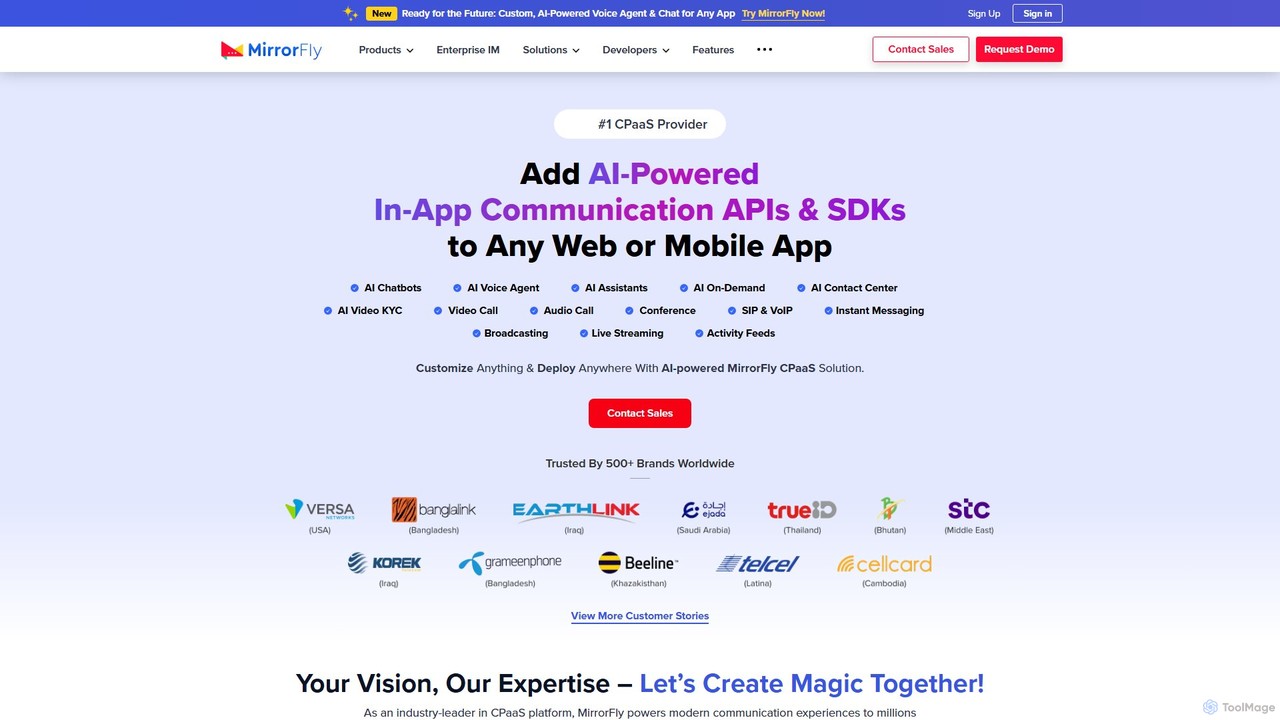
MirrorFly

MirrorFly

MirrorFly is a leading AI-powered CPaaS (Communication Platform as a Service) provider, offering customizable video, voice, and chat …

63.6K

About Cpaas

CPaaS (Communications Platform as a Service) is a category of cloud-based platforms that allow developers to embed real-time communication features directly into their own applications. These tools provide APIs and SDKs for integrating functionalities like voice, video, SMS, and instant messaging, eliminating the need to build complex backend infrastructure. By using CPaaS, businesses can create customized communication experiences within their existing products and workflows. This approach offers greater flexibility and scalability compared to off-the-shelf communication software.

Core Features

  • Programmable APIs: Access APIs for SMS, voice calls, video sessions, and messaging apps like WhatsApp to build custom workflows.
  • Global Carrier Network: Leverage a worldwide network of telecom carriers for reliable and high-quality message and call delivery.
  • Developer Tools & SDKs: Utilize software development kits (SDKs) and comprehensive documentation to accelerate integration.
  • Scalable Cloud Infrastructure: Rely on a cloud-native architecture that handles high volumes and scales automatically with demand.
  • Security & Compliance: Implement features like two-factor authentication (2FA) and ensure compliance with data privacy regulations.

Use Cases

CPaaS is widely adopted by developers and product teams across various industries. In e-commerce, it's used for sending order confirmations and delivery notifications via SMS. Healthcare providers use it to build telehealth platforms with in-app video consultations. Financial services leverage CPaaS for secure transaction alerts and two-factor authentication.

How to Choose

When selecting a CPaaS tool, first evaluate the range of available APIs and channels to ensure they match your needs. Assess the quality of developer documentation, SDKs, and technical support. Compare pricing models, such as pay-as-you-go versus subscription plans, and analyze per-message or per-minute costs. Finally, consider the platform's global reach, reliability, and uptime guarantees (SLAs).

CpaasUse Cases

1

Automate Appointment Reminders via SMS

Healthcare clinics and service-based businesses often face challenges with patient or client no-shows, which impact revenue and scheduling. A developer can use a CPaaS platform's SMS API to integrate an automated reminder system directly into the existing scheduling software. The system is configured to automatically send a personalized SMS message to clients 24 hours before their appointment. This simple, automated communication significantly reduces the rate of missed appointments, improves operational efficiency, and enhances the client experience without requiring manual effort from staff.

2

Implement Two-Factor Authentication (2FA)

Online platforms handling sensitive user data, such as financial or e-commerce sites, need robust security measures. A product team can use a CPaaS provider's API to implement a Two-Factor Authentication (2FA) system. When a user attempts to log in or perform a critical action, the application's backend triggers an API call to the CPaaS platform. The platform then generates a unique one-time password (OTP) and sends it to the user's registered phone number via SMS. This adds a crucial layer of security, protecting user accounts from unauthorized access even if their password is compromised.

3

Build In-App Video Consultations for Telehealth

A telehealth startup aims to connect patients with doctors remotely. Instead of building a complex video streaming infrastructure from scratch, their development team uses a CPaaS provider's video API and SDKs. This allows them to quickly embed secure, high-quality, and HIPAA-compliant video chat functionality directly into their mobile and web applications. Patients can schedule and join a video call with a healthcare professional from within the app, creating a seamless and integrated user experience. The CPaaS handles all the backend complexities like session management, media routing, and scalability.

4

Powering a Customer Support Call Center

A growing company needs to set up a flexible and scalable customer support call center. Using a CPaaS voice API, their developers can build a custom Interactive Voice Response (IVR) system to greet callers and route them to the correct department based on their keypad input. They can also programmatically purchase phone numbers for different regions, set up call forwarding to agents' devices (wherever they are), and record calls for quality assurance. This API-driven approach is more cost-effective and adaptable than traditional hardware-based PBX systems, allowing the company to scale its support operations easily.

5

Send Real-Time Delivery Notifications

A logistics and delivery company wants to improve customer communication by providing real-time updates. Their developers integrate a CPaaS SMS API into their internal tracking system. Whenever a package's status changes—for example, 'shipped', 'out for delivery', or 'delivered'—the system automatically triggers an API call to send an SMS notification to the customer. This proactive communication keeps customers informed, reduces inquiries to the support team, and builds trust. The API allows for high-volume, reliable message delivery across different countries and carriers.

6

Enable Conversational Marketing via WhatsApp

A retail brand wants to engage with customers on their preferred messaging app, WhatsApp. Using a CPaaS provider that offers a WhatsApp Business API, their marketing team can build automated conversational flows. They can send promotional offers, new product announcements, and abandoned cart reminders. Customers can reply to ask questions or get support, with responses handled by a chatbot or routed to a live agent. This creates a direct and interactive marketing channel, leading to higher engagement rates and sales conversions compared to traditional email campaigns.

CpaasFrequently Asked Questions