ToolMage
Sign in

Best 2 Email Automation AI tools for Communication

Popular Email Automation AI tools in Communication include Close and Email Filter, helping you work more efficiently.

Email Filter
Freemium

Email Filter

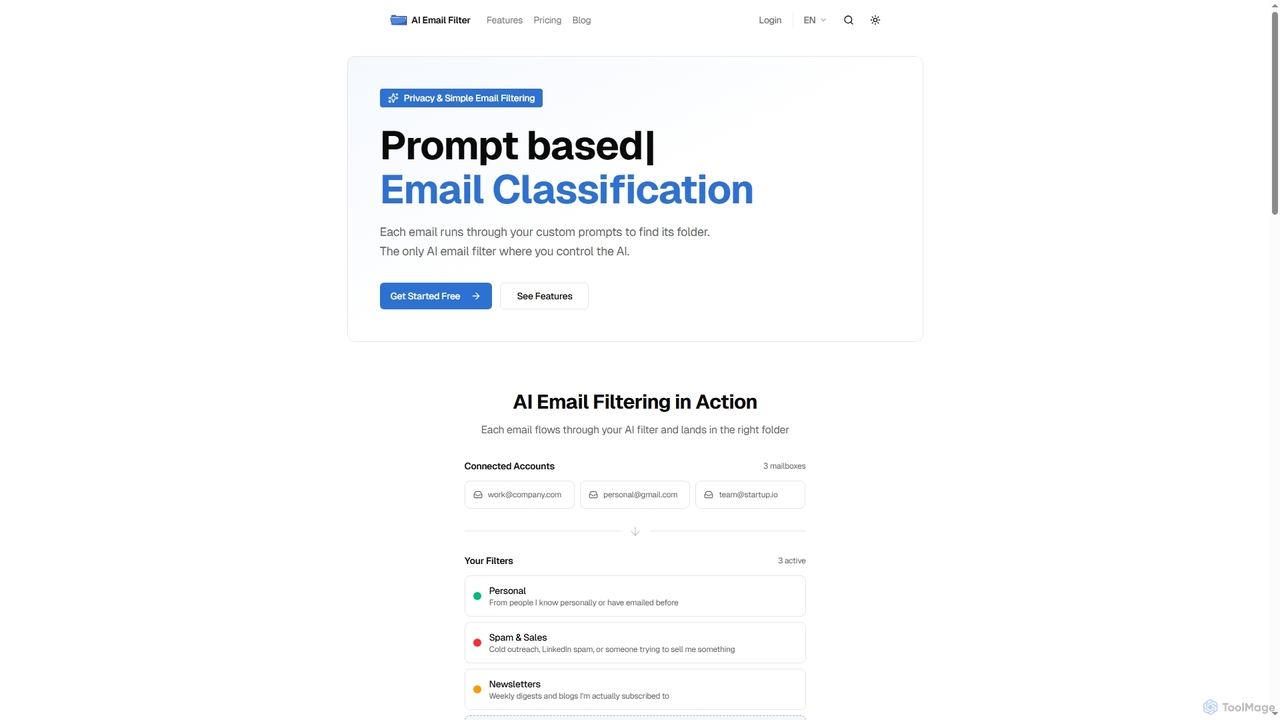
Email Filter is an AI-powered email management tool that uses custom, natural language prompts to automatically sort and organize your incoming emails. It connects to any IMAP/SMTP provider, processes emails directly on your server for enhanced privacy, and offers the flexibility to integrate your own Large Language Models. Streamline your inbox with intelligent, context-aware classification.

Email Automation
Visits 6KFavorites 21Likes 26
Close
Paid

Close

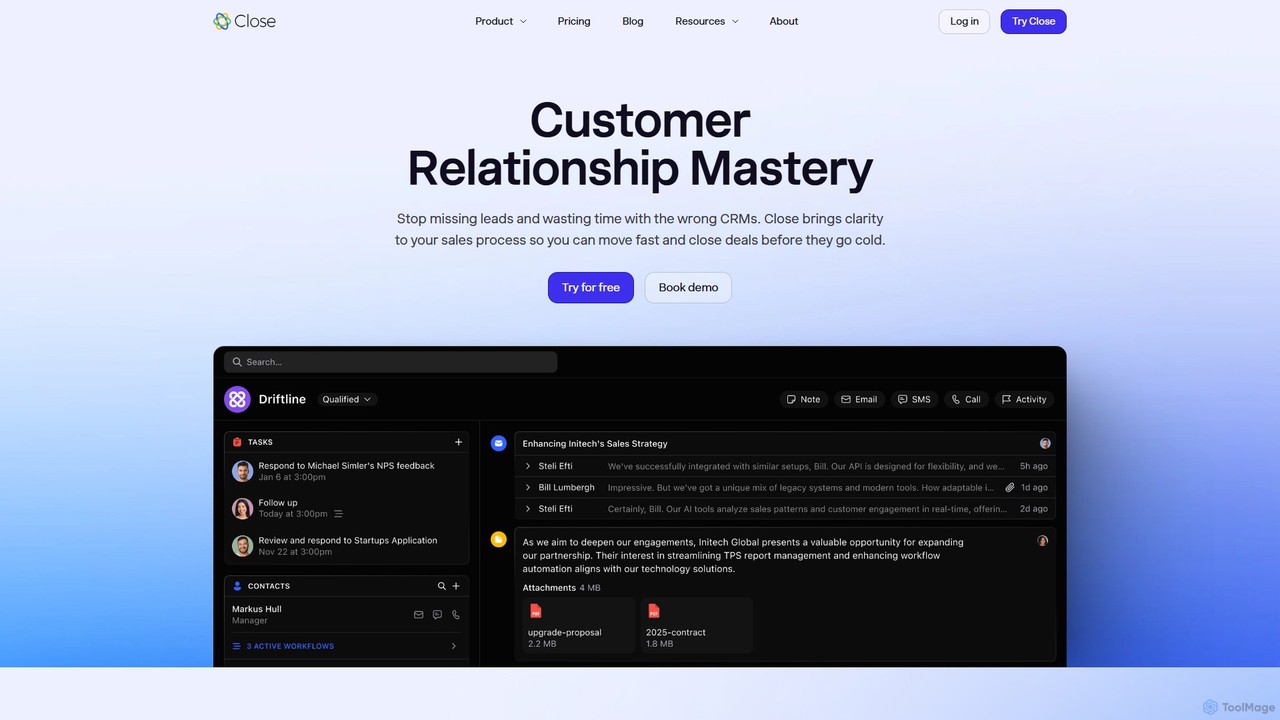
Close is an all-in-one sales CRM designed for startups and small businesses. It streamlines sales communication with built-in calling, email, and SMS, while powerful automation features boost productivity. With an intuitive interface and a focus on closing deals faster, Close helps sales teams manage their pipeline, automate follow-ups, and track performance effectively, all from a single platform.

Email Automation
Visits 1.2MFavorites 144Likes 138

About Email Automation

Email Automation tools leverage artificial intelligence to streamline and personalize email communications, moving beyond basic scheduling to intelligent campaign management. These AI-powered platforms analyze recipient behavior, optimize sending times, and even generate dynamic content, significantly enhancing engagement and efficiency. They are essential for businesses aiming to scale their outreach, nurture leads, and build stronger customer relationships through highly relevant and timely messages.

Core Features

  • AI-driven Content Generation: Automatically crafts personalized subject lines, body text, and calls-to-action based on user data and campaign goals.
  • Smart Audience Segmentation: Uses machine learning to segment audiences dynamically, identifying optimal groups for targeted messaging.
  • Predictive Sending Optimization: Analyzes individual recipient activity to determine the best time to send emails for maximum open and click-through rates.
  • Automated Workflow Creation: Designs and executes complex email sequences, such as welcome series, abandoned cart reminders, and re-engagement campaigns, without manual intervention.
  • Performance Analytics & A/B Testing: Provides deep insights into campaign performance and automatically optimizes email elements through continuous A/B testing.

Applicable Scenarios

Email Automation tools are widely adopted by marketing teams for large-scale campaigns, sales professionals for lead nurturing, and customer service departments for automated support and onboarding. They are crucial for e-commerce businesses to drive sales through personalized product recommendations and for SaaS companies to improve user retention with tailored educational content.

How to Choose

When selecting an Email Automation tool, consider its AI capabilities for content generation and personalization, integration with existing CRM or marketing platforms, and scalability to handle growing contact lists. Evaluate its analytics and reporting features for actionable insights, as well as compliance with data privacy regulations like GDPR and CCPA.

Email Automation use cases

1

Automating Personalized Welcome Sequences

A marketing manager uses an AI email automation tool to create a dynamic welcome series for new subscribers. The AI analyzes sign-up source and initial browsing behavior to personalize the content, product recommendations, and call-to-actions in each email, ensuring a highly relevant onboarding experience that boosts early engagement and conversion rates.

2

Re-engaging Inactive Customers with Tailored Offers

An e-commerce business identifies inactive customers through the AI platform's segmentation features. The tool then automatically sends a series of re-engagement emails with personalized product suggestions and exclusive discounts, generated by AI, based on their past purchase history and browsing patterns, aiming to reactivate their interest and drive repeat sales.

3

Streamlining Sales Lead Nurturing Workflows

A sales team integrates an AI email automation tool with their CRM to automate lead nurturing. When a lead interacts with specific content, the AI triggers a personalized email sequence, providing relevant case studies or product information. This ensures timely follow-ups and keeps leads engaged until they are ready for a direct sales conversation, significantly shortening the sales cycle.

4

Optimizing Campaign Performance with Predictive Sending

A digital marketer leverages AI email automation to optimize the delivery of promotional campaigns. The tool's predictive sending feature analyzes individual recipient engagement patterns to determine the optimal time to send each email, maximizing open rates and click-through rates across diverse time zones and user habits, leading to higher campaign ROI.

5

Enhancing Customer Onboarding with Proactive Support

A SaaS company uses AI email automation to guide new users through their product onboarding. The system monitors user progress and automatically sends targeted tips, tutorials, or troubleshooting guides based on their in-app behavior. This proactive approach reduces support tickets, improves user adoption, and ensures a smoother learning curve for complex features.

6

Generating Dynamic Content for Abandoned Cart Recovery

An online retailer deploys an AI email automation solution to recover abandoned carts. The AI automatically detects abandoned carts and sends a series of personalized reminder emails. These emails dynamically include the exact items left in the cart, suggest complementary products, and may even offer a small incentive, all tailored to the user's browsing history, significantly increasing recovery rates.

Email Automation FAQ

What is AI Email Automation?

AI Email Automation refers to the use of artificial intelligence technologies to automate, personalize, and optimize email marketing and communication processes. Unlike traditional automation, AI tools can analyze vast amounts of data to understand recipient behavior, generate highly relevant content, predict optimal sending times, and adapt campaigns in real-time, leading to more effective and engaging email interactions.

How does AI enhance email automation compared to traditional methods?

AI significantly enhances email automation by adding intelligence and adaptability. Traditional methods rely on predefined rules, while AI-powered tools use machine learning to dynamically segment audiences, personalize content at scale, optimize sending schedules based on individual behavior, and even predict future actions. This results in higher engagement, better conversion rates, and a more efficient use of resources compared to static, rule-based automation.

What are the key benefits of using AI for email marketing?

The key benefits of using AI for email marketing include increased personalization, improved engagement rates, and enhanced operational efficiency. AI enables hyper-personalization of content, subject lines, and offers, making emails more relevant to each recipient. It optimizes sending times and campaign flows, leading to higher open and click-through rates. Additionally, AI automates repetitive tasks, freeing up marketing teams to focus on strategy and creativity.

How to choose the best AI email automation tool for my business?

To choose the best AI email automation tool, consider your specific business needs, budget, and existing tech stack. Look for robust AI capabilities in content generation, audience segmentation, and predictive analytics. Ensure it offers seamless integration with your CRM, e-commerce platform, or other marketing tools. Evaluate its scalability, ease of use, reporting features, and compliance with data privacy regulations to ensure it meets both current and future requirements.

Can AI email automation personalize content for individual users?

Yes, AI email automation excels at personalizing content for individual users. By leveraging machine learning, these tools analyze user data such as browsing history, purchase behavior, demographics, and engagement patterns. This allows them to dynamically generate personalized product recommendations, tailor promotional offers, customize subject lines, and even adapt the tone and style of email copy to resonate more effectively with each recipient, driving deeper engagement.