
Communication Best in category 1 results Nonverbal Analysis AI Tool

Popular AI tools in the Nonverbal Analysis field of Communication include Nonverbia, etc., helping you quickly improve efficiency.

Nonverbia

Nonverbia

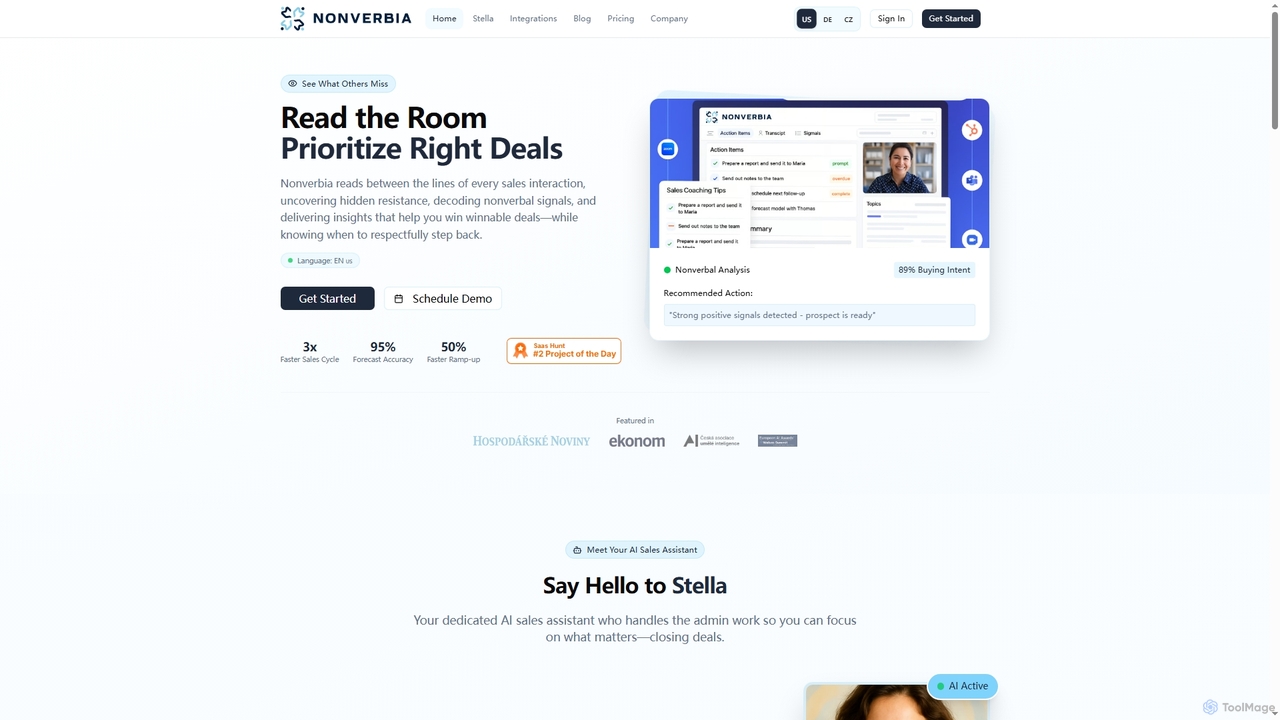
Nonverbia is an AI sales assistant that decodes nonverbal cues and hidden resistance in sales interactions. It automates …

3.7K

About Nonverbal Analysis

Nonverbal Analysis tools are a class of AI-powered software designed to interpret human communication beyond spoken or written words. These tools utilize computer vision and audio processing algorithms to analyze facial expressions, body language, gestures, and vocal tone. Their primary value lies in uncovering deeper insights into emotional states, engagement levels, and intentions that verbal communication alone may not reveal. This technology provides objective, data-driven feedback for understanding human behavior in various contexts.

Core Features

  • Facial Expression Recognition: Automatically detects and classifies emotions such as happiness, sadness, anger, and surprise from facial cues.
  • Body Language & Gesture Analysis: Interprets posture, hand movements, and other physical signals to gauge confidence, interest, or discomfort.
  • Vocal Tone & Paralinguistic Analysis: Analyzes pitch, volume, and speech patterns to understand the emotional sentiment behind spoken words.
  • Eye Tracking & Gaze Analysis: Monitors eye movement and pupil dilation to determine focus, attention, and cognitive load.

Use Cases

This technology is widely applied in market research to gauge genuine consumer reactions during focus groups and product testing. In human resources, it assists in analyzing video interviews to better understand a candidate's soft skills and confidence. It is also valuable in UX research for identifying user frustration or delight when interacting with software or websites.

How to Choose

When selecting a Nonverbal Analysis tool, consider the accuracy and range of emotions it can detect. Evaluate the types of input it supports (e.g., live video stream, pre-recorded files, audio only). Assess its integration capabilities via API for embedding into existing platforms. Finally, scrutinize its data privacy and compliance policies, especially when handling sensitive personal data.

Nonverbal AnalysisUse Cases

1

Analyze Consumer Reactions in Market Research

A market researcher for a consumer goods company needs to evaluate genuine reactions to a new product packaging design. They record a focus group session and upload the video to a Nonverbal Analysis tool. The AI automatically analyzes each participant's facial expressions, identifying moments of surprise, delight, or confusion that correlate with specific design elements. The resulting report provides quantifiable data on emotional engagement, highlighting which designs evoke the most positive responses, offering insights far deeper than traditional surveys.

2

Improve Sales Pitch and Negotiation Skills

A sales team uses a nonverbal analysis tool to refine their virtual sales pitches. After a practice call, the software provides a detailed report on the salesperson's vocal tone, confidence levels (based on posture), and use of engaging gestures. It also analyzes the prospect's facial micro-expressions to pinpoint moments of interest or skepticism. This data-driven feedback allows sales professionals to identify specific areas for improvement, such as modulating their voice for better impact or adjusting their approach when they detect waning engagement from the client.

3

Assess Candidate Engagement in Video Interviews

An HR department integrates a nonverbal analysis API into their video interviewing platform. As candidates answer questions, the system analyzes their eye contact, facial expressions, and vocal confidence. It doesn't make hiring decisions but provides recruiters with an 'engagement score' and flags moments of potential hesitation or inconsistency between verbal answers and nonverbal cues. This helps recruiters formulate more targeted follow-up questions and gain a more holistic view of a candidate's communication skills and composure under pressure.

4

Measure Audience Engagement for Online Presentations

A university professor delivering an online lecture uses a real-time nonverbal analysis tool to gauge student engagement. The tool, with student consent, analyzes webcam feeds to create an aggregated, anonymized engagement dashboard. It tracks metrics like collective focus (based on eye-tracking) and emotional response to different topics. If the dashboard shows a dip in attention, the professor can adapt their teaching style on the fly, perhaps by asking a question or introducing an interactive poll, to re-engage the class and improve learning outcomes.

5

Enhance UX Testing with Emotional Feedback

A UX designer is testing a new mobile banking app feature. Alongside traditional think-aloud protocols, they use a nonverbal analysis tool to capture the user's facial expressions during the test. The software automatically tags moments of frustration when the user struggles with a confusing interface element, or moments of satisfaction upon completing a task easily. This provides objective emotional data that complements the user's verbal feedback, helping the designer pinpoint specific UI/UX issues that cause negative emotional responses, even if the user doesn't explicitly mention them.

6

Provide Data-Driven Feedback for Media Training

A public relations firm uses a nonverbal analysis tool to train executives for press conferences. After a mock interview, the AI generates a report analyzing the executive's posture, frequency of hand gestures, vocal pitch variation, and facial expressions. The report might highlight that the executive appeared less confident when answering tough questions, based on a closed-off posture and a monotonous tone. This objective feedback allows the media coach to focus on specific, measurable improvements, such as practicing open body language and varying vocal delivery to convey authority and trustworthiness.

Nonverbal AnalysisFrequently Asked Questions