ToolMage
Sign in

Best 1 Personal Assistant for Communication

Popular Personal Assistant in Communication include Yatter, helping you work more efficiently.

Yatter
Freemium

Yatter

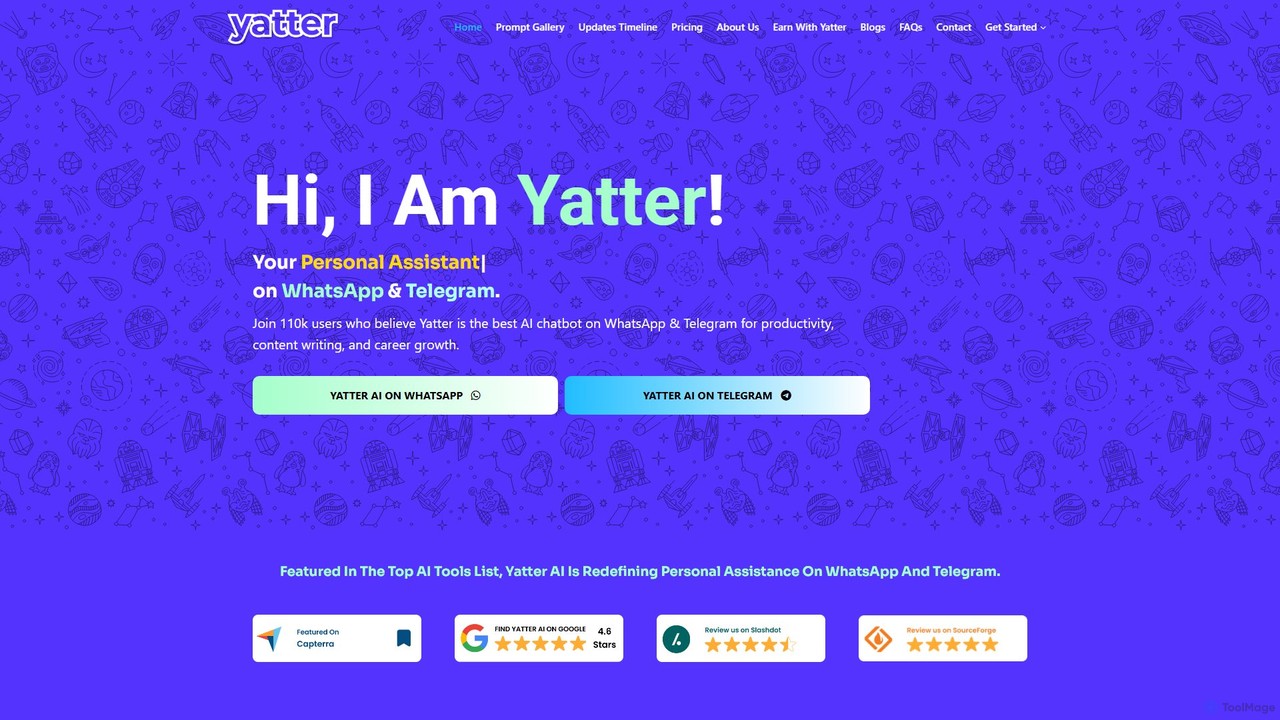
Yatter is a powerful AI assistant integrated into WhatsApp and Telegram, powered by GPT-4o, Google Gemini, and Llama 3. It enhances productivity and communication by offering text, voice, and image interactions, real-time web search, content creation, and smart reminders directly within your favorite messaging apps, no installation required.

Personal Assistant
Visits 5.7KFavorites 80Likes 90

About Personal Assistant

AI Personal Assistants are intelligent tools designed to help individuals manage their daily tasks, schedules, and communications more efficiently. Leveraging natural language processing (NLP) and machine learning, these tools understand user requests, automate routine actions, and provide proactive support. They act as a digital counterpart, streamlining workflows and enhancing personal productivity by handling administrative burdens, thereby freeing up time for more strategic activities within the broader communication ecosystem.

Core Features

  • Intelligent Scheduling: Automatically manages calendars, sets reminders, and suggests optimal meeting times based on availability and preferences.
  • Email & Communication Management: Filters important messages, drafts context-aware responses, summarizes lengthy threads, and prioritizes urgent communications.
  • Task Automation: Handles repetitive administrative tasks such as data entry, report generation, file organization, and follow-up prompts.
  • Information Retrieval & Synthesis: Quickly finds, summarizes, and synthesizes relevant information from various sources based on complex user queries.
  • Proactive Reminders & Alerts: Delivers timely notifications for appointments, deadlines, follow-ups, and even suggests actions based on learned patterns.
  • Voice Command Integration: Allows users to interact with the assistant using natural spoken language for hands-free operation.

Use Cases

Professionals across various fields utilize AI Personal Assistants to significantly offload administrative burdens and improve focus. Entrepreneurs can automate meeting scheduling, email triage, and client follow-ups, ensuring no opportunity is missed. Project managers leverage these tools to track deadlines, coordinate team communications, and generate progress reports effortlessly. Furthermore, individuals seeking better work-life balance benefit immensely from automated reminders, intelligent task prioritization, and streamlined household management, ensuring important personal and professional commitments are met without constant manual oversight or mental load.

How to Choose

When selecting an AI Personal Assistant, consider its integration capabilities with your existing digital ecosystem, including calendar, email client, and CRM systems, to ensure seamless workflow. Evaluate the breadth and depth of its automation features, such as advanced natural language understanding for complex requests and proactive assistance. Accuracy in task execution and the level of customization offered for workflows, notification preferences, and privacy settings are also crucial. Finally, assess the security protocols for handling sensitive personal data and compare pricing models (e.g., subscription tiers, free plans) to find a solution that aligns with both your needs and budget.

Personal Assistant use cases

1

Automating Complex Meeting Scheduling

For executives or team leads who frequently organize meetings with multiple participants across different time zones, an AI Personal Assistant can automatically find optimal slots. By accessing calendars and understanding preferences, it sends invitations, manages RSVPs, and sends reminders, eliminating manual coordination and reducing scheduling conflicts, saving hours each week.

2

Intelligent Email Triage and Response Drafting

Marketing professionals or customer support agents often face an overwhelming volume of emails. An AI Personal Assistant can categorize incoming messages, flag urgent ones, summarize long threads, and even draft initial responses based on context. This significantly reduces time spent on inbox management, allowing focus on critical communications and improving response times.

3

Proactive Deadline and Task Management

Project managers or students juggling multiple assignments benefit from an AI Personal Assistant that proactively tracks deadlines. It integrates with project management tools, sends timely reminders for upcoming tasks, suggests prioritization based on urgency, and helps break down large projects into manageable steps, ensuring consistent progress and preventing missed deadlines.

4

Personalized Information Gathering for Decision Making

Business analysts or researchers needing quick access to specific data can leverage an AI Personal Assistant. Users can pose complex queries, and the assistant will scour various online and internal sources, synthesize relevant information, and present it in a concise, actionable format. This accelerates research processes and supports informed decision-making without extensive manual searching.

5

Streamlining Travel Itinerary and Logistics

Frequent business travelers can use an AI Personal Assistant to manage their entire trip. From booking flights and hotels based on preferences and budget to creating detailed itineraries, providing real-time flight updates, and suggesting local transport options. This automates the tedious aspects of travel planning, ensuring a smooth and stress-free journey.

6

Optimizing Daily Routines and Personal Productivity

Individuals aiming to improve personal productivity and work-life balance can rely on an AI Personal Assistant. It helps set daily goals, manages personal appointments, sends reminders for health and wellness activities, and even suggests breaks. By automating routine personal tasks and providing gentle nudges, it fosters better habits and a more organized daily life.

Personal Assistant FAQ

What are AI Personal Assistants?

AI Personal Assistants are software tools that leverage artificial intelligence, primarily natural language processing and machine learning, to help individuals manage and automate various daily tasks. They act as a digital helper, understanding user commands and proactively assisting with scheduling, communication, information retrieval, and administrative duties. Their core purpose is to enhance personal productivity and streamline workflows.

How do I choose the best AI Personal Assistant for my needs?

To choose the best AI Personal Assistant, consider several factors. First, evaluate its compatibility with your existing ecosystem (e.g., Google Calendar, Outlook, CRM). Second, assess the range and depth of its features, such as advanced scheduling, email management, or task automation capabilities. Third, examine its natural language understanding accuracy and customization options. Finally, review its data privacy policies and pricing structure to ensure it aligns with your budget and security requirements.

What specific tasks can AI Personal Assistants automate?

AI Personal Assistants can automate a wide array of tasks to boost efficiency. This includes intelligent meeting scheduling, where they find optimal times and send invitations; email management, by filtering, summarizing, and drafting responses; and proactive task management, through setting reminders and prioritizing duties. They can also retrieve and synthesize information, manage travel itineraries, and even optimize daily routines by suggesting breaks or wellness activities, significantly reducing manual effort.

Who benefits most from using an AI Personal Assistant?

A diverse range of individuals can benefit significantly from AI Personal Assistants. Busy professionals, executives, and entrepreneurs find them invaluable for managing complex schedules and heavy communication loads. Project managers and students use them for deadline tracking and task prioritization. Anyone seeking to improve personal productivity, reduce administrative overhead, or achieve a better work-life balance will find these tools highly beneficial, as they free up mental space and time for more important activities.

How do AI Personal Assistants differ from traditional calendar or reminder apps?

AI Personal Assistants differ from traditional calendar or reminder apps primarily through their intelligence and proactive capabilities. While traditional apps simply store and display information you input, AI assistants use machine learning to understand context, anticipate needs, and automate actions. For example, an AI assistant can *suggest* meeting times, *draft* emails, or *prioritize* tasks based on learned patterns, rather than just reminding you of a pre-set event. They offer a more dynamic, interactive, and autonomous level of support.